
For many, the stock market can seem like a complex labyrinth of numbers and jargon. Yet, at its core, it serves a fundamental purpose: providing a mechanism for companies to raise capital. When a company “sells stock,” it’s essentially selling small ownership stakes in itself to investors. This pivotal financial decision is driven by a multitude of strategic objectives, ranging from fueling ambitious growth plans to providing liquidity for early stakeholders. Understanding why companies embark on this journey offers profound insights into corporate finance, economic development, and the very fabric of capitalism.

The Primary Purpose: Capital Formation
At its heart, the decision to sell stock is about raising money. Unlike debt, which must be repaid with interest, equity capital represents a permanent injection of funds into the company, albeit in exchange for a share of ownership and future profits. This capital is the lifeblood for companies aiming to expand their horizons.
Funding Growth and Expansion
The most common and perhaps intuitive reason for a company to sell stock is to finance its growth initiatives. Imagine a burgeoning tech startup with a revolutionary product or a manufacturing giant looking to enter new international markets. Such ventures require substantial investment in various forms:
- Research and Development (R&D): Developing new products, improving existing ones, or exploring cutting-edge technologies demands significant financial resources. Equity capital can fund the years of R&D often required to bring innovative solutions to market.
- Market Penetration and Expansion: Whether it’s launching new marketing campaigns, setting up distribution channels, or establishing a physical presence in new geographic regions, market expansion is capital-intensive. Selling stock provides the funds needed to scale operations and capture a larger market share.
- Strategic Acquisitions: Companies often grow by acquiring other businesses. These mergers and acquisitions (M&A) can be incredibly costly, and issuing new stock can be an effective way to finance such deals, either by using the cash raised or by offering company shares directly as currency for the acquisition.
Investing in Infrastructure and Operations
Beyond direct growth initiatives, capital from stock sales can be crucial for strengthening a company’s operational backbone. This includes:
- Capital Expenditures (CapEx): Building new factories, upgrading machinery, investing in advanced IT systems, or expanding office spaces all fall under CapEx. These investments are vital for increasing production capacity, improving efficiency, and staying competitive.
- Working Capital: Every business needs a certain amount of working capital to manage its day-to-day operations – paying suppliers, managing inventory, and covering short-term operational expenses. A fresh injection of equity can shore up a company’s working capital position, providing financial stability and flexibility.
Debt Repayment and Financial Stability
While equity is often seen as distinct from debt, companies sometimes issue stock to address their existing debt obligations. A high level of debt can be a significant burden, incurring substantial interest payments and increasing financial risk.
- Reducing Leverage: By using capital from stock sales to pay down debt, a company can reduce its leverage ratio, making its balance sheet appear stronger and more attractive to lenders and investors alike.
- Improving Creditworthiness: Lower debt levels can lead to better credit ratings, which in turn can reduce the cost of future borrowing and enhance a company’s overall financial resilience. This strategic move can provide a healthier financial footing for long-term sustainability.
Strategic Benefits Beyond Cash Injection
While capital infusion is a primary driver, the decision to sell stock, particularly by going public through an Initial Public Offering (IPO), offers a suite of strategic advantages that extend beyond mere cash.
Enhancing Company Profile and Credibility
Becoming a publicly traded company signifies a significant milestone. It brings increased visibility and often confers a higher level of prestige and credibility.
- Public Scrutiny and Transparency: Public companies are subject to stringent regulatory requirements (e.g., SEC filings in the U.S.), demanding greater transparency in their financial reporting and operations. This increased scrutiny, while burdensome, can foster trust among customers, partners, and employees, enhancing the company’s reputation.
- Attracting Talent and Business Partnerships: A public listing can make a company more attractive to top-tier talent who might view it as more stable and reputable. Similarly, potential business partners may prefer to work with publicly traded entities due to their greater transparency and perceived reliability.
Attracting and Retaining Talent
In today’s competitive job market, companies constantly seek innovative ways to attract and retain the best employees. Offering stock or stock options is a powerful incentive.
- Employee Stock Ownership Plans (ESOPs): By granting employees stock options or shares, companies can align employee interests directly with those of shareholders. When the company performs well, employees benefit from the increase in stock value, fostering a sense of ownership and motivation. This can be particularly effective in high-growth industries where talent is scarce.
- Long-Term Incentives: Stock-based compensation plans often have vesting periods, encouraging employees to stay with the company for several years to fully realize the value of their grants.
Providing Liquidity for Founders and Early Investors
Founders and early-stage investors (like venture capitalists) often pour years of effort and significant capital into building a company without seeing immediate returns. Selling stock, especially through an IPO, provides a crucial “exit strategy.”
- Monetization of Investment: An IPO allows these early stakeholders to convert their illiquid ownership stakes into liquid cash. This enables them to realize the returns on their substantial investments, rewarding their risk-taking and enabling them to pursue new ventures.
- Reinvestment Opportunities: For venture capitalists and institutional investors, monetizing their investments in one company allows them to free up capital to invest in the next generation of startups, thereby fueling the broader entrepreneurial ecosystem.
Navigating the Journey: The Mechanics of Going Public
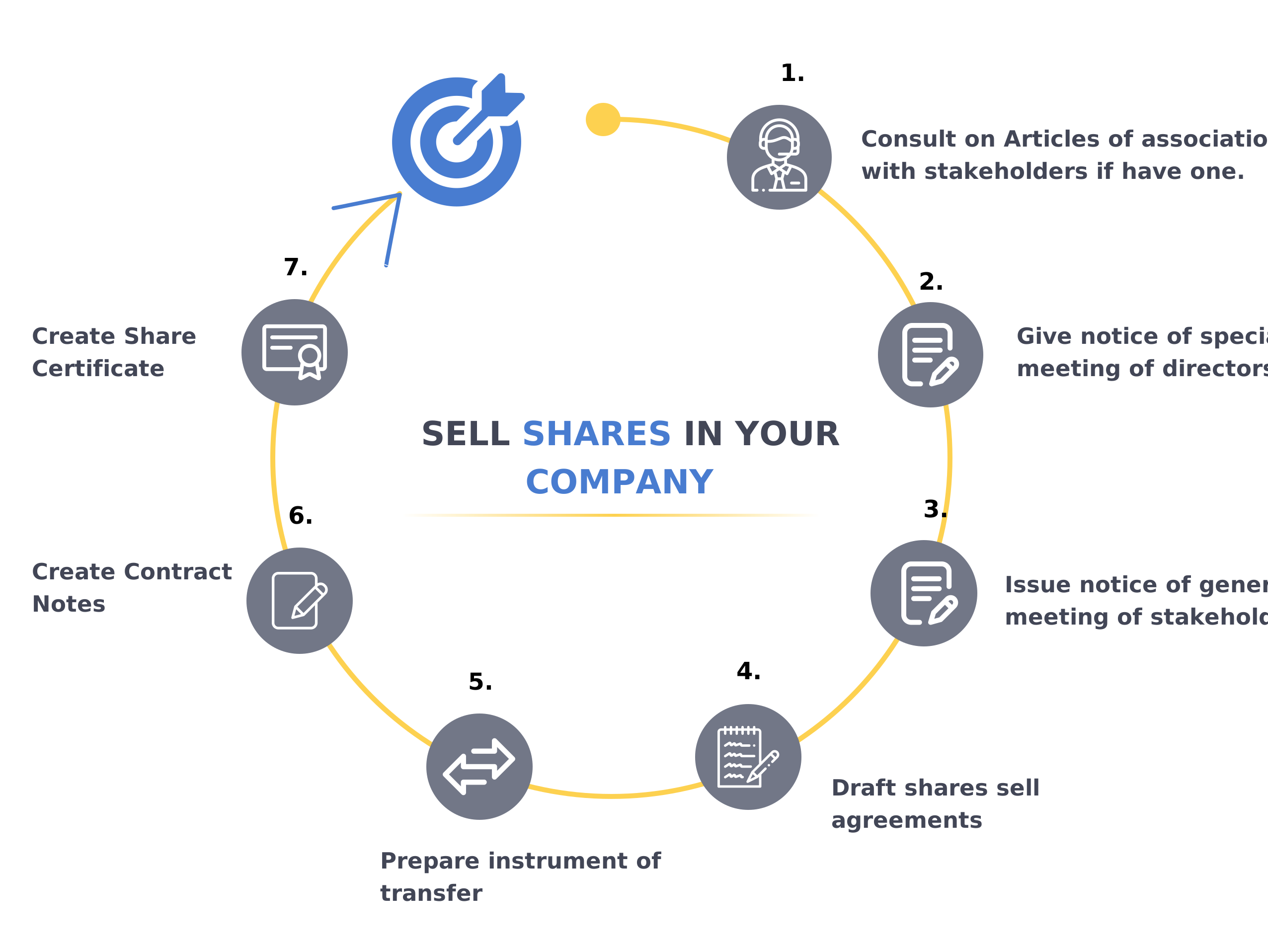
The process by which a private company transforms into a public one is complex, involving various financial institutions and regulatory bodies.
Initial Public Offering (IPO): The First Dive
An IPO is the quintessential moment when a private company first offers its shares to the general public. It’s a highly regulated and intricate process:
- Underwriting: Investment banks (underwriters) play a crucial role, advising the company, assessing its valuation, and helping to sell the shares. They often guarantee the sale of a certain number of shares, taking on some risk.
- Prospectus and Roadshow: Companies prepare a detailed prospectus, a legal document outlining their business, financials, and risks. This is then presented to potential institutional investors during a “roadshow” to generate interest and gauge demand.
- Pricing and Listing: Based on demand and market conditions, the shares are priced, and the company’s stock begins trading on a stock exchange (e.g., NYSE, NASDAQ).
Secondary Offerings: Continued Capital Raising
Going public isn’t a one-time event for raising capital. Public companies can conduct secondary offerings or follow-on offerings to issue new shares to the public even after their IPO. These are typically done for similar reasons as an IPO – to fund large projects, make acquisitions, or reduce debt.
Direct Listings vs. Traditional IPOs
While IPOs are traditional, alternative methods like direct listings have gained traction. In a direct listing, a company lists its existing shares directly on an exchange without raising new capital or involving underwriters in the same way, allowing existing shareholders to sell their shares without dilution. This method often aims to reduce the significant costs associated with traditional IPOs.
The Trade-offs and Responsibilities of Public Ownership
While the benefits of selling stock are substantial, becoming a public company comes with significant trade-offs and increased responsibilities.
Loss of Control and Increased Scrutiny
- Dilution of Ownership: When a company issues new shares, it dilutes the ownership stake of existing shareholders. Founders and early investors may see their percentage of company ownership decrease, potentially impacting their control over decision-making.
- Shareholder Accountability: Public companies are accountable to a diverse group of shareholders. Management decisions come under constant scrutiny from investors, analysts, and the media. This can lead to short-term pressure to meet quarterly earnings targets, potentially diverting focus from long-term strategic goals.
- Regulatory Compliance: Public companies face extensive regulatory compliance, particularly with bodies like the Securities and Exchange Commission (SEC). This involves rigorous financial reporting, transparency requirements, and adherence to corporate governance standards, which can be resource-intensive.
Costs of Being Public
The privilege of being publicly traded comes with a significant price tag.
- Underwriting and Legal Fees: The fees paid to investment banks, lawyers, and accountants during the IPO process are substantial, often amounting to millions of dollars.
- Ongoing Compliance Costs: After going public, companies incur continuous costs for legal counsel, auditing services, investor relations, and maintaining compliance with public market regulations. These ongoing expenses can eat into a company’s profitability.
Market Volatility and Shareholder Expectations
Public companies are constantly subject to the whims of the market. Their stock price can fluctuate dramatically based on economic conditions, industry trends, company performance, and investor sentiment.
- Managing Investor Relations: Companies must actively manage investor relations, communicating their strategy and performance clearly to maintain investor confidence. Negative market reactions can impact a company’s ability to raise future capital or even attract talent.
- Short-Term vs. Long-Term Focus: The pressure to deliver consistent quarterly results can sometimes force management to prioritize short-term gains over long-term strategic investments, which may not always be in the company’s best interest.
The Broader Economic Impact
The act of companies selling stock has ripple effects that extend far beyond the individual firm, contributing significantly to the broader economy.
Fueling Innovation and Job Creation
By providing access to vast pools of capital, public markets enable companies to undertake ambitious projects that might otherwise be impossible. This funding fuels innovation, drives technological advancements, and leads to the creation of new industries and countless jobs. A vibrant stock market is a critical component of a dynamic, growing economy.

Democratizing Investment
Public markets also democratize investment, allowing individual investors (through direct stock purchases or mutual funds/ETFs) to participate in the growth and success of established and emerging companies. This access allows individuals to build wealth, save for retirement, and contribute to their financial well-being by becoming partial owners of some of the world’s most successful enterprises.
In conclusion, a company’s decision to sell stock is a profound strategic move, driven by a complex interplay of financial necessity and ambitious goals. While it offers unparalleled access to capital for growth, liquidity for early investors, and enhanced credibility, it also introduces significant responsibilities, costs, and scrutiny. Ultimately, the ability for companies to raise capital by selling stock is a cornerstone of modern financial systems, enabling innovation, job creation, and economic prosperity on a global scale.
aViewFromTheCave is a participant in the Amazon Services LLC Associates Program, an affiliate advertising program designed to provide a means for sites to earn advertising fees by advertising and linking to Amazon.com. Amazon, the Amazon logo, AmazonSupply, and the AmazonSupply logo are trademarks of Amazon.com, Inc. or its affiliates. As an Amazon Associate we earn affiliate commissions from qualifying purchases.