
For both novice investors and seasoned professionals, understanding the intricate rhythms of the global stock market is paramount. It’s not just about knowing what to invest in, but also when to execute those investments. The question “When does the stock market close?” might seem straightforward, but its answer unravels a complex tapestry of global trading hours, extended sessions, holiday closures, and strategic implications that profoundly affect investment decisions and portfolio performance.
Far from a simple “lights out” moment, the closing bell for any major exchange signals a transition, not an end. It delineates phases of market activity that can offer distinct opportunities and present unique risks. From the bustling open to the final closing price, and even into the quiet hours when institutional giants make their moves, the market’s operational schedule dictates liquidity, volatility, and information flow. This comprehensive guide will dissect the standard trading day across major global markets, explore the nuances of extended hours, detail the various types of market closures, and ultimately, equip you with the strategic insights needed to navigate these financial waters effectively.
The Standard Trading Day: A Global Perspective
The concept of a “trading day” varies significantly across the globe, reflecting different time zones, cultural practices, and regulatory frameworks. While the underlying principles of buying and selling shares remain constant, the specific hours of operation are a critical piece of information for anyone looking to engage with international markets or understand the global economic pulse.
North American Markets: NYSE and NASDAQ
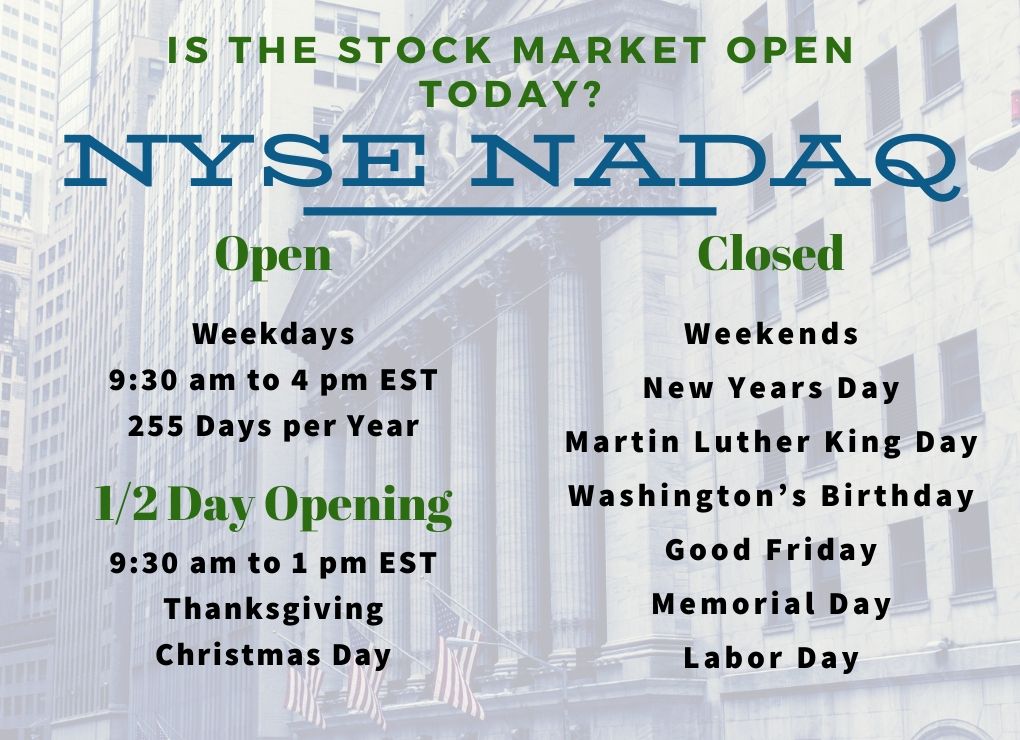
In the United States, the two most prominent stock exchanges, the New York Stock Exchange (NYSE) and the NASDAQ, operate on a synchronized schedule that sets the rhythm for much of North American trading.
- Opening Bell: Both exchanges typically open at 9:30 AM Eastern Time (ET). This is often a period of high volatility as overnight news and economic data are digested and initial trading strategies are executed.
- Closing Bell: The regular trading session concludes at 4:00 PM ET. The closing bell is another crucial moment, often marked by increased activity as investors try to get in or out of positions before the market shuts down for the day.
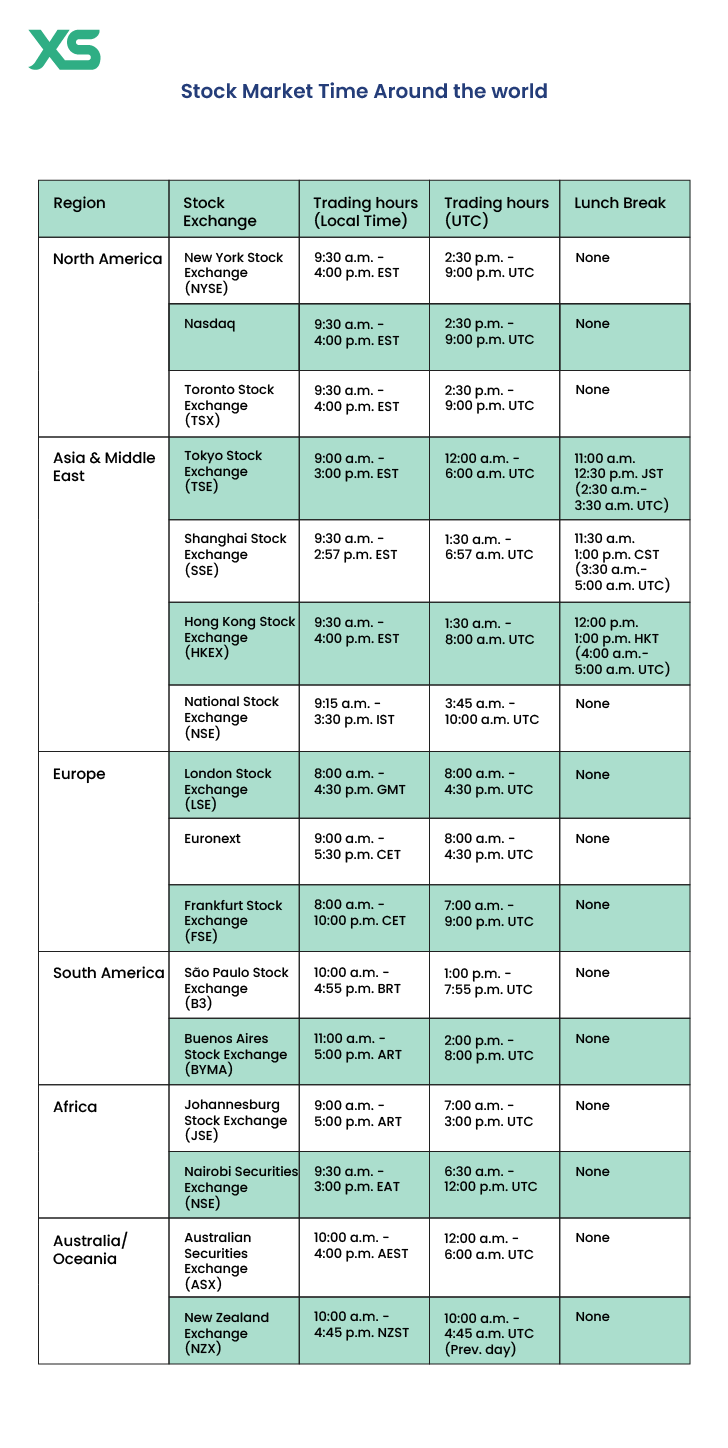
It’s important to note that unlike some other global markets, U.S. exchanges do not have a designated lunch break during their regular trading hours. Trading is continuous for the entire 6.5-hour session. Canadian exchanges, such as the Toronto Stock Exchange (TSX), generally follow a similar 9:30 AM to 4:00 PM ET schedule.
European Exchanges: LSE, Euronext, Deutsche Börse
Europe’s financial landscape is characterized by a network of significant exchanges, each with its own local trading hours, which, when converted to a universal time, creates a dynamic, overlapping trading window.
- London Stock Exchange (LSE): Located in Greenwich Mean Time (GMT) or British Summer Time (BST), the LSE typically operates from 8:00 AM to 4:30 PM GMT/BST. Its early opening allows for significant overlap with Asian market closes and North American pre-market activity.
- Euronext: A pan-European exchange group encompassing markets in Amsterdam, Brussels, Dublin, Lisbon, Oslo, and Paris, Euronext generally operates from 9:00 AM to 5:30 PM Central European Time (CET) or Central European Summer Time (CEST).
- Deutsche Börse (Frankfurt Stock Exchange): Germany’s primary exchange, Xetra, trades from 9:00 AM to 5:30 PM CET/CEST, aligning with its Euronext counterparts.
These European markets, much like their North American counterparts, do not typically observe a mid-day trading halt. Their operating hours mean that European traders are active during both the tail end of Asian sessions and the opening hours of the North American market, making London, in particular, a critical nexus for global financial flow.
Asian Markets: Tokyo, Shanghai, Hong Kong
Asia’s financial markets often kick off the global trading day, preceding European and North American sessions due to time zone differences. Their schedules sometimes incorporate unique features.
- Tokyo Stock Exchange (TSE): The TSE typically operates in two sessions: 9:00 AM to 11:30 AM JST (Japan Standard Time) for the morning session, and 12:30 PM to 3:00 PM JST for the afternoon session. The one-hour lunch break is a distinguishing feature.
- Shanghai Stock Exchange (SSE) & Shenzhen Stock Exchange (SZSE): Mainland China’s exchanges also follow a split-session model: 9:30 AM to 11:30 AM CST (China Standard Time), followed by a lunch break, and then 1:00 PM to 3:00 PM CST.
- Hong Kong Stock Exchange (HKEX): Similar to its mainland counterparts, HKEX operates from 9:30 AM to 12:00 PM HKT (Hong Kong Time) and then from 1:00 PM to 4:00 PM HKT.
The concept of a mid-day break, common in many Asian markets, provides a pause for traders to analyze morning performance, react to news, and strategize for the afternoon. These earlier trading hours (relative to UTC) mean that Asian markets are often the first to react to overnight global news, setting the tone for the trading day to come.
Beyond Regular Hours: Understanding Extended Trading
The idea that the stock market simply closes at 4:00 PM ET (or its equivalent elsewhere) is an oversimplification. While the “regular” trading session defines the primary window for most investors, significant activity occurs both before the opening bell and after the closing bell in what are known as “extended trading hours.”
Pre-Market Trading
Pre-market trading refers to the period of time before the official market open when trades can still be executed. For major U.S. exchanges, this typically begins as early as 4:00 AM ET and runs until the 9:30 AM ET open.
- What it is and why it exists: This session allows institutional investors, market makers, and even some retail traders to react to news that breaks overnight or early in the morning (e.g., earnings reports, economic data, global market movements) before the main market opens. It provides an early indication of market sentiment and potential opening price movements.
- Advantages and disadvantages:
- Advantage: Opportunity to react quickly to news, potentially at more favorable prices if the market overreacts at the open.
- Disadvantage: Significantly lower liquidity compared to regular hours, leading to wider bid-ask spreads and potentially greater price volatility. Trades executed during pre-market can be harder to fill at desired prices and may experience larger price swings on smaller volumes.
- Who participates: Primarily institutional investors and sophisticated retail traders with access to platforms offering extended-hours trading.
After-Hours Trading
After-hours trading occurs after the regular market closes, typically from 4:00 PM ET to 8:00 PM ET for U.S. markets.

- Purpose: This session serves a similar purpose to pre-market trading, allowing investors to react to news released after the market close (e.g., late-day earnings reports, analyst upgrades/downgrades) without waiting until the next trading day. It’s also used by institutions to adjust positions or execute large block trades.
- Platforms and access: Most major brokerage firms offer after-hours trading, though often with specific order types (e.g., limit orders are common due to lower liquidity) and disclaimers regarding increased risk.
- Risks associated with after-hours trading: Like pre-market trading, after-hours sessions are characterized by reduced liquidity and increased volatility. Price discovery can be less efficient, and large price gaps can occur between the after-hours close and the next day’s open. It’s generally not recommended for novice investors due to the amplified risks.
Market Closures: Weekends, Holidays, and Unexpected Events
While regular and extended hours define the active phases of trading, understanding when the market is not open is equally critical for planning and risk management.
Weekend Closures: The Universal Rule
Globally, stock markets universally close for the weekend. This means that trading typically ceases on Friday evening (local time) and resumes on Monday morning (local time).
- Why markets are closed on Saturdays and Sundays: The weekend closure is a long-standing tradition designed to allow market participants a break, provide time for settlements, and facilitate system maintenance. It also reflects a societal rhythm where business typically pauses on these days.
- Impact on trading strategies: The weekend gap introduces “overnight risk” (or “weekend risk”), where significant news or events occurring over the non-trading period can lead to a substantial price difference between Friday’s close and Monday’s open. Investors holding positions over the weekend must account for this uncertainty.
Public and Financial Holidays
Stock exchanges also observe a number of public and financial holidays, during which they remain closed or operate on a reduced schedule. These vary by country and exchange.
- Common holidays leading to market closures:
- United States: New Year’s Day, Martin Luther King, Jr. Day, Washington’s Birthday (Presidents’ Day), Good Friday, Memorial Day, Juneteenth National Independence Day, Independence Day (July 4th), Labor Day, Thanksgiving Day, Christmas Day. Markets often have early closings on days preceding or following major holidays (e.g., Christmas Eve, day after Thanksgiving).
- United Kingdom: New Year’s Day, Good Friday, Easter Monday, Early May Bank Holiday, Spring Bank Holiday, Summer Bank Holiday, Christmas Day, Boxing Day.
- Japan: New Year’s Day, Coming of Age Day, National Foundation Day, Emperor’s Birthday, Vernal Equinox Day, Showa Day, Constitution Memorial Day, Greenery Day, Children’s Day, Marine Day, Mountain Day, Respect for the Aged Day, Autumnal Equinox Day, Health and Sports Day, Culture Day, Labor Thanksgiving Day.
- Importance of checking holiday schedules: Investors, especially those with international portfolios, must consult the specific holiday calendars of the relevant exchanges. These schedules are typically published well in advance on exchange websites. Failing to do so can lead to missed trading opportunities or an inability to manage positions.
Emergency Closures and Circuit Breakers
In rare circumstances, markets may close unexpectedly or halt trading due to unforeseen events or extreme volatility.
- Emergency closures: These are highly unusual and typically reserved for national crises, natural disasters, or major infrastructure failures. Notable examples include the closure of U.S. markets for several days after the September 11, 2001, terrorist attacks.
- Circuit breakers: These are automated mechanisms designed to temporarily halt trading across an entire exchange or for specific securities during periods of rapid and severe market decline. They are triggered when indices fall by predetermined percentages (e.g., 7%, 13%, 20% drops in the S&P 500 in the U.S.).
- How circuit breakers work: The goal is to give investors time to absorb information, prevent panic selling, and restore order to the market. The duration of the halt increases with the severity of the decline.
- Implications for market stability: While disruptive in the short term, circuit breakers are intended to prevent catastrophic freefalls and maintain overall market integrity.
The Strategic Implications of Market Hours for Investors
Understanding when the stock market opens and closes isn’t merely about ticking off times on a clock; it’s a fundamental aspect of developing effective investment strategies, managing risk, and optimizing returns.
Volatility and Liquidity Across Sessions
The market’s behavior changes dramatically across its different operational phases.
- Regular Session (High Liquidity, Managed Volatility): This is where the vast majority of trading volume occurs. High liquidity means tighter bid-ask spreads, making it easier to buy and sell at predictable prices. Volatility is present but typically more contained than in extended hours, due to the presence of all market participants and robust price discovery mechanisms.
- Extended Hours (Lower Liquidity, Higher Volatility): Pre-market and after-hours trading are characterized by significantly lower trading volumes. This reduced liquidity means that even small orders can move prices dramatically, leading to wider spreads and increased price swings. News events can have an outsized impact on stock prices during these times, creating both opportunities for quick profits and substantial risks for those caught on the wrong side of a sudden move.
- Impact of news events: A major earnings announcement released after the close can cause a stock to gap up or down significantly in after-hours trading, and that gap may or may not persist into the next regular session. Similarly, positive or negative economic data released before the open can set the tone for the entire pre-market and subsequent regular session.
- Opportunities and risks for different investor types:
- Day traders: Often thrive on the volatility of the opening and closing hours of the regular session, and some actively participate in extended hours to capitalize on immediate reactions to news. This requires constant monitoring and quick decision-making.
- Long-term investors: Typically less concerned with intra-day or extended-hours fluctuations, focusing instead on the underlying fundamentals and long-term trends. However, even long-term investors need to be aware of how overnight news can impact their portfolio at the next market open.
Information Flow and Decision Making
Market hours dictate the pace and availability of information, directly influencing investor decision-making.
- The “overnight risk” and “opening gap”: Holding a stock overnight means taking on the risk that unforeseen news (company-specific, industry-wide, or macroeconomic) will emerge before the next market open, causing the stock to “gap” significantly up or down. This can be particularly pronounced over weekends.
- Planning trade entries and exits: Savvy investors often plan their entries and exits around market hours. For instance, some prefer to avoid the volatile opening minutes, waiting for prices to stabilize. Others might place orders towards the close to capture end-of-day momentum. Understanding these dynamics allows for more calculated and less emotionally driven trading.
- The role of automation and algorithmic trading: Many institutional players and advanced retail traders use algorithms that are programmed to react to market conditions and news around the clock, including during extended hours. These algorithms can execute trades at lightning speed, further contributing to the unique dynamics of pre- and after-market sessions.
Practical Tips for Navigating Market Hours
To effectively leverage or mitigate the effects of market hours, consider these practical tips:
- Know your exchange’s specific hours: Always confirm the exact opening and closing times, including any lunch breaks or early closures, for the specific exchange where your assets are traded. This is especially crucial for international investing.
- Utilize extended hours cautiously: If trading during pre-market or after-hours, understand the heightened risks associated with lower liquidity and wider spreads. Use limit orders exclusively to ensure you trade at your desired price.
- Set alerts and monitor news: Stay informed about major news releases, earnings reports, and economic data, noting when they are scheduled to be released relative to market hours. Set price alerts for your holdings to be notified of significant movements.
- Manage weekend risk: Be aware of the potential for weekend gaps. If you are particularly risk-averse, consider reducing positions before Friday’s close, especially if major geopolitical events or economic announcements are anticipated over the weekend.
- Leverage educational resources: Continuously educate yourself on market dynamics, trading strategies, and risk management techniques tailored to different market sessions.
The question “When does the stock market close?” serves as a gateway to a deeper understanding of market mechanics. It’s not just a time on a clock, but a fundamental parameter that shapes liquidity, volatility, information flow, and ultimately, investment outcomes. By mastering the nuances of market hours—from standard sessions across continents to the intricacies of extended trading and the realities of various closures—investors can make more informed decisions, manage risks more effectively, and position themselves for greater success in the dynamic world of finance.
aViewFromTheCave is a participant in the Amazon Services LLC Associates Program, an affiliate advertising program designed to provide a means for sites to earn advertising fees by advertising and linking to Amazon.com. Amazon, the Amazon logo, AmazonSupply, and the AmazonSupply logo are trademarks of Amazon.com, Inc. or its affiliates. As an Amazon Associate we earn affiliate commissions from qualifying purchases.