
In the vast and often complex world of investing, few financial products have democratized market access and diversified portfolios quite like the Exchange Traded Fund (ETF). Among the multitude of ETFs available today, one name consistently emerges as a cornerstone for many investors: VOO. Issued by Vanguard, one of the largest and most respected investment management companies globally, VOO is more than just a ticker symbol; it represents a highly efficient and widely embraced strategy for participating in the performance of the U.S. stock market’s largest companies.
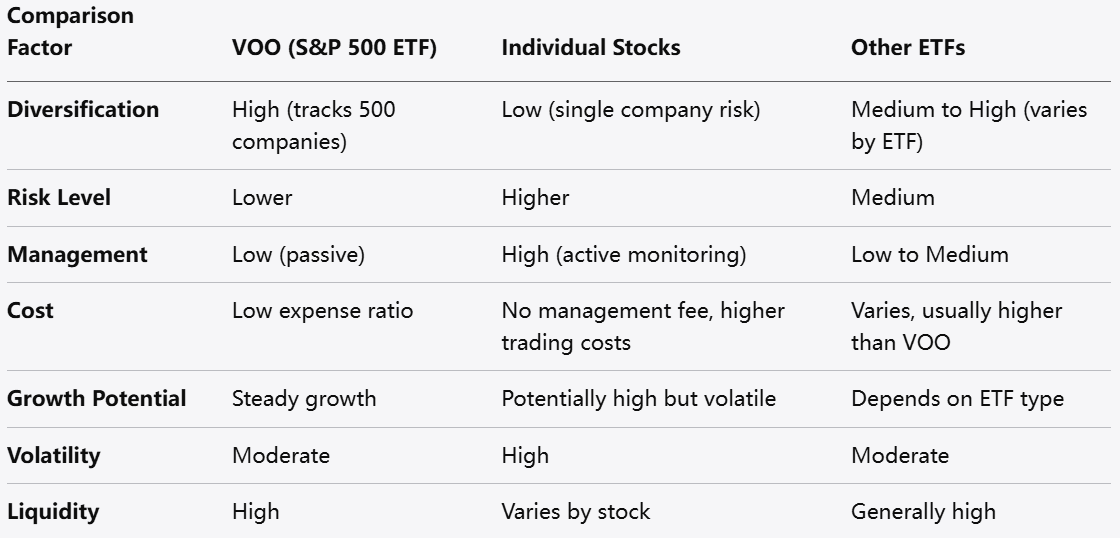
For those looking to understand the core components of a robust investment strategy, particularly within the realm of passive investing, understanding what kind of ETF VOO is becomes paramount. It offers a blend of simplicity, broad diversification, and low costs that make it an attractive option for both seasoned investors and those just beginning their financial journey. This article will delve into the specifics of VOO, exploring its structure, advantages, risks, and its ideal placement within a well-rounded financial plan, all exclusively within the “Money” niche of personal finance and investing.
The Essence of VOO: An S&P 500 Index ETF
To truly grasp what VOO offers, it’s essential to dissect its fundamental identity as an S&P 500 Index ETF. This classification immediately tells us a great deal about its investment objective, methodology, and the underlying assets it holds.
What is an ETF?
An Exchange Traded Fund (ETF) is a type of investment fund that holds a collection of assets, such as stocks, bonds, or commodities, but trades like a regular stock on a stock exchange. Unlike traditional mutual funds, which are priced only once a day after the market closes, ETFs can be bought and sold throughout the trading day at market prices. This feature provides investors with greater flexibility and liquidity. ETFs are often lauded for their cost-efficiency, transparency regarding their holdings, and their ability to provide instant diversification across a wide range of assets with a single purchase. They are a powerful tool for implementing various investment strategies, from broad market exposure to sector-specific bets.
Understanding Index Funds and the S&P 500
At its core, VOO is an index fund. An index fund is a type of mutual fund or ETF that aims to replicate the performance of a specific market index. Instead of relying on a fund manager’s active stock-picking skills, index funds passively track a predetermined benchmark, such as the Dow Jones Industrial Average, the Nasdaq Composite, or, in VOO’s case, the S&P 500. This passive approach often results in lower management fees and a more consistent performance relative to the chosen index.
The S&P 500 is arguably the most widely recognized and respected benchmark for the U.S. equity market. It comprises 500 of the largest publicly traded companies in the United States, selected by S&P Dow Jones Indices based on criteria such as market capitalization, liquidity, and sector representation. Because it covers approximately 80% of the total U.S. stock market’s value, the S&P 500 is often considered a proxy for the overall health and performance of the American economy and corporate sector. Investing in an S&P 500 index fund means gaining exposure to industry giants across diverse sectors like technology, healthcare, financials, consumer discretionary, and more.
VOO’s Objective: Tracking the S&P 500
Vanguard S&P 500 ETF (VOO) is designed with a singular, clear objective: to track the performance of the S&P 500 Index as closely as possible. This means that when the S&P 500 goes up, VOO is expected to go up by a similar percentage (minus its minuscule expense ratio and potential tracking error), and vice versa. To achieve this, VOO employs a full replication strategy, meaning it invests in all 500 companies in the index, generally in the same proportions as their weightings within the index.
By holding VOO, an investor effectively gains fractional ownership in each of these 500 leading U.S. companies. This passive strategy eliminates the need for individual stock analysis and decision-making, providing a straightforward and broadly diversified pathway to participate in the growth of the American economy. Its structure as an index ETF is a testament to the power of diversification and long-term market participation.
Key Characteristics and Advantages of Investing in VOO
VOO’s popularity stems from a compelling set of characteristics and advantages that align perfectly with sound investment principles, particularly for long-term wealth accumulation.
Diversification at Your Fingertips
One of the most significant benefits of VOO is the instant, broad diversification it provides. With a single purchase, you are invested in 500 of America’s largest and most influential companies, spanning approximately 11 major sectors of the economy. This inherent diversification significantly reduces idiosyncratic risk – the risk associated with a single company performing poorly. For example, if one company in the S&P 500 experiences a downturn, its impact on the overall VOO portfolio is minimal due to the sheer number of other holdings. This allows investors to capture the collective growth of the market without being overly exposed to the fortunes of any individual stock. Top holdings typically include tech giants like Apple, Microsoft, Amazon, Alphabet (Google), and Meta Platforms, alongside other industry leaders such as Berkshire Hathaway, Tesla, and Nvidia, providing a robust cross-section of American enterprise.
Low Cost and Expense Ratio
Vanguard is renowned for its commitment to low-cost investing, and VOO is a prime example of this philosophy. The ETF boasts an exceptionally low expense ratio, which is the annual fee charged by the fund to cover its operating expenses. For VOO, this ratio is typically around 0.03% (as of early 2024), meaning that for every $10,000 invested, you pay only about $3 in annual fees. This is significantly lower than the expense ratios of many actively managed mutual funds, which can often be 0.50% to 1.50% or even higher. Over decades of investing, these seemingly small differences in fees can compound dramatically, allowing investors to retain a much larger portion of their investment returns. Vanguard’s structure, where its funds are owned by its investors, further reinforces its mission to keep costs down.
Liquidity and Flexibility
As an ETF, VOO trades on major stock exchanges throughout the trading day, similar to individual stocks. This provides excellent liquidity, meaning investors can buy or sell shares at market price whenever the market is open. This flexibility is a notable advantage over traditional mutual funds, which are only priced and traded once daily after the market closes. The ability to trade VOO intraday allows investors to react to market developments more promptly, though for most long-term investors, this feature is less about rapid trading and more about the ease of executing buy or sell orders when needed. Furthermore, its tradability makes it highly suitable for strategies like dollar-cost averaging, where an investor invests a fixed amount of money at regular intervals, regardless of the share price.
Simplicity and Accessibility
VOO embodies simplicity, making it an ideal investment vehicle for both novice investors and those who prefer a “set it and forget it” approach. There’s no need to research individual companies, analyze financial statements, or constantly monitor market news for stock-picking opportunities. By investing in VOO, you effectively outsource the complexities of portfolio construction and maintenance to the market itself. It’s an accessible product, available through virtually any brokerage account, and its straightforward objective of tracking the S&P 500 makes it easy for investors to understand what they own and how it’s performing.
Performance and Risk Considerations
While VOO offers numerous advantages, it’s crucial to approach any investment with a clear understanding of both its potential for returns and its inherent risks.
Historical Performance and Market Returns
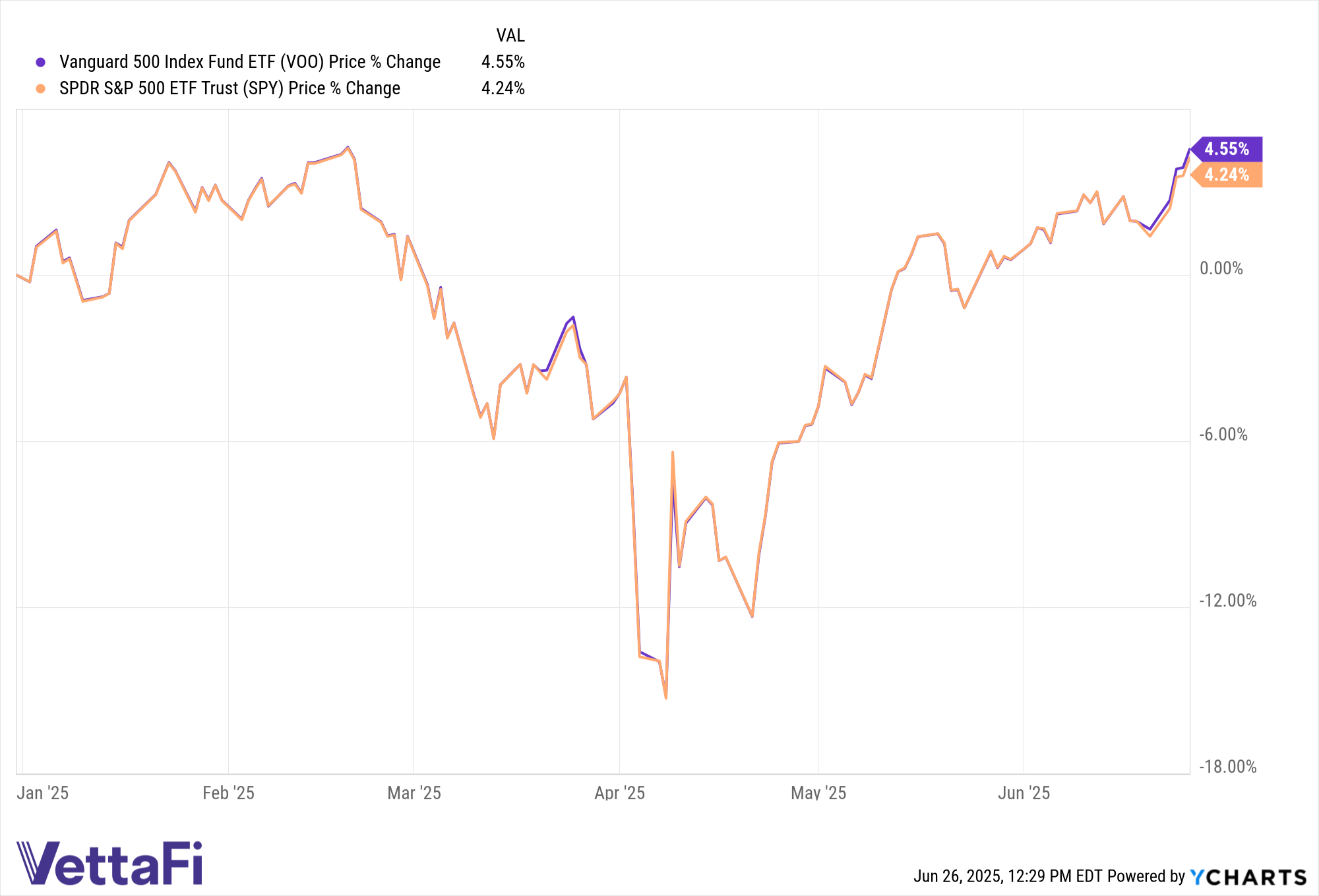
The S&P 500 Index has an impressive long-term track record of growth, often serving as the benchmark against which other investments are measured. Over several decades, the average annual return of the S&P 500 (including reinvested dividends) has historically been around 10-12%. VOO, by design, aims to replicate this performance. This consistent historical growth underscores the power of investing in a broad market index and allowing compounding to work its magic over extended periods. It’s important to remember, however, that past performance is not indicative of future results, and market conditions can and do change.
Inherent Market Risk
Despite its diversification, VOO is not without risk. As an equity ETF, its value is directly tied to the performance of the stock market. This means that if the overall U.S. stock market experiences a downturn due to economic recession, geopolitical events, or other macroeconomic factors, the value of VOO shares will decline. Investors in VOO should be prepared for market volatility and the potential for temporary losses, particularly over shorter investment horizons. While the S&P 500 has historically recovered from all major downturns, there is no guarantee that future market cycles will follow the same pattern. It is designed for investors who can stomach market fluctuations and maintain a long-term perspective.
Tracking Error (Minimal for VOO)
Tracking error refers to the difference between a fund’s returns and the returns of its underlying benchmark index. While VOO aims for perfect replication of the S&P 500, a minor tracking error can occur due to various factors, such as the fund’s expense ratio, transaction costs, cash drag, and differences in dividend reinvestment schedules. However, Vanguard is renowned for its highly efficient fund management, and VOO typically exhibits a very low tracking error, meaning its performance aligns remarkably closely with that of the S&P 500 index it seeks to mirror. This efficiency is another aspect that makes VOO a highly reliable investment vehicle.
Who Should Consider Investing in VOO?
Given its characteristics, VOO is an excellent fit for several categories of investors seeking a reliable and straightforward path to long-term wealth creation.
Long-Term Investors
VOO is particularly well-suited for investors with a long-term investment horizon, typically five years or more. Over extended periods, the S&P 500 has demonstrated its resilience and ability to generate substantial returns, allowing investors to ride out short-term market fluctuations and benefit from the power of compounding. For those saving for retirement, a down payment on a house many years away, or their children’s college education, VOO provides a stable and growth-oriented foundation.
Beginners and Passive Investors
For individuals new to investing, VOO offers an accessible and low-maintenance entry point into the stock market. It eliminates the need for complex research or active portfolio management, allowing beginners to gain immediate diversification without needing to pick individual stocks. Similarly, experienced passive investors who believe in the efficiency of the market and prefer to match market returns rather than trying to beat them will find VOO to be an ideal choice. It allows them to focus on other aspects of their financial life while their investments steadily grow.
Core Portfolio Holding
Many financial advisors recommend VOO, or a similar S&P 500 index fund, as a core holding within a broader, diversified portfolio. Its broad exposure to U.S. large-cap equities makes it a strong foundational component that can be complemented with other asset classes, such as international equity ETFs (e.g., VXUS for ex-U.S. developed and emerging markets), bond ETFs (e.g., BND for total U.S. bond market), or sector-specific funds, depending on an investor’s risk tolerance and financial goals. Using VOO as a core allows investors to build a comprehensive portfolio while keeping costs low.
Retirement Savers (IRAs, 401(k)s)
VOO is an excellent choice for tax-advantaged retirement accounts such as Individual Retirement Accounts (IRAs) and employer-sponsored 401(k)s. Its low expense ratio ensures that more of your money stays invested and grows tax-deferred or tax-free (in the case of Roth accounts). The long-term growth potential of the S&P 500 aligns perfectly with the multi-decade accumulation phase of retirement planning, making VOO a staple in many retirement portfolios.
How to Invest in VOO
Investing in VOO is a straightforward process, accessible to virtually anyone with a brokerage account.
Opening a Brokerage Account
The first step is to open an investment account with a reputable brokerage firm. Many popular online brokers, such as Vanguard (the issuer of VOO), Fidelity, Charles Schwab, E*TRADE, Robinhood, M1 Finance, and others, offer commission-free trading for ETFs, including VOO. The process typically involves completing an online application, verifying your identity, and linking a bank account for funding. You can choose between a taxable brokerage account, a Roth IRA, or a Traditional IRA, depending on your financial goals and tax situation.
Buying Shares
Once your account is funded, you can search for VOO using its ticker symbol (VOO) within your brokerage platform. You can then place a buy order, specifying the number of shares you wish to purchase or the dollar amount you want to invest (if your broker offers fractional share investing). For long-term investors, market orders (to buy at the current market price) are usually sufficient, or limit orders if you prefer to set a maximum price you’re willing to pay. Some brokers also allow for automatic investments, letting you set up recurring purchases of VOO.
Ongoing Management
One of the beauties of VOO is its minimal ongoing management requirements. Once purchased, there’s little need for active trading or rebalancing (unless you are part of a larger, more complex portfolio). VOO automatically reinvests dividends within the fund, or you can opt to have dividends paid out as cash or reinvested into additional VOO shares, depending on your brokerage’s options. Periodically reviewing your overall asset allocation and ensuring VOO still fits within your broader financial plan is good practice, but the fund itself requires virtually no day-to-day oversight.
In conclusion, VOO stands as an exemplary Exchange Traded Fund, embodying a powerful yet simple investment philosophy. It is a low-cost, broadly diversified, and highly liquid vehicle for investing in the performance of the S&P 500, making it an indispensable tool in the “Money” niche for personal finance and investing. Whether you are a beginner taking your first steps into the market, a seasoned investor building a core portfolio, or a diligent saver planning for retirement, VOO offers a compelling and efficient pathway to long-term wealth accumulation by harnessing the collective strength of America’s leading companies.
aViewFromTheCave is a participant in the Amazon Services LLC Associates Program, an affiliate advertising program designed to provide a means for sites to earn advertising fees by advertising and linking to Amazon.com. Amazon, the Amazon logo, AmazonSupply, and the AmazonSupply logo are trademarks of Amazon.com, Inc. or its affiliates. As an Amazon Associate we earn affiliate commissions from qualifying purchases.