
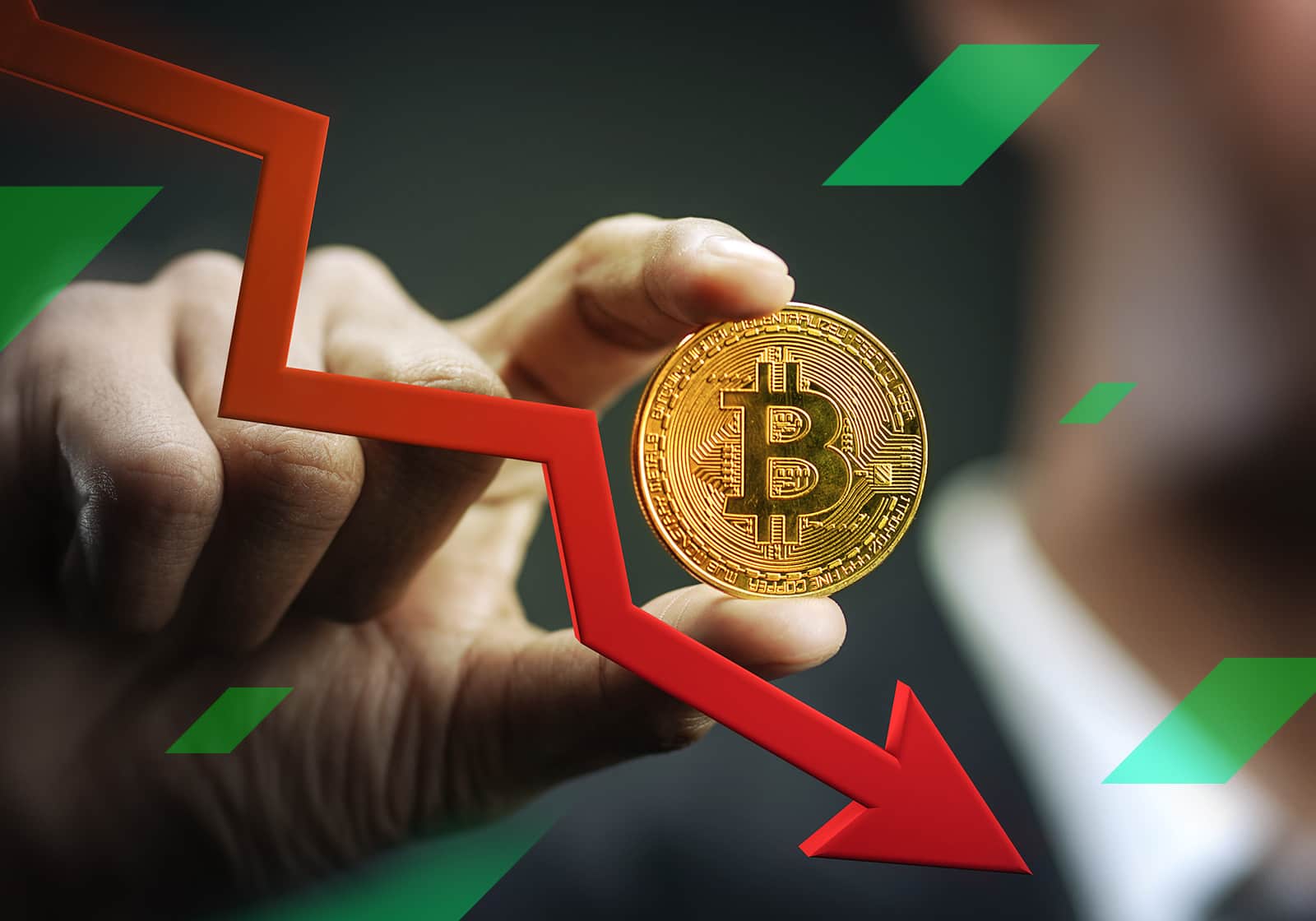
The world of cryptocurrency is no stranger to volatility, but the sustained downward pressure experienced by Bitcoin (BTC) has many investors and market observers asking a fundamental question: “Why is BTC falling?” What appears to be a simple query, however, unravels into a complex tapestry of macroeconomic shifts, market-specific dynamics, broader ecosystem challenges, and deeply entrenched investor psychology. Understanding these multifaceted factors is crucial for anyone navigating the digital asset landscape, moving beyond mere price action to grasp the underlying financial currents driving the market.
Bitcoin, heralded by many as “digital gold” and a hedge against inflation, has paradoxically struggled in an era marked by rising inflation and economic uncertainty. Its recent performance highlights its evolving role within the global financial system and underscores its sensitivity to macro forces, liquidity conditions, and regulatory environments. This article delves into the primary financial and economic reasons behind Bitcoin’s current struggles, offering an insightful perspective on the forces at play.

Macroeconomic Headwinds and Interest Rate Policies
One of the most significant overarching influences on Bitcoin’s price, and indeed the broader cryptocurrency market, stems from the prevailing global macroeconomic environment. For years, digital assets flourished in a period of unprecedented monetary easing and low interest rates. This era of “easy money” is now decisively over, creating substantial headwinds.
Central Bank Tightening and Quantitative Easing Reversal
Central banks worldwide, led by the U.S. Federal Reserve, have embarked on aggressive monetary tightening cycles to combat stubbornly high inflation. This involves two primary mechanisms: raising benchmark interest rates and quantitative tightening (QT). When interest rates increase, the cost of borrowing goes up across the economy. This makes riskier assets, such as cryptocurrencies, less attractive because investors can now earn a relatively “risk-free” return on safer assets like government bonds or even high-yield savings accounts. The opportunity cost of holding volatile assets like Bitcoin rises significantly.
Furthermore, quantitative tightening involves central banks reducing their balance sheets by allowing previously purchased bonds to mature without reinvestment, effectively draining liquidity from the financial system. During quantitative easing (QE), the influx of new money often found its way into riskier assets, inflating their prices. Reversing this process means less capital is available to chase speculative investments, leading to a general contraction in asset valuations, with highly speculative assets like Bitcoin often experiencing the sharpest corrections. This shift from an abundance of cheap capital to a more constrained, expensive lending environment fundamentally alters investor appetite for risk.
Inflationary Pressures and Consumer Sentiment
While Bitcoin was initially touted as an inflation hedge, its performance during this period of high inflation has challenged that narrative. High inflation erodes the purchasing power of consumers and businesses, reducing disposable income and increasing operational costs. When the cost of living surges, households become more cautious with their spending and investments, often prioritizing essential goods and services over speculative assets.
This shift in consumer sentiment translates into reduced capital flowing into investment markets, particularly those perceived as high-risk. Investors may also need to liquidate portions of their portfolios, including crypto holdings, to cover rising living expenses or unexpected costs. The overall sentiment of economic uncertainty created by persistent inflation contributes to a “risk-off” environment, where investors prefer to hold cash or lower-volatility assets, further pressuring BTC’s price.
Global Economic Slowdown and Recession Fears
Compounding the effects of central bank tightening and inflation are growing concerns about a global economic slowdown, potentially leading to a recession. Leading economic indicators, such as manufacturing output, consumer confidence, and corporate earnings forecasts, have shown signs of weakening in major economies. Recessions typically involve reduced consumer spending, declining corporate profits, and increased unemployment.
In anticipation of or during a recession, investors tend to reduce exposure to assets highly correlated with economic growth or those considered highly speculative. Bitcoin, despite its unique characteristics, has largely traded as a risk-on asset, akin to growth stocks in the tech sector. Therefore, fears of a recession lead to a “flight to safety,” where capital flows out of volatile assets into traditional safe havens like the U.S. dollar, gold, or short-term government bonds. This widespread de-risking strategy by institutional and retail investors alike exerts downward pressure on BTC and the broader crypto market.
Bitcoin-Specific Dynamics and Market Structure
Beyond the macroeconomic panorama, several factors inherent to Bitcoin’s market structure and its regulatory standing play a crucial role in its price movements, distinguishing its behavior from other asset classes.
Regulatory Uncertainty and Enforcement Actions
The regulatory landscape surrounding cryptocurrencies remains a significant source of uncertainty, creating apprehension among institutional investors and impacting market stability. Governments and financial watchdogs globally are grappling with how to classify, regulate, and supervise digital assets. In the United States, debates persist over whether cryptocurrencies like Bitcoin should be classified as commodities, securities, or a new asset class entirely. This ambiguity creates a challenging environment for businesses operating in the crypto space and for large financial institutions considering deeper involvement.
Recent enforcement actions by regulatory bodies against exchanges, stablecoin issuers, and other crypto entities further amplify this uncertainty. Each new lawsuit or regulatory guidance can send ripples of fear through the market, as investors worry about potential restrictions on trading, staking, or even ownership. The lack of a clear, comprehensive regulatory framework can deter institutional capital, which typically requires a stable and predictable legal environment before committing significant funds. This “regulatory FUD” (Fear, Uncertainty, Doubt) often manifests as selling pressure.
Liquidation Cascades and Leverage
The cryptocurrency market is known for its high degree of leverage, particularly in derivative markets. Traders often use borrowed capital to amplify their positions, hoping to magnify gains. While leverage can increase profits in a bull market, it can lead to devastating losses and market instability during downturns. When prices start to fall, highly leveraged positions can reach their liquidation thresholds.
A forced liquidation occurs when an exchange automatically closes a trader’s position to prevent further losses, typically by selling their underlying assets. If a significant number of leveraged positions are liquidated simultaneously, it creates a cascade effect: the forced selling pushes prices even lower, triggering more liquidations, and so on. This feedback loop can rapidly accelerate price declines, turning moderate corrections into sharp crashes. The interconnectedness of derivative markets and spot markets means that liquidation cascades can have a profound impact on the price of BTC, exacerbating selling pressure far beyond what might be justified by fundamental factors alone.
Institutional Investor Sentiment and De-risking
The 2020-2021 bull run saw significant entry of institutional investors into the Bitcoin market, providing substantial capital and perceived legitimacy. However, these institutions, ranging from hedge funds to public companies holding BTC on their balance sheets, operate with different risk parameters than retail investors. In a macro environment characterized by rising interest rates, inflation, and recession fears, these institutions are often mandated to de-risk their portfolios.
This de-risking typically involves reducing exposure to high-beta, volatile assets like Bitcoin in favor of safer, more liquid investments. When institutional players decide to trim their crypto holdings, the sheer volume of their capital can create substantial selling pressure. Their withdrawal or even cautious approach can signal a lack of confidence, further dampening overall market sentiment and making it harder for BTC to find a floor. The ebb and flow of institutional interest is a powerful determinant of Bitcoin’s price trajectory.
Broader Cryptocurrency Market Contagion and Ecosystem Events
Bitcoin does not exist in a vacuum; it is the undisputed leader of a vast and interconnected cryptocurrency ecosystem. Events within this broader market, particularly those involving major players or significant financial failures, can have a contagious effect on BTC’s price.
Fallout from Past Scandals (e.g., FTX, Terra/Luna)
The crypto market has been rocked by several high-profile failures and scandals in recent years, most notably the collapse of the Terra/Luna ecosystem and the FTX exchange. These events led to billions of dollars in investor losses, widespread liquidations, and a severe erosion of trust across the industry. When a major entity collapses, it creates a ripple effect: creditors face losses, other companies with exposure to the failed entity struggle, and overall market confidence plummets.
The long-term fallout from these scandals continues to impact BTC. They instilled a deeper sense of caution among investors, making them more hesitant to allocate capital to digital assets. They also led to a significant deleveraging across the industry, with many funds and institutions reducing their exposure to crypto to mitigate risk. This lingering trauma has made the market more susceptible to fear and less resilient to downward price movements, as investors are quicker to sell in response to negative news.
Stablecoin De-pegs and FUD
Stablecoins are cryptocurrencies designed to maintain a stable value, typically pegged to fiat currencies like the U.S. dollar. They are crucial for liquidity and trading within the crypto ecosystem. While Bitcoin is not a stablecoin, issues with major stablecoins can trigger widespread panic and affect BTC’s price. For example, the de-pegging of TerraUSD (UST) in May 2022 was a catalyst for a significant market crash that pulled Bitcoin down with it.
Even temporary de-pegs or rumors surrounding the solvency of stablecoin issuers can generate immense FUD. Investors might fear that their stablecoin holdings could lose value, leading them to frantically sell other crypto assets, including BTC, to convert to fiat currency or more perceivedly stable assets. This fear-driven selling, combined with reduced confidence in the broader crypto financial infrastructure, directly contributes to downward pressure on Bitcoin.
Miner Selling Pressure
Bitcoin mining is an energy-intensive process that requires significant capital investment in specialized hardware and electricity. Miners earn rewards in BTC for validating transactions. While miners are often long-term holders, they also have substantial operational costs that need to be covered, typically in fiat currency.
When the price of Bitcoin falls, mining becomes less profitable. If the cost of mining a Bitcoin exceeds its market value, miners may be forced to sell a portion of their existing BTC holdings to cover their electricity bills, equipment upgrades, or other overheads. This “miner capitulation” adds significant selling pressure to the market, especially when large mining operations liquidate substantial amounts of Bitcoin. In extended bear markets, miner selling can become a consistent drag on price recovery, as the supply coming from miners continues to outweigh demand.
Investor Psychology and Market Cycles
Finally, the inherent psychology of market participants and the cyclical nature of financial markets play a critical, albeit often irrational, role in why BTC is falling.
Fear, Greed, and the Psychology of Bear Markets
Financial markets are profoundly influenced by human emotions, primarily fear and greed. During bull markets, greed often drives investors to take on more risk, chase higher returns, and dismiss warning signs. Conversely, in bear markets, fear becomes the dominant emotion. The fear of losing money, or “fear of missing out on the exit” (FOMOE), can lead to panic selling, often at irrational prices.
This psychological dynamic creates a negative feedback loop. As prices fall, more investors become fearful, leading them to sell, which further drives down prices, triggering more fear. This self-fulfilling prophecy can exacerbate downturns, making it difficult for the market to find a bottom even when fundamental indicators might suggest otherwise. The widespread narratives of “crypto winter” or “bear market” can significantly dampen investor confidence and perpetuate selling pressure.
The Cyclical Nature of Bitcoin
Despite its relatively short history, Bitcoin has demonstrated a distinct cyclical pattern characterized by periods of explosive growth (bull markets) followed by prolonged and often steep corrections (bear markets). These cycles are influenced by factors such as the halving events, technological advancements, and the broader economic climate.
While painful for current holders, bear markets are a normal, even necessary, part of this cyclical process. They shake out weaker projects, force innovation, and allow the market to consolidate before the next growth phase. Understanding that corrections are part of Bitcoin’s journey can help temper emotional responses. However, during the downturn, the recognition of this cyclical nature doesn’t prevent the immediate financial impact, and the ‘falling’ aspect is simply part of this larger market re-evaluation. The current fall is thus also a manifestation of Bitcoin entering a new phase of its market cycle, one that is perhaps more mature but still susceptible to its inherent volatility.

Conclusion
The decline in Bitcoin’s price is not attributable to a single factor but rather a complex confluence of powerful forces. The aggressive monetary tightening by central banks, driven by persistent inflation and fears of a global recession, has created a significant “risk-off” environment that disfavors speculative assets. Simultaneously, Bitcoin’s market has contended with specific challenges, including ongoing regulatory uncertainty, the destabilizing effects of liquidation cascades fueled by excessive leverage, and a shift in institutional investor sentiment towards de-risking.
Furthermore, the lingering impact of past market scandals, the contagion risks from stablecoin issues, and the continuous selling pressure from miners facing profitability challenges have all contributed to the downward trajectory. Underlying these financial and market-specific drivers is the pervasive psychology of fear that defines bear markets, amplified by Bitcoin’s inherent cyclical volatility.
For investors, understanding these intertwined factors is paramount. It moves the discussion beyond mere price charts to a deeper appreciation of the financial and economic realities shaping the digital asset space. While Bitcoin’s long-term potential continues to be debated, its current struggle underscores its integration into, and vulnerability to, the dynamics of the broader global financial system. Navigating this environment requires a professional, insightful, and financially prudent approach, recognizing that the “why” behind BTC’s fall is as multifaceted as the asset itself.
aViewFromTheCave is a participant in the Amazon Services LLC Associates Program, an affiliate advertising program designed to provide a means for sites to earn advertising fees by advertising and linking to Amazon.com. Amazon, the Amazon logo, AmazonSupply, and the AmazonSupply logo are trademarks of Amazon.com, Inc. or its affiliates. As an Amazon Associate we earn affiliate commissions from qualifying purchases.