
In the dynamic world of personal finance and investing, understanding the cost structures of your chosen brokerage is paramount. Robinhood burst onto the scene with a revolutionary promise: commission-free trading. This innovation significantly lowered the barrier to entry for millions of new investors, making it a household name in modern financial tools. However, while the headline “commission-free” is powerful, the reality of selling assets on any platform, including Robinhood, involves a nuanced look beyond the simple absence of a direct commission. For savvy investors and newcomers alike, unraveling the actual costs associated with liquidating your investments on Robinhood is crucial for optimizing returns and managing your financial strategy effectively. This article delves into the specifics, dissecting the various scenarios where costs might arise and providing a comprehensive guide to what you can expect when you decide it’s time to sell.
Understanding Robinhood’s Commission-Free Model
Robinhood’s core appeal lies in its commitment to commission-free trading for stocks, exchange-traded funds (ETFs), and options. This model disrupted traditional brokerage services, which historically charged a flat fee or a percentage per trade. For many, this eliminated a significant barrier, allowing them to trade more frequently or with smaller sums without seeing their profits eroded by transaction costs.
The Zero-Commission Revolution
Before Robinhood, even discount brokers charged a few dollars per trade, which could quickly add up for active traders or those with modest portfolios. Robinhood’s introduction of zero-commission trading for equities, ETFs, and options was a game-changer. It forced much of the industry, including established giants like Fidelity and Charles Schwab, to follow suit, fundamentally reshaping the retail investing landscape. This meant that when you buy or sell shares of a company, an ETF, or even an options contract, Robinhood itself does not impose a direct fee for facilitating that transaction. This is a significant advantage, particularly for investors focused on long-term growth who might otherwise incur substantial costs over decades of portfolio adjustments.
What “Commission-Free” Truly Means
While “commission-free” accurately describes Robinhood’s direct charge for executing trades, it’s essential to understand its precise scope. It means that Robinhood does not charge you a per-share fee, a flat transaction fee, or any other direct brokerage commission when you place a market, limit, stop, or stop-limit order for eligible securities. This applies whether you are buying or selling. This transparency in its primary trading function is what attracts many users. However, it’s crucial not to equate “commission-free” with “entirely free.” There are still regulatory requirements and other potential indirect costs that can apply, which are standard across the industry, even for other zero-commission brokers.
Diving Deeper: Are There Any Fees When Selling on Robinhood?
The short answer is “yes,” but these are not commissions levied by Robinhood. Instead, they are regulatory fees or other indirect costs that are often passed on to the investor. Understanding these is vital for a complete picture of your transaction costs.
Regulatory Transaction Fees (SEC & TAF)
When you sell shares of stock or ETFs, especially in larger quantities, two specific regulatory fees can apply, though they are often so small they might go unnoticed by retail investors unless they are making very large sales. These fees are mandated by financial regulators, not by Robinhood, and are typically passed through directly to the seller.
- Securities and Exchange Commission (SEC) Fee: This fee is charged by the SEC for sales of securities. It’s a very small fee, currently a fraction of a cent per $1,000 of principal sold. For instance, as of recent rates, it might be around $8 per $1,000,000 in sales. Robinhood collects and remits this fee to the SEC. Its purpose is to help fund the SEC’s operations and oversight of the securities markets. You will only see this fee on sales, not on purchases.
- FINRA Trading Activity Fee (TAF): The Financial Industry Regulatory Authority (FINRA) also imposes a small fee on sell orders for equities. The TAF is typically a very small amount per share, with a maximum cap per transaction. This fee contributes to FINRA’s regulatory efforts and market surveillance. Like the SEC fee, Robinhood passes this fee through directly to the investor when they sell.
It’s important to note that for most everyday retail transactions, especially those involving smaller portfolios, these fees are often so minuscule that they might not even register as a full cent and are rounded down or absorbed by the broker. However, for very large institutional-sized sales, they can become more noticeable.
Options Contract Regulatory Fees
While Robinhood offers commission-free options trading, certain regulatory fees still apply to options contracts, primarily when opening a position. When selling an options contract, if it’s to close an existing position, you won’t typically incur a per-contract fee from Robinhood. However, if you are writing (selling to open) options, there can be very small regulatory fees depending on the exchange and the type of option. Robinhood clearly discloses these, and they are usually just a few cents per contract. The key takeaway for selling options to close a position is that it remains commission-free from Robinhood’s perspective, without additional regulatory fees like the SEC or TAF on the underlying value, as those apply to equity sales.
ACATS Transfer Fees
If you decide to sell all your assets on Robinhood because you want to move your entire brokerage account to another institution, you might encounter an “Automated Customer Account Transfer Service” (ACATS) fee. This is not a fee for selling individual assets but rather a fee for transferring your entire account (or a portion of it) out of Robinhood to another brokerage. Robinhood typically charges a flat fee (e.g., $75) for outgoing ACATS transfers. While not directly a “selling” fee, it’s a cost associated with liquidating your position with Robinhood as your custodian. If you simply sell all your assets and withdraw the cash, there is no ACATS fee.
Crypto Spreads (Indirect Cost)
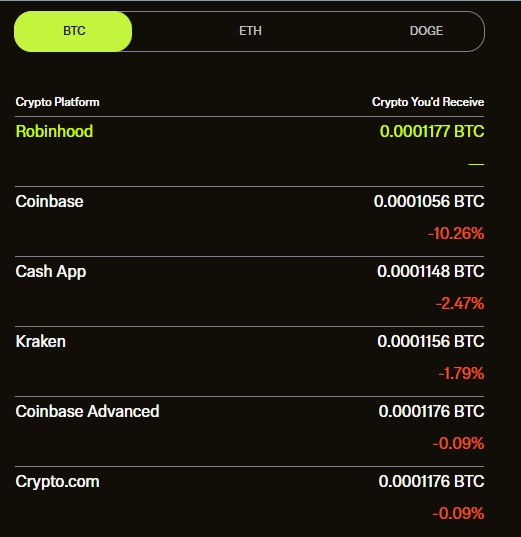
Robinhood also offers commission-free cryptocurrency trading. However, for cryptocurrency transactions, the cost isn’t a direct commission but rather an indirect cost known as the “spread.” When you buy or sell crypto on Robinhood, you’re quoted a price that includes a small spread between the bid and ask price. This spread is how Robinhood makes money on crypto trades, as they internalize the orders and provide a slightly less favorable price than the absolute market price. When you sell crypto, the price you receive is slightly lower than the true market price at that instant, with the difference being the spread. This is a common practice among crypto exchanges and is essentially an indirect fee for the service. While not a “commission to sell,” it is a cost incurred upon selling.
Navigating Potential Costs Beyond Commissions
Beyond direct regulatory fees, investors should be aware of other financial considerations and potential costs that, while not “selling fees” in the traditional sense, can impact the net proceeds of their sales or their overall financial picture.
Instant Deposit Limits and Withdrawal Speed
Robinhood offers “Instant Deposits” for funding accounts, allowing users to trade immediately with funds that haven’t fully cleared from their bank. When you sell assets, the proceeds are typically available for reinvestment instantly. However, if you wish to withdraw those funds to your bank, there are limits and processing times. Standard withdrawals are usually free but can take 3-5 business days to process and reach your bank account. There is no fee for standard withdrawals, but if you need faster access (which Robinhood generally doesn’t offer for bank transfers beyond their standard processing), that might be a service for which other platforms could charge. This isn’t a selling fee, but rather a liquidity consideration.

Robinhood Gold Membership Costs
Robinhood Gold is a premium subscription service that offers features like larger instant deposits, access to professional research, and most notably, margin investing. If you are a Robinhood Gold member and are utilizing margin (borrowing money from Robinhood to invest), selling assets might be necessary to meet margin calls or reduce your margin debt. While Robinhood does not charge a fee for selling to cover margin, you are paying a monthly subscription fee for Gold (e.g., $5/month) and interest on any margin loan utilized. The interest rate on margin loans varies based on market rates and the amount borrowed. So, while selling itself is free, using margin comes with its own set of costs that can implicitly be linked to the decision to sell.
Tax Implications of Selling
One of the most significant financial considerations when selling assets on Robinhood (or any brokerage) is the tax implication. This is not a fee charged by Robinhood, but rather a government levy on your investment gains.
- Capital Gains Tax: If you sell an investment for more than you paid for it, you realize a capital gain. This gain is subject to taxation.
- Short-Term Capital Gains: If you held the asset for one year or less before selling, the gain is taxed at your ordinary income tax rate, which can be as high as 37% (as of current tax law).
- Long-Term Capital Gains: If you held the asset for more than one year before selling, the gain is taxed at a more favorable long-term capital gains rate, typically 0%, 15%, or 20% depending on your income level.
- Capital Losses: Conversely, if you sell an investment for less than you paid for it, you realize a capital loss. Capital losses can be used to offset capital gains and, to a limited extent ($3,000 per year), offset ordinary income. This can be a valuable tax-saving strategy, often referred to as “tax-loss harvesting.”
Robinhood will provide you with a Form 1099-B at the end of the year, detailing all your sales and their associated cost bases, which is essential for reporting your capital gains and losses to the IRS. Understanding these tax implications is crucial for maximizing your net proceeds after selling.
Comparing Robinhood’s Fee Structure with Competitors
Robinhood’s pioneering commission-free model has largely been adopted across the industry for stocks, ETFs, and often options. However, subtle differences still exist, making a comparative analysis insightful.
Traditional Brokerages vs. Discount Brokers
Before the commission-free era, traditional full-service brokerages charged higher commissions but offered extensive research, personalized advice, and a broader range of services. Discount brokers charged lower commissions but provided less hand-holding. Today, the lines are blurred. Major discount brokers like Charles Schwab, Fidelity, and Vanguard now also offer commission-free trading for stocks and ETFs, directly matching Robinhood’s core offering. When it comes to selling, the regulatory fees (SEC, TAF) are universal and apply across all these platforms. The primary differentiators often lie in:
- Options Contract Fees: While many offer commission-free options trading, some platforms might still charge a small per-contract fee (e.g., $0.65 per contract). Robinhood typically doesn’t charge this, making it competitive for options traders.
- Mutual Funds: Robinhood does not offer mutual funds. Brokerages that do may have specific transaction fees for buying or selling certain mutual funds, especially those outside of their “no-transaction-fee” (NTF) lists.
- International Trading: Robinhood has limited international trading capabilities. Brokerages that offer access to foreign markets often charge currency conversion fees or higher commissions for international trades.
- Advisory Services: Full-service brokerages might charge advisory fees for managed accounts, which is a different cost structure entirely.
Other Popular Zero-Commission Platforms
Beyond the legacy players, other modern platforms like Webull and M1 Finance also operate with commission-free models similar to Robinhood.
- Webull: Very similar to Robinhood in its fee structure for stocks, ETFs, and options (commission-free with regulatory fees). It also offers crypto trading with a spread. Webull often targets more active traders with advanced charting tools.
- M1 Finance: Focuses on automated investing and “pies.” While it’s commission-free for trading, its model is built around portfolio rebalancing rather than frequent active trading. It doesn’t charge for selling specific slices within a pie, but its overall structure encourages a different investing philosophy.
In essence, when it comes to the act of selling common assets like stocks and ETFs, most major platforms now align with Robinhood’s zero-commission approach, meaning the minimal regulatory fees are the only direct charges. The true differences emerge in other areas like crypto spreads, margin rates, available asset classes, and ancillary services.
Best Practices for Managing Costs on Robinhood
Navigating the costs associated with investing, even on a platform designed for low fees, requires diligence and strategic awareness.
Understanding Fee Disclosures
Robinhood, like all regulated brokerages, is legally required to disclose its fees clearly. Always refer to Robinhood’s official fee schedule and disclosures, which are typically found on their website or within the app’s support section. These documents will provide the most up-to-date information on any potential charges, including regulatory fees, ACATS transfer fees, and Robinhood Gold subscription costs. Being proactive in reviewing these ensures you are never surprised by a cost.
Strategic Portfolio Management
Thoughtful portfolio management can implicitly help manage costs. While frequent trading is commission-free, it can lead to higher short-term capital gains taxes if you’re constantly realizing profits within a year. Consider:
- Long-Term Investing: Holding investments for over a year qualifies them for lower long-term capital gains tax rates, significantly reducing the tax burden when you do decide to sell.
- Tax-Loss Harvesting: Strategically selling losing investments can offset capital gains and even a limited amount of ordinary income, effectively reducing your overall tax liability. This isn’t a “no-fee” strategy but a tax-efficient one that leverages the concept of selling.
- Position Sizing: Making fewer, larger trades rather than many small ones can sometimes simplify tracking and minimize the impact of any per-share regulatory fees, though for Robinhood, these are often negligible.
Utilizing Cash Management Features
Robinhood also offers cash management features that can impact how you handle funds post-sale. For example, their program allows uninvested cash to earn interest (often tied to a partner bank). While not directly a “selling fee,” ensuring your cash isn’t sitting idle in a non-interest-bearing account after a sale can contribute to your overall financial health and offset any minor costs incurred.
In conclusion, Robinhood remains a highly competitive platform for its zero-commission approach to buying and selling stocks, ETFs, and options. When you sell assets on Robinhood, you will primarily encounter minimal, unavoidable regulatory fees (SEC and TAF) for equity sales, which are standard across the industry. Cryptocurrency sales involve an indirect cost via the spread. While direct selling commissions are a relic of the past for these asset classes on Robinhood, understanding potential costs like ACATS transfer fees, margin interest from Robinhood Gold, and critically, the tax implications of your capital gains, is essential for every investor looking to optimize their financial outcomes. By staying informed and employing strategic financial practices, you can effectively manage the true costs of investing and selling on Robinhood.
aViewFromTheCave is a participant in the Amazon Services LLC Associates Program, an affiliate advertising program designed to provide a means for sites to earn advertising fees by advertising and linking to Amazon.com. Amazon, the Amazon logo, AmazonSupply, and the AmazonSupply logo are trademarks of Amazon.com, Inc. or its affiliates. As an Amazon Associate we earn affiliate commissions from qualifying purchases.