
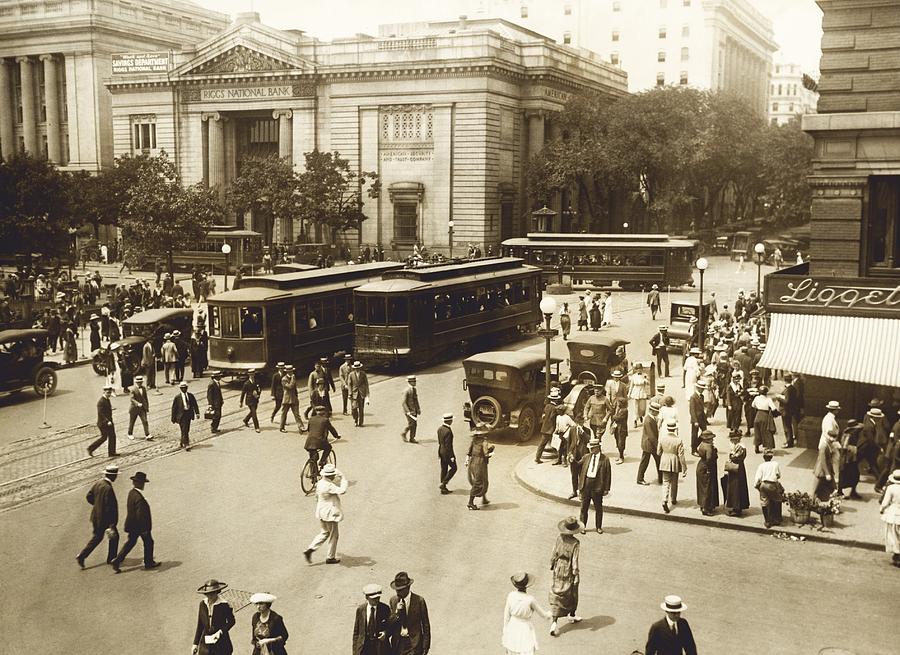
The early 20th century, a period roughly spanning from 1900 to 1940, represented a crucible for the global financial system, forging many of the economic structures, regulatory frameworks, and investment paradigms we recognize today. Far from being a mere chronological demarcation, it was an era defined by profound shifts in capital markets, industrial production, international finance, and personal wealth management. Understanding this epoch means delving into its unique financial character, marked by both unprecedented growth and devastating crises.
Defining the Financial Epoch: 1900-1940
The turn of the century ushered in an age where industrial capitalism reached new heights, transforming economies from agrarian roots to manufacturing powerhouses. This era, extending through the Great Depression, fundamentally reshaped how money was earned, invested, and managed on both a national and international scale. It laid the groundwork for modern business finance, corporate structures, and the very concept of a regulated financial market.
The Dawn of Industrial Capitalism and Corporate Finance
At the beginning of the 20th century, the Second Industrial Revolution was in full swing, driving massive capital accumulation and the growth of colossal corporations. Industries like steel, oil, automotive, and chemicals saw the emergence of titans such as U.S. Steel, Standard Oil, and Ford Motor Company. These entities required immense capital, leading to the sophisticated development of stock and bond markets. Initial public offerings (IPOs), though not termed as such, facilitated the raising of vast sums from public investors, marking a shift from private or family financing to broad public ownership. For the savvy investor, identifying and backing these burgeoning industrial giants offered unprecedented opportunities for wealth creation, albeit with nascent regulatory oversight. This period also saw the consolidation of banks and the rise of investment banks, which played pivotal roles in underwriting corporate securities and facilitating mergers and acquisitions. The interplay between industrial growth and financial engineering was a defining characteristic, showcasing how capital was effectively deployed to fuel economic expansion.
Evolving Financial Structures and International Finance
The early 20th century also witnessed the further solidification of the gold standard, which underpinned international trade and finance, providing a fixed exchange rate system that, for a time, fostered stability and predictability in cross-border transactions. However, this system also faced severe tests during times of war and economic crisis. Central banks, like the newly established Federal Reserve in the United States (1913), began to take on more significant roles in managing monetary policy, interest rates, and the liquidity of banking systems. While their powers were less defined than today, their inception marked a critical step towards modern financial governance. For businesses and investors operating internationally, understanding the nuances of the gold standard and the emerging roles of national central banks was crucial for managing currency risk and facilitating global commerce. The financial architecture was becoming increasingly complex, moving beyond simple bilateral trade to a more integrated, albeit fragile, global financial network.
Economic Booms and Bursts: The Roaring Twenties and the Great Depression
No discussion of the early 20th century’s financial landscape is complete without examining the dramatic swing from unprecedented prosperity to catastrophic collapse. This period offers invaluable lessons in market psychology, the dangers of speculative bubbles, and the profound impact of economic downturns on personal and business finance.
Speculation, Innovation, and Prosperity: The Roaring Twenties
Following the end of World War I, the 1920s erupted into an era of immense economic growth and social change, colloquially known as the “Roaring Twenties.” This decade saw widespread adoption of consumer goods like automobiles, radios, and household appliances, driving demand and corporate profits. For investors, the stock market became an irresistible magnet. Easy credit, coupled with widespread optimism, fueled a speculative bubble of extraordinary proportions. Margin buying, where investors purchased stocks with borrowed money, became rampant, amplifying both potential gains and losses. New financial products and simplified access to markets drew in a broader range of the public, eager to partake in the perceived endless climb of stock values. This period underscores how technological innovation and changing consumer habits can drive significant economic expansion, but also how unchecked speculation can detach asset prices from underlying economic realities. Many learned their first hard lessons in personal finance and investing during this time.
The Cataclysm of 1929 and Its Aftermath
The speculative frenzy culminated in the Wall Street Crash of October 1929, an event that triggered the Great Depression, the most severe economic downturn in modern history. The crash exposed the fragility of the financial system, leading to widespread bank failures, massive unemployment, and a collapse in international trade. For individuals, personal savings evaporated, investment portfolios were decimated, and the ability to secure loans became nearly impossible. Businesses faced plummeting demand, forcing layoffs and bankruptcies. The economic contraction was global, demonstrating the interconnectedness of international finance even in a less globalized world. Governments and central banks initially struggled to respond effectively, lacking the tools and understanding to mitigate such a profound crisis. This catastrophic event forced a re-evaluation of financial regulation, the role of government in economic stabilization, and the fundamental principles of prudent investing, creating a generation deeply cautious about financial risk.

Navigating Global Conflict and Economic Restructuring
The early 20th century was punctuated by global conflicts that fundamentally altered financial systems, national economies, and the relationship between states and their treasuries. World War I, in particular, tested the resilience of financial markets and introduced new mechanisms of war finance.
War Finance and Debt: World War I’s Economic Impact
The outbreak of World War I in 1914 imposed unprecedented financial demands on belligerent nations. Governments resorted to massive borrowing, issuing war bonds that appealed to both institutional and individual investors as a patriotic duty. Taxation also increased dramatically. The scale of this finance pushed nations off the gold standard, allowing them to print more money to fund the war effort, leading to inflation. For individuals, purchasing war bonds became a common way to contribute to the war, providing a secure, albeit modest, return. This period highlighted the immense capacity of governments to mobilize capital during times of crisis, but also the long-term economic burden of national debt and the inflationary pressures of printing money. The conflict reoriented industrial production towards military needs, creating boom-and-bust cycles in specific sectors.
Post-War Economic Shifts and Reparations
The end of World War I brought new financial challenges, particularly concerning war reparations imposed on defeated nations like Germany. The attempt to extract massive payments led to hyperinflation in Germany and significantly destabilized the global financial system. International conferences and agreements, such as the Dawes Plan and the Young Plan, were efforts to restructure these debts and stabilize European economies, showcasing early attempts at coordinated international financial diplomacy. For investors, the post-war period was fraught with uncertainty regarding currency stability and sovereign risk, particularly in Europe. The economic aftershocks of the war contributed to the conditions that would eventually lead to the Great Depression, demonstrating the complex interplay between geopolitics, national treasuries, and global financial stability.
Emergence of Modern Financial Regulation and Tools
The financial turmoil of the early 20th century, particularly the Great Depression, spurred significant legislative and institutional changes aimed at stabilizing financial markets and protecting investors. These reforms laid the groundwork for much of today’s regulatory environment.
The Birth of Central Banking Influence and Monetary Policy
The Federal Reserve, established in 1913, initially operated with limited understanding of its full powers. However, the crises of the 1920s and 1930s underscored the critical need for a centralized body capable of managing the money supply, overseeing banks, and acting as a lender of last resort. The experience of the Great Depression prompted a dramatic expansion of the Fed’s role and influence, laying the foundation for modern monetary policy tools, such as open market operations and reserve requirements, to manage economic cycles. For businesses, the actions of the central bank began to have a direct impact on credit availability and interest rates, influencing investment decisions. For individuals, the stability of the banking system became paramount, and the Fed’s role in ensuring this stability grew in importance.
Early Investment Strategies and Challenges
Before comprehensive regulation, investing was a more opaque and risky endeavor. The early 20th century saw the rise of stockbrokers and investment advisors, but without clear ethical guidelines or robust oversight. The excesses leading up to 1929 exposed widespread fraudulent practices and conflicts of interest. In response, landmark legislation like the Securities Act of 1933 and the Securities Exchange Act of 1934 were enacted in the U.S. These acts mandated greater transparency in financial markets, established the Securities and Exchange Commission (SEC) to regulate exchanges and investment firms, and provided protections for investors. This marked a profound shift towards a more regulated and transparent investment environment, fundamentally changing how individuals and institutions could participate in capital markets. Early investment strategies often revolved around identifying undervalued industrial assets, but the period taught invaluable lessons about diversification, risk management, and the importance of due diligence, all concepts that remain cornerstones of sound financial planning today.

Enduring Lessons for Today’s Financial Landscape
The early 20th century was a formative period for global finance, demonstrating both the immense potential for wealth creation through industrial and market innovation, and the devastating consequences of unchecked speculation and systemic fragility. The lessons learned from the panics of the early 1900s, the speculative boom of the 1920s, and the subsequent Great Depression continue to resonate. They underscore the importance of robust financial regulation, the critical role of central banks in maintaining stability, the dangers of asset bubbles, and the enduring need for prudent personal and business financial management. Many of the tools, institutions, and concepts we use in financial analysis, investment, and economic policy today find their roots in the challenges and transformations of this pivotal four-decade span.
aViewFromTheCave is a participant in the Amazon Services LLC Associates Program, an affiliate advertising program designed to provide a means for sites to earn advertising fees by advertising and linking to Amazon.com. Amazon, the Amazon logo, AmazonSupply, and the AmazonSupply logo are trademarks of Amazon.com, Inc. or its affiliates. As an Amazon Associate we earn affiliate commissions from qualifying purchases.