
In an increasingly digitized and interconnected world, the simple act of “payment” has evolved from a straightforward exchange of goods or services for currency into a complex, multifaceted financial phenomenon. At its core, a payment represents the transfer of value from one party to another, settling a debt, completing a transaction, or fulfilling an obligation. Yet, beneath this fundamental definition lies a vast ecosystem of methods, technologies, regulations, and players, all working in concert to facilitate the flow of money globally. Understanding “what is the payment” today requires delving into its anatomy, its diverse forms, the intricate mechanics that govern it, and its profound implications for individuals, businesses, and the global economy. This exploration will illuminate the journey of value transfer, from ancient bartering systems to the instant, borderless transactions of the digital age, all through the lens of personal and business finance.

Deconstructing the Concept of ‘Payment’
At its essence, a payment is a mechanism for value exchange. It signifies the culmination of an agreement where one party, the payer, provides something of agreed-upon worth to another party, the payee, in return for goods, services, or to discharge a debt. This seemingly simple definition masks a rich history and an increasingly sophisticated operational framework that underpins virtually every economic interaction.
The Core Elements of a Transaction
Every payment, regardless of its form, involves several fundamental components:
- Payer: The individual or entity initiating the payment, transferring the value. This could be a consumer buying groceries, a business paying its suppliers, or an employer paying wages.
- Payee: The individual or entity receiving the payment, to whom the value is transferred. This might be a merchant, a service provider, an employee, or a creditor.
- Value: The amount or asset being exchanged. Historically, this was often physical currency or commodities. Today, it predominantly refers to monetary units (e.g., dollars, euros, yen) represented digitally.
- Method of Transfer: The specific instrument or channel used to move the value. This could range from cash and checks to credit cards, debit cards, bank transfers, mobile payments, or even cryptocurrencies. The choice of method often dictates the speed, cost, security, and convenience of the transaction.
- Purpose: The underlying reason for the payment. This could be purchasing a product, subscribing to a service, repaying a loan, making a donation, or sending money to a friend or family member. The purpose often influences the type of payment method chosen and the regulatory scrutiny applied.
The Purpose and Value Exchange
Beyond the mechanics, payments serve a critical purpose in enabling economic activity and fostering trust. They facilitate the exchange of labor for wages, goods for revenue, and capital for investment. Without efficient and reliable payment systems, modern economies would grind to a halt, reverting to less efficient forms of direct barter. The reliability of payment systems instills confidence, allowing individuals and businesses to plan, invest, and transact with the assurance that obligations will be met and value will be appropriately transferred. This trust is paramount for everything from daily consumer purchases to complex international trade agreements. Furthermore, payments generate vital financial data, which, when analyzed ethically, can provide insights into consumer behavior, market trends, and economic health, further refining financial strategies and product development.
Navigating the Diverse Landscape of Payment Methods
The journey of payment methods mirrors humanity’s technological and financial evolution. From shells and precious metals to paper currency, and now to bits of data traveling at the speed of light, the ways we transfer value have become incredibly diverse, catering to different needs for speed, security, cost, and convenience. Understanding this landscape is crucial for both individuals managing personal finances and businesses optimizing their revenue streams.
Traditional vs. Digital Payment Systems
The most fundamental distinction in modern payments lies between traditional and digital systems.
-
Traditional Payment Systems: These are methods that have historically formed the backbone of financial transactions.
- Cash: Physical currency (coins and banknotes) remains a prevalent form of payment, especially for smaller transactions and in regions with less developed digital infrastructure. It offers anonymity and immediate settlement but carries risks of theft and is inconvenient for large sums or remote transactions.
- Checks: Once a dominant non-cash payment method, checks (or cheques) involve a written order to a bank to pay a specified sum. While declining in usage, they still serve niches, particularly for large business payments or specific institutional transactions, offering a paper trail and a float period.
- Money Orders & Bank Drafts: These are prepaid instruments guaranteeing payment, often used for secure mail-based transactions where a personal check might not be accepted.
-
Digital Payment Systems: These leverage technology to facilitate electronic value transfer, offering speed, convenience, and often enhanced security.
- Credit and Debit Cards: Ubiquitous globally, these cards facilitate payments by drawing funds from a credit line (credit) or directly from a bank account (debit). They are supported by vast global networks (Visa, Mastercard, American Express) that process transactions instantaneously.
- Bank Transfers (ACH/Wire): Automated Clearing House (ACH) transfers are common for recurring payments (e.g., payroll, bill payments) within a country, offering lower costs but slower settlement. Wire transfers are faster, often used for larger or international transactions, with higher fees.
- Mobile Payments: This rapidly growing segment includes payment apps (e.g., PayPal, Venmo, Zelle), mobile wallets (e.g., Apple Pay, Google Pay), and QR code payments. They leverage smartphones for convenience and can link to cards, bank accounts, or stored balances.
- Online Payment Gateways: Platforms like Stripe, Square, and PayPal enable businesses to accept online payments securely from various sources, acting as intermediaries between merchants, customers, and banks.
- Cryptocurrencies: Digital assets like Bitcoin and Ethereum offer decentralized, peer-to-peer transaction capabilities without traditional financial intermediaries. While volatile and not yet mainstream for everyday payments, their potential to revolutionize cross-border payments and financial inclusion is significant.
Understanding Different Payment Models
Beyond the method, payments also adhere to various models based on their frequency and structure:
- One-Time Payments: The most common model, where a single transaction settles a single purchase or debt. Examples include buying a coffee, paying a bill manually, or making a one-off donation.
- Recurring Payments: Automated payments made at regular intervals (e.g., monthly, annually) for subscriptions, utility bills, loan repayments, or rent. These are crucial for personal budgeting and business revenue predictability.
- Installment Payments: A form of recurring payment where a large purchase is broken down into smaller, fixed payments over a set period, often with interest. “Buy Now, Pay Later” (BNPL) services are a modern variation, offering interest-free installments at the point of sale.
- Peer-to-Peer (P2P) Payments: Direct transfers between individuals, often facilitated by mobile apps, for sharing expenses, sending gifts, or settling small debts.
The Rise of Alternative Payment Methods (APMs)
The digital age has ushered in a plethora of APMs that go beyond traditional card networks. These include digital wallets, bank-to-bank instant payments, cryptocurrency, and regional payment schemes (e.g., SEPA in Europe, UPI in India). Businesses, particularly those operating internationally, must consider accepting a wide array of APMs to cater to diverse customer preferences and market specifics, impacting conversion rates and market reach. For individuals, APMs offer convenience and sometimes better exchange rates or lower fees for international transfers.
The Intricate Ecosystem Behind Every Payment
While a payment might feel like a direct interaction between a buyer and a seller, it is in reality the visible tip of a vast and intricate iceberg. Beneath the surface, a complex ecosystem of financial institutions, technology providers, and regulatory bodies works tirelessly to ensure that value is transferred securely, accurately, and efficiently. Understanding this ecosystem is critical for appreciating the robustness of modern financial systems and for navigating the challenges and opportunities within them.
Key Players in the Payment Chain
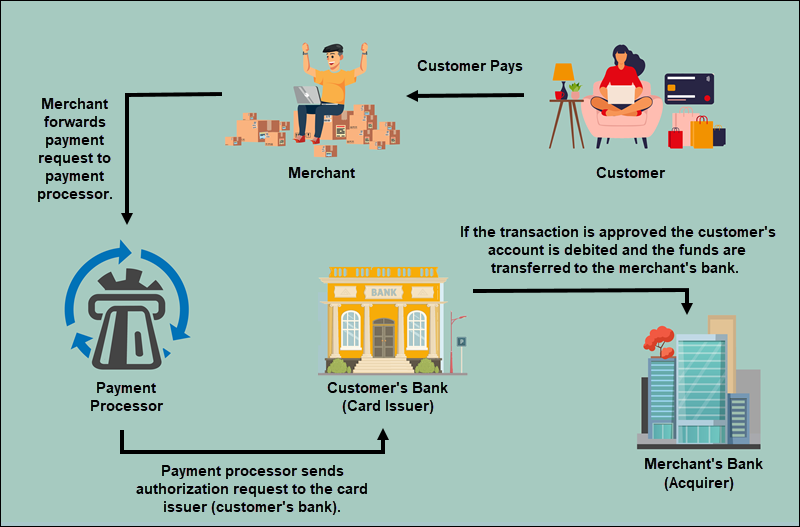
A typical digital payment involves multiple stakeholders, each playing a crucial role:
- Payer (Consumer/Buyer): Initiates the transaction.
- Payee (Merchant/Seller): The recipient of the funds.
- Issuing Bank: The financial institution that issued the payer’s card or holds their bank account. It authorizes transactions and pays the acquiring bank.
- Acquiring Bank: The financial institution that processes payments for the merchant. It receives funds from the issuing bank and deposits them into the merchant’s account.
- Payment Network/Scheme (e.g., Visa, Mastercard): These global networks provide the infrastructure to route transaction data between issuing and acquiring banks, setting interchange fees and rules.
- Payment Processor: A service provider that handles the actual technical processing of transactions, connecting merchants to acquiring banks and payment networks.
- Payment Gateway: Often an integral part of the processor, this technology securely captures payment information from the customer (e.g., on an e-commerce website) and transmits it to the processor.
- Regulators: Government bodies and financial authorities (e.g., central banks, financial conduct authorities) that establish rules, laws, and oversight to ensure fairness, security, and stability in the payment system.
Each step in this chain involves data encryption, authentication, authorization checks, and fraud screening, all happening in milliseconds to ensure a seamless user experience while protecting financial integrity.
Regulatory Frameworks and Consumer Protection
The complexity and critical nature of payment systems necessitate robust regulatory oversight. These frameworks serve several vital purposes:
- Consumer Protection: Regulations protect consumers from fraud, unauthorized transactions, unfair fees, and deceptive practices. This includes rules around dispute resolution, data privacy (e.g., GDPR, CCPA), and liability for fraudulent charges.
- System Stability and Integrity: Regulators ensure that financial institutions operate securely and maintain adequate capital, preventing systemic risks that could disrupt payment flows. Anti-Money Laundering (AML) and Know Your Customer (KYC) regulations are crucial for preventing illicit financial activities.
- Fair Competition: Regulations can foster a competitive environment, preventing monopolies and encouraging innovation among payment service providers.
- Interoperability: Standards and regulations often promote interoperability, allowing different payment systems to communicate and transact with each other seamlessly.
Compliance with these regulations is a significant cost and operational challenge for all players in the payment ecosystem but is fundamental to maintaining trust and security in financial transactions.
The Technology Underpinning Modern Payments
While the “Money” category focuses on the financial implications, it’s impossible to discuss the modern payment ecosystem without acknowledging the technological backbone. This isn’t about deep dives into code, but understanding how technology facilitates the financial flow. Key technologies include:
- Encryption and Tokenization: Protecting sensitive payment data during transmission and storage. Tokenization replaces actual card numbers with unique, non-sensitive tokens.
- Fraud Detection and Prevention (FDP) Systems: Leveraging AI and machine learning to analyze transaction patterns and identify suspicious activities in real-time. This is a crucial financial safeguard.
- API (Application Programming Interface) Integrations: Allowing different financial systems and applications to communicate and exchange data, enabling seamless payment experiences across various platforms.
- Cloud Computing: Providing scalable and secure infrastructure for processing massive volumes of transactions.
- Blockchain: While still emerging, blockchain technology promises to offer new ways to process payments with enhanced transparency, security, and potentially lower costs for certain types of transactions, especially cross-border.
These technologies ensure that when you tap your card or click “pay now,” the value transfer happens almost instantaneously and with a high degree of confidence.
Optimizing Your Payment Experience: For Individuals and Businesses
Understanding “what is the payment” extends beyond its definition and mechanics; it involves actively managing and optimizing one’s own payment strategies. For individuals, this means making smart financial choices about how they pay and budget. For businesses, it’s about efficient payment acceptance, management, and strategic financial planning.
Personal Finance: Smart Payment Choices and Budgeting
For individuals, the choices made around payments directly impact personal financial health:
- Choosing the Right Payment Method: Consider fees, rewards (cashback, points), security features, and convenience. While credit cards offer convenience and rewards, debit cards help prevent overspending. Bank transfers are often best for larger, planned payments.
- Budgeting and Tracking: Using budgeting apps or spreadsheets to track all incoming and outgoing payments is fundamental. Understanding where money goes helps control spending and achieve financial goals.
- Managing Debt Wisely: Credit card payments can lead to high-interest debt if not managed responsibly. Prioritizing high-interest debt repayment is crucial. Understanding installment plans (e.g., BNPL) means evaluating their impact on your budget.
- Security Awareness: Protecting personal payment information is paramount. This includes using strong, unique passwords, being wary of phishing attempts, and regularly monitoring bank and credit card statements for unauthorized transactions.
- Automating Payments: Setting up automatic payments for recurring bills can prevent late fees and improve credit scores, but it requires ensuring sufficient funds are always available.
Business Finance: Streamlining Payment Acceptance and Management
For businesses, payment strategy is directly tied to revenue, customer satisfaction, and operational efficiency:
- Diverse Payment Acceptance: Offering a variety of payment methods (cards, mobile wallets, local APMs) caters to a wider customer base and reduces cart abandonment, especially for e-commerce and international businesses.
- Optimizing Processing Fees: Understanding the fee structures of different payment processors and networks is crucial for minimizing costs. Negotiating rates and choosing efficient solutions can significantly impact profit margins.
- Fraud Prevention: Implementing robust fraud detection tools is essential to protect against chargebacks and financial losses. Balancing security with customer experience is key.
- Cash Flow Management: Efficiently managing incoming payments (accounts receivable) and outgoing payments (accounts payable) is vital for healthy cash flow. Automating invoicing and payment reminders can accelerate collections.
- Reconciliation and Reporting: Streamlining the reconciliation process – matching payments received to sales records – ensures financial accuracy and simplifies accounting. Leveraging payment analytics provides insights into sales trends and customer behavior.
- Global Payment Strategy: For businesses operating internationally, managing cross-border payments involves navigating different currencies, exchange rates, and local payment preferences and regulations. Partnering with specialized international payment providers can streamline this complexity.
The Future of Payments: Trends and Innovations
The payment landscape is in constant flux, driven by technological advancements and evolving consumer demands. Key trends include:
- Real-time Payments: Instantaneous transfers that settle within seconds, available 24/7, are becoming the new standard globally, enhancing liquidity and efficiency.
- Embedded Finance: Payments becoming seamlessly integrated into non-financial apps and services, making transactions almost invisible.
- Central Bank Digital Currencies (CBDCs): Many countries are exploring digital versions of their national currency, which could revolutionize how payments are made and settled, offering new policy tools and financial inclusion opportunities.
- AI and Machine Learning: Further enhancing fraud detection, personalizing payment experiences, and automating financial tasks.
- Biometric Payments: Using fingerprints, facial recognition, or iris scans for secure authentication, offering increased convenience and security.
- Open Banking and API Economy: Allowing third-party financial service providers to securely access financial data (with user consent) to offer innovative new payment and financial management services.
In conclusion, “what is the payment” is far more than a simple query about money changing hands. It represents the intricate mechanism that powers economies, connects people, and facilitates commerce across the globe. By understanding its foundational elements, navigating its diverse methods, appreciating its complex ecosystem, and strategically optimizing its use, individuals and businesses can better manage their finances, enhance their financial security, and prepare for an ever-evolving future of value exchange. The journey of a payment, from concept to execution, is a testament to human ingenuity in shaping the flow of resources and the very fabric of our financial lives.
aViewFromTheCave is a participant in the Amazon Services LLC Associates Program, an affiliate advertising program designed to provide a means for sites to earn advertising fees by advertising and linking to Amazon.com. Amazon, the Amazon logo, AmazonSupply, and the AmazonSupply logo are trademarks of Amazon.com, Inc. or its affiliates. As an Amazon Associate we earn affiliate commissions from qualifying purchases.