
In the world of finance, the question “how do you percent” is rarely about simple division by one hundred. Instead, it is the fundamental question of how we measure growth, assess risk, and allocate resources. Percentages are the universal language of money. Whether you are a novice saver looking to optimize a high-yield savings account or a seasoned investor evaluating the volatility of a tech-heavy portfolio, understanding the nuances of percentages is the difference between financial stagnation and exponential wealth creation.
This guide moves beyond the basic classroom definition of a percentage to explore its critical role in personal finance, investment strategy, and long-term wealth preservation. By mastering the application of percentages, you gain the ability to strip away the noise of raw numbers and see the true health of your financial life.

The Mathematics of Money: Why Understanding Percentages is Your Most Valuable Asset
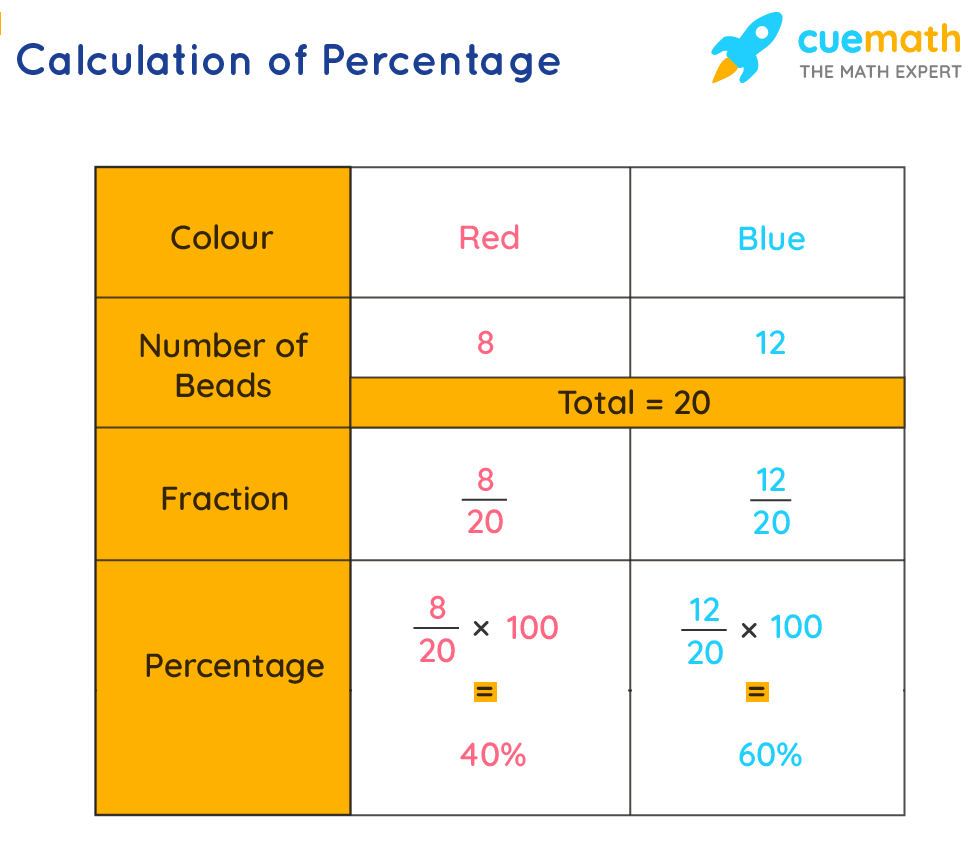
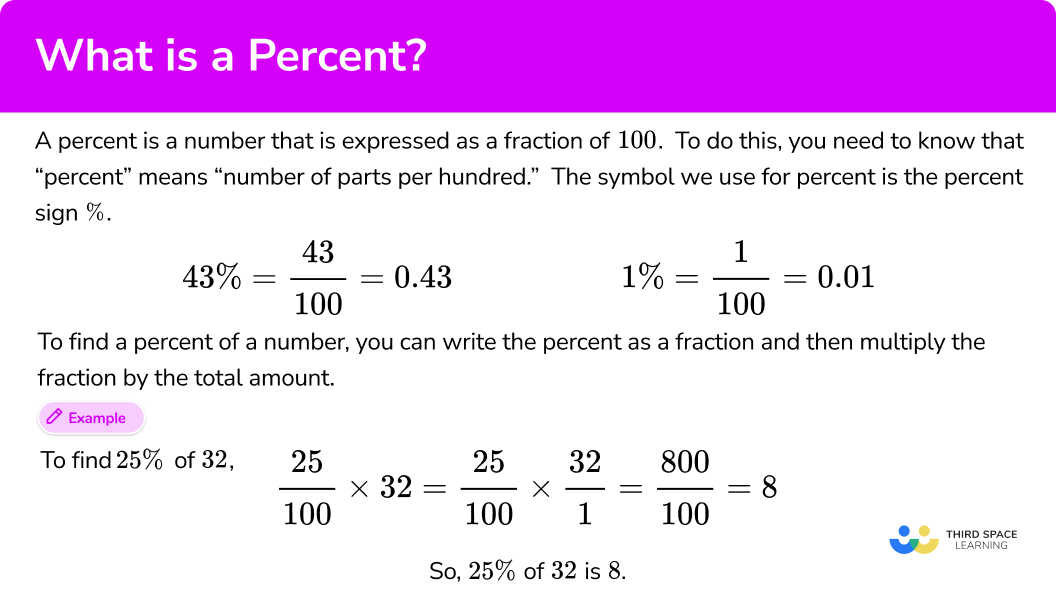
At its core, a percentage is a ratio—a way to compare two quantities in a standardized format. In finance, this standardization is what allows us to compare a $50 gain on a $500 investment with a $5,000 gain on a $100,000 investment. Without percentages, we lose the context of scale.
Beyond Simple Math: The Psychological Impact of Percentages
Human psychology is often poorly equipped to handle large numbers, but it responds acutely to percentages. This is known as “numerical framing.” For example, a 5% discount on a $20,000 car feels less significant to many than a 50% discount on a $10 item, even though the former saves you $1,000 and the latter saves you $5. In wealth management, this bias can be dangerous. Investors often overlook a 1% management fee because it “sounds small,” not realizing that a 1% fee can erode over 25% of a portfolio’s potential value over thirty years due to the loss of compounding. Understanding “how you percent” means looking past the surface value and calculating the long-term impact on your net worth.
Mastering the Basic Formula for Real-World Scenarios
To navigate the financial world, one must be fluent in three specific percentage calculations: Percentage Change, the Percentage of a Total, and the Reverse Percentage.
- Percentage Change is vital for tracking portfolio performance:
((New Value - Old Value) / Old Value) * 100. - Percentage of Total helps in budgeting:
(Expense Category / Total Income) * 100. - Reverse Percentage is essential for understanding taxes or discounts: If an item costs $107 after a 7% sales tax, knowing how to find the original price ($100) ensures you aren’t overpaying or miscalculating your tax liabilities.
Building Your Portfolio: Calculating Returns and Diversification Ratios
When an investor asks “how do you percent,” they are usually asking about their Rate of Return (RoR). However, not all returns are created equal. To build sustainable wealth, you must distinguish between various types of percentage growth and how they interact with the market.
Annualized Returns vs. Cumulative Gains
A common mistake in personal finance is conflating cumulative gains with annualized returns. If your portfolio grew by 50% over five years, it did not grow by 10% each year. Due to the effects of compounding, the “geometric mean” or Compound Annual Growth Rate (CAGR) would actually be approximately 8.45%. This distinction is crucial when comparing your performance against benchmarks like the S&P 500. Professional investors use annualized percentages to determine if their strategy is actually outperforming “safe” assets like Treasury bonds on a year-to-year basis.
The Rule of 72: A Shortcut for Projecting Growth
One of the most powerful tools in the “money” niche is the Rule of 72. This is a simplified way to determine how long it will take for an investment to double at a fixed annual percentage rate of interest. By dividing 72 by the annual rate of return, investors can get a rough estimate of their wealth-building timeline. For instance, at a 6% return, your money doubles in 12 years (72/6). If you can increase that return to 9% through better asset allocation, your money doubles in just 8 years. This 3% difference in “how you percent” results in reaching your financial goals 33% faster.
The Consumer’s Perspective: Navigating Interest Rates and Debt
While percentages work for you in investments, they often work against you in debt. Understanding the mechanics of interest rates is the primary defense against predatory lending and inefficient capital management.
APR vs. APY: Understanding the Cost of Borrowing
Financial institutions often use different “percent” metrics to favor their position. The Annual Percentage Rate (APR) is the standard way to express the cost of a loan, including fees and interest. However, when you are saving money, banks often quote the Annual Percentage Yield (APY). The difference lies in compounding. APY accounts for the frequency with which interest is added to your balance. If you are a borrower, a high frequency of compounding (daily vs. monthly) increases the total amount you pay, even if the “nominal” interest rate looks low. Always calculate the “Effective Annual Rate” to see the true percentage impact on your wallet.
The Impact of Inflation: Protecting Your Purchasing Power
Inflation is the “hidden percentage” that erodes wealth. If your savings account offers a 4% interest rate, but inflation is running at 5%, your “real” rate of return is -1%. In this scenario, even though your balance is numerically increasing, your purchasing power is shrinking. To truly grow wealth, your percentage gains must consistently exceed the Consumer Price Index (CPI). This is why holding too much cash can be a financial risk; it is a guaranteed loss in real percentage terms during inflationary periods.
Strategic Budgeting: Using the 50/30/20 Rule and Other Percentage-Based Frameworks
The most effective way to manage personal cash flow is not through rigid dollar amounts, but through percentage-based allocations. This allows your budget to scale automatically as your income increases.
Allocating Income for Stability and Growth
The 50/30/20 rule is a gold standard in financial planning. It suggests allocating:
- 50% to Needs: Housing, utilities, groceries, and insurance.
- 30% to Wants: Dining out, travel, and hobbies.
- 20% to Financial Goals: Debt repayment, emergency funds, and retirement investments.
By focusing on the percentage rather than the dollar amount, you ensure that a raise at work translates into a proportional increase in your savings, preventing “lifestyle creep” where expenses rise to meet income.
Adjusting Ratios for Different Life Stages
“How you percent” your budget should evolve as you age. A young professional in their 20s might lean harder into the “Financial Goals” category, perhaps aiming for 30% or 40% to take advantage of their long time horizon for compounding. Conversely, someone nearing retirement might shift their percentage allocation toward capital preservation and high-dividend yields to ensure a steady income stream. The flexibility of percentage-based budgeting is what makes it a superior strategy for long-term financial health.
The Advanced Financial Toolkit: Ratios for Professional-Grade Investing
For those looking to move into sophisticated investing, percentages evolve into “ratios.” These are specific percentage-based metrics used to evaluate the health of a company or an asset class.
The Debt-to-Equity Ratio: Assessing Corporate Health
When evaluating a stock, the Debt-to-Equity (D/E) ratio is a critical percentage. It is calculated by dividing a company’s total liabilities by its shareholder equity. A high D/E percentage indicates that a company is aggressively financing its growth with debt, which can be risky during economic downturns. By comparing the D/E percentages of different companies within the same industry, an investor can identify which businesses are built on solid ground and which are over-leveraged.
Dividend Yields and Payout Ratios
For income investors, the Dividend Yield—a percentage representing the annual dividend payment divided by the stock price—is the primary metric of success. However, an experienced investor also looks at the Dividend Payout Ratio. If a company is paying out 90% of its earnings as dividends, that 10% yield might be unsustainable. A healthy “payout percent” usually sits between 30% and 60%, ensuring the company retains enough capital to reinvest in future growth while still rewarding shareholders.
Conclusion: Mastering the Language of Value
The question “how do you percent” is the gateway to financial mastery. It is the tool that allows us to calculate the true cost of a mortgage, the actual growth of a 401(k), and the hidden erosion caused by inflation. By shifting your perspective from raw currency values to percentage-based ratios, you gain a clearer, more objective view of your financial trajectory.
Wealth management is not about how much money you have today; it is about the percentage at which that money is growing and the efficiency with which it is being protected. Whether you are optimizing your monthly budget or rebalancing a multi-asset portfolio, remember that in the world of money, the percentage is the only number that truly tells the full story.
aViewFromTheCave is a participant in the Amazon Services LLC Associates Program, an affiliate advertising program designed to provide a means for sites to earn advertising fees by advertising and linking to Amazon.com. Amazon, the Amazon logo, AmazonSupply, and the AmazonSupply logo are trademarks of Amazon.com, Inc. or its affiliates. As an Amazon Associate we earn affiliate commissions from qualifying purchases.