
In the realm of personal finance and wealth management, few mathematical concepts are as pervasive or as critical as the percentage. Whether you are calculating the interest on a high-yield savings account, determining the capital gains tax on a stock sale, or evaluating the profit margin of a side hustle, understanding how to find the percentage of a number is the bedrock of financial literacy. Percentages allow us to standardize data, compare disparate investment opportunities, and track our progress toward long-term financial goals.
For many, the word “math” triggers a sense of anxiety, yet in the context of money, these calculations are less about abstract theory and more about practical empowerment. When you can fluently calculate percentages, you gain the ability to see through marketing gimmicks, negotiate better salary increases, and understand the true cost of debt. This guide will walk you through the essential methods of finding percentages, specifically tailored to the financial landscape.

The Fundamental Role of Percentages in Financial Literacy
At its core, a percentage is a way of expressing a number as a fraction of 100. In the world of money, this “100” usually represents a total—your total income, the total value of an investment portfolio, or the total cost of a loan. Understanding the mechanics of this calculation is the first step toward taking control of your financial destiny.
Understanding the Formula: Part, Whole, and Rate
To find the percentage of a number, you essentially need three components: the whole (the total amount), the rate (the percentage you want to find), and the part (the resulting value). The basic formula is:
Part = (Percentage / 100) × Total
For example, if you want to find 15% of a $4,000 monthly salary to determine how much to contribute to a retirement fund, you would divide 15 by 100 (0.15) and multiply by 4,000. The result, $600, is the part.
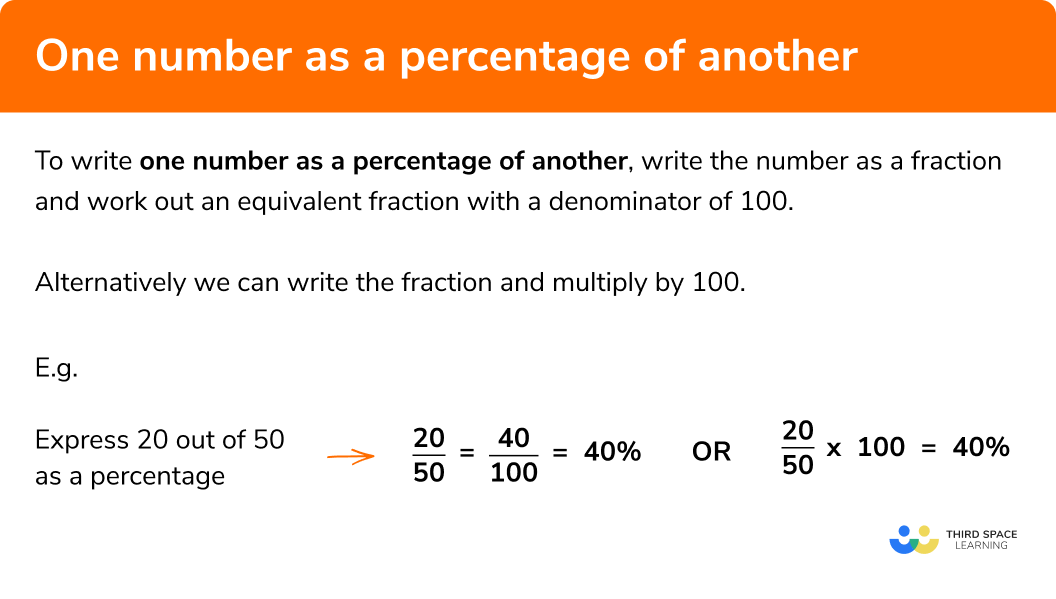
In financial circles, we often reverse this to find the rate of return. If an investment of $1,000 grows by $50, you divide the part ($50) by the whole ($1,000) to get 0.05, or 5%. Mastering this tripartite relationship allows you to move fluidly between different financial metrics, whether you are looking at interest rates or dividend yields.
Why Mental Math is a Key Skill for Investors
While we live in an era of smartphones and instant calculators, the ability to perform mental percentage calculations is a “superpower” for investors and entrepreneurs. When you are in a high-stakes negotiation or evaluating a real estate deal on the fly, you cannot always stop to open a spreadsheet.
A simple trick for mental math is the “10% Method.” To find 10% of any number, you simply move the decimal point one place to the left. If a stock is trading at $155.00, 10% is $15.50. From there, you can easily find 5% (half of 10%) or 20% (double 10%). Developing this mental agility allows you to spot “red flags” in financial statements or recognize a bargain before the opportunity vanishes.
Applying Percentages to Personal Budgeting and Savings
Budgeting is essentially an exercise in percentage allocation. Without a percentage-based framework, a budget is merely a list of expenses; with it, a budget becomes a strategic roadmap for wealth creation.
The 50/30/20 Rule: Allocation in Action
One of the most popular financial frameworks is the 50/30/20 rule, which dictates how your after-tax income should be distributed. By applying percentages to your income, you ensure that your lifestyle doesn’t outpace your ability to save.
- 50% to Needs: This includes housing, utilities, groceries, and insurance.
- 30% to Wants: This covers dining out, hobbies, and travel.
- 20% to Financial Goals: This is the most crucial percentage, reserved for debt repayment, emergency funds, and retirement investments.
If you earn $5,000 a month, finding 20% ($1,000) tells you exactly what your “wealth-building” target is. If your current savings are lower than that percentage, the math provides an objective signal that your “needs” or “wants” are consuming too much of your financial pie.
Compound Interest: The Percentage That Builds Wealth
Albert Einstein famously called compound interest the “eighth wonder of the world.” In finance, compound interest is a percentage applied not just to the initial principal, but also to the accumulated interest of previous periods.
Understanding how to calculate this percentage change over time is vital for long-term planning. If you have an annual interest rate of 7%, your money isn’t just growing by a flat amount; it is growing by a percentage that increases in value every year. Calculating a 7% return on $10,000 yields $700 in year one. In year two, that 7% is calculated on $10,700, yielding $749. This “percentage on a percentage” is what allows modest monthly contributions to grow into million-dollar portfolios over several decades.
Navigating Taxes and Discounts: Real-World Calculations
In our daily lives, percentages are most frequently encountered through taxes and consumer discounts. These calculations directly affect your purchasing power and your net take-home pay.
Sales Tax and Gratuities: Moving the Decimal Point
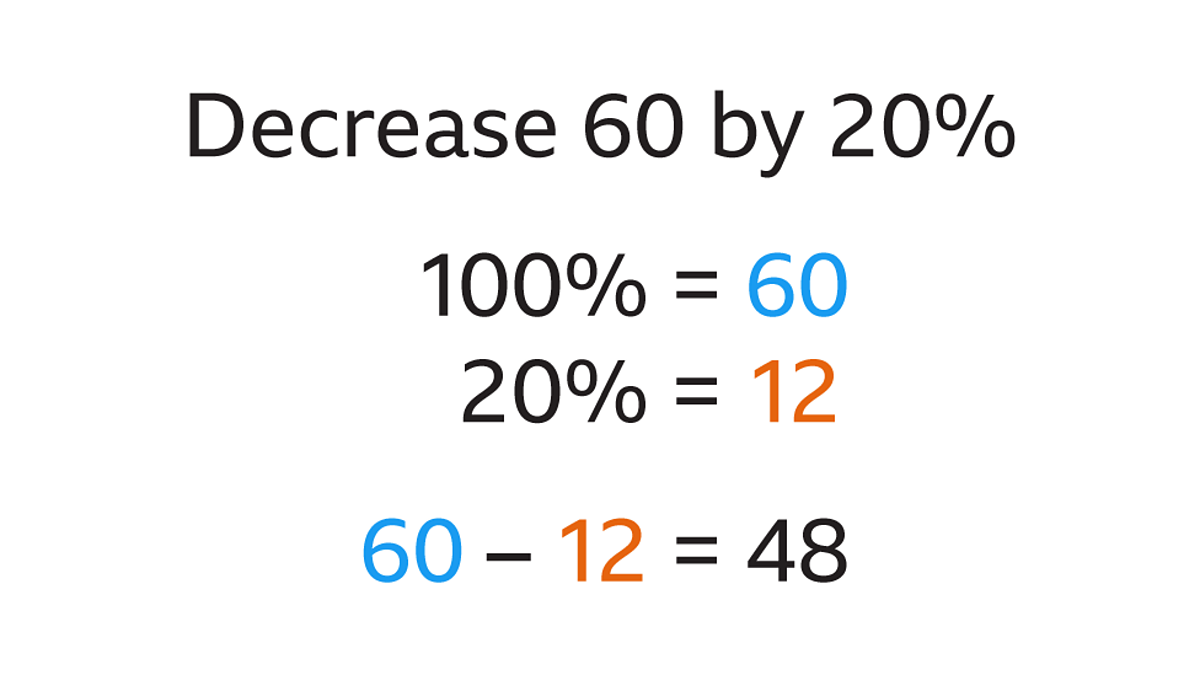
Whether you are calculating a tip at a business lunch or estimating the final cost of a piece of equipment for your home office, percentages are the standard unit of measurement. In many regions, sales tax is a fixed percentage added to the subtotal. To find the total cost, you calculate the percentage and add it to the original number.
For tips, the standard in many professional settings is 15% to 20%. Using the mental math mentioned earlier, if the bill is $80, 10% is $8. Double that to get $16, and you have successfully calculated a 20% tip. These small, daily calculations keep your finances precise and prevent “leakage”—the small, unmonitored expenses that can derail a financial plan.
Calculating Effective Tax Rates on Income
Income tax in many countries is progressive, meaning different portions of your income are taxed at different percentages (tax brackets). However, the number that matters most for your personal cash flow is your Effective Tax Rate.
This is found by taking the total tax paid and dividing it by your total earned income. If you earned $100,000 and paid $15,000 in total taxes, your effective tax rate is 15%. Many people confuse their “marginal tax bracket” (the rate on their last dollar earned) with their actual tax burden. Knowing how to calculate the true percentage of your income going to the government is essential for accurate retirement planning and investment strategy.
Business Finance: Profit Margins and Growth Metrics
For those who run a business or participate in the gig economy, percentages are the primary language of performance. They tell you if a product is viable and if the company is growing healthily.
Gross vs. Net Profit Margins
In business finance, we use percentages to determine “margins.” A margin tells you what percentage of every dollar in sales is kept as profit.
- Gross Profit Margin: This is calculated by taking (Total Revenue – Cost of Goods Sold) / Total Revenue. If you sell a product for $100 that costs $60 to make, your gross margin is 40%.
- Net Profit Margin: This is the “bottom line.” It accounts for all expenses, including rent, marketing, and taxes. If that same $100 sale results in $10 of actual profit after all expenses, your net margin is 10%.
Entrepreneurs must constantly monitor these percentages. A high revenue figure is meaningless if the net profit margin percentage is near zero. By focusing on the percentage rather than the raw dollar amount, business owners can compare their efficiency against industry benchmarks.
Year-over-Year (YoY) Growth Calculations
To understand if a business or an investment is succeeding, we look at the percentage of growth over time. The formula for percentage increase is:
((New Value – Old Value) / Old Value) × 100
If your side hustle earned $10,000 in 2022 and $15,000 in 2023, the growth is $5,000. To find the percentage, you divide $5,000 by the original $10,000 to get 0.5, or 50% growth. In the world of investing and business finance, a 50% YoY growth rate is a powerful indicator of a “scaleable” venture.
Tools and Strategies for Precision
While understanding the manual calculation is vital, the modern financial landscape offers tools that handle complex percentages with ease. Utilizing these tools allows for deeper financial analysis and more robust projections.
Leveraging Financial Calculators and Spreadsheets
For complex financial tasks, such as calculating the percentage of a loan that goes toward interest versus principal (amortization), software is indispensable. In Microsoft Excel or Google Sheets, finding a percentage is as simple as using the asterisk (*) for multiplication. If cell A1 contains your total and B1 contains your percentage (expressed as a decimal), the formula =A1*B1 gives you the answer instantly.
Furthermore, spreadsheets allow for “What-If” analysis. You can change the interest rate percentage by a fraction of a point to see how it affects your total repayment over 30 years. This level of precision is what separates amateur savers from professional wealth managers.
Common Pitfalls to Avoid in Financial Calculations
The most common mistake in financial percentage calculations is the “Percentage Point” vs. “Percentage” error. If an interest rate rises from 3% to 4%, it has increased by one percentage point, but it has actually increased by 33.3% in terms of cost.
Another pitfall is failing to account for the “base” of the calculation. A 50% loss in the stock market requires a 100% gain just to get back to even. If your $10,000 portfolio drops to $5,000 (50% loss), you need to gain $5,000 to return to $10,000. That $5,000 gain is 100% of your new, smaller base. Understanding these nuances is critical for risk management and for maintaining a realistic perspective on market volatility.
In conclusion, knowing how to find the percentage of a number is not merely a mathematical exercise; it is a fundamental requirement for financial success. From the simple act of tipping a server to the complex world of corporate profit margins and compound interest, percentages provide the clarity needed to make informed, profitable decisions. By mastering these calculations, you transform from a passive observer of your finances into an active, strategic architect of your wealth.
aViewFromTheCave is a participant in the Amazon Services LLC Associates Program, an affiliate advertising program designed to provide a means for sites to earn advertising fees by advertising and linking to Amazon.com. Amazon, the Amazon logo, AmazonSupply, and the AmazonSupply logo are trademarks of Amazon.com, Inc. or its affiliates. As an Amazon Associate we earn affiliate commissions from qualifying purchases.