
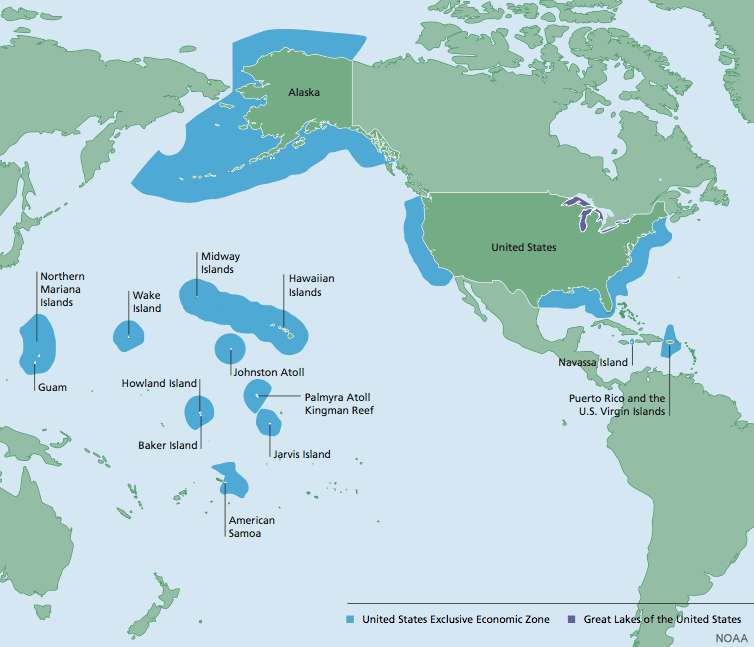
The United States, a nation often conceived of as a contiguous landmass, actually extends its reach far beyond its 50 states. Its political and administrative umbrella covers several “territories,” distinct geographical areas that are unincorporated and unorganized or organized but not states. For those navigating the digital world, building a brand, or managing their finances, understanding these territories isn’t just a matter of geographical curiosity; it can have practical implications for technology access, brand recognition, and financial opportunities. This article will delve into what constitutes a U.S. territory, explore the major ones, and connect these concepts to the core areas of technology, brand building, and financial management.
Understanding the Nuances: Beyond the 50 States
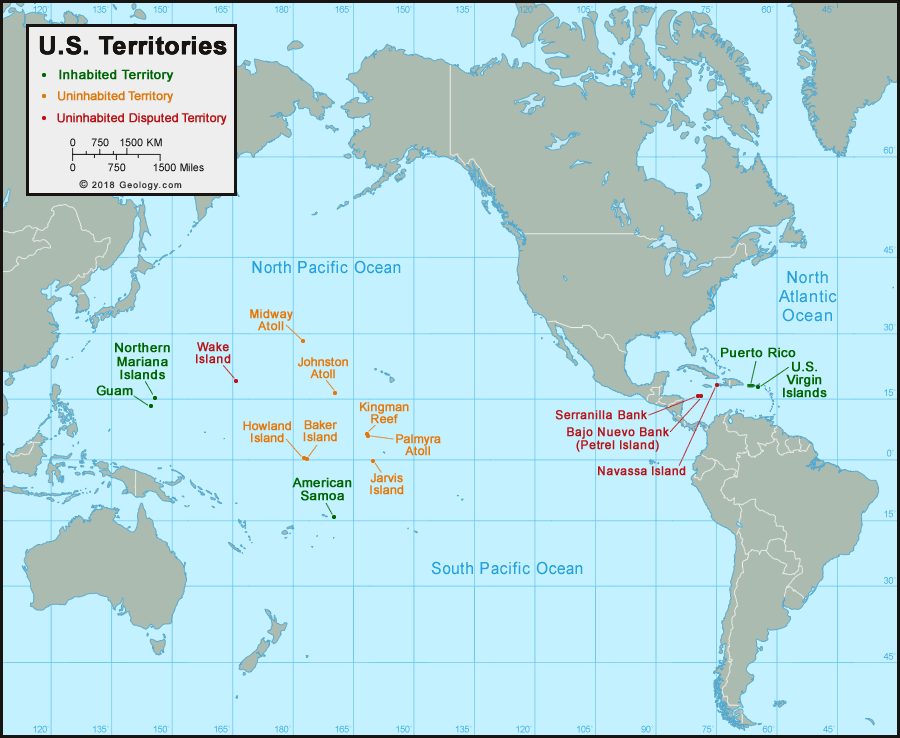
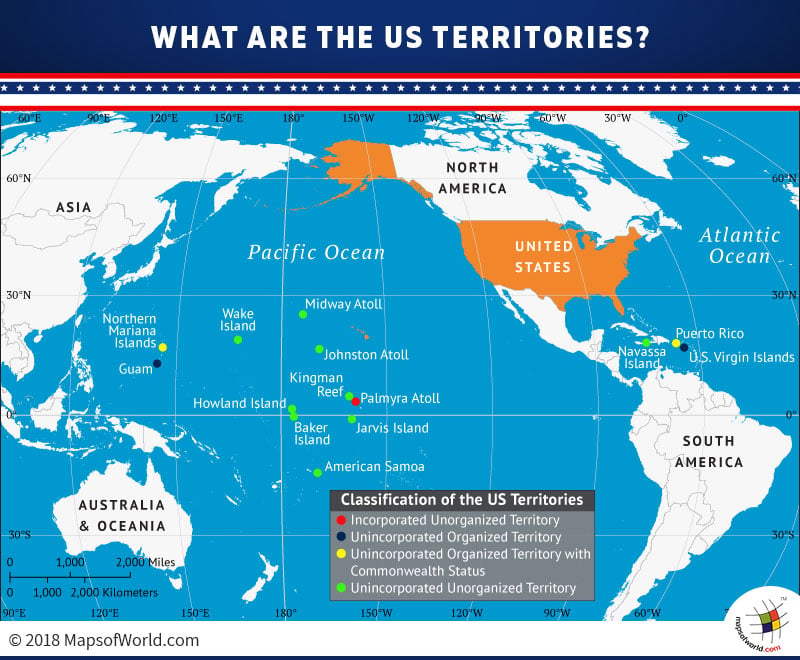
The term “U.S. territory” can be a bit of a catch-all, and differentiating between them is crucial. Generally, U.S. territories are defined by their relationship with the federal government, distinct from states, the District of Columbia, or independent nations. The key distinction often lies in the level of self-governance granted and whether the U.S. Constitution applies in full.
Incorporated vs. Unincorporated Territories
This fundamental distinction dictates the legal framework governing these lands.
Incorporated Territories: A Pathway to Statehood (Historically)
Historically, incorporated territories were those where the U.S. Congress intended for the territory to eventually become a state. The U.S. Constitution, in its entirety, was considered to be in effect. While no currently inhabited territories fall under this category, it’s an important historical concept. The Philippines, for example, was once an incorporated territory before gaining independence.
Unincorporated Territories: Belonging to, but Not Part Of
The vast majority of currently inhabited U.S. territories are unincorporated. This means they “belong to” the United States but are not considered an integral part of it, and the U.S. Constitution does not necessarily apply in full. Congress has the authority to decide which parts of the Constitution, if any, will be extended to these territories. Residents of unincorporated territories are generally U.S. citizens but may not have full voting rights in federal elections, nor do they have representation in Congress with voting power.
Organized vs. Unorganized Territories
This classification refers to whether a territory has an organic act passed by Congress that establishes a framework for its government.
Organized Territories: A Self-Governing Structure
Organized territories have a locally elected government and a constitution or organic act that defines its structure and powers. Most of the major inhabited territories fall into this category, enjoying a significant degree of self-governance, though ultimate authority still rests with the U.S. Congress.
Unorganized Territories: Direct Congressional Rule
Unorganized territories, on the other hand, do not have a specific organic act establishing their governance. Their administration is entirely at the discretion of Congress, and they often have less local autonomy. This category often includes uninhabited islands or those with very limited populations and specific strategic purposes.
The Major U.S. Territories: Where Geography Meets Governance
While the precise definition and legal status can be complex, several key territories are commonly recognized as belonging to the United States. Understanding their unique characteristics is vital, especially when considering how they interact with the global digital economy, brand development, and financial systems.
Puerto Rico: The Largest and Most Populous
Puerto Rico, a Caribbean island, is the most populous of all U.S. territories. It is an unincorporated territory with a locally elected governor and a bicameral legislature. Puerto Ricans are U.S. citizens, can serve in the U.S. military, and have a non-voting representative in the House of Representatives.
-
Tech Implications: Puerto Rico has a growing technology sector, with initiatives aimed at attracting tech companies and talent. Internet penetration is increasing, and there’s a focus on developing digital infrastructure. The availability of cloud services, software solutions, and AI tools is crucial for businesses and individuals alike to compete in the global marketplace. Digital security is also a paramount concern, given its susceptibility to natural disasters and its role in regional networks.
-
Brand Implications: Puerto Rico’s unique cultural heritage offers a rich tapestry for branding. Businesses can leverage its distinct identity for marketing, while individuals can build personal brands that reflect their heritage and aspirations. For U.S. companies, understanding the nuances of the Puerto Rican market is key to effective branding and consumer engagement.
- Money Implications: As U.S. citizens, Puerto Ricans are subject to U.S. federal income tax on income earned outside of Puerto Rico, but not on income sourced within the island, under certain conditions (Section 933 of the IRS code). This creates a unique financial landscape for individuals and businesses. The pursuit of online income, side hustles, and investment opportunities is increasingly prevalent, mirroring trends in the mainland U.S. Access to financial tools and services is crucial for economic development and personal wealth building.
U.S. Virgin Islands: The Archipelago in the Caribbean
Comprising the islands of St. Croix, St. John, and St. Thomas, the U.S. Virgin Islands is another unincorporated territory in the Caribbean. It also has a locally elected governor and legislature. Residents are U.S. citizens.
-
Tech Implications: Similar to Puerto Rico, the U.S. Virgin Islands faces challenges and opportunities in its technological development. Efforts are underway to improve internet access and digital literacy. Gadgets and apps that facilitate remote work and communication are particularly valuable in this island setting. Protecting digital infrastructure from cyber threats is a constant imperative.
-
Brand Implications: The islands’ stunning natural beauty and vibrant culture provide a strong foundation for tourism-related brands. For local entrepreneurs, building a brand that resonates with both tourists and residents requires a deep understanding of local values and global trends.
-
Money Implications: U.S. Virgin Islands residents are U.S. citizens and are generally subject to U.S. federal income tax. However, similar to Puerto Rico, there are specific provisions that can influence tax liabilities for income earned locally. This makes understanding financial tools and investment strategies particularly important for residents seeking economic stability and growth.
Guam: The Pacific Gateway
Located in the western Pacific Ocean, Guam is an unincorporated territory and a strategic U.S. military hub. It has a locally elected governor and a unicameral legislature. Chamorro is the indigenous people of Guam, and their cultural heritage is a significant aspect of the island’s identity.
-
Tech Implications: Guam’s strategic location makes it a vital node for telecommunications and data transfer. The demand for cutting-edge technology, from high-speed internet to advanced software and AI tools, is significant for both military operations and civilian use. Digital security is paramount given its geopolitical importance.
-
Brand Implications: Guam’s role as a gateway between Asia and the Americas offers unique branding opportunities. Businesses can leverage this transpacific connection for marketing and outreach. Personal branding for individuals in Guam can draw upon its rich cultural history and its position in the global supply chain.
-
Money Implications: Residents of Guam are U.S. citizens and are subject to U.S. federal income tax. The economy is heavily influenced by U.S. military spending and tourism. Developing robust personal finance strategies, exploring online income streams, and understanding business finance are essential for economic prosperity in Guam.
American Samoa: The Southernmost Territory
American Samoa, situated in the South Pacific, is an unincorporated territory. Its residents are U.S. nationals, not citizens, but they are subject to U.S. law. It has a unique traditional governance system alongside its elected officials.
-
Tech Implications: While technological infrastructure is developing, access to the latest gadgets and high-speed internet can be more limited compared to other territories. However, the need for productivity apps and digital security solutions remains high for businesses and individuals looking to connect with the outside world.
-
Brand Implications: American Samoa’s distinctive Polynesian culture provides a strong cultural identity for branding. Local businesses can build brands that celebrate their heritage and unique way of life.
-
Money Implications: The financial landscape in American Samoa is distinct due to its territorial status. While residents are U.S. nationals, the application of certain U.S. financial regulations and tax laws can differ. Understanding personal finance, exploring opportunities for online income, and seeking out financial tools that are accessible and relevant to the local economy are crucial.
Northern Mariana Islands: The Commonwealth in the Pacific
The Commonwealth of the Northern Mariana Islands (CNMI), located north of Guam, is a commonwealth in political union with the United States. Residents are U.S. citizens. It has its own constitution and a locally elected governor.
-
Tech Implications: The CNMI, like its Pacific neighbors, is focused on enhancing its digital infrastructure. The adoption of new technologies, from AI tools for business to productivity apps for daily life, is driven by a desire to improve efficiency and connectivity.
-
Brand Implications: The CNMI’s brand is often associated with tourism and its natural beauty. Developing a strong corporate identity and effective marketing strategies are key for businesses operating in this competitive market.
-
Money Implications: Residents of the CNMI are U.S. citizens and are subject to U.S. federal income tax. The economy has historically been reliant on tourism and manufacturing, presenting unique financial planning considerations for individuals and businesses.
Territories and the Evolving Digital, Brand, and Financial Landscape
The existence of these territories highlights the multifaceted nature of the United States. From a technological perspective, they represent both challenges and opportunities in bridging the digital divide, ensuring access to critical tools, and bolstering digital security. For brands, these territories offer diverse cultural canvases for authentic storytelling and market penetration. Financially, they present unique ecosystems where understanding personal finance, exploring online income, and leveraging business finance tools are paramount for individual and collective economic advancement. As the world becomes increasingly interconnected, understanding the U.S. territories is not just an academic exercise but a practical necessity for anyone looking to engage comprehensively with the American sphere of influence.
aViewFromTheCave is a participant in the Amazon Services LLC Associates Program, an affiliate advertising program designed to provide a means for sites to earn advertising fees by advertising and linking to Amazon.com. Amazon, the Amazon logo, AmazonSupply, and the AmazonSupply logo are trademarks of Amazon.com, Inc. or its affiliates. As an Amazon Associate we earn affiliate commissions from qualifying purchases.