
In an era dominated by digital transactions and fiat currency, the question “which coins are silver?” might seem antiquated. However, for investors, collectors, and those seeking a tangible hedge against economic volatility, understanding the world of silver coinage remains profoundly relevant. Silver coins represent more than just their face value; they are a direct link to historical financial systems, a store of wealth, and a fascinating collectible. This article will delve into the intricacies of identifying silver coins, their historical significance, and why they continue to hold a significant place in the modern financial landscape.
Understanding Silver in Coinage: A Historical Perspective
For millennia, precious metals like gold and silver served as the bedrock of monetary systems across civilizations. Their inherent scarcity, durability, and divisibility made them ideal mediums of exchange, trusted stores of value, and units of account. Silver, in particular, played a pivotal role in the daily commerce of empires and nations, long before the advent of paper money or digital currencies.
The Era of Precious Metal Standard
Prior to the 20th century, most circulating coinage in major economies was minted from precious metals. Silver coins, ranging from small denominations to larger pieces, were common. Nations adhered to a bimetallic or silver standard, where the value of their currency was directly tied to a specific weight of silver. This system provided stability and universal acceptance, as the coin’s intrinsic metallic value backed its purchasing power. Examples include the Spanish Reales, British Sterling, and early U.S. dollars. The purity of these coins varied, but they consistently contained significant percentages of silver, typically 80% to 92.5%, often alloyed with copper for durability.
The Shift from Silver: Economic and Practical Motivations
The mid-20th century marked a significant turning point for silver in circulating coinage, primarily driven by rising silver prices and evolving economic policies. As the industrial demand for silver surged, its market value began to exceed the face value of the coins. This phenomenon led to “melt value” surpassing legal tender value, making it profitable for individuals to melt down coins for their silver content rather than spend them. To prevent the disappearance of coinage from circulation and to reduce minting costs, governments progressively demonetized silver from their everyday currency. The United States, for instance, made its pivotal move away from silver coinage in 1965, though the transition was not immediate for all denominations.
Defining “Silver Coinage”: Bullion vs. Circulating Currency
When we speak of “silver coins” today, it’s crucial to distinguish between two primary categories:
- Circulating Silver Coinage (Junk Silver): These are coins originally minted for everyday use but contain a significant silver percentage, typically issued before major governmental transitions away from precious metals. They are primarily valued for their silver content, often referred to as “junk silver” by investors, though collectors might value specific dates or mint marks for their numismatic appeal.
- Modern Bullion Coins: These are coins specifically minted by government mints (or private refineries) for investment purposes. They typically contain high purity silver (e.g., .999 or .9999 fine silver) and are not intended for circulation. Examples include the American Silver Eagle, Canadian Silver Maple Leaf, and Austrian Silver Philharmonic. While they have a nominal face value, their true value is derived almost entirely from their silver content.
Identifying Silver Coins: Key Indicators and Eras
For those looking to unearth silver treasures from old coin collections, inherited jars, or even loose change (though increasingly rare), knowing how to identify genuine silver coins is essential. The key lies in understanding historical minting standards and specific governmental policies.
Pre-1965 U.S. Coinage: The “90% Silver” Standard
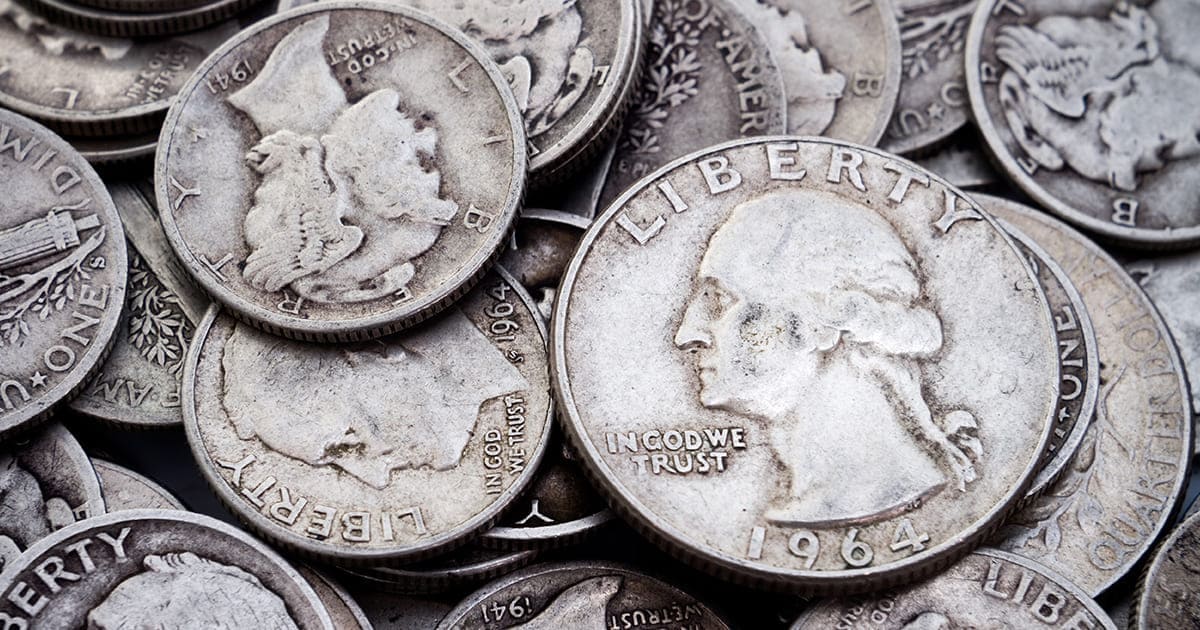
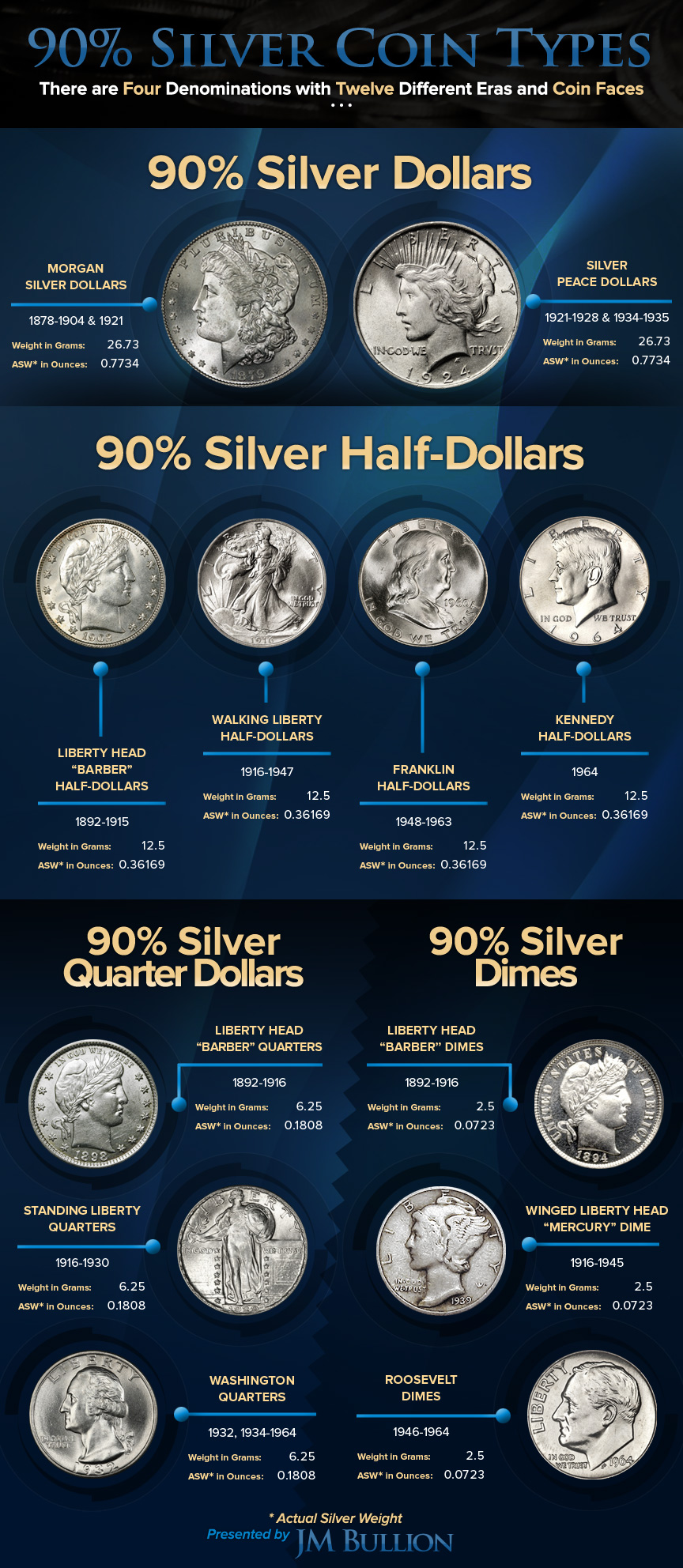
In the United States, a crucial date to remember is 1964. All dimes, quarters, and half-dollars minted for circulation before 1965 contain 90% silver and 10% copper. This includes:
- Dimes: Mercury Dimes (1916-1945), Roosevelt Dimes (1946-1964)
- Quarters: Standing Liberty Quarters (1916-1930), Washington Quarters (1932-1964)
- Half Dollars: Barber Half Dollars (1892-1915), Walking Liberty Half Dollars (1916-1947), Franklin Half Dollars (1948-1963), Kennedy Half Dollars (1964 only)
Any U.S. dollar coins (Morgan, Peace) minted before 1935 also contain 90% silver.
Post-1964 U.S. Half Dollars: The “40% Silver” Exception
While dimes and quarters made a complete transition to copper-nickel clad in 1965, the Kennedy Half Dollar had an intermediate silver content. Kennedy Half Dollars minted between 1965 and 1970 contain 40% silver. From 1971 onwards, circulating Kennedy Half Dollars became copper-nickel clad, with no silver content.
World Silver Coinage: Varying Purity and Dates
Identifying silver coins from other countries requires knowledge of their specific historical standards.
- Canadian Silver: Generally, Canadian dimes, quarters, and half-dollars minted before 1968 contain silver. From 1920-1967, most contained 80% silver. Some 1968 coins contained 50% silver before transitioning to nickel.
- Mexican Silver: Mexico has a rich history of silver coinage, with varying purities over time, from 72% to 90% in older circulating coins. Modern bullion coins like the Libertad are .999 fine.
- British Silver: Most British circulating silver coinage before 1947 contains silver (often 50% after 1920, and sterling silver 92.5% before 1920). Coins minted from 1947 onwards are generally copper-nickel.
- Other European Nations: Many European countries, particularly before 1960-1970, issued silver coins. Researching the specific country and denomination’s history is crucial.
Mint Marks, Edge Markings, and Sound Tests
Beyond dates and denominations, other indicators can help:
- Mint Marks: While not directly indicating silver content, specific mint marks (e.g., “S” for San Francisco Mint, “D” for Denver Mint) can help verify the coin’s authenticity and date.
- Edge Test: Silver coins, especially those with high purity, often have a distinct, slightly duller sheen compared to copper-nickel clad coins. Clad coins will clearly show a copper stripe along their edge.
- Ping Test (Sound Test): A common, though not foolproof, method involves gently dropping the coin onto a hard surface (like a wooden table). Silver coins tend to produce a higher-pitched, sustained “ping” sound, while clad coins produce a duller “thud.” This is best done by comparing with a known silver coin and a known clad coin.
- Weight and Magnet Test: Silver is non-magnetic. A magnet will not stick to a genuine silver coin. Weight can also be an indicator if you have exact specifications for comparison.
Modern Bullion Coins: Purity and Recognition
Modern silver bullion coins are designed to be easily identifiable. They typically have their weight and purity clearly stamped on them (e.g., “1 oz .999 Fine Silver”). Major government-issued bullion coins like the American Silver Eagle, Canadian Silver Maple Leaf, and Austrian Silver Philharmonic are globally recognized and highly liquid.
The Value Proposition of Silver Coins: Beyond Face Value
The allure of silver coins extends far beyond their historical context; they represent a unique asset class with several compelling financial and intrinsic benefits.
Intrinsic Value vs. Numismatic Value
The primary value driver for most silver coins is their intrinsic value, which is directly tied to the current spot price of silver. This is especially true for “junk silver” where the melt value significantly exceeds the coin’s face value. For example, a 1964 U.S. quarter, with a face value of $0.25, might contain several dollars worth of silver depending on the market.
However, some silver coins also possess numismatic value, which is their worth to collectors based on factors like rarity, condition, historical significance, mint mark, and demand. A rare date, a low mintage figure, or an exceptional grade can drastically increase a coin’s value far beyond its silver content. For instance, a pristine 1909-S VDB Lincoln Cent (which is not silver) or a rare proof silver coin can command thousands, if not hundreds of thousands, of dollars from collectors. Understanding the difference between intrinsic and numismatic value is crucial for both investors and collectors.

Silver as a Hedge Against Inflation
Historically, precious metals like silver have served as a reliable hedge against inflation. As the purchasing power of fiat currencies erodes due to inflation, the value of tangible assets like silver often tends to rise. This is because silver’s supply is finite, and its demand for industrial uses (electronics, solar panels, medical applications) and investment tends to persist or grow, regardless of monetary policy. Including silver coins in a portfolio can help preserve wealth during periods of economic uncertainty and currency devaluation.
Portfolio Diversification with Physical Assets
In an increasingly digitized and interconnected financial world, physical assets offer a unique form of portfolio diversification. Unlike stocks, bonds, or digital currencies, physical silver coins are tangible assets that are not subject to counterparty risk (the risk that the other party in a financial contract will not fulfill their obligations). They represent real wealth that can be held directly, offering a sense of security and independence from traditional financial systems. This tangibility makes them attractive to investors looking to diversify away from purely paper-based or digital investments.
Historical Significance and Collector Appeal
Beyond their financial utility, silver coins carry a profound historical weight. Each coin tells a story of the era in which it was minted, reflecting the artistry, political climate, and economic conditions of its time. For collectors, the appeal lies in preserving these tangible pieces of history, completing sets, or acquiring rare specimens. The joy of discovery, the intellectual challenge of research, and the aesthetic appreciation of numismatic art are powerful motivators for coin enthusiasts.
Collecting and Investing in Silver Coins: Best Practices
Engaging with silver coins, whether for investment or collecting, requires a thoughtful approach and adherence to best practices to maximize returns and enjoyment.
Setting Your Investment or Collection Goals
Before diving in, define your objectives. Are you primarily an investor seeking to accumulate silver content at the lowest premium possible? Or are you a collector focused on historical periods, specific denominations, or high-grade specimens for their numismatic value? Your goals will dictate the types of coins you pursue, where you buy them, and how you store them. Investors might favor modern bullion coins or “junk silver” for their direct silver exposure, while collectors might target specific pre-1965 rarities.
Research and Education: Knowing Your Coins
The world of silver coins is vast and complex. Thorough research is paramount. Understand the different purities, mint marks, key dates, and grading standards for the coins you’re interested in. Reputable numismatic guides, online forums, and academic resources can provide invaluable insights. For investors, staying abreast of silver spot prices and market trends is crucial. Ignorance can lead to overpaying or missing out on valuable opportunities.
Storage and Preservation: Protecting Your Investment
Physical silver coins require proper storage and preservation to maintain their value, especially numismatic pieces.
- Air-tight containers: Store coins in air-tight flips (PVC-free), capsules, or tubes to prevent tarnishing and environmental damage.
- Stable environment: Keep coins in a cool, dry place away from direct sunlight, extreme temperatures, and humidity.
- Security: For significant investments, consider a home safe, a safe deposit box, or specialized vaulting services.
- Handling: Always handle coins by their edges to avoid transferring oils and dirt from your skin, which can damage their surface and reduce their value. Never clean old coins unless you are an expert and know exactly what you are doing, as improper cleaning can severely diminish numismatic value.
Understanding Premiums and Spot Price
When buying silver coins, you will typically pay a “premium” above the current “spot price” of silver. The spot price is the current market price for one troy ounce of pure silver. The premium covers minting costs, dealer markup, shipping, and often reflects the coin’s scarcity or desirability. Bullion coins usually have lower premiums than rare numismatic coins. For investors, comparing premiums across different dealers and coin types is essential to ensure you are getting the most silver for your money. For collectors, the numismatic premium might be significantly higher but is justified by the coin’s rarity and condition.
Navigating the Market: Where to Buy and Sell Silver Coins
Engaging in the silver coin market requires knowledge of reliable sources and fair practices. The legitimacy of your counterparty is paramount.
Reputable Dealers and Online Marketplaces
For both buying and selling, reputable dealers are your safest bet.
- Local Coin Shops: Established local coin dealers often offer personalized service, expertise, and a chance to inspect coins in person.
- Online Bullion Dealers: Major online bullion retailers (e.g., JM Bullion, SD Bullion, APMEX) offer competitive pricing, wide selection, and secure shipping for bullion coins.
- Auction Sites (with caution): Platforms like eBay can offer good deals but come with higher risks of counterfeits or misrepresentation. Always check seller ratings, use buyer protection, and ideally, only purchase from highly-rated, specialized coin sellers.
Auctions and Coin Shows
For rare or higher-value numismatic coins, specialized coin auctions (e.g., Heritage Auctions, Stacks and Bowers) and major coin shows (e.g., FUN Show, ANA World’s Fair of Money) are excellent venues. These provide opportunities to view rare coins, learn from experts, and participate in a competitive bidding environment. For selling, consigning to a reputable auction house can maximize exposure for valuable pieces.
Verifying Authenticity and Fair Pricing
Always be vigilant about counterfeits, especially when buying online or from less reputable sources.
- Third-Party Grading (TPG): For high-value numismatic coins, consider buying coins graded and authenticated by independent services like PCGS (Professional Coin Grading Service) or NGC (Numismatic Guaranty Corporation).
- Due Diligence: Compare prices across multiple sources before making a purchase. Be wary of deals that seem “too good to be true.”
- Trust Your Gut: If a deal feels off, it probably is. Work with dealers who are transparent, knowledgeable, and have a strong reputation.
Legal and Tax Considerations
Depending on your jurisdiction and the value of your transactions, there may be legal and tax implications for buying and selling silver coins.
- Sales Tax: Some states or countries levy sales tax on precious metals purchases, while others have exemptions.
- Capital Gains Tax: Profits from selling silver coins (especially if held as an investment) may be subject to capital gains tax.
- Reporting Requirements: Large cash transactions involving precious metals might be subject to reporting requirements by dealers to government agencies.
It is advisable to consult with a financial advisor or tax professional to understand your specific obligations.
In conclusion, the question “which coins are silver?” opens a gateway to a fascinating intersection of history, finance, and material science. Whether you are driven by the pursuit of profit, the thrill of collecting, or the desire for tangible wealth, understanding silver coinage is a valuable endeavor. From the historical circulation coins that once underpinned global commerce to the high-purity bullion coins of today, silver continues to shine as an enduring symbol of value and a compelling asset in any well-diversified financial strategy.
aViewFromTheCave is a participant in the Amazon Services LLC Associates Program, an affiliate advertising program designed to provide a means for sites to earn advertising fees by advertising and linking to Amazon.com. Amazon, the Amazon logo, AmazonSupply, and the AmazonSupply logo are trademarks of Amazon.com, Inc. or its affiliates. As an Amazon Associate we earn affiliate commissions from qualifying purchases.