
In the modern digital economy, few names command as much recognition and influence as Google. However, to truly grasp the financial might behind this global phenomenon, one must look beyond the ubiquitous search engine to its parent company, Alphabet Inc. The question “what is the net worth of Google” is, in essence, an inquiry into the financial health, asset valuation, and overall economic significance of one of the world’s most valuable corporations. This article will delve into the intricacies of calculating and understanding the net worth of such a behemoth, focusing exclusively on the financial lens.
Deconstructing “Net Worth” for a Corporate Giant
The concept of “net worth” is fundamental in finance, representing the total value of an entity’s assets minus its total liabilities. While seemingly straightforward, applying this principle to a multi-national conglomerate like Alphabet Inc. involves a complex interplay of tangible and intangible values, market dynamics, and accounting principles.
Defining Net Worth: Assets Minus Liabilities
At its core, net worth is a simple equation: Assets – Liabilities = Net Worth. For an individual, assets might include cash, property, and investments, while liabilities are debts like mortgages or loans. For a corporation like Alphabet, this expands dramatically. Assets encompass not just physical property and cash reserves but also intellectual property, brand value, strategic investments, and the vast infrastructure supporting its global operations. Liabilities include everything from outstanding debts and lease obligations to deferred taxes and operational commitments. A high net worth generally indicates a strong financial position, reflecting a company’s ability to cover its obligations and retain significant value for its shareholders.
Public vs. Private Valuation: The Alphabet Inc. Context
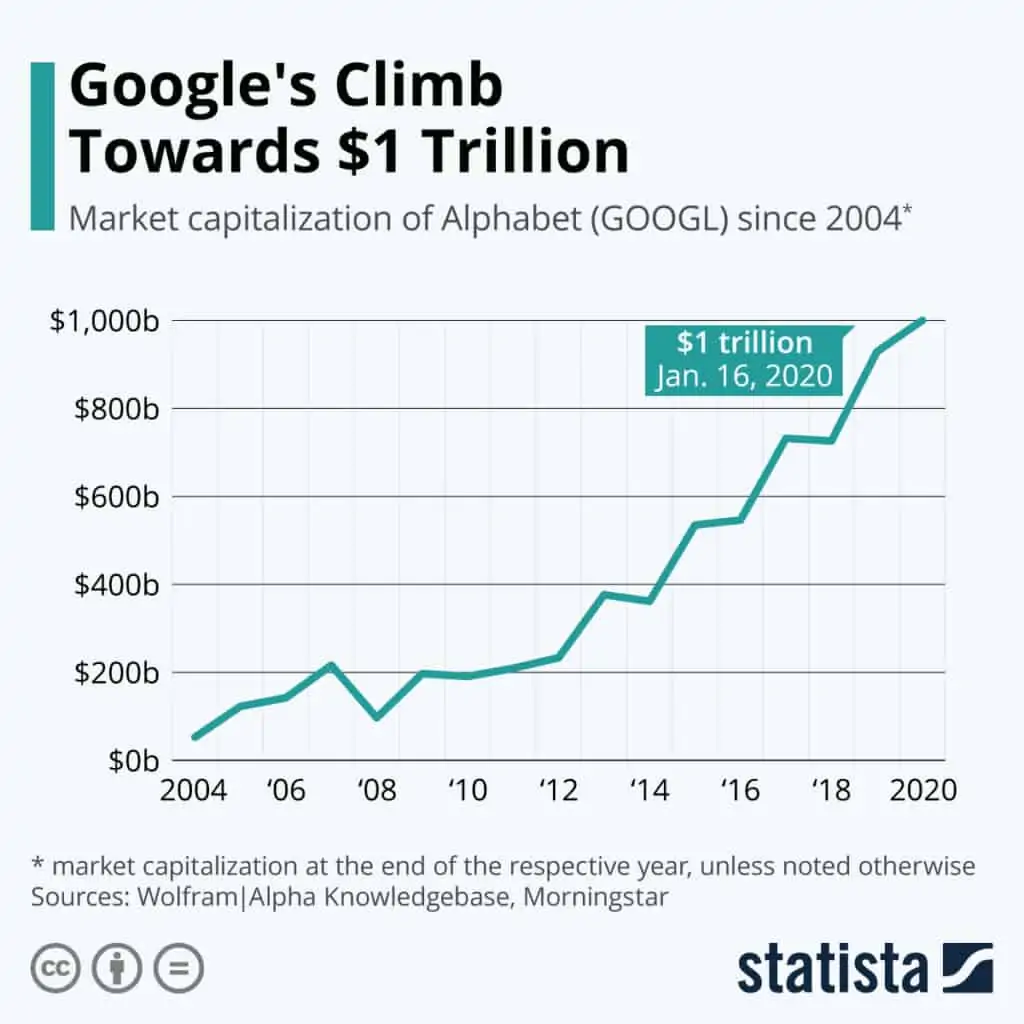
It’s crucial to distinguish between a privately held company and a publicly traded one. Alphabet Inc. is publicly traded on NASDAQ under the ticker symbols GOOGL (Class A shares) and GOOG (Class C shares). For publicly traded companies, “net worth” often correlates closely with market capitalization, which is the total value of all outstanding shares (share price multiplied by the number of shares). While market capitalization provides a real-time snapshot of how the market values the company, it is distinct from the book value net worth derived directly from the balance sheet. Market cap reflects future earnings potential, brand strength, and investor sentiment, often exceeding the book value significantly for growth-oriented tech companies. Alphabet’s market capitalization frequently fluctuates, often placing it among the top two or three most valuable companies globally, a testament to its perceived financial strength and future prospects.
The Dynamic Nature of Corporate Net Worth
Unlike a static figure, a company’s net worth is inherently dynamic. It changes constantly due to market fluctuations, operational performance, investment decisions, debt management, and economic conditions. Quarterly earnings reports, balance sheet updates, and strategic announcements by Alphabet all impact how investors and analysts perceive its value. Furthermore, the valuation of intangible assets, which are particularly significant for a tech company, can be subjective and subject to re-evaluation based on market trends and competitive landscape. Understanding this fluidity is key to appreciating the complexity of assessing a giant like Alphabet.
Alphabet Inc.’s Asset Portfolio: The Engines of Value
Alphabet’s immense net worth is underpinned by a diverse and strategically managed asset portfolio, ranging from hard physical assets to priceless intellectual property and a network of innovative subsidiaries.
Tangible Assets: Real Estate, Infrastructure, and Cash Reserves
While Google is synonymous with digital services, its operations rely on a vast physical infrastructure. Alphabet owns extensive real estate globally, including its iconic Googleplex headquarters in Mountain View, California, and numerous data centers worldwide. These data centers, housing millions of servers, represent a massive investment in physical infrastructure crucial for delivering its services. Furthermore, Alphabet consistently maintains substantial cash and marketable securities reserves, often in the hundreds of billions of dollars. These reserves provide financial flexibility, enabling strategic acquisitions, investments in research and development, and a robust buffer against economic downturns. These tangible assets form a bedrock of its balance sheet.
Intangible Assets: Brand Value, Patents, and Intellectual Property
For a technology company, intangible assets often far outweigh tangible ones in terms of value. Google’s brand itself is one of the most recognized and valuable brands globally. This brand equity drives customer loyalty, attracts top talent, and commands premium advertising rates. Beyond the brand, Alphabet possesses an enormous portfolio of patents covering everything from search algorithms and artificial intelligence to autonomous driving technologies and cloud computing innovations. These patents protect its technological edge and represent a significant barrier to entry for competitors. Its vast intellectual property, including proprietary software, algorithms, and data sets, is arguably its most critical asset, providing the foundation for its diverse product ecosystem.
Subsidiaries and Strategic Investments: A Diverse Portfolio
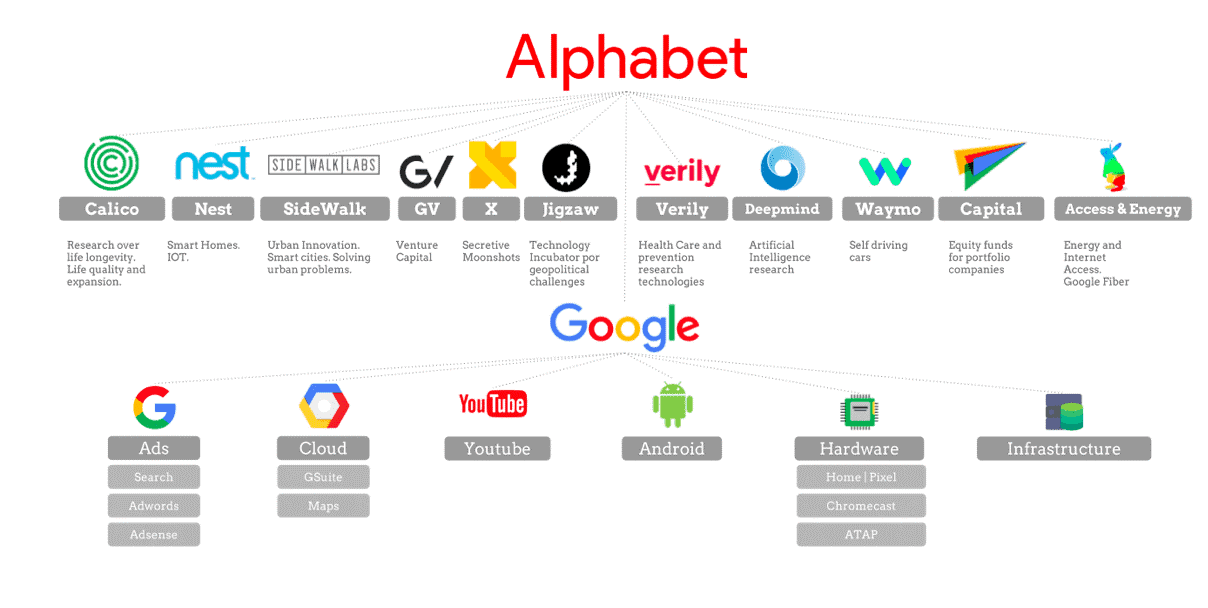
Alphabet is not just Google. Under its umbrella, it holds a multitude of subsidiaries and “Other Bets” that contribute to its overall valuation and future growth potential. Key examples include:
- Google Cloud: A rapidly growing segment competing in the enterprise cloud computing market, generating substantial revenue and future potential.
- Waymo: A leader in autonomous driving technology, representing a significant long-term investment in a transformative industry.
- Verily and Calico: Life sciences companies focused on health, longevity, and disease prevention, showcasing Alphabet’s commitment to moonshot projects with potentially massive future returns.
- DeepMind: A leading AI research company pushing the boundaries of artificial intelligence.
These subsidiaries, while some are still in early stages of monetization, represent diversified assets that could become significant revenue drivers or provide strategic advantages in emerging markets, thus adding considerable value to Alphabet’s net worth.
Market Capitalization vs. Book Value: The Investor’s Perspective
While book value net worth (assets minus liabilities from the balance sheet) provides an accounting perspective, investors typically focus on market capitalization as the most relevant real-time valuation. Alphabet’s market capitalization routinely stands in the multi-trillion-dollar range, reflecting the market’s collective belief in its ability to generate future earnings and growth. This market valuation incorporates expectations about its advertising dominance, cloud growth, AI leadership, and potential success of its “Other Bets.” The difference between a company’s book value and its market cap is often attributed to its intangible assets, future growth prospects, and the overall confidence investors have in its management and strategic direction.
Assessing the Liabilities: What Alphabet Owes
Understanding a company’s net worth also necessitates a thorough examination of its liabilities. While Alphabet Inc. is renowned for its financial strength, like any large corporation, it carries various obligations that must be balanced against its assets.
Debt Obligations and Financial Commitments
Alphabet, despite its massive cash reserves, does utilize debt for various purposes, such as financing capital expenditures for data centers, share buybacks, or strategic acquisitions. These debt obligations, including bonds, loans, and lease commitments, represent financial commitments that reduce its net assets. However, given its strong credit rating and robust cash flow, Alphabet typically maintains a conservative debt-to-equity ratio, indicating a healthy ability to service its debt. The nature and extent of these liabilities are carefully monitored by investors as indicators of financial risk.
Operational Liabilities and Future Payouts
Beyond traditional debt, Alphabet incurs various operational liabilities. These include accounts payable (money owed to suppliers), deferred revenue (payments received for services not yet delivered), and accrued expenses (e.g., employee salaries and benefits not yet paid). Additionally, the company faces potential future payouts related to legal proceedings, regulatory fines, and employee stock-based compensation plans, which, while not immediate cash outlays, represent future obligations. Managing these operational liabilities efficiently is crucial for maintaining a strong balance sheet and ensuring liquidity.
The Impact of Stock-Based Compensation and Shareholder Equity
A significant component of a tech giant’s financial structure is shareholder equity, which is essentially the net worth attributable to the owners (shareholders). This includes retained earnings (profits not distributed as dividends) and capital contributed by shareholders. Stock-based compensation, a common practice in tech to attract and retain talent, impacts shareholder equity by diluting existing shares or increasing compensation expenses. While beneficial for employee motivation, it’s a financial instrument that analysts consider when evaluating the true cost of operations and the potential impact on earnings per share.
Key Financial Metrics Driving Alphabet’s Valuation
Beyond the static balance sheet, Alphabet’s ongoing operational performance, reflected in its income statements and cash flow statements, provides critical insights into its underlying value and future potential.
Revenue Streams: Advertising Dominance, Cloud Computing, and Other Bets
Alphabet’s revenue generation is overwhelmingly dominated by its advertising business, primarily through Google Search and YouTube Ads. This segment consistently generates tens of billions of dollars each quarter, fueled by its unparalleled reach and sophisticated advertising technologies. However, Google Cloud has emerged as a significant and rapidly growing secondary revenue stream, competing directly with AWS and Azure in the enterprise cloud market. “Other Bets” also contribute, albeit on a smaller scale, reflecting diversified investments that could become major revenue sources in the long term. The consistent growth across these segments is a primary driver of investor confidence and market valuation.
Profitability: Operating Income and Net Income Trends
Profitability is paramount. Alphabet’s ability to translate its massive revenue into substantial operating income and net income is a key indicator of its efficiency and market power. Operating income reflects profits from core business operations before interest and taxes, while net income is the “bottom line” profit available to shareholders. Analysts closely scrutinize these figures, along with profit margins, to assess the company’s financial health and its ability to sustain growth while managing costs. Alphabet’s consistently high profitability underscores its dominant market positions and efficient operations.
Cash Flow Generation: A Sign of Financial Health
Perhaps the most robust indicator of a company’s financial health is its ability to generate significant free cash flow. Free cash flow (cash from operations minus capital expenditures) represents the cash a company has left after paying for its operating expenses and capital investments. Alphabet’s consistent generation of massive free cash flow allows it to fund research and development, make strategic acquisitions, pay down debt, and return capital to shareholders through share buybacks. Strong free cash flow signals financial resilience and provides the flexibility to invest in future growth opportunities without relying heavily on external financing.
Return on Investment (ROI) and Shareholder Value
For investors, the ultimate measure is the return on their investment. Metrics like Return on Equity (ROE) and Return on Assets (ROA) help assess how effectively Alphabet uses shareholder capital and its assets to generate profits. Ultimately, the company’s financial strategies, including share buybacks (which reduce the number of outstanding shares and can boost earnings per share) and prudent capital allocation, are aimed at maximizing shareholder value, contributing directly to the perception and reality of its net worth.
The Broader Economic Impact and Future Outlook
Alphabet’s net worth is not just a figure on a balance sheet; it represents a powerful economic engine with far-reaching implications and a continually evolving future.
Influence on Global Financial Markets
As one of the world’s largest companies by market capitalization, Alphabet Inc. exerts considerable influence on global financial markets. Its stock performance can impact major indices, and its financial health is often seen as a bellwether for the broader technology sector and even the economy. Large institutional investors hold significant stakes in Alphabet, making its financial results closely watched worldwide. Its ability to raise capital, engage in large-scale M&A, and drive innovation shapes investment trends and competitive landscapes.
Strategic Investments and Future Growth Drivers
Alphabet’s continued investment in cutting-edge technologies like artificial intelligence, quantum computing, autonomous vehicles, and life sciences ensures its relevance and potential for future growth. These strategic bets, though sometimes expensive in the short term, are designed to create new markets or dominate existing ones, thus securing long-term revenue streams and bolstering its future net worth. The company’s commitment to R&D is a testament to its forward-looking strategy, aiming to stay ahead of technological curves.
Challenges and Risks: Regulatory Scrutiny, Competition, and Market Volatility
Despite its immense financial strength, Alphabet faces significant challenges that could impact its future net worth. Regulatory scrutiny, particularly concerning antitrust, privacy, and content moderation, is an ongoing concern in various jurisdictions. Intense competition in its core advertising, cloud, and AI segments from tech giants like Meta, Amazon, Apple, and Microsoft requires constant innovation and strategic defense. Furthermore, global economic volatility, supply chain disruptions, and geopolitical tensions can all introduce market risks that affect its valuation and operational stability. Navigating these complexities will be critical for maintaining its financial prowess.

The Enduring Value Proposition of Alphabet
Ultimately, the net worth of Google (Alphabet Inc.) is a reflection of its enduring value proposition: an ecosystem of indispensable products and services that power the global digital economy. From connecting billions through search and Android to empowering businesses with cloud infrastructure and pushing the boundaries of AI, Alphabet’s financial strength is a direct consequence of its ability to innovate, scale, and monetize its technological leadership. Its net worth is a dynamic testament to its past achievements, current dominance, and vast potential for future financial growth and societal impact.
aViewFromTheCave is a participant in the Amazon Services LLC Associates Program, an affiliate advertising program designed to provide a means for sites to earn advertising fees by advertising and linking to Amazon.com. Amazon, the Amazon logo, AmazonSupply, and the AmazonSupply logo are trademarks of Amazon.com, Inc. or its affiliates. As an Amazon Associate we earn affiliate commissions from qualifying purchases.