
The world of cryptocurrency and blockchain technology often presents a complex tapestry of terms, protocols, and digital assets. Among these, XRP stands out as a prominent digital asset, frequently discussed in financial news and technological forums alike. However, a common misconception arises when people attempt to categorize XRP within the broader blockchain ecosystem, often mistakenly associating it with popular platforms like Ethereum or Bitcoin. The truth is, XRP operates on its own unique, purpose-built blockchain, known as the XRP Ledger (XRPL). This distinction is not merely semantic; it speaks to fundamental architectural differences, design philosophies, and technological capabilities that set XRP and its ledger apart from many of its peers. Understanding the XRPL is crucial for anyone looking to grasp the true technical underpinning and potential applications of XRP.
Unpacking the XRP Ledger: Beyond Traditional Blockchains
The XRP Ledger is not just another blockchain; it is a distributed ledger technology meticulously engineered for speed, efficiency, and scalability, primarily for facilitating fast, low-cost international payments. Its design choices reflect a deliberate departure from the more energy-intensive and slower consensus mechanisms found in earlier blockchain iterations.
The Genesis of XRP and Ripple
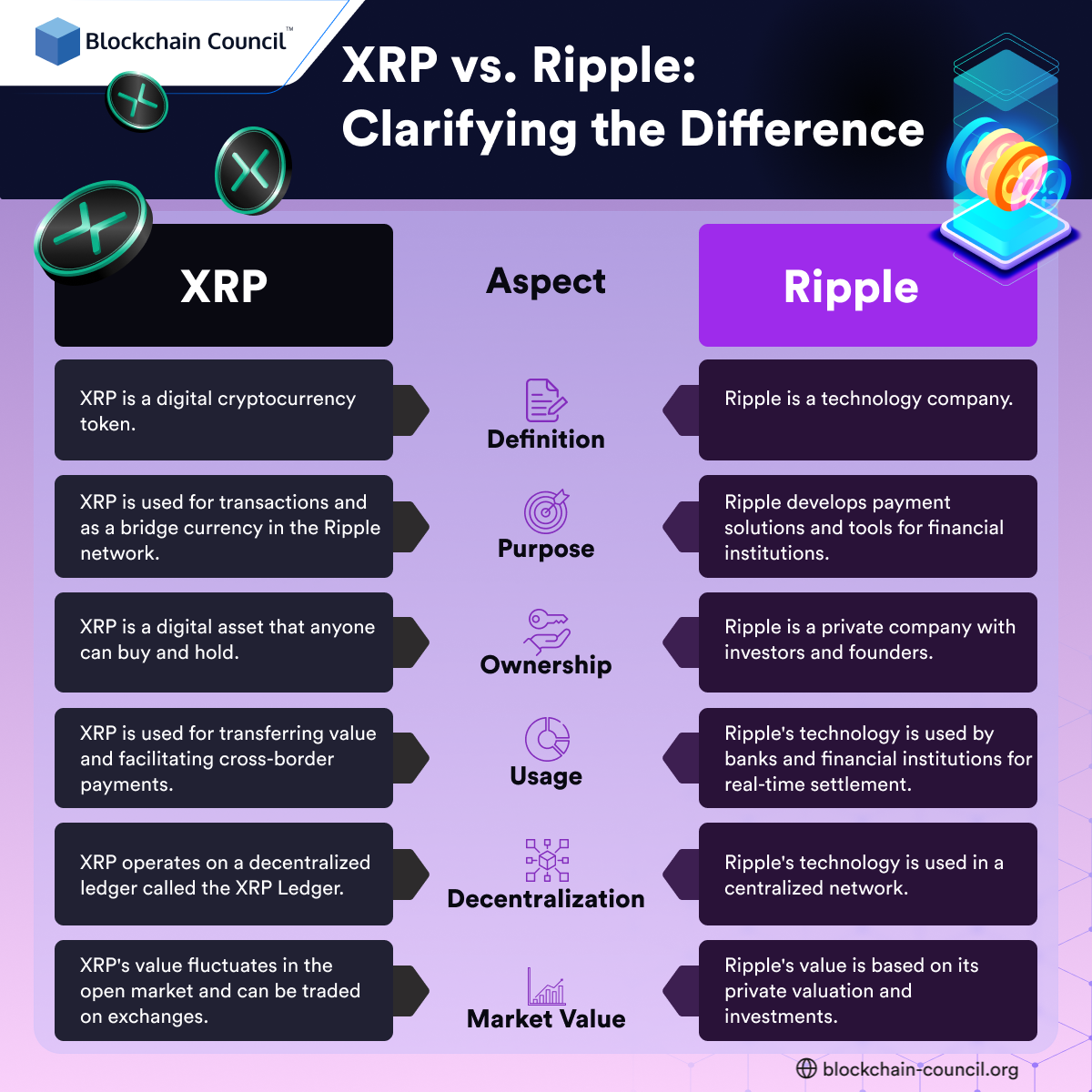
XRP was created in 2012 by Jed McCaleb, Arthur Britto, and David Schwartz, preceding many of the major cryptocurrencies we know today. Soon after, the company Ripple (initially OpenCoin) was founded to develop and promote the XRP Ledger and its applications, particularly for institutional use in global payments. While often conflated, it’s important to differentiate: XRP is the native digital asset on the XRP Ledger, and Ripple is the company that utilizes the XRPL and XRP in its products and services, such as RippleNet, to offer financial institutions more efficient ways to send money globally. The core purpose of XRP within this ecosystem is to act as a bridge currency, enabling quick and inexpensive conversion between different fiat currencies or other digital assets without requiring pre-funded nostro/vostro accounts.
Distinguishing Features of the XRP Ledger (XRPL)
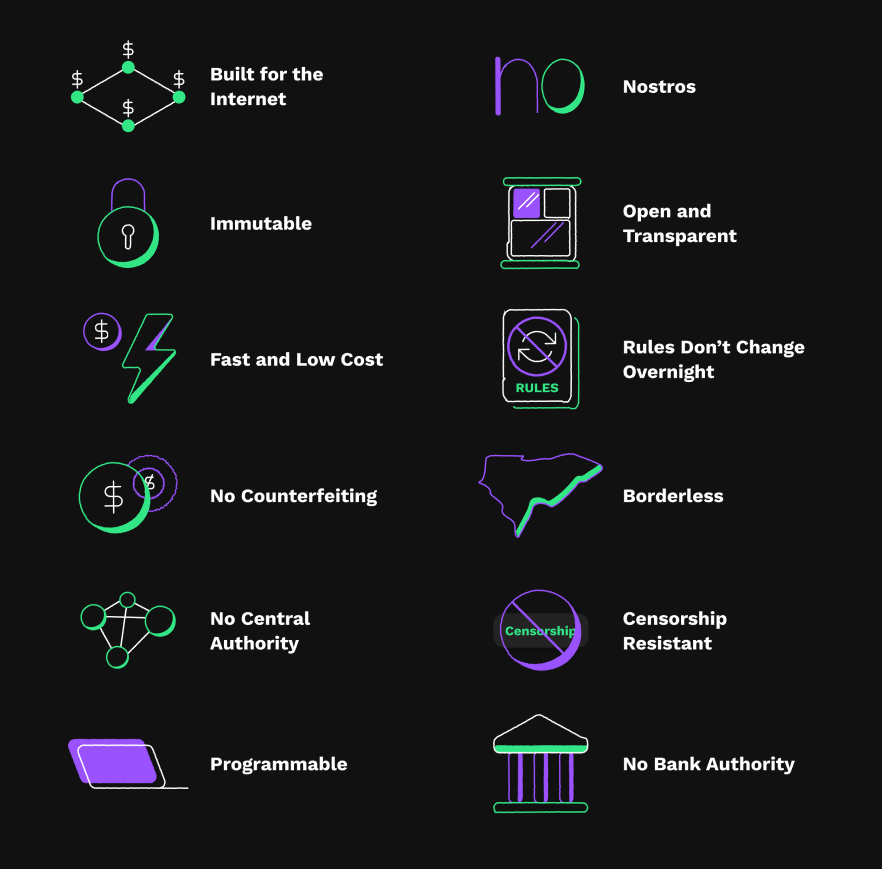
At its heart, the XRPL is designed for functionality that directly addresses the shortcomings of traditional banking systems and, to some extent, even early blockchains. Unlike Bitcoin’s Proof-of-Work (PoW) or Ethereum’s (now) Proof-of-Stake (PoS), the XRPL employs a unique consensus algorithm known as the XRP Ledger Consensus Protocol. This protocol allows for transaction validation and ledger closing in typically 3-5 seconds, a stark contrast to the minutes or even hours required by other networks. This rapid finality is critical for payment systems where speed is paramount. Moreover, the XRPL boasts impressive throughput, capable of handling 1,500 transactions per second (TPS) natively, with potential for significantly more under certain conditions, far exceeding the single-digit TPS of Bitcoin and Ethereum. This efficiency also translates into incredibly low transaction costs, often fractions of a cent, making it viable for even micro-payments.
Validators and the Unique Consensus Protocol
The XRP Ledger’s consensus mechanism relies on a network of independent validating servers. These validators don’t mine blocks in the way PoW systems do; instead, they propose and agree upon a set of transactions to be included in the next version of the ledger. Each validator maintains a Unique Node List (UNL) of trusted validators, which it believes will not conspire to defraud it. For a transaction set to be validated and added to the ledger, a supermajority (typically 80%) of validators on a node’s UNL must agree on the order and validity of transactions. This approach is often referred to as a form of federated Byzantine agreement (FBA). The UNL is chosen by individual validators, promoting decentralization over time as more entities operate validators and curate their lists independently. This model prioritizes speed and security for its intended use case, making it highly energy-efficient compared to PoW, as it doesn’t involve competitive mining.
Architectural Advantages for Financial Transactions
The technical architecture of the XRP Ledger has been meticulously crafted to address the specific demands of high-volume, low-latency financial transactions, offering a compelling alternative to traditional banking infrastructure.
Speed and Scalability: A Core Mandate
The XRPL’s consensus mechanism is optimized for rapid transaction finality. When a transaction is submitted to the network, it is typically processed and confirmed within 3 to 5 seconds. This near-instant settlement is a game-changer for cross-border payments, where traditional methods can take days. The architecture also allows for high scalability, supporting thousands of transactions per second. This capacity is vital for enterprise-level adoption, ensuring the network can handle significant transactional load without congestion or increased fees, a common issue on less scalable blockchains. This blend of speed and scalability positions the XRPL as a robust backbone for global financial operations.
Cost-Effectiveness and Micropayments
One of the most attractive features of the XRP Ledger from a financial perspective is its extremely low transaction fees. Each transaction on the XRPL incurs a small fee, typically a fraction of a cent, which is intentionally burned (destroyed) rather than paid to validators. This burning mechanism serves to slightly deflate the total supply of XRP over time, discouraging spam and ensuring the network remains efficient. These minimal costs make the XRPL ideal not only for large institutional transfers but also for micropayments and novel use cases that involve frequent, small-value transactions, which would be economically unfeasible on networks with higher fees.
Bridging Traditional Finance and Digital Assets
Ripple, the company, has significantly leveraged the XRPL and XRP to build products that bridge the gap between traditional financial institutions and the burgeoning world of digital assets. RippleNet is a global network of financial institutions that use Ripple’s technology to send money globally. A key component of RippleNet is On-Demand Liquidity (ODL), which utilizes XRP as a bridge currency. ODL allows financial institutions to instantly source liquidity for cross-border payments without needing to pre-fund accounts in destination currencies. For example, a bank in the U.S. wanting to send USD to Mexico can convert USD to XRP on the XRPL, send the XRP to a Mexican exchange, which then instantly converts the XRP to MXN, all within seconds and with minimal fees. This eliminates the need for correspondent banking relationships and their associated delays and costs, directly addressing inefficiencies in a multi-trillion-dollar industry.
Beyond Payments: Expanding Use Cases of the XRPL
While its primary design objective was payments, the XRP Ledger is a versatile platform supporting a growing array of functionalities that extend beyond simple transfers, showcasing its capabilities as a comprehensive blockchain ecosystem.
Decentralized Exchange (DEX) Functionality
A notable feature of the XRPL is its native, built-in Decentralized Exchange (DEX). Unlike many blockchain platforms where DEX functionality is provided by smart contracts or third-party applications, the XRPL’s DEX is a core component of the ledger itself. This means users can directly trade any asset issued on the XRPL (including XRP, fiat-backed stablecoins, or other digital tokens) against any other asset, without relying on an intermediary or experiencing counterparty risk common with centralized exchanges. The native DEX allows for transparent order books, efficient matching engines, and atomic swaps, providing a powerful tool for liquidity provision and asset exchange directly on-chain, leveraging the XRPL’s speed and low fees.
Tokenization and Asset Issuance
The XRP Ledger supports the issuance and management of custom tokens, enabling individuals and businesses to tokenize a wide range of assets. This could include stablecoins pegged to fiat currencies, loyalty points, real estate, commodities, or even entirely new digital assets. The XRPL’s robust infrastructure provides the necessary tools for creating, distributing, and trading these tokens securely and efficiently. This capability opens doors for innovative applications in various sectors, from supply chain finance to gaming, where fractional ownership, transparent transfer, and immutable record-keeping are highly beneficial. The ease of token creation and low transaction costs make the XRPL an attractive platform for asset tokenization projects.
Smart Contracts and Hooks Amendments
Historically, the XRP Ledger has been known for its efficiency in payments rather than complex smart contract capabilities comparable to Ethereum. However, the XRPL ecosystem is continuously evolving. The introduction of “Hooks” is a significant development designed to bring smart contract-like functionality to the XRPL. Hooks are small, efficient pieces of code that can be attached to XRP Ledger accounts, enabling custom logic to be executed before or after transactions. This allows for conditional payments, automated actions, and more sophisticated interactions on the ledger without compromising its core performance. While not a full Turing-complete smart contract platform in the vein of Ethereum, Hooks offer a practical and secure way to extend the XRPL’s utility for specific, high-value use cases, maintaining the ledger’s speed and low transaction costs. This ongoing development showcases the XRPL’s commitment to adapting to broader blockchain trends while staying true to its performance-centric design.
Security and Decentralization Considerations
The integrity and resilience of any blockchain system are paramount. The XRP Ledger’s unique consensus mechanism and operational framework incorporate specific design choices to ensure security and foster a practical level of decentralization suitable for its mission.
The UNL Model and Network Resilience
The XRP Ledger’s Unique Node List (UNL) model, wherein each validating server curates a list of other trusted validators, is central to its security and decentralization strategy. While detractors sometimes argue it’s less decentralized than a fully open Proof-of-Work network, proponents highlight its effectiveness. The UNL ensures that consensus is reached rapidly and reliably, even in the presence of malicious or faulty nodes, as long as a supermajority of trusted nodes agree. The diversity and independence of the validators on the network are critical for its resilience. Over time, as more diverse entities (universities, businesses, individual developers) run validators and independently select their UNLs, the network’s decentralization strengthens, reducing the reliance on any single entity. This distributed trust model is designed to prevent single points of failure and resist censorship.
Mitigating Risks and Ensuring Integrity
Security on the XRPL is multifaceted. The consensus protocol itself is designed to be highly resistant to attacks like double-spending, as transactions are validated and finalized within seconds across the network. The burning of transaction fees also mitigates spam attacks, making it economically unfeasible to flood the network with junk transactions. Additionally, the XRPL codebase is open source, allowing for public scrutiny and continuous improvement by a global community of developers. This transparency helps identify and patch vulnerabilities proactively. While no system is entirely immune, the XRPL’s architecture focuses on maintaining a high degree of integrity and uptime, crucial for financial applications where trust and reliability are paramount.
Regulatory Landscape and its Impact on XRPL Adoption
The regulatory environment significantly impacts the technological adoption and growth of any blockchain. For the XRPL and XRP, the ongoing legal clarity (or lack thereof in certain jurisdictions) directly influences how financial institutions and developers can integrate with the technology. From a purely technological standpoint, regulatory uncertainty can slow down enterprise adoption, as companies naturally shy away from innovative solutions that might expose them to unforeseen legal risks. Conversely, clear and favorable regulations can accelerate the integration of the XRPL’s efficient payment technology into existing financial infrastructures, enabling broader use cases for ODL and other XRPL-based solutions. Understanding the tech requires an appreciation for the external forces shaping its path to widespread integration.
The Future Trajectory of the XRP Ledger
The XRP Ledger is not a static technology; it is a continually evolving platform, driven by a dedicated developer community and strategic visions for its future role in the global financial and digital landscape.
Continuous Innovation and Developer Ecosystem
The XRPL’s roadmap includes ongoing amendments and feature enhancements, spearheaded by the community and organizations like RippleX (Ripple’s developer arm). These innovations aim to expand the ledger’s capabilities, from new cryptographic primitives to further improvements in scalability and efficiency. The growth of the XRPL developer ecosystem is crucial for this evolution, fostering the creation of new applications, tools, and services built on the ledger. Hackathons, grants, and educational initiatives are actively encouraging developers to explore the XRPL’s potential, ensuring a steady stream of innovation that will broaden its utility beyond its core payment functionality.
Interoperability and Cross-Chain Potential
In an increasingly multi-chain world, interoperability is key. The XRP Ledger is well-positioned to play a significant role in connecting various blockchain networks and traditional financial systems. Its efficiency as a bridge asset makes it a natural candidate for facilitating value transfer between different digital ecosystems. Efforts towards cross-chain communication and atomic swaps involving the XRPL are under continuous development, aiming to allow seamless interaction between the XRPL and other blockchains. This will enhance the overall liquidity and flexibility of the digital asset space, positioning the XRPL as a central hub for value exchange.

The Role of the XRPL in the Broader Blockchain Landscape
The XRP Ledger occupies a unique niche within the broader blockchain landscape. While networks like Ethereum focus on general-purpose smart contracts and decentralized applications, and Bitcoin primarily serves as a store of value, the XRPL excels in fast, low-cost asset transfers and payments. Its design choices make it particularly suitable for institutional adoption in financial services, where high throughput, low latency, and cost-effectiveness are paramount. As the digital economy matures, the XRPL’s specialized capabilities will likely ensure its continued relevance, offering a powerful, efficient, and reliable infrastructure for the movement of value across borders and between diverse digital and traditional systems. Its future is tied to its ability to adapt, innovate, and continue delivering on its promise of efficient global value exchange.
aViewFromTheCave is a participant in the Amazon Services LLC Associates Program, an affiliate advertising program designed to provide a means for sites to earn advertising fees by advertising and linking to Amazon.com. Amazon, the Amazon logo, AmazonSupply, and the AmazonSupply logo are trademarks of Amazon.com, Inc. or its affiliates. As an Amazon Associate we earn affiliate commissions from qualifying purchases.