
In the rapidly evolving landscape of digital finance, tools like Cash App have become indispensable for millions, offering a convenient platform for sending, receiving, and managing money. While its peer-to-peer payment functionality is widely known, understanding how to effectively withdraw funds is paramount for comprehensive financial management. For many, Cash App isn’t just a fleeting convenience; it’s an integral part of their personal finance ecosystem, facilitating everything from splitting bills with friends to receiving freelance payments. This guide delves into the various methods for taking money out of Cash App, exploring the financial implications, security considerations, and best practices to ensure your funds are accessible when you need them, without unnecessary friction or cost.
Cash App as a Financial Hub: Beyond Peer-to-Peer Payments
Cash App has transcended its initial role as a simple peer-to-peer payment service to become a multifaceted financial tool. For many users, it functions as a primary or secondary digital wallet, capable of holding balances, facilitating direct deposits, and even enabling investments in stocks and Bitcoin. This expansion signifies a broader trend in personal finance, where traditional banking models are increasingly complemented—or even challenged—by agile fintech solutions. Understanding Cash App’s capabilities beyond merely sending money is the first step towards leveraging it as an effective part of your overall financial strategy.
The Evolving Role of Digital Wallets
Digital wallets like Cash App represent a significant shift in how individuals interact with their money. They offer unparalleled convenience, speed, and often lower transaction costs compared to traditional banking methods for certain operations. This evolution has empowered users with greater control over their funds, enabling instant transfers, simplified budgeting through categorization (if used thoughtfully), and immediate access to digital currency. However, this convenience also necessitates a clear understanding of how these platforms integrate with conventional financial systems, particularly when it comes to converting digital balances into tangible cash or bank funds. For those who receive payments or manage funds primarily through Cash App, knowing the withdrawal mechanisms is crucial to ensure liquidity and financial flexibility.
Why Understanding Withdrawal Options is Crucial for Financial Management
While it’s easy to send money within Cash App or use its associated Cash Card for direct purchases, the true test of any digital financial tool lies in its ability to seamlessly return funds to more traditional avenues when needed. Whether you need to pay a bill that doesn’t accept card payments, withdraw cash for daily expenses, or transfer a significant sum to a savings account, having a clear grasp of Cash App’s withdrawal options is vital. Misunderstanding these processes can lead to unexpected fees, delays, or even temporary unavailability of funds, disrupting personal financial planning. A proactive approach to learning these methods ensures that your Cash App balance is a liquid asset, not a locked-in digital sum.
Your Options for Accessing Funds: Cash App Withdrawal Methods
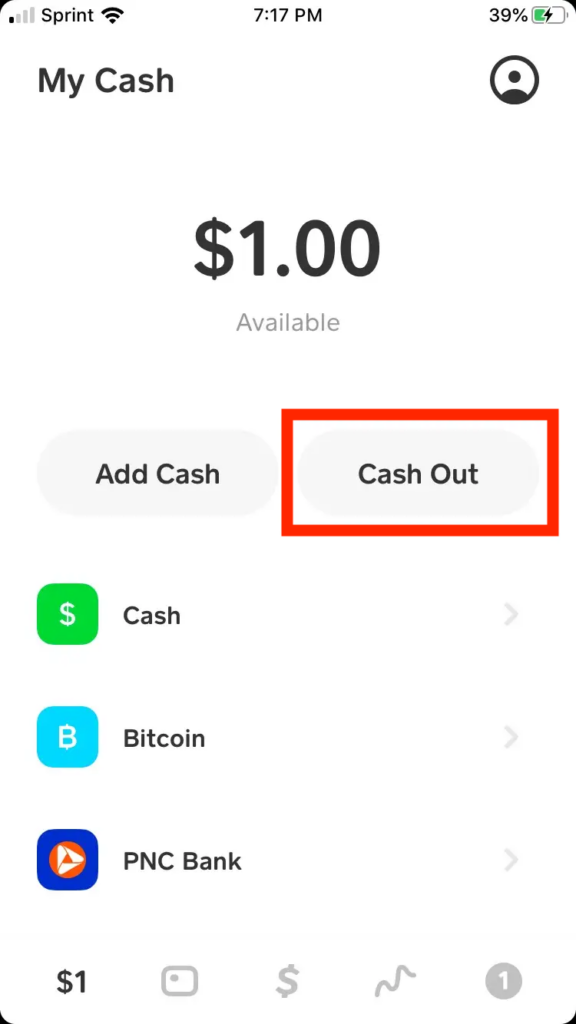
Cash App provides several flexible options for users to access their funds, catering to different needs for speed and convenience. Each method comes with its own set of characteristics regarding fees and processing times, making it important for users to choose the option that best suits their immediate financial requirements. The primary methods involve depositing funds to a linked bank account or utilizing the Cash Card.
Instant Deposit to a Linked Bank Account
For those who need immediate access to their funds, Cash App offers an instant deposit option. This method allows you to transfer your Cash App balance directly to your linked debit card (which is tied to your bank account) within minutes, typically reaching your bank account almost instantaneously. The speed of this service comes with a small convenience fee, which is usually a percentage of the transferred amount (e.g., 0.5% to 1.75%, subject to change). This fee makes instant deposits a trade-off between speed and cost, making it ideal for urgent financial needs such as covering an unexpected expense or avoiding an overdraft fee on your primary bank account. It’s important to verify the exact fee percentage within the app before initiating an instant transfer to avoid surprises.
Standard Deposit to a Linked Bank Account
If immediacy isn’t a critical factor, the standard deposit option is the most cost-effective way to transfer funds from Cash App to your linked bank account. This method is typically free of charge. However, the trade-off is the processing time. Standard deposits usually take 1-3 business days to reflect in your bank account, depending on your bank’s processing times and the time of day the transfer is initiated. This option is perfect for planned transfers, such as moving your weekly budget into your checking account or transferring saved funds to a savings account without incurring any additional fees. It reinforces the importance of planning and foresight in personal finance, allowing you to save on transaction costs.
Using the Cash Card at ATMs
The Cash Card, a customizable debit card issued by Cash App and powered by Visa, provides another powerful way to access your funds. Once activated and linked to your Cash App balance, the Cash Card can be used at any ATM that accepts Visa. This offers direct cash withdrawal capabilities, similar to a traditional debit card. However, it’s crucial to be aware of the fees involved. While Cash App generally doesn’t charge its own ATM withdrawal fees if you have direct deposit set up (otherwise, there might be a small fee per withdrawal), the ATM operator itself will almost certainly levy a surcharge. These surcharges can vary significantly, typically ranging from $2 to $5 per transaction. To mitigate these costs, users should look for ATMs that are part of surcharge-free networks or strategically plan their withdrawals to minimize frequency. For those without direct deposit, the first ATM withdrawal fee may be waived, but subsequent ones will incur a fee from Cash App as well as the ATM operator.
Spending Directly with Your Cash Card
While not a direct “withdrawal” in the sense of transferring money out or getting cash, spending directly with your Cash Card is an effective way to utilize your Cash App balance without any additional steps or fees (beyond standard merchant processing, which is usually absorbed by the merchant, not the cardholder). The Cash Card functions like any other debit card: you can use it for online purchases, in-store transactions, and even recurring bill payments. This method is often the most convenient and cost-efficient way to use the money held in your Cash App, effectively bypassing the need to withdraw it to a bank account or as physical cash. It integrates your digital balance seamlessly into your daily spending habits, making Cash App a truly practical financial instrument.
Understanding the Financial Implications: Fees, Limits, and Timelines
Effective financial management with Cash App necessitates a clear understanding of the financial implications tied to each withdrawal method. Fees can erode your balance, limits can restrict access, and varying timelines can impact your liquidity. Being fully informed about these factors allows for strategic decision-making, ensuring you manage your funds efficiently and economically.
Deciphering Withdrawal Fees
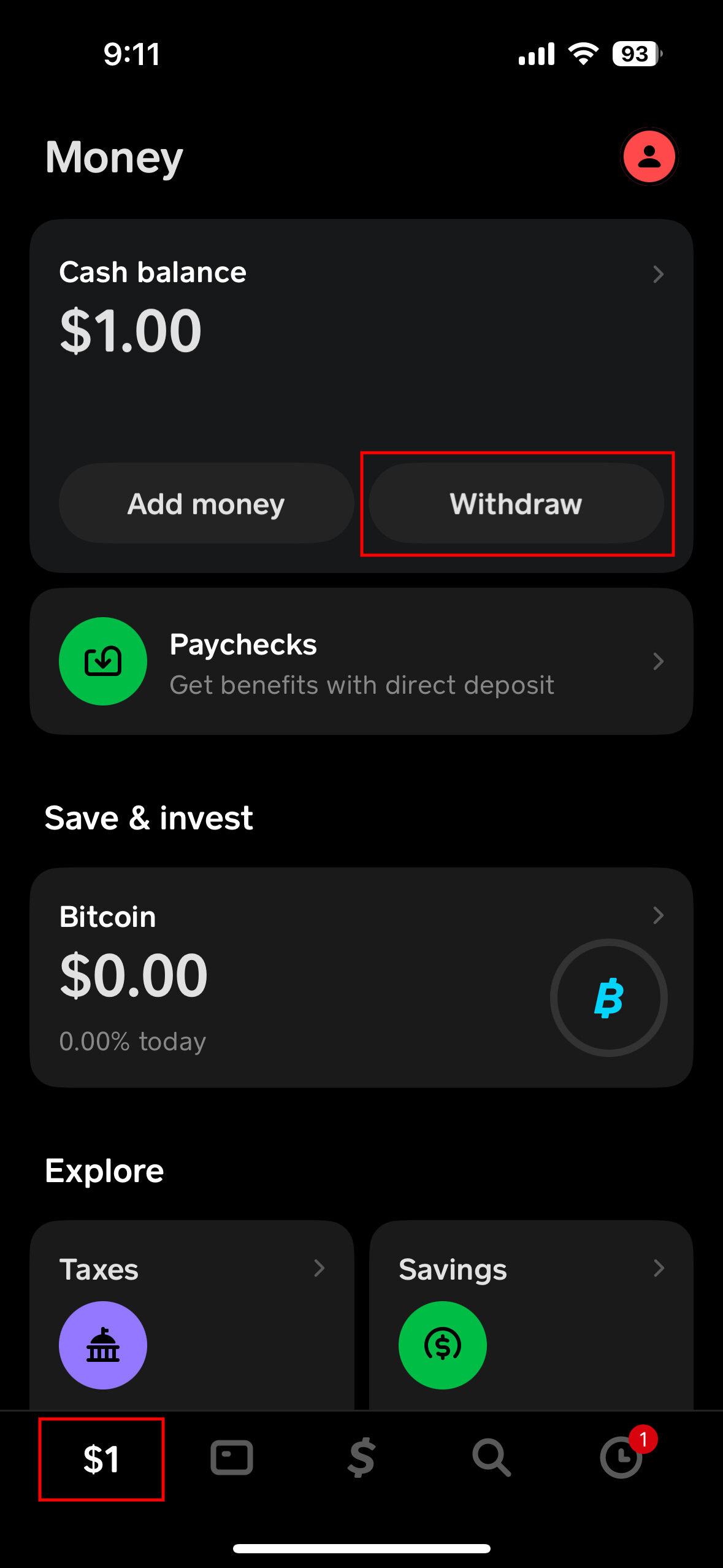
Fees are a critical component of any financial transaction, and Cash App withdrawals are no exception. As discussed, instant deposits incur a percentage-based fee, typically ranging from 0.5% to 1.75%. While seemingly small, these fees can accumulate, especially for frequent withdrawals of larger sums. For instance, withdrawing $500 instantly at a 1.5% fee would cost you $7.50. Over a year, if you do this weekly, that’s nearly $400 in fees. Standard deposits are free, making them the preferred choice for non-urgent transfers. ATM withdrawals using the Cash Card also come with potential fees: Cash App’s own fee (if applicable, generally waived with direct deposit), and the more common surcharge from the ATM operator. Savvy users consider these fees as a cost of convenience and factor them into their financial planning, opting for free methods whenever possible or budgeting for the costs when speed is paramount.
Daily and Weekly Withdrawal Limits
Cash App, like most financial platforms, imposes limits on withdrawals for security and regulatory compliance. These limits can vary based on your account verification status. Unverified accounts typically have lower limits for sending and receiving money, which naturally impacts how much you can withdraw. Verified accounts, which require providing personal information like your full name, date of birth, and the last four digits of your Social Security Number, unlock higher limits. For instance, ATM withdrawal limits might be set at $310 per transaction and $1,000 per day, with a weekly limit of $1,000. Bank transfer limits can be significantly higher, often reaching thousands of dollars per day or week for verified users. It’s crucial to be aware of your specific limits, which can be found within the Cash App settings or support documentation, to avoid hitting an unexpected ceiling when you need to access a substantial amount of money. Planning large withdrawals in advance, or splitting them over several days, might be necessary.
Expedited vs. Standard Fund Availability
The timeline for fund availability is a significant consideration, especially for critical financial needs. Expedited methods, such as instant deposits, provide near-immediate access but come with a fee. This speed can be invaluable in emergencies, allowing you to prevent overdrafts, make urgent payments, or simply have cash in hand without delay. Standard deposits, while free, require patience, typically taking 1-3 business days. This delay means funds transferred on a Friday might not clear until the following Tuesday or Wednesday, potentially impacting weekend spending or Monday morning obligations. Understanding these timelines allows you to choose the appropriate withdrawal method based on the urgency of your need, balancing cost savings against immediate liquidity requirements. Strategic financial planning often involves anticipating when funds might be needed and initiating standard transfers ahead of time to avoid unnecessary fees.
Safeguarding Your Finances: Security Best Practices for Withdrawals
Security is paramount when dealing with any financial platform, and Cash App is no exception. While the platform employs robust security measures, users also play a critical role in protecting their funds, especially during withdrawals. Being vigilant and adopting best practices can significantly reduce the risk of fraud or unauthorized access to your money.
Protecting Your Account from Unauthorized Access
The first line of defense against unauthorized withdrawals is securing your Cash App account itself. This includes using a strong, unique password and enabling two-factor authentication (2FA). 2FA adds an extra layer of security by requiring a second verification step, such as a code sent to your phone, in addition to your password. Be wary of sharing your login credentials, even with people you trust, and never give out your PIN or password to anyone claiming to be from Cash App support. Cash App will never ask for your PIN, login code, or account password. Regularly review your transaction history for any suspicious activity and immediately report unauthorized transactions to Cash App support. Keeping your linked bank accounts and debit cards secure through your bank’s own fraud protection services also adds another layer of security to your Cash App ecosystem.
Recognizing and Avoiding Common Scams
Cash App’s popularity has unfortunately made it a target for various scams designed to trick users into parting with their money or account access. Common scams include “cash flipping” schemes (promising to multiply your money), fake customer support accounts, lottery or sweepstakes scams, and phishing attempts that mimic official Cash App communications. Be highly skeptical of unsolicited requests for money or information. Always verify the identity of anyone claiming to be from Cash App support, preferably by contacting them through the official in-app support or website, not through external links or phone numbers provided in suspicious messages. Never click on suspicious links or download attachments from unknown senders. Remember, if an offer seems too good to be true, it almost certainly is. Educating yourself on these common tactics is crucial for protecting your financial well-being.
What to Do if You Encounter Issues
Despite best efforts, issues can sometimes arise during withdrawals. If a deposit to your bank account is delayed beyond the expected timeframe, or if an ATM withdrawal fails, the first step is to check your Cash App activity feed and your linked bank account statement. Often, there might be a simple explanation or a slight delay. If the issue persists or if you suspect fraudulent activity, immediately contact Cash App support through the official app or website. Provide them with all relevant details, including transaction IDs, dates, and amounts. Freezing your Cash Card temporarily within the app can also prevent further unauthorized transactions if you suspect your card information has been compromised. Prompt action and clear communication with support can significantly improve the chances of resolving issues quickly and recovering any lost funds.
Optimizing Your Cash App for Financial Efficiency
Integrating Cash App effectively into your personal finance strategy goes beyond merely knowing how to withdraw money; it involves optimizing its use to enhance financial efficiency and reduce costs. By strategically managing your linked accounts and making informed decisions about transaction types, Cash App can become a powerful asset in your financial toolkit.
Linking and Managing Your Bank Accounts Effectively
The seamless flow of funds between Cash App and your traditional bank accounts is central to efficient financial management. Ensure that your primary bank account and debit card are correctly linked and up-to-date. Regularly review and update this information, especially if you change banks or get a new debit card. Having a robust link ensures that instant and standard deposits execute smoothly. Consider which bank account is best suited for receiving Cash App funds—perhaps your main checking account for daily spending, or a specific savings account for larger transfers. Some users even link a separate account specifically for Cash App transactions to better track their digital wallet activity, offering clearer insights into how their funds are moving in and out of the platform.
Strategizing Your Withdrawals for Cost Savings
The difference between a free standard deposit and a fee-incurring instant deposit or ATM withdrawal can add up significantly over time. A key strategy for financial efficiency is to plan your withdrawals. If you know you’ll need funds from Cash App within a few days, opt for the free standard deposit. Reserve instant deposits for genuine emergencies or situations where the cost is justified by the urgency. Similarly, for ATM withdrawals, try to minimize frequency by taking out a larger amount less often, or seek out surcharge-free ATMs. By being mindful of the fee structures and making conscious choices, you can substantially reduce the costs associated with accessing your funds, allowing more of your money to stay in your pocket. This deliberate approach turns Cash App into a more economical financial tool.
Integrating Cash App into Your Personal Finance Strategy
Finally, to truly optimize your Cash App experience, integrate it thoughtfully into your broader personal finance strategy. If you receive regular payments through Cash App (e.g., freelance income, reimbursements), consider how these funds fit into your budget. Do they go directly into savings, or are they allocated for specific expenses? Use the direct deposit feature to potentially waive ATM fees or to streamline the receipt of paychecks or government benefits. For small, recurring transactions, using the Cash Card directly can be more efficient than constantly withdrawing cash. By consciously aligning Cash App’s capabilities with your financial goals—whether it’s budgeting, saving, or managing daily expenses—you can transform it from a mere payment app into a valuable component of your comprehensive financial toolkit, enhancing your control and efficiency over your money.
aViewFromTheCave is a participant in the Amazon Services LLC Associates Program, an affiliate advertising program designed to provide a means for sites to earn advertising fees by advertising and linking to Amazon.com. Amazon, the Amazon logo, AmazonSupply, and the AmazonSupply logo are trademarks of Amazon.com, Inc. or its affiliates. As an Amazon Associate we earn affiliate commissions from qualifying purchases.