
In an increasingly digital financial landscape, mobile payment applications have become indispensable tools for managing personal funds, sending money to friends, and handling everyday transactions. Among these, Cash App stands out as a popular choice for its user-friendly interface and versatile features. For many, understanding how to efficiently deposit money into their Cash App account is the foundational step to unlocking its full potential as a financial instrument. This guide will delve into the various methods available for funding your Cash App, offering insights into each process, potential considerations, and how these actions integrate into a broader strategy for personal financial management.
The Essentials of Cash App for Personal Finance
Before diving into the mechanics of depositing funds, it’s crucial to grasp what Cash App is and its role in modern personal finance. Far more than just a simple money transfer service, Cash App has evolved into a comprehensive financial tool designed to simplify everyday monetary interactions.
What is Cash App and Why Fund It?
Cash App, developed by Block, Inc., functions primarily as a mobile peer-to-peer (P2P) payment service, allowing users to send and receive money with ease. However, its utility extends significantly beyond P2P transfers. Users can link bank accounts or debit cards, use a customizable Cash Card for purchases, invest in stocks and Bitcoin, and even file taxes. The core benefit of funding your Cash App account is to establish a readily accessible digital wallet for a range of financial activities. Having funds within the app enables instant payments, seamless P2P transactions without bank delays, and the ability to leverage features like the Cash Card for daily spending, much like a traditional debit card but with often enhanced rewards through “Boosts.” For individuals seeking efficiency and convenience in their financial dealings, keeping a balance in Cash App streamlines many routine monetary tasks.
Key Features Beyond Deposits
While depositing is fundamental, the true value of Cash App lies in its integrated ecosystem of financial services. Once your account is funded, you gain access to:
- Cash Card: A free, customizable debit card linked directly to your Cash App balance, usable anywhere Visa is accepted. It often comes with “Boosts,” which are instant discounts at various merchants.
- Investing: The ability to buy and sell stocks and Bitcoin directly within the app, allowing users to dip their toes into investment without needing a separate brokerage account.
- Direct Deposit: Receive paychecks, tax refunds, and government benefits directly into your Cash App account, often faster than traditional banks.
- Tax Filing: Cash App provides a free tax filing service, further integrating its role into a user’s financial life.
- ATM Withdrawals: Use your Cash Card to withdraw cash from ATMs, though fees may apply.
Understanding these features highlights why maintaining a funded Cash App balance is not just about convenience but about leveraging a powerful, all-in-one financial toolkit.
Direct Deposit: Connecting Your Bank to Cash App
The most common and often preferred method for funding your Cash App account involves linking it to your existing bank infrastructure. This offers a seamless way to transfer funds digitally, whether from a personal bank account or through direct deposit of income.
Linking a Bank Account or Debit Card
The primary method for digitally transferring funds into Cash App is by linking a bank account or a debit card. This process is straightforward and essential for most financial interactions within the app.
- Open Cash App: Navigate to the main screen.
- Access the Banking Tab: Tap the banking icon (looks like a house or a bank) on the bottom left of the screen.
- Link Bank/Card: Select “Link Bank” or “Link Debit Card.” You’ll be prompted to enter your debit card number, expiration date, CVV, and zip code. For a bank account, you’ll typically use your bank’s online login credentials for a secure connection through a third-party service like Plaid.
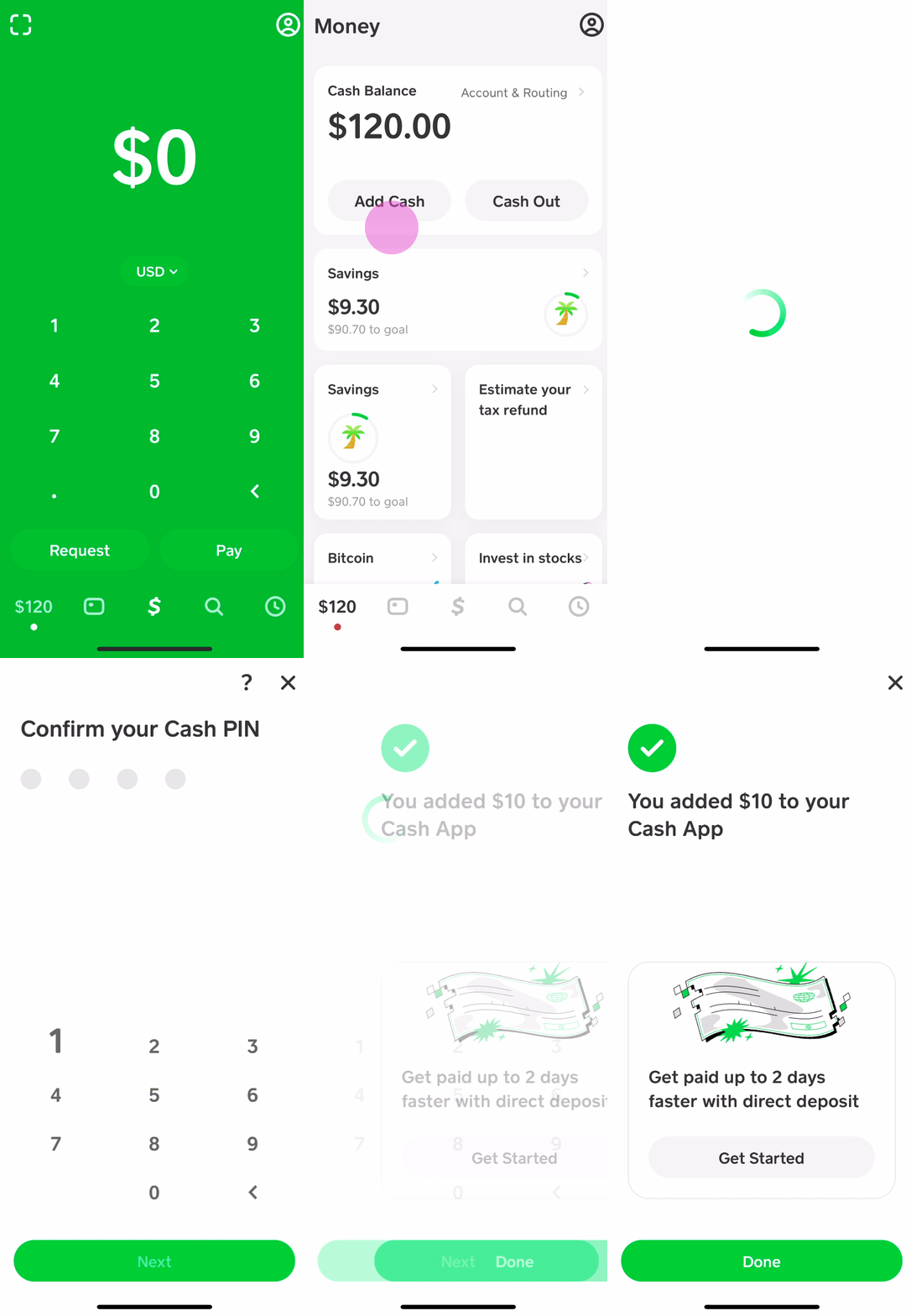
- Initiate Transfer: Once linked, you can tap the “Add Cash” button on the main screen, enter the desired amount, and confirm the transfer from your linked debit card or bank account. Funds added via debit card are usually instant, while bank transfers can take 1-3 business days to clear, similar to an ACH transfer.
This method offers a high degree of control over how much and when you deposit funds, making it ideal for regular top-ups or larger transfers.
Enabling Direct Deposit for Paychecks and Benefits
For many, Cash App can serve as a primary banking account, especially for those who prefer digital-first solutions or encounter challenges with traditional banks. Cash App provides unique routing and account numbers, similar to a standard checking account, enabling users to set up direct deposit for their paychecks, tax refunds, unemployment benefits, or other regular income streams.
- Locate Account and Routing Numbers: On the banking tab, tap on “Direct Deposit.” You’ll see your Cash App routing and account numbers.
- Provide to Payer: Give these numbers to your employer’s payroll department, government agency, or benefit provider. You might need to fill out a direct deposit form, similar to setting up direct deposit with any bank.
- Receive Funds: Once set up, your funds will be directly deposited into your Cash App balance on your scheduled payday, often arriving earlier than they would with traditional banks.
This feature can be a game-changer for budgeting and cash flow management, offering speed and convenience. It effectively transforms Cash App into a primary financial hub for income receipt.
The Instant Deposit Feature Explained
While most debit card deposits are instant, Cash App also offers an “Instant Deposit” option for funds from Cash App to your linked bank account, typically for a small fee. This is less about depositing into Cash App and more about withdrawing quickly. However, it’s worth noting the inverse: when adding cash from a linked debit card, the funds are usually available instantly in your Cash App balance, while standard bank transfers (ACH) into Cash App can take a few business days. Understanding the distinction between instant availability within Cash App from a debit card versus instant transfer out of Cash App to a bank (which incurs a fee) is crucial for managing expectations and avoiding unnecessary charges.
Cash Deposits: Adding Physical Currency to Your Digital Wallet
Not all financial transactions originate digitally. For those who deal with physical cash and wish to integrate it into their digital Cash App wallet, the platform offers a convenient solution through retail partnerships.
Utilizing Retail Stores for Cash Deposits (e.g., Walgreens, 7-Eleven)
Cash App has partnered with various retail chains across the United States, including Walgreens, 7-Eleven, Walmart, and Family Dollar, to allow users to deposit physical cash directly into their accounts. This bridges the gap between traditional cash transactions and the digital payment ecosystem, catering to individuals who receive payments in cash or prefer to manage their money this way. These partnerships make Cash App more accessible and versatile, particularly for those without traditional bank accounts or who simply prefer the convenience of in-person cash handling.
Step-by-Step Process for In-Store Deposits
Depositing cash at a participating retailer is a straightforward process designed for efficiency:
- Locate a Participating Retailer: Use the Cash App map feature (or check their website) to find the nearest store that supports Cash App cash deposits.
- Generate a Barcode: Within the Cash App, navigate to the “Banking” tab, tap “Deposit Cash,” and then “Show Barcode.” This will generate a unique barcode for your account.
- Present to Cashier: At the checkout, inform the cashier you wish to deposit cash into your Cash App account and present the barcode.
- Hand Over Cash: Give the cashier the amount of cash you wish to deposit. Most retailers have limits, typically between $5 and $500 per transaction, with daily and weekly limits often applied (e.g., $1,000 per day, $4,000 per week).
- Confirm Deposit: The cashier will scan the barcode and take your cash. The funds are usually available in your Cash App balance immediately, or within a few minutes. You’ll receive an in-app notification confirming the deposit.

This method offers an invaluable service for those who frequently handle physical cash, enabling them to seamlessly integrate it into their digital financial management.
Understanding Limits and Fees for Cash Deposits
While incredibly convenient, cash deposits through retailers come with certain parameters to consider:
- Transaction Limits: As mentioned, there are typically minimum and maximum limits per transaction (e.g., $5-$500).
- Daily/Weekly Limits: Cash App imposes overall limits on how much cash you can deposit within a 24-hour period and a 7-day period (e.g., $1,000 per day, $4,000 per week). These limits are in place for security and regulatory compliance.
- Fees: Cash App itself does not charge a fee for depositing cash at a retail location. However, it’s always wise to confirm with the specific retailer if they impose any service charges, though this is rare for Cash App deposits.
Being aware of these limits ensures a smooth and successful cash deposit experience, helping users plan their financial activities accordingly.
Peer-to-Peer Transfers and Other Funding Methods
Beyond linking bank accounts and depositing physical cash, Cash App thrives on its peer-to-peer functionality and offers other avenues for funding your account, reinforcing its utility as a versatile financial tool.
Receiving Money from Friends and Family
The most intuitive way to get money into your Cash App is through its core P2P functionality. If a friend, family member, or colleague also uses Cash App, they can send money directly to your account.
- Sender Initiates: The sender opens Cash App, taps the “$” icon, enters the amount, taps “Pay,” enters your
$Cashtag, phone number, or email, and confirms the payment. - Recipient Receives: Funds are instantly deposited into your Cash App balance. You’ll receive a notification and see the updated balance.
This method is quick, free, and forms the bedrock of Cash App’s widespread adoption for splitting bills, repaying debts, or sending gifts. It’s a fundamental aspect of digital personal finance where instant transfers replace traditional checks or cash exchanges.
Transferring from Other Financial Apps
While not a direct “deposit” in the traditional sense, you can effectively move money into Cash App from other financial applications or digital wallets. This typically involves using your linked debit card or Cash App’s unique account and routing numbers. For instance:
- From PayPal/Venmo: You can withdraw funds from platforms like PayPal or Venmo to your linked bank account, and then transfer them from that bank account into Cash App. Alternatively, some apps might allow direct transfers to a debit card, which could be your Cash Card.
- From Other Banks: If you have an account with another online bank (e.g., Chime, Ally), you can typically initiate an external transfer from that bank to your Cash App using your Cash App’s routing and account numbers, similar to setting up direct deposit.
These indirect methods ensure flexibility, allowing users to consolidate funds from various digital sources into their central Cash App balance for unified management.
Leveraging Referral Bonuses and Promotions
Cash App frequently offers referral bonuses and other promotional incentives that can add funds directly to your balance.
- Referral Program: When you refer a new user to Cash App, and they link a debit card and send a qualifying amount of money (usually $5 or more) within a specific timeframe, both you and the new user receive a bonus (e.g., $5 to $15). This bonus is deposited directly into your Cash App balance.
- Boosts and Other Promotions: While “Boosts” are discounts applied at the point of sale, Cash App occasionally runs other promotions or cashback offers that might result in a direct credit to your account.
These programs are not only a way to earn a little extra cash but also demonstrate how Cash App actively encourages user engagement and financial activity, adding another dimension to how funds can accumulate in your digital wallet.
Optimizing Your Cash App Experience: Security and Smart Financial Habits
Successfully depositing money into Cash App is just the first step. To truly integrate it into a robust personal finance strategy, users must prioritize security and adopt smart financial habits.
Protecting Your Funds: Security Best Practices
Security is paramount when dealing with any financial tool, and Cash App is no exception. Users are entrusted with protecting their digital wallet from unauthorized access and fraud.
- Enable Security Lock: Always activate a PIN, Touch ID, or Face ID within the app’s settings. This prevents unauthorized access even if your phone is lost or stolen.
- Two-Factor Authentication (2FA): Utilize 2FA for an extra layer of security. This typically involves a code sent to your linked phone number or email, required in addition to your password.
- Strong, Unique Password: If you have a separate password for Cash App (e.g., for logging into the website), ensure it’s strong and not reused on other platforms.
- Be Wary of Scams: Cash App is a frequent target for scammers. Never share your login credentials, PIN, or verification codes with anyone. Be suspicious of unsolicited requests for money or offers that seem too good to be true. Cash App support will never ask for your PIN.
- Monitor Transactions: Regularly review your transaction history for any unfamiliar activity. Report suspicious transactions immediately to Cash App support.
Adhering to these security measures is critical to safeguarding your funds and maintaining peace of mind when using Cash App for your financial needs.
Managing Your Cash App Balance Effectively
Treating your Cash App balance like any other financial account is key to effective money management.
- Budgeting: Consider setting a weekly or monthly budget for funds held within Cash App, especially if you primarily use it for discretionary spending or peer-to-peer transactions.
- Avoid Over-Reliance: While convenient, it’s generally not advisable to hold excessively large sums in any single digital wallet, including Cash App. For substantial savings or investments, traditional banking and diversified investment vehicles are typically more secure and offer better interest rates.
- Regular Reconciliation: Periodically reconcile your Cash App transactions with your overall budget or bank statements to ensure accuracy and track spending habits.
Smart balance management ensures that Cash App remains a valuable tool that complements, rather than complicates, your broader financial goals.

Integrating Cash App into Your Overall Financial Strategy
Ultimately, Cash App is one component of a comprehensive personal finance strategy. Its integration should align with your financial objectives.
- Emergency Fund Supplement: While not a primary emergency fund, a small, readily accessible balance in Cash App can serve as a quick fund for minor unexpected expenses.
- Spending Tracking: Utilize the app’s transaction history to track categories of spending, especially if you use it for daily purchases via the Cash Card.
- Micro-Investing: Leverage its investing features for small, consistent contributions to stocks or Bitcoin, aligning with a long-term savings or investment plan.
- Payment Hub: For small businesses or side hustles, Cash App can serve as an efficient payment hub for receiving payments from clients or customers.
By thoughtfully depositing and managing funds within Cash App, users can leverage its convenience and features to enhance their personal financial efficiency, support their budgeting efforts, and streamline their digital money interactions. It represents a powerful example of how financial technology can empower individuals to take greater control of their money.
aViewFromTheCave is a participant in the Amazon Services LLC Associates Program, an affiliate advertising program designed to provide a means for sites to earn advertising fees by advertising and linking to Amazon.com. Amazon, the Amazon logo, AmazonSupply, and the AmazonSupply logo are trademarks of Amazon.com, Inc. or its affiliates. As an Amazon Associate we earn affiliate commissions from qualifying purchases.