
In an increasingly digital world, managing personal finances often means navigating a landscape of online banking, mobile payment apps, and digital wallets. Among these, Cash App has emerged as a powerhouse, offering a streamlined platform for sending, spending, saving, and investing money. While many of its core functions revolve around digital transfers, the need to convert physical cash into a usable digital balance remains a common requirement for a significant portion of its user base. Whether you’re receiving cash for services, managing tips, or simply prefer to handle physical currency for certain transactions, understanding how to seamlessly integrate that cash into your digital financial ecosystem via Cash App is an essential skill for modern money management. This guide delves into the practicalities of depositing cash into your Cash App account, exploring the processes, advantages, and broader implications for your personal finance strategy.
Understanding Cash App’s Role in Modern Personal Finance
Cash App, developed by Block, Inc., has revolutionized the way millions of people handle their daily finances. It’s more than just a payment app; it’s a versatile financial tool that combines elements of a checking account, a debit card, an investment platform, and a peer-to-peer payment system. Its intuitive interface and broad functionality have made it particularly popular among younger demographics and those seeking an alternative to traditional banking.
The Evolution of Digital Wallets
The rise of digital wallets like Cash App signifies a significant shift in financial behavior. Historically, managing money meant trips to the bank, physical checks, and a wallet full of cash. Today, a smartphone can serve as a comprehensive financial hub. Digital wallets offer unparalleled convenience, allowing users to make payments, receive funds, manage subscriptions, and even invest, all from the palm of their hand. This evolution democratizes financial services, making them accessible to a wider audience, including the unbanked or underbanked populations who may struggle with traditional financial institutions. Cash App plays a crucial role in this paradigm, acting as a bridge between traditional cash-based economies and the burgeoning digital financial ecosystem.
Why Deposit Cash? Bridging the Digital Divide
Despite the pervasive nature of digital payments, physical cash continues to be a vital part of many people’s financial lives. Small businesses often operate on a cash basis, individuals receive cash gifts, and some prefer using cash for budgeting purposes. The challenge arises when these physical funds need to be converted into a digital format to pay bills online, send money to friends via Cash App, or use the Cash Card for digital purchases. This is where the cash deposit feature becomes invaluable. It bridges the gap between the physical and digital, ensuring that users aren’t left behind by the digital transformation and can fully leverage the capabilities of their Cash App account regardless of the form their income takes. It’s a practical solution for maintaining financial liquidity and flexibility in an increasingly cashless society.
Step-by-Step Guide to Depositing Physical Cash into Cash App
Depositing physical cash into your Cash App account is a straightforward process, primarily facilitated through partnerships with major retail chains. This method allows users to convert paper money into their digital Cash App balance quickly and efficiently.
Preparing for a Cash Deposit
Before heading out to deposit cash, a few preparatory steps can ensure a smooth transaction. Firstly, ensure you have an active Cash App account and the latest version of the app installed on your smartphone. You will also need your Cash Card, as this often serves as the identifier at the point of sale. While typically not required, having a valid photo ID on hand is advisable, as some retailers or transaction amounts might trigger identity verification. It’s also wise to check your daily and weekly deposit limits within the Cash App. These limits are in place for security and regulatory compliance and can vary, so being aware of them will prevent any surprises at the register. Finally, ensure your cash is in good condition; torn or excessively worn bills may not be accepted.
Locating a Participating Retailer
Cash App has partnered with various national retailers to offer cash deposit services. Prominent partners often include stores like Walmart, Walgreens, CVS, 7-Eleven, and Dollar General, among others. The easiest way to find a participating location near you is directly through the Cash App itself.
- Open the Cash App and tap the Banking tab (the house icon) on the bottom left.
- Scroll down and tap on “Paper Money” or “Deposit Paper Money.”
- Tap “See Map” to view nearby locations that accept cash deposits.
The map feature will display available stores, their operating hours, and often directions, making it convenient to plan your deposit trip. This feature is particularly helpful as retailer partnerships can evolve, and specific store locations may or may not participate.
The In-Store Process
Once you’ve arrived at a participating retailer, the process to deposit your cash is simple:
- Inform the Cashier: Approach the cashier and inform them you wish to “deposit cash into your Cash App.” Some stores might refer to it as “adding money to a card” or “loading a prepaid card.”
- Generate a Barcode (if necessary): In some instances, the cashier might initiate the process, or you may need to generate a barcode or show your Cash Card within the app. The Cash App interface, under the “Paper Money” section, will guide you on what to present. Often, simply swiping your Cash Card will initiate the transaction.
- Hand Over Your Cash: Give the cashier the exact amount of cash you wish to deposit. Ensure the amount is within your daily/weekly limits and the store’s transaction limits (which are usually the same as Cash App’s limits for these types of deposits). There is typically a small fee associated with cash deposits, often around $1, which will be deducted from your deposit total or charged separately.
- Receive Confirmation: The cashier will process the transaction, and you should receive a receipt. Simultaneously, Cash App will send you an in-app notification confirming the successful deposit, often with the funds appearing in your balance within minutes, though sometimes it can take a bit longer (up to 10 minutes).
Confirmation and Accessibility
After the transaction is complete, it’s crucial to verify that the funds have indeed arrived in your Cash App balance. You can do this by checking your in-app balance and reviewing your activity feed. Most cash deposits are processed almost instantly, making the funds immediately available for use with your Cash Card, sending to others, or even investing. Should there be any delay or discrepancy, retain your physical receipt and contact Cash App support through the app for assistance. The transparency and near-instant access to funds underscore the convenience of using Cash App for managing your financial liquidity.
Alternative Methods for Funding Your Cash App Balance (Beyond Physical Cash)
While depositing physical cash is a key feature, Cash App offers several other convenient ways to add funds to your account, catering to a variety of financial habits and needs. These methods seamlessly integrate with your existing financial infrastructure.
Linking Bank Accounts and Debit Cards

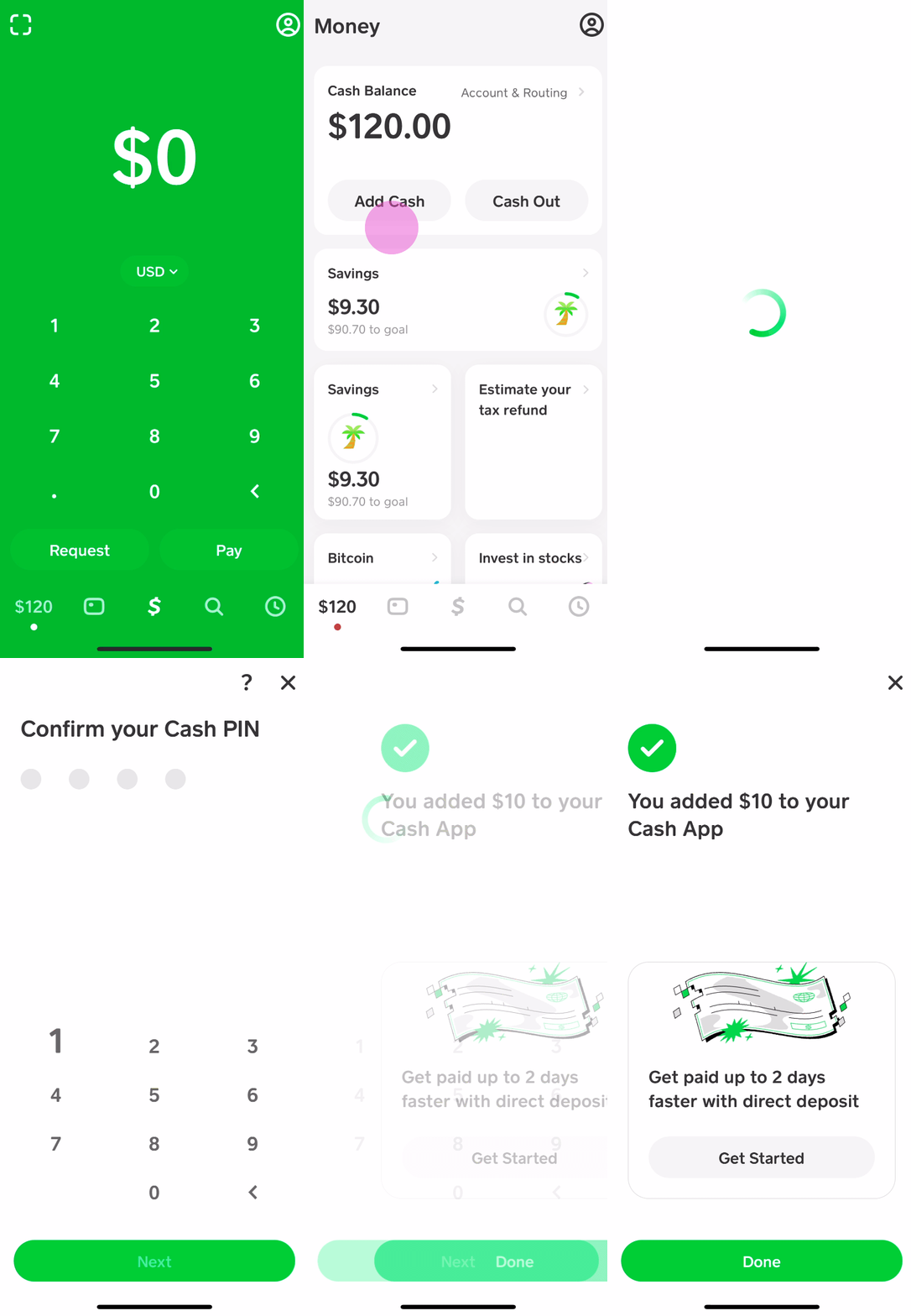
The most common and arguably simplest way to fund your Cash App account is by linking a bank account or a debit card. This process allows for instant transfers from your external bank account directly to your Cash App balance.
- From the Banking tab, tap “Link Bank” or “Add Cash.”
- Follow the prompts to link your bank account using your online banking credentials or add your debit card details.
Once linked, you can initiate transfers with a few taps. Funds from a linked debit card typically transfer instantly, while transfers from a linked bank account (using the routing and account number) may take 1-3 business days to clear, similar to an ACH transfer.
Utilizing Direct Deposit
Cash App also functions as a full-fledged financial account capable of receiving direct deposits, such as payroll from your employer or government benefits. This feature effectively turns your Cash App into a primary banking solution for many users.
- From the Banking tab, locate your Cash App routing and account numbers.
- Provide these details to your employer’s HR or payroll department, or to the relevant government agency.
Setting up direct deposit ensures that your earnings or benefits are automatically routed to your Cash App balance, often making funds available up to two days earlier than traditional banks. This method is particularly beneficial for those who rely on Cash App as their primary financial hub, simplifying the process of receiving regular income.
Receiving Funds from Other Cash App Users
Cash App is fundamentally a peer-to-peer payment platform. One of the easiest ways to receive funds into your account is through transfers from other Cash App users. If a friend, family member, or client sends you money via their Cash App, the funds are instantly credited to your balance. This makes it an ideal tool for splitting bills, receiving payments for small services, or getting money from others effortlessly. All you need is their $Cashtag, phone number, or email.
Leveraging Cash App for Bitcoin Transactions (Brief Mention)
While not a method for depositing “cash” in the traditional sense, Cash App also allows users to buy, sell, and store Bitcoin. If you engage in cryptocurrency transactions, selling Bitcoin on Cash App will convert it into USD, which is then added to your Cash App balance. This provides another avenue for managing various forms of value within a single financial application, further highlighting its versatility as a financial tool.
Maximizing Your Cash App Experience for Financial Management
Beyond mere transactions, Cash App offers features that, when leveraged correctly, can significantly enhance your personal financial management. Understanding its nuances is key to optimizing its utility.
Managing Your Cash App Balance Effectively
Treating your Cash App balance like any other bank account is crucial for effective financial management. Regularly monitor your activity feed to track spending and deposits. The Cash Card, which functions as a Visa debit card, allows you to spend your Cash App balance anywhere Visa is accepted, online or in physical stores. Utilize this for everyday purchases, and consider linking it to budgeting apps if you use them, to get a holistic view of your finances. Setting realistic spending limits and reviewing your transactions periodically can help prevent overspending and keep your financial goals on track.
Understanding Limits and Fees
Every financial service comes with limits and fees, and Cash App is no exception. It’s imperative to familiarize yourself with these to avoid unexpected charges or transaction failures.
- Deposit Limits: Cash deposits at retail locations typically have daily and weekly limits (e.g., $500 per deposit, $1,000 per day, $4,000 per week).
- Withdrawal Limits: Using your Cash Card at an ATM also has daily and weekly limits.
- Sending/Receiving Limits: While generally quite generous, there are limits on how much you can send or receive from other users, which can be increased by verifying your identity.
- Fees: While peer-to-peer transfers are generally free, instant transfers to a linked debit card (from Cash App to your bank), Bitcoin purchases, and cash deposits at retail locations typically incur small fees. Always check the app for the most current fee structure. Understanding these parameters allows for smarter financial planning and prevents frustrating roadblocks.
Security Best Practices for Your Digital Wallet
Given that Cash App handles your money, robust security practices are paramount.
- Enable Security Locks: Always use a PIN or biometric security (fingerprint/Face ID) to protect your app.
- Two-Factor Authentication (2FA): Enable 2FA for all critical actions and logins.
- Strong, Unique Password: If you use a password (e.g., for email verification), ensure it’s complex and unique to Cash App.
- Beware of Scams: Be vigilant against phishing attempts, fake customer support, and unsolicited money requests. Cash App will never ask for your PIN or full sign-in code via phone or email.
- Monitor Activity: Regularly review your transaction history for any unauthorized activity.
- Keep Software Updated: Ensure your Cash App and smartphone operating system are always up-to-date to benefit from the latest security patches.
By adhering to these practices, you can significantly mitigate risks and safeguard your funds within your digital wallet.
The Future of Cash and Digital Payments
The financial landscape is continually evolving, with technology driving unprecedented changes in how we perceive and interact with money. The ability to deposit physical cash into a digital platform like Cash App is not just a feature; it’s a testament to the ongoing convergence of traditional and modern financial systems.
The Blurring Lines Between Physical and Digital Money
The convenience offered by apps like Cash App indicates a future where the distinction between physical and digital money continues to blur. While cryptocurrencies push the boundaries of decentralized finance, traditional fiat currency, particularly physical cash, retains its cultural and practical significance. Financial tools that effectively bridge these two worlds will remain crucial. As technology advances, we may see even more seamless ways to convert between physical and digital assets, with enhanced security and reduced friction. The goal is to provide users with maximum flexibility and control over their finances, irrespective of the form their money takes.

Cash App’s Position in the Fintech Landscape
Cash App has firmly cemented its position as a leading fintech innovator. Its accessibility, ease of use, and comprehensive suite of features—from peer-to-peer payments and direct deposit to stock and Bitcoin investing—make it a powerful tool for personal finance. By offering robust cash deposit options, Cash App ensures that it remains relevant and inclusive, catering to a diverse user base that still interacts with physical cash. As the digital economy expands, apps like Cash App will continue to play a pivotal role in shaping how individuals manage their money, offering accessible and efficient financial solutions that adapt to evolving consumer needs and technological advancements.
aViewFromTheCave is a participant in the Amazon Services LLC Associates Program, an affiliate advertising program designed to provide a means for sites to earn advertising fees by advertising and linking to Amazon.com. Amazon, the Amazon logo, AmazonSupply, and the AmazonSupply logo are trademarks of Amazon.com, Inc. or its affiliates. As an Amazon Associate we earn affiliate commissions from qualifying purchases.