
For millions of Americans, Social Security represents a cornerstone of their financial security in retirement, during disability, or for their surviving family members. It’s a vital program that provides a safety net, but understanding how your specific benefit amount is determined can often feel like deciphering a complex puzzle. Many people assume it’s a simple calculation based on what they’ve paid in, but the reality is more nuanced, involving a sophisticated formula that considers several key factors.
Demystifying Social Security benefits is crucial for effective retirement planning. Knowing the drivers behind your potential payout allows you to make informed decisions about your career, savings, and when to claim your benefits. This comprehensive guide will break down the foundational elements that dictate “what is your social security benefit based on,” from your earning history to the intricate formulas the Social Security Administration (SSA) employs.

The Foundational Pillar: Your Earnings Record
At the heart of your Social Security benefit calculation is your individual earnings record. This is not simply a tally of how much you’ve paid in taxes, but rather a detailed account of your annual earnings that were subject to Social Security (FICA) taxes throughout your working life. The more you earn and contribute, generally, the higher your potential benefit will be.
How Earnings Are Tracked
Every dollar you earn from employment or self-employment, up to an annually adjusted maximum (the “taxable maximum”), is subject to Social Security taxes. Your employer withholds these taxes from your paycheck, or you pay them as self-employment taxes. The SSA meticulously tracks these earnings year by year. They convert your reported wages and self-employment income into what are called “credits.” In 2024, you earn one credit for each $1,730 of earnings, up to a maximum of four credits per year. Most people need 40 credits (10 years of work) to be eligible for retirement benefits, though eligibility rules can vary for disability or survivor benefits.
It’s important to distinguish between earning credits for eligibility and the actual amount used for benefit calculation. While credits get you in the door, the specific dollar amounts of your taxed earnings are what truly matter for determining your payment. The SSA maintains a lifetime record of these earnings, which forms the bedrock of all subsequent calculations.
The Importance of Accurate Records
Given that your entire benefit hinges on your earnings history, ensuring the accuracy of your SSA record is paramount. Errors, though rare, can occur. These might stem from incorrect reporting by an employer, a misspelled name, or an incorrect Social Security number. An inaccuracy could potentially reduce your future benefits.
The best way to monitor your record is by regularly checking your Social Security Statement. This document, available online through your mySocialSecurity account or mailed to you if you are over 60 and not receiving benefits, provides a year-by-year breakdown of your reported earnings. It also offers personalized estimates of your future benefits based on your current record. Reviewing this statement annually allows you to identify and correct any discrepancies promptly, ensuring your future benefits are based on a complete and accurate history.
Calculating Your Average Indexed Monthly Earnings (AIME)
Once the SSA has a complete record of your taxable earnings, the next critical step in determining your benefit is to calculate your Average Indexed Monthly Earnings (AIME). This figure represents an average of your highest earnings over a specific period, adjusted for inflation to reflect their true value over time.
Indexing: Adjusting for Inflation
A dollar earned in 1980 had significantly more purchasing power than a dollar earned today. To ensure that your past earnings are fairly represented in current dollars, the SSA “indexes” your earnings. This process adjusts your historical wages to account for general wage inflation that has occurred since those earnings were received.
For example, an income of $20,000 in 1985 would be adjusted upwards to a much higher amount in today’s dollars, reflecting the increase in average wages across the U.S. economy. Indexing applies to earnings up to the year you turn 60. Earnings from age 60 onwards are generally counted at their nominal (actual) value without indexing, as they are considered closer to your retirement age and less affected by long-term inflation. This indexing ensures that the benefits of someone who worked decades ago are comparable in value to those of someone retiring today.
The “Highest 35 Years” Rule
After your earnings have been indexed, the SSA identifies your 35 highest-earning years. If you have worked for more than 35 years, your lowest-earning years (or years with no earnings) will be dropped from the calculation. If you have worked for fewer than 35 years, the remaining years will be counted as zeros. This is a crucial detail, as even a few years with low or no earnings can significantly bring down your AIME if you haven’t accumulated 35 years of substantial earnings.
Once the 35 highest indexed annual earnings are selected, they are summed up and then divided by 420 (the number of months in 35 years). The result is your Average Indexed Monthly Earnings (AIME). This AIME is a key input into the final benefit formula and directly reflects the level of your career earnings, weighted towards your most productive years and adjusted for inflation.
The Primary Insurance Amount (PIA) Formula
With your AIME established, the SSA then applies a progressive formula to determine your Primary Insurance Amount (PIA). The PIA is the monthly benefit you would receive if you start receiving benefits exactly at your full retirement age (FRA). This is the figure upon which all other benefit adjustments (for early or delayed claiming, spousal benefits, etc.) are based.
Bend Points and Progressive Benefits
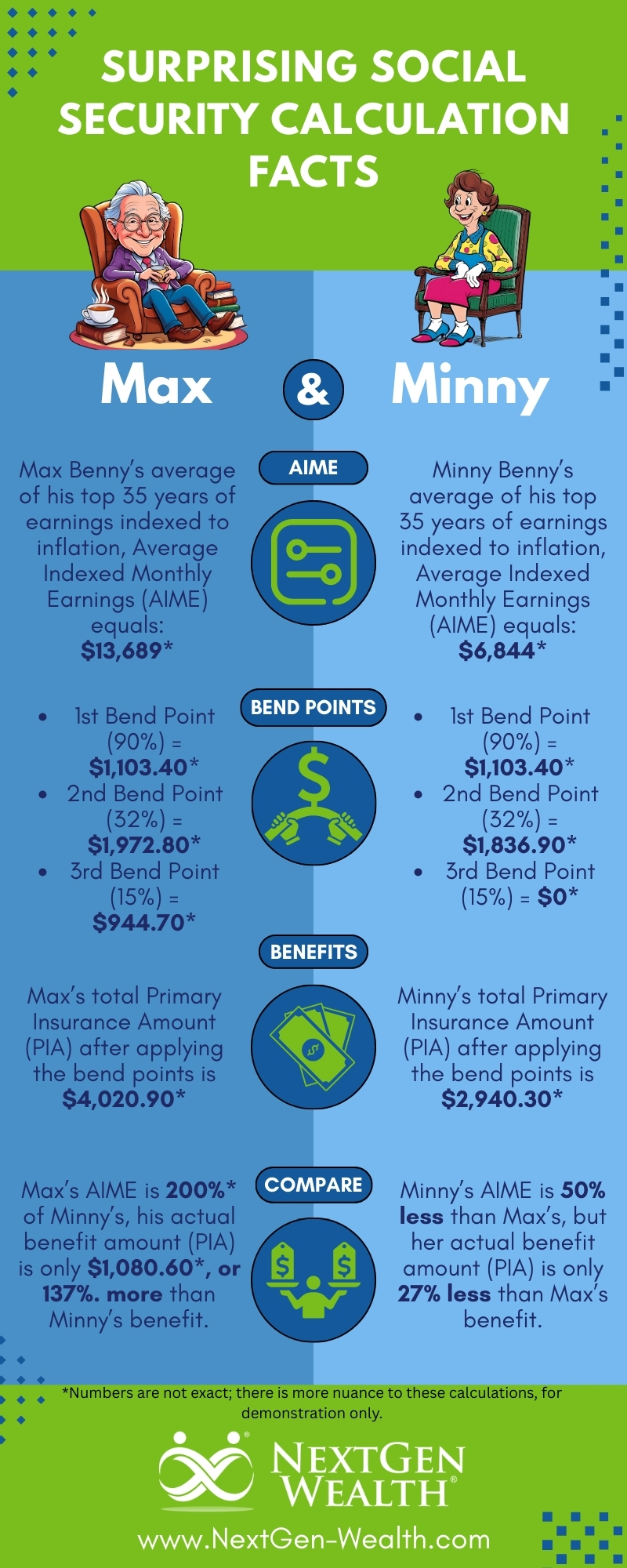
The PIA formula is progressive, meaning it replaces a higher percentage of earnings for lower-income workers than for higher-income workers. This is achieved through what are known as “bend points.” The formula uses three specific percentages applied to different segments of your AIME. For individuals becoming eligible for retirement benefits in 2024, the formula is:
- 90% of the first $1,174 of AIME
- 32% of AIME between $1,174 and $7,078
- 15% of AIME above $7,078
These dollar amounts ($1,174 and $7,078) are the “bend points,” and they are adjusted annually. The progressive nature of the formula reflects Social Security’s goal of providing a fundamental level of income replacement, especially for those with lower lifetime earnings. Someone with a lower AIME will see a larger portion of their earnings replaced, while higher earners still receive a significant benefit, though at a lower replacement rate for their additional earnings.
Why the Formula Matters
Understanding the PIA formula reveals why Social Security is not simply a dollar-for-dollar return on your contributions. It’s a social insurance program designed to provide a baseline of support, with a bias towards protecting the most vulnerable. This formula directly impacts your expected benefit and is a testament to the program’s foundational principles of social adequacy and individual equity. Your PIA is the starting point for everything, and any deviation from claiming at your FRA will adjust this amount up or down.
Factors Influencing Your Actual Benefit Amount
While your PIA is the core, your actual monthly Social Security check can be significantly different depending on a few critical decisions and circumstances.
Claiming Age: Early, Full, or Delayed Retirement
Perhaps the most impactful decision affecting your Social Security benefit is when you choose to start receiving it.
- Early Retirement (as early as age 62): You can claim benefits as early as age 62, but your monthly benefit will be permanently reduced. The reduction is typically about 5/9 of 1% for each month before your FRA, up to 36 months, and 5/12 of 1% for each month beyond 36 months. For someone with an FRA of 67, claiming at 62 could result in a 30% reduction.
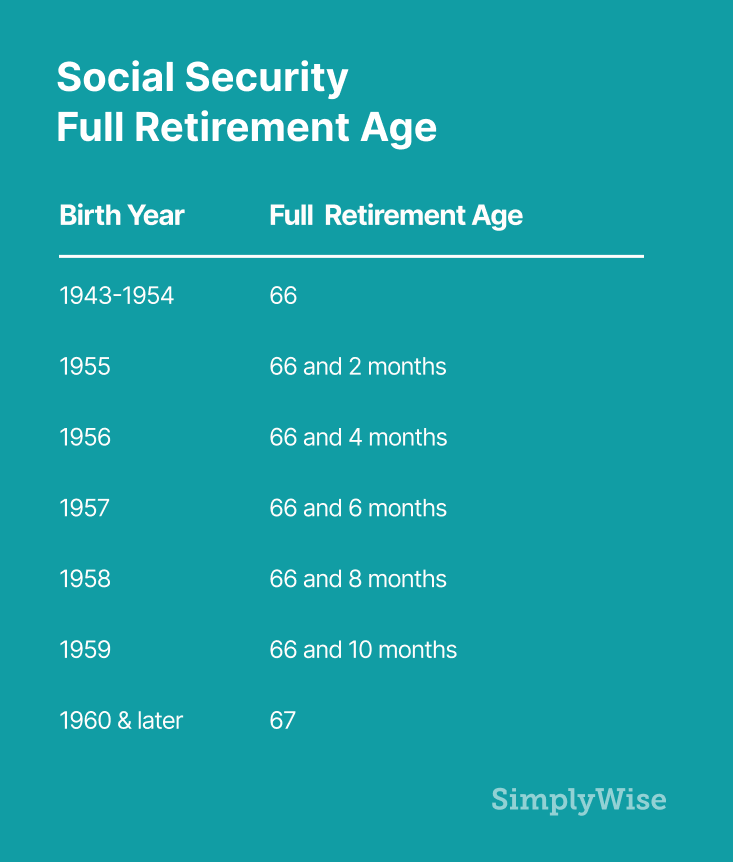
- Full Retirement Age (FRA): This is the age at which you are entitled to 100% of your PIA. FRA varies based on your birth year; for those born in 1960 or later, it is 67.
- Delayed Retirement (up to age 70): For each month you delay claiming past your FRA, up to age 70, your benefit increases by a certain percentage, known as Delayed Retirement Credits (DRCs). These credits add 2/3 of 1% to your monthly benefit for each month of delay, or 8% per year. Delaying from age 67 to 70 could mean a 24% permanent increase in your monthly benefit.
The decision of when to claim involves weighing longevity, current financial needs, health status, and other income sources.
Spousal and Survivor Benefits
Social Security also provides benefits to certain family members based on your earnings record.
- Spousal Benefits: If you are married, your spouse may be eligible for benefits based on your earnings record, even if they have little to no work history of their own. A spouse can receive up to 50% of your PIA if they claim at their own FRA. If they claim early, their spousal benefit will also be reduced. Importantly, if your spouse’s own retirement benefit based on their work record is higher, they will receive that instead.
- Survivor Benefits: In the event of your death, your surviving spouse, children, or dependent parents may be eligible for benefits based on your record. A surviving spouse can receive up to 100% of your benefit amount (if they claim at their own FRA), while children can receive up to 75%. These benefits provide crucial financial support during a difficult time.
Taxation of Benefits
For some beneficiaries, a portion of their Social Security benefits may be subject to federal income tax. This depends on your “provisional income,” which includes your adjusted gross income, tax-exempt interest income, and one-half of your Social Security benefits.
- Up to 50% of your benefits may be taxable if your provisional income is between $25,000 and $34,000 for an individual, or $32,000 and $44,000 for those filing jointly.
- Up to 85% of your benefits may be taxable if your provisional income exceeds $34,000 for an individual or $44,000 for those filing jointly.
Some states also tax Social Security benefits, adding another layer to consider when assessing your net benefit.
The Earnings Test (If Claiming Early)
If you claim Social Security benefits before your Full Retirement Age (FRA) and continue to work, your benefits may be temporarily reduced if your earnings exceed certain limits. This is known as the earnings test.
- In the year before you reach FRA, the SSA deducts $1 from your benefits for every $2 you earn above an annual limit (e.g., $22,320 in 2024).
- In the year you reach FRA, the SSA deducts $1 from your benefits for every $3 you earn above a different, higher limit (e.g., $59,520 in 2024), only counting earnings before the month you reach FRA.
Once you reach your FRA, the earnings test no longer applies, and you can earn as much as you want without your benefits being reduced. Any benefits withheld due to the earnings test are not lost; they lead to a recalculation of your benefit amount at your FRA, increasing your monthly payment slightly to account for the withheld benefits.
Maximizing Your Social Security Benefits
Understanding how your benefits are calculated empowers you to make strategic decisions that can potentially increase your lifetime Social Security income.
Working Longer and Earning More
Since your benefit is based on your 35 highest-earning indexed years, working longer, especially in your prime earning years, can significantly boost your AIME. Each additional year of higher earnings can replace a lower-earning year from earlier in your career, thereby increasing your average. Furthermore, delaying retirement also allows you to accumulate more years of earnings, which are typically higher than your early career wages, and helps you accrue valuable Delayed Retirement Credits.
Strategic Claiming Decisions
The decision of when to claim benefits is highly personal, but a strategic approach can yield substantial rewards.
- Delaying as long as possible (up to age 70): For many, delaying until age 70 offers the highest possible monthly benefit, providing a strong hedge against longevity risk and inflation. This strategy is often suitable for individuals who are in good health, have sufficient other retirement funds, or are still working.
- Coordinating with a spouse: Married couples have more options. They can coordinate claiming strategies to maximize their combined lifetime benefits. This might involve one spouse claiming early while the higher earner delays, or “filing and suspending” (no longer an option for individuals, but available for certain spousal benefits under grandfathered rules), or “restricted applications” for spousal benefits. It’s often beneficial for the higher earner to delay claiming.
- Considering health and life expectancy: If you have health issues or a family history of shorter lifespans, claiming earlier might make more sense, even with the reduction, to ensure you receive benefits for a longer period.
Reviewing Your Social Security Statement
As mentioned earlier, regularly checking your Social Security Statement is not just about correcting errors; it’s a vital tool for planning. It provides personalized estimates of your retirement, disability, and survivor benefits at various ages, based on your actual earnings record. This allows you to project your future income and adjust your savings and investment strategies accordingly. Use this statement to understand where you stand and to project the impact of different claiming ages.
Conclusion
Understanding what your Social Security benefit is based on transforms the program from a mysterious government entitlement into a tangible asset you can plan around. It starts with your complete and accurate earnings history, which is then indexed for inflation and averaged over your 35 highest-earning years to arrive at your AIME. This AIME is fed into a progressive formula to determine your Primary Insurance Amount (PIA).
However, your final check is further shaped by critical choices like your claiming age, eligibility for spousal or survivor benefits, and the potential impact of taxation or the earnings test. By being proactive, checking your earnings record, and carefully considering your claiming strategy, you can significantly influence the amount of income Social Security provides throughout your retirement years. It’s not just a benefit; it’s a crucial part of your financial future that deserves your informed attention.
aViewFromTheCave is a participant in the Amazon Services LLC Associates Program, an affiliate advertising program designed to provide a means for sites to earn advertising fees by advertising and linking to Amazon.com. Amazon, the Amazon logo, AmazonSupply, and the AmazonSupply logo are trademarks of Amazon.com, Inc. or its affiliates. As an Amazon Associate we earn affiliate commissions from qualifying purchases.