
The hypothetical disappearance of the human race is a common trope in speculative fiction, often focusing on the rewilding of cities or the reclamation of the planet by nature. However, from a professional technological perspective, the extinction of humanity triggers a fascinating and complex cascade of events within the silicon and steel ecosystems we have spent the last century constructing. We have built a world defined by “always-on” connectivity, autonomous algorithms, and massive data repositories. If the hands that built these systems suddenly vanished, the technological landscape would not simply “turn off.” Instead, it would undergo a chaotic, fascinating, and ultimately terminal evolution.
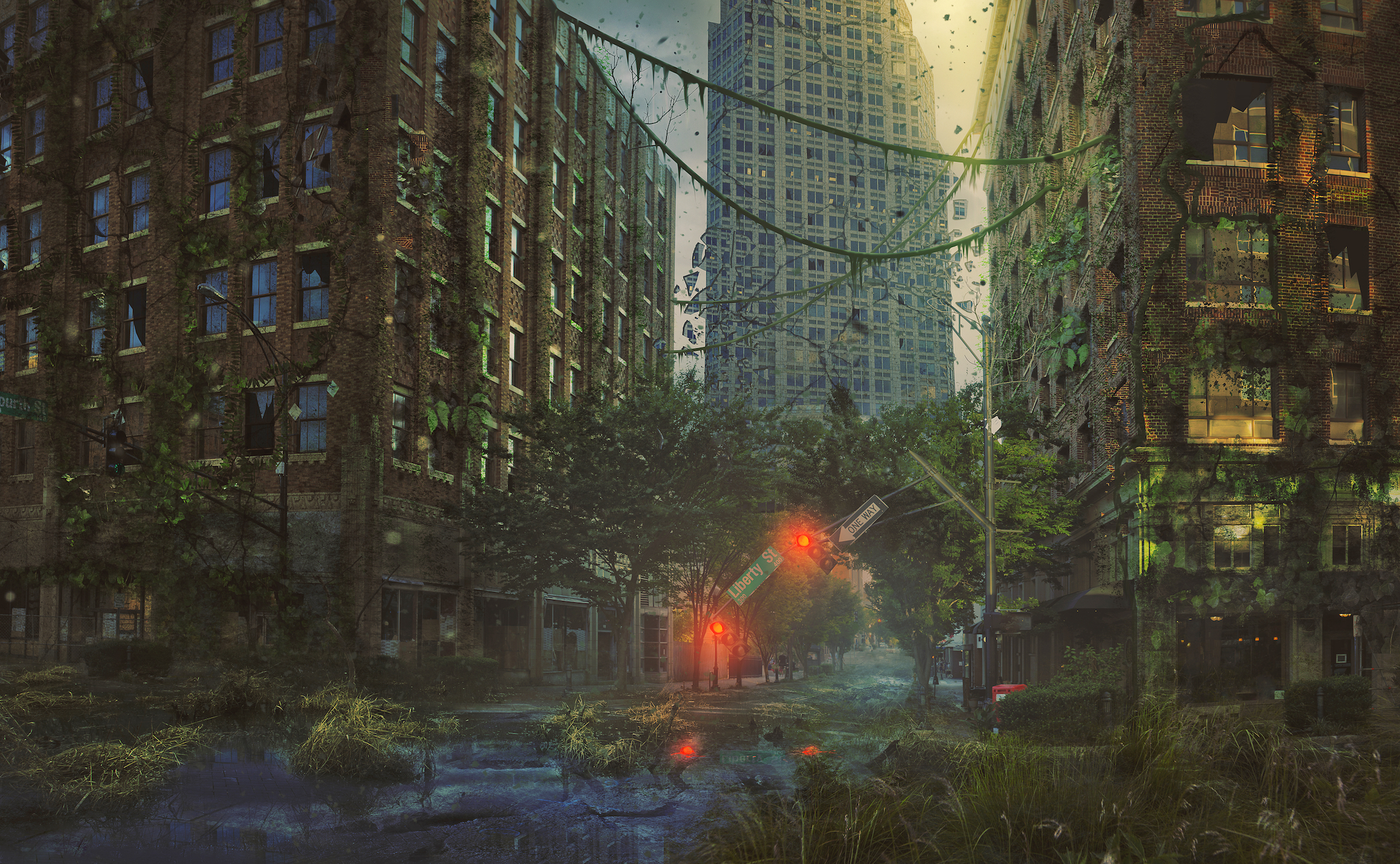
This exploration delves into the survival of hardware, the persistence of autonomous software, and the eventual decay of the digital legacy we leave behind.
The Immediate Silence: The Collapse of the Global Power Grid
The lifeblood of all modern technology is electricity. Without a constant flow of electrons, our most sophisticated AI tools and global networks are merely expensive paperweights. In the immediate aftermath of human extinction, the battle for technological survival begins at the power plant.
The Grid’s Dependency on Human Maintenance
Most of our current energy infrastructure is not designed for indefinite autonomy. Fossil fuel power plants—coal, natural gas, and oil—would be the first to fail. These facilities require constant human intervention for fuel replenishment and mechanical oversight. Within 24 to 48 hours, as fuel reserves at the plants are exhausted or as minor mechanical imbalances trigger safety shutdowns, the localized grids they support would go dark.
The Survival of Renewable and Automated Energy
Renewable energy sources would prove more resilient, albeit temporarily. Hydroelectric dams are among the most robust systems; if left in “auto” mode, some could potentially generate power for weeks or even months. However, they are eventually undone by silt buildup or mechanical failure of the turbines. Similarly, solar arrays and wind farms would continue to pump power into an increasingly unstable grid until the lack of load balancing—the process of matching supply with demand, currently managed by human-led dispatch centers and sophisticated software—leads to a catastrophic frequency mismatch, tripping circuit breakers and plunging the planet into a permanent digital blackout.
The Ghost in the Machine: Autonomous Systems and AI
While the hardware requires power, the software requires logic. In a world without humans, the internet would initially be populated by “ghost” processes—algorithms that continue to execute their programming without a target audience.
From Assisted Intelligence to Self-Sustaining Logic
Today, a significant portion of web traffic is already non-human. High-frequency trading (HFT) bots, web crawlers, and automated maintenance scripts operate around the clock. In the days following human extinction, these systems would continue to interact. Stock market algorithms might react to the lack of new data or the sudden cessation of trade orders, potentially triggering massive, invisible “flash crashes” in an empty financial market. Without human intervention to reset the “circuit breakers,” these AI systems would continue to cycle through logic loops until their host servers lost power.
The Longevity of Edge Computing and Satellites
Satellites represent our most isolated technology. Global Positioning System (GPS) satellites and communications arrays in geostationary orbit would continue to function long after terrestrial power grids failed. Powered by solar panels and operating in the vacuum of space, these systems could theoretically broadcast signals for years. However, without ground stations to provide “ephemeris” updates (correcting the satellite’s position data) and clock synchronizations, the accuracy of GPS would degrade within days, eventually rendering the timing data useless for any remaining autonomous terrestrial systems.
The Physical Decay of Hardware and Infrastructure
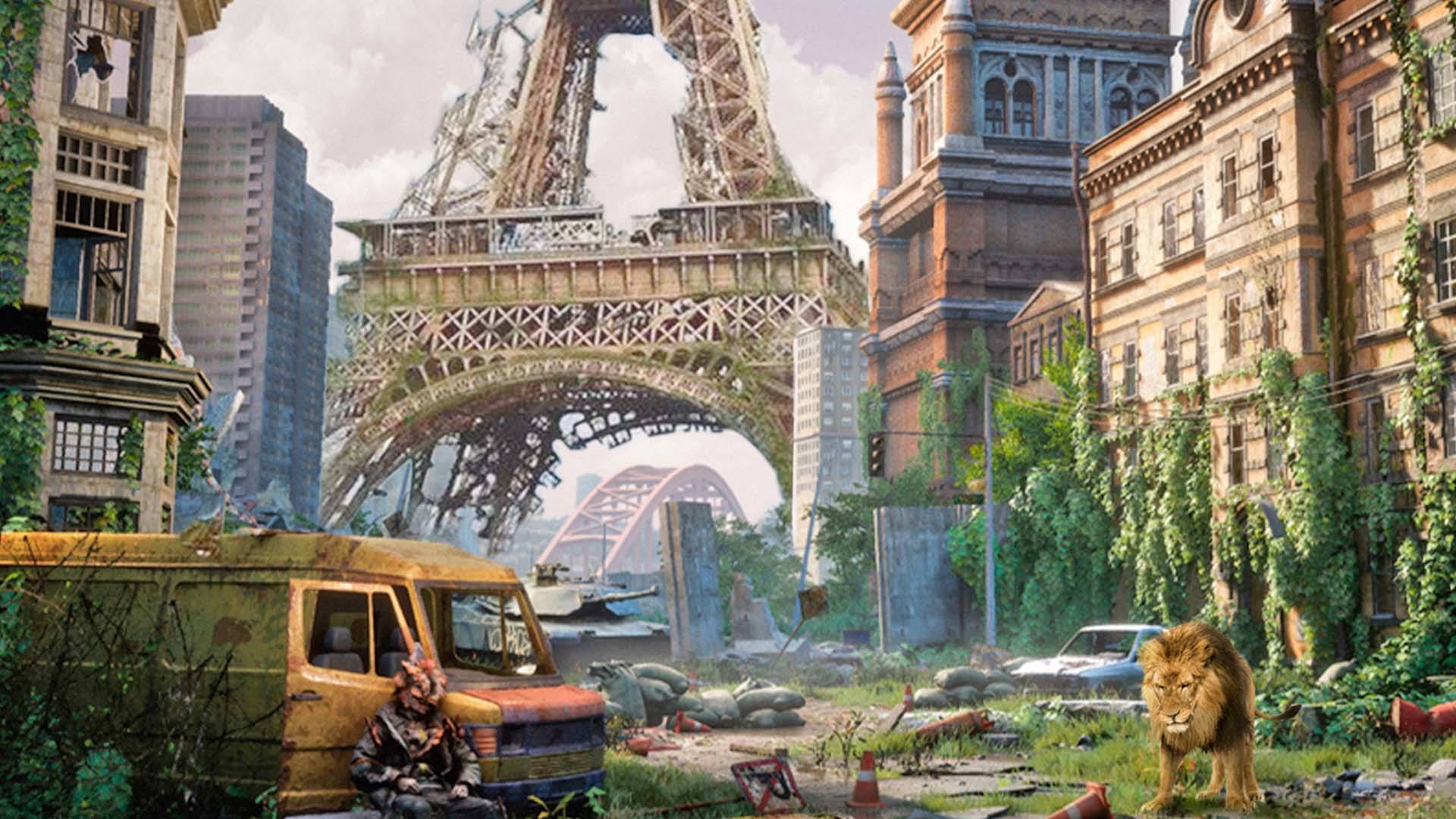
If we assume a localized source of power survives—perhaps a dedicated solar farm connected to a specific data center—the next threat to technology is the physical environment. Hardware is remarkably fragile when deprived of climate-controlled environments.
The Fragility of Data Centers and Cooling Systems
Modern servers generate immense heat. Data centers rely on sophisticated HVAC systems to prevent hardware from melting down. Almost immediately after human extinction, the air filtration systems would begin to clog with dust. Without humans to replace filters or maintain the liquid cooling loops, the ambient temperature inside server farms would skyrocket. Modern CPUs and GPUs are designed to “thermal throttle” or shut down when they reach critical temperatures. Within days of a cooling failure, the vast majority of the world’s “cloud” computing power would go offline to prevent physical combustion.
Corrosion, Moisture, and the “Bit Rot”
Even if a device remains powered and cool, it faces the slow march of entropy. In a world without climate control, humidity would infiltrate high-tech facilities. Moisture leads to the oxidation of copper traces on circuit boards and the corrosion of delicate connectors. Furthermore, data itself is not permanent. “Bit rot” refers to the slow degradation of data stored on magnetic media (HDDs) or NAND flash (SSDs). Magnetic orientations shift, and electrical charges in flash memory cells eventually leak away. Without “scrubbing”—the process where a system periodically reads and rewrites data to ensure its integrity—the information stored on our drives would become unreadable within a decade.
The Digital Legacy: Our Information as a Fossil Record
If a future intelligence—be it a highly evolved terrestrial species or an extraterrestrial visitor—were to arrive a thousand years after our extinction, what would remain of our digital civilization?
Long-term Storage Solutions and the “10,000-Year” Challenge
The irony of the digital age is that our records are far more fragile than the stone tablets of the Sumerians. A stone carving lasts millennia; a hard drive lasts a decade. Tech innovators are currently working on “Cold Storage” solutions designed to last for centuries, such as glass etchings or synthetic DNA storage. If humanity had successfully migrated its core knowledge—the sum of our scientific discoveries and cultural history—into these formats before extinction, our “brand” as a species might survive in a readable format. However, these repositories are currently rare and localized.
The Challenge of Decryption and Interpretation
Even if a physical storage medium survived, the software “stack” required to read it is immense. To read a simple PDF, one needs a functional computer, an operating system, and a specific application, all of which rely on billions of lines of code. An alien intelligence finding a surviving SSD would face the ultimate cryptographic challenge. Without the “Rosetta Stone” of our programming languages and hardware architectures, the entirety of the internet would appear as nothing more than random, undecipherable noise. Our digital existence would be a locked vault with no key.
Lessons for Modern Tech Strategy: Building for Resilience
While the extinction of the species is an extreme scenario, analyzing how our technology fails provides critical insights for current industry professionals. The vulnerabilities exposed by the “human-out” scenario highlight the need for greater resilience in our current systems.
Decentralization and Autonomy as Safeguards
The fragility of the centralized grid and the “cloud” suggests that true technological resilience lies in decentralization. Edge computing—where processing happens locally rather than in a distant data center—and localized micro-grids are less susceptible to the “cascading failures” that would follow a loss of human oversight. For tech architects, building systems that can fail gracefully and operate autonomously for extended periods is no longer a luxury; it is a necessity in an increasingly volatile world.

The Importance of Hardened Infrastructure
As we become more dependent on AI and digital records, the tech industry must prioritize long-term data preservation. The “Digital Dark Age”—a period where our current history is lost due to obsolete formats and decaying hardware—is a real risk. Investing in hardware that can withstand environmental fluctuations and developing open-source, “universal” data formats are essential steps to ensuring that our technological achievements outlast the specific platforms they were built on.
In conclusion, the extinction of humans would reveal that our technology is not an independent entity, but a biological extension of our species. Our tools are deeply tethered to our daily intervention. Without us, the lights of the digital age would flicker briefly, powered by the momentum of automation, before succumbing to the relentless laws of thermodynamics. Our legacy would shift from a vibrant, buzzing network of light and information to a silent, decaying archive of silicon—a testament to a species that mastered the electron but remained bound by the fragility of the systems it created.
aViewFromTheCave is a participant in the Amazon Services LLC Associates Program, an affiliate advertising program designed to provide a means for sites to earn advertising fees by advertising and linking to Amazon.com. Amazon, the Amazon logo, AmazonSupply, and the AmazonSupply logo are trademarks of Amazon.com, Inc. or its affiliates. As an Amazon Associate we earn affiliate commissions from qualifying purchases.