
Understanding your yearly salary is more than just knowing a single number; it’s a critical component of personal financial management, career planning, and overall financial well-being. Whether you’re an hourly worker, a salaried professional, or someone with a more complex compensation structure, accurately calculating your annual income is fundamental. This insight empowers you to create effective budgets, set realistic financial goals, negotiate for better compensation, and make informed decisions about your career trajectory. In an increasingly complex financial landscape, demystifying your earnings is the first step toward greater financial literacy and control.
This comprehensive guide will break down the process of figuring out your yearly salary, addressing the nuances that often lead to confusion. We’ll explore the different components of compensation, provide clear calculation methods for various pay structures, discuss the factors that influence your take-home pay, and offer strategies for optimizing your earnings. By the end, you’ll have a robust understanding of your financial inflows, enabling you to manage your money with greater precision and confidence.

Understanding the Fundamentals of Your Salary
Before diving into calculations, it’s essential to establish a clear understanding of the basic terminology and concepts related to your pay. Misinterpreting these foundational elements can lead to significant discrepancies in your financial planning.
Gross vs. Net Salary: A Crucial Distinction
The most common point of confusion revolves around gross and net salary.
- Gross Salary is the total amount of money you earn before any deductions are taken out. This is the figure typically quoted when you discuss your salary with an employer or on a job offer. It includes your base pay, any overtime, bonuses, commissions, and other forms of compensation. For example, if you’re offered a “salary of $60,000 per year,” that refers to your gross annual salary.
- Net Salary, often referred to as “take-home pay,” is the amount of money you actually receive in your bank account after all deductions. These deductions typically include federal income tax, state income tax (where applicable), local income tax (where applicable), Social Security contributions, Medicare contributions, health insurance premiums, retirement plan contributions (e.g., 401(k)), and any other pre-tax or post-tax withholdings. It’s the net salary that dictates your immediate spending power and the money available for budgeting.
Understanding the difference is paramount because while your gross salary determines your tax bracket and eligibility for certain loans, your net salary dictates your day-to-day financial reality.
The Role of Pay Periods: Hourly, Weekly, Bi-weekly, Monthly
How often you get paid significantly impacts how you approach calculating your yearly salary.
- Hourly: You are paid a specific rate for each hour you work. Your total pay for a period depends entirely on the number of hours clocked.
- Weekly: You receive a paycheck every week, totaling 52 paychecks in a year.
- Bi-weekly: You receive a paycheck every two weeks, resulting in 26 paychecks in a year. This is a very common pay schedule.
- Semi-monthly: You receive a paycheck twice a month, often on specific dates like the 15th and 30th. This results in 24 paychecks in a year.
- Monthly: You receive a single paycheck once a month, totaling 12 paychecks annually. This is common for higher-level salaried positions.
The frequency of your paychecks directly influences the multiplication factor you’ll use to annualize your earnings.
Components of Total Compensation Beyond Base Pay
Your “salary” might just be one piece of your overall compensation package. To get a complete picture of your yearly earnings, consider these additional elements:
- Bonuses: Performance-based, sign-on, or retention bonuses can significantly increase your annual income. These are often discretionary and may not be guaranteed year-to-year.
- Commissions: Common in sales roles, commissions are a percentage of sales revenue or profit. They can be a substantial part of total earnings and often fluctuate.
- Overtime Pay: For non-exempt employees, working beyond regular hours (typically 40 hours per week) often qualifies for time-and-a-half or double-time pay. This can add up quickly over a year.
- Stock Options/Restricted Stock Units (RSUs): Especially prevalent in tech and executive roles, these offer ownership in the company and can vest over time, providing significant financial upside.
- Tips: Common in service industries, tips are direct payments from customers that form a significant portion of income for many.
- Per Diem: A daily allowance paid to employees to cover living expenses when traveling for work.
Factoring in all these components provides a more accurate and robust estimate of your full annual earning potential.
Step-by-Step Calculation: From Paycheck to Annual Income
Once you understand the basic components, the actual calculation of your yearly salary becomes straightforward, though the method varies slightly depending on your pay structure.
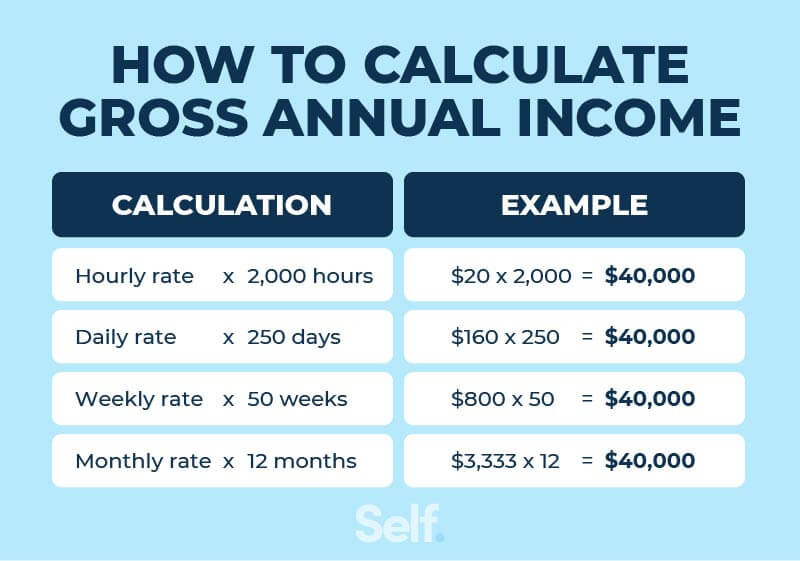
For Hourly Employees: Calculating Annual Gross Salary
If you are paid hourly, your annual gross salary depends on your hourly rate and the number of hours you work.
- Determine your hourly rate: This is the base amount you earn per hour.
- Calculate average weekly hours: If your hours vary, average them over a few weeks or months. For full-time, this is typically 40 hours.
- Multiply hourly rate by weekly hours: This gives you your gross weekly pay.
- *Example: $15/hour * 40 hours/week = $600/week*
- Multiply weekly pay by 52 (weeks in a year): This gives you your annual gross salary.
- *Example: $600/week * 52 weeks = $31,200/year*
Consider Overtime: If you regularly work overtime, you must include it.
- Example: $15/hour (regular) + $22.50/hour (overtime, 1.5x regular rate)
- *Regular hours: 40 hours/week * $15/hour = $600*
- *Overtime hours: 5 hours/week * $22.50/hour = $112.50*
- Total weekly gross: $600 + $112.50 = $712.50
- *Annual gross: $712.50 * 52 weeks = $37,050/year*
For Salaried Employees: Straightforward Annual Gross
Calculating annual gross salary for salaried employees is generally simpler, as their base pay is already stated as an annual figure or can be easily annualized.
- If stated annually: The number provided is your annual gross salary (e.g., “$75,000 per year”).
- If stated per pay period: Multiply your gross pay per period by the number of pay periods in a year.
- Bi-weekly: Gross pay per check * 26
- *Example: $2,500/bi-weekly check * 26 checks = $65,000/year*
- Semi-monthly: Gross pay per check * 24
- *Example: $2,700/semi-monthly check * 24 checks = $64,800/year*
- Monthly: Gross pay per check * 12
- *Example: $5,500/monthly check * 12 checks = $66,000/year*
- Bi-weekly: Gross pay per check * 26
Accounting for Irregular Income and Bonuses
For income sources like bonuses, commissions, or tips, which can be irregular, you’ll need to estimate or use historical data.
- Bonuses: If bonuses are common, use an average from previous years, or the expected amount for the current year. Be conservative if they are not guaranteed.
- Commissions: Average your monthly or quarterly commissions over the past 6-12 months to get a realistic annual projection. Factor in seasonality if applicable.
- Tips: Track your tips for a few typical weeks or months and then project that average over the year.
Add these estimated irregular incomes to your base annual gross salary to get a more comprehensive picture of your potential total annual earnings.
Beyond the Basics: Factors Influencing Your Effective Yearly Income
While gross salary is a key indicator, your “effective” yearly income—what you can actually use for living expenses and savings—is heavily influenced by various deductions and benefits.
Deductions and Withholdings: Taxes, Benefits, and Retirement
These are the amounts subtracted from your gross pay to arrive at your net pay.
- Mandatory Taxes:
- Federal Income Tax: Progressive tax based on your income, filing status, and W-4 elections.
- State Income Tax: Varies by state; some states have none, others have flat or progressive rates.
- Local Income Tax: Applicable in some cities or counties.
- FICA Taxes (Social Security & Medicare): Mandatory federal contributions. Social Security has an income cap; Medicare does not.
- Health Insurance Premiums: Your share of the cost for health, dental, and vision insurance, often deducted pre-tax.
- Retirement Plan Contributions: Deductions for 401(k), 403(b), or other employer-sponsored retirement plans. These are often pre-tax, reducing your taxable income.
- Other Pre-Tax Deductions: Health Savings Accounts (HSAs), Flexible Spending Accounts (FSAs), commuter benefits, etc., which reduce your taxable income.
- Post-Tax Deductions: Union dues, charitable contributions, garnishments, or certain voluntary benefits.
To figure your net yearly salary, you’d calculate your total gross annual income, then subtract the estimated annual total of all these deductions. This is often the more crucial figure for daily budgeting.
The Impact of Overtime and Commissions
As mentioned earlier, overtime and commissions can significantly boost your gross annual income. However, they also impact your tax situation. Higher income, even from irregular sources, means you might move into a higher tax bracket or have a larger percentage of your income withheld for taxes. It’s important to factor in these fluctuations when planning your finances and not solely rely on base pay. For those with highly variable income, budgeting based on a conservative estimate (e.g., base pay plus minimum expected commissions) and treating additional earnings as bonuses for savings or discretionary spending can be a prudent strategy.
Understanding Employee Benefits and Their Monetary Value
Beyond direct monetary compensation, the value of your employee benefits package can add thousands, or even tens of thousands, of dollars to your overall yearly compensation, though it doesn’t appear on your paycheck.
- Health Insurance: Employer contributions to your health plan can be substantial.
- Retirement Plan Matching: Many employers match a percentage of your 401(k) contributions, which is essentially “free money” towards your retirement.
- Paid Time Off (PTO): Vacation days, sick leave, and holidays have a monetary value equivalent to your daily pay.
- Life and Disability Insurance: Employer-provided policies offer financial protection.
- Professional Development: Tuition reimbursement, training programs, and certifications enhance your skills and marketability.
- Other Perks: Subsidized meals, gym memberships, transportation allowances, or childcare support.
When evaluating a job offer or assessing your total compensation, always ask for a breakdown of these benefits. They can make a lower base salary offer more attractive than a higher base salary with minimal benefits.
Strategies for Optimizing and Negotiating Your Salary
Knowing how to figure your yearly salary is just the beginning. The next step is to actively work towards optimizing it and ensuring you’re fairly compensated.
Researching Market Value for Your Role
Before any negotiation, arm yourself with data. Research what similar roles in your industry, geographic location, and with your level of experience are paying.
- Online Salary Calculators: Websites like Glassdoor, Salary.com, LinkedIn, and Payscale offer valuable insights.
- Industry Reports: Professional organizations often publish salary surveys.
- Networking: Speak confidentially with peers in your field.
This research will give you a realistic salary range and strengthen your negotiation position.
Highlighting Your Value and Accomplishments
When negotiating, focus on the value you bring to the organization.
- Quantify your achievements: Instead of saying “I improved sales,” state “I increased sales by 15% in Q3, resulting in an additional $X revenue.”
- Demonstrate problem-solving: Show how you’ve tackled challenges and delivered solutions.
- Align with company goals: Explain how your contributions directly support the company’s strategic objectives.
Frame your request not as a personal need, but as a fair reflection of your contribution to the company’s success.
Negotiating for Better Benefits and Perks
If a higher base salary isn’t fully achievable, consider negotiating other aspects of your compensation package.
- Signing Bonus: A one-time payment upon joining.
- Relocation Assistance: If moving for the role.
- Increased PTO: More vacation days can significantly improve work-life balance.
- Professional Development Budget: Funds for courses, conferences, or certifications.
- Flexible Work Arrangements: Remote work options or flexible hours can offer significant value.
- Review Employer Contribution to Health or Retirement Plans: See if there’s room for improvement.
Sometimes, a robust benefits package can be more valuable than a marginal increase in base salary, especially if those benefits align with your personal needs and long-term financial goals.
Regular Salary Reviews and Professional Development
Don’t wait for a job offer to think about your salary. Proactively seek regular performance reviews to discuss compensation.
- Annual Reviews: Prepare a summary of your accomplishments and contributions for your annual performance review, making a case for a raise.
- Skill Development: Invest in continuous learning and acquire new skills that are in demand. This increases your market value.
- Seek New Opportunities: Sometimes, the most effective way to significantly increase your salary is to move to a new company or role where your skills are valued more highly. Regularly assessing your marketability can reveal lucrative opportunities.
The Broader Financial Picture: Why Your Yearly Salary Matters
Figuring out your yearly salary isn’t just an academic exercise; it’s a foundational step towards building a secure and prosperous financial future.
Budgeting and Financial Planning
Your accurate annual net income is the cornerstone of any effective budget.
- Income Allocation: Knowing your take-home pay allows you to realistically allocate funds for housing, food, transportation, debt repayment, and discretionary spending.
- Expense Management: A clear picture of your income helps you identify where you might need to cut back or where you have room to spend more.
- Avoiding Debt: By living within your means, guided by your net salary, you can avoid accumulating high-interest debt.
Without a clear understanding of your annual income, budgeting becomes a guessing game, making financial stability elusive.
Setting Financial Goals: Savings, Debt, and Investments
Your yearly salary directly impacts your ability to achieve significant financial milestones.
- Emergency Fund: Knowing your income helps determine how much you need to save for 3-6 months of living expenses.
- Debt Repayment: A higher income or better understanding of your current income can accelerate debt repayment strategies.
- Down Payments: Saving for a house, car, or other major purchases relies on a predictable income stream.
- Investing for the Future: Your capacity to contribute to retirement accounts, brokerage accounts, or other investment vehicles is directly tied to your available income.
Understanding your yearly earnings allows you to set aggressive yet achievable targets for these goals.

Long-Term Career Growth and Earning Potential
Beyond the immediate, analyzing your yearly salary helps you evaluate your career trajectory.
- Career Path Analysis: Are you on a path where your income potential will grow over time?
- Skill Gaps: Does your current salary indicate a need to acquire new skills or certifications to climb the corporate ladder?
- Industry Trends: Are you in a field with stagnant wages, or one with high growth potential?
- Return on Education/Training: Will further education or training translate into a significant boost in your annual income?
By regularly reviewing your salary and comparing it to market rates, you can make strategic decisions about your professional development and career choices, ensuring your earning potential keeps pace with your aspirations and the cost of living.
In conclusion, knowing how to figure your yearly salary, both gross and net, and understanding the myriad factors that contribute to your total compensation, is an indispensable skill for anyone seeking financial empowerment. It’s not just a number on a paycheck; it’s a vital piece of the puzzle that enables effective budgeting, strategic financial planning, and informed career growth. Take the time to master this calculation, and you’ll lay a solid foundation for a more secure and prosperous financial future.
aViewFromTheCave is a participant in the Amazon Services LLC Associates Program, an affiliate advertising program designed to provide a means for sites to earn advertising fees by advertising and linking to Amazon.com. Amazon, the Amazon logo, AmazonSupply, and the AmazonSupply logo are trademarks of Amazon.com, Inc. or its affiliates. As an Amazon Associate we earn affiliate commissions from qualifying purchases.