
Understanding how your Social Security benefits are determined is one of the most crucial aspects of effective retirement planning. For millions of Americans, Social Security represents a foundational pillar of their financial security in their later years. Far from a simple flat payment, the monthly benefit you receive is the result of a complex formula that considers your entire earning history, your age at claiming, and several other factors. Demystifying this calculation process is not just an academic exercise; it empowers individuals to make informed decisions that can significantly impact their financial well-being throughout retirement.

This article delves deep into the methodology employed by the Social Security Administration (SSA) to calculate your retirement benefits. We will explore the key variables, the intricate formulas, and the strategic implications of decisions like when to claim. By the end, you will have a clear, actionable understanding of how your future Social Security income is shaped, allowing you to optimize your retirement strategy.
The Foundation of Your Benefit: Earnings, Age, and the Primary Insurance Amount
At its core, your Social Security benefit is derived from three primary elements: your lifetime earnings, the age at which you choose to begin receiving benefits, and a pivotal figure known as your Primary Insurance Amount (PIA). Each of these components plays a critical role in shaping the final monthly sum you will receive.
Your Lifetime Earning Record: The 35-Year Benchmark
The bedrock of your Social Security calculation is your earnings history. The SSA doesn’t just look at your most recent salary; it considers your entire career. Specifically, the system takes your 35 highest-earning years under Social Security-covered employment. If you have fewer than 35 years of earnings, the missing years will be counted as zeros, which can significantly lower your average.
It’s important to note that only earnings up to the annual Social Security taxable maximum are considered. This maximum changes each year (e.g., $168,600 in 2024). Any income earned above this threshold is not subject to Social Security taxes and, therefore, does not factor into your benefit calculation. The SSA also “indexes” your past earnings to account for changes in average wages over time, ensuring that your earnings from decades ago are given appropriate weight in current dollar terms. This process is essential for providing a fair representation of your career contributions, even if they occurred in a different economic era.
Your Full Retirement Age (FRA) and Claiming Decisions
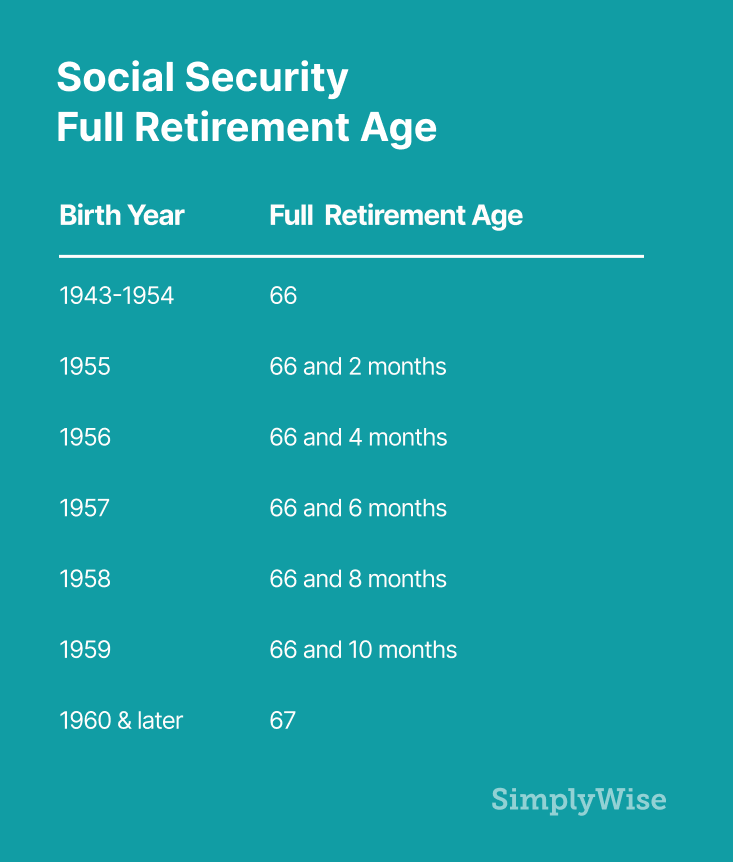
The age at which you decide to claim your benefits is perhaps the most impactful decision you’ll make regarding your Social Security income. The SSA designates a Full Retirement Age (FRA), which is the age at which you are entitled to receive 100% of your calculated benefit. For those born in 1960 or later, FRA is 67. For those born between 1943 and 1959, it gradually rises from 66 to 67.
You have the flexibility to claim benefits as early as age 62, or you can delay them up to age 70. However, these choices come with significant, permanent adjustments:
- Claiming Early: If you claim before your FRA, your monthly benefit will be permanently reduced. For example, if your FRA is 67 and you claim at 62, your benefit could be reduced by up to 30%.
- Delaying Benefits: For each year you delay claiming past your FRA, up to age 70, your benefit increases by a certain percentage, known as delayed retirement credits. These credits currently stand at 8% per year. Delaying from age 67 to 70 could result in a 24% increase in your monthly payment for life.
These adjustments are critical for maximizing your lifetime benefits and require careful consideration of your personal health, financial needs, and other income sources.
The Primary Insurance Amount (PIA): Your Unadjusted Benefit
The Primary Insurance Amount (PIA) is the monthly benefit you would receive if you began collecting Social Security precisely at your Full Retirement Age (FRA). It’s the starting point for all benefit calculations, before any adjustments for early or delayed claiming. The PIA is determined by a formula that applies “bend points” to your Average Indexed Monthly Earnings (AIME). These bend points are designed to make the Social Security benefit progressively weighted, meaning lower earners receive a higher percentage of their average indexed earnings back as a benefit compared to higher earners.
Deciphering Your Earnings Record: The Average Indexed Monthly Earnings (AIME)
Before the SSA can calculate your PIA, it first needs to determine your Average Indexed Monthly Earnings (AIME). This figure represents your average monthly income from your indexed 35 highest-earning years, providing a crucial input for the final benefit formula.
What is Average Indexed Monthly Earnings (AIME)?
AIME is a crucial intermediate step. It’s not simply your raw earnings added up and divided. Instead, the SSA first “indexes” your past earnings to reflect the general increase in wages that has occurred since you earned those dollars. This indexing process ensures that your earnings from, say, the 1980s or 1990s, are brought up to a more current value, preventing inflation from unfairly diminishing their contribution to your benefit.
For example, an income of $20,000 in 1985 had significantly more purchasing power than $20,000 today. Indexing adjusts that 1985 income upward to reflect what it would be worth in a recent year, typically two years before you become eligible for benefits. Earnings from the most recent two years prior to eligibility are generally not indexed because they are already relatively current.
The 35-Year Rule in Detail
As mentioned, the SSA selects your 35 years of highest earnings. If you’ve worked for 40 years, your five lowest-earning years will be dropped. If you’ve only worked for 20 years in covered employment, those 20 years will be used, and 15 years will be entered as zeros in the calculation. This “zero” treatment for years without earnings can significantly dilute your AIME, underscoring the importance of a consistent work history. Many individuals may have gaps in their employment due to education, caregiving, or unemployment, and understanding how these gaps affect your AIME is vital for realistic retirement planning.
Once your 35 highest indexed annual earnings are identified, they are summed up and then divided by 420 (which is 35 years multiplied by 12 months) to arrive at your Average Indexed Monthly Earnings (AIME).
From AIME to PIA: The Bend Point Formula
With your AIME established, the SSA applies a progressive formula involving “bend points” to calculate your Primary Insurance Amount (PIA). This formula ensures a degree of income redistribution, providing a higher replacement rate for lower-income workers.
Understanding Bend Points
The PIA formula uses specific percentages applied to different segments of your AIME. These segments are defined by dollar amounts called “bend points.” The bend points themselves are adjusted annually based on changes in the national average wage index. For example, for someone becoming eligible for retirement benefits in 2024, the bend points are:
- 90% of the first $1,174 of AIME
- 32% of AIME between $1,174 and $7,078
- 15% of AIME above $7,078
Let’s illustrate with an example: If an individual’s AIME is $4,000, their PIA calculation would look like this:
- 90% of $1,174 = $1,056.60
- 32% of ($4,000 – $1,174) = 32% of $2,826 = $904.32
- 15% of $0 (since AIME is below the third bend point) = $0
- Total PIA = $1,056.60 + $904.32 = $1,960.92
This means if their FRA is 67, they would receive approximately $1,960.92 per month if they claim at 67.
Why Bend Points Matter: Progressivity in Action
The progressive nature of the bend point formula is a cornerstone of Social Security’s design. It ensures that individuals with lower lifetime earnings receive a proportionally larger Social Security benefit relative to their pre-retirement income compared to those with higher earnings. While high earners will receive a larger absolute dollar amount, the system is fundamentally structured to prevent extreme poverty among retirees and provide a meaningful safety net for all. This progressive structure is a key reason why Social Security is considered an anti-poverty program.
Strategic Adjustments: Early vs. Delayed Benefits
Once your PIA is calculated, it’s subject to adjustments based on your claiming age. This is where personal strategy and financial planning become paramount.
The Impact of Claiming Early (Age 62)
The earliest you can begin receiving retirement benefits is age 62. However, doing so results in a permanent reduction of your monthly benefit. The reduction percentage depends on how many months you are away from your Full Retirement Age (FRA). For someone with an FRA of 67, claiming at age 62 means collecting benefits 60 months (5 years) early. The reduction is typically 5/9 of 1% per month for the first 36 months, and 5/12 of 1% for additional months. This can amount to a substantial reduction, often around 25-30% of your PIA, for the rest of your life. While claiming early can provide much-needed income for some, it comes at a significant cost in terms of total lifetime benefits, especially for those who live a long life.
Maximizing Benefits: Delaying Up to Age 70
Conversely, you can significantly increase your monthly benefit by delaying your claim past your Full Retirement Age, up to age 70. For each year you delay, you earn delayed retirement credits, which currently boost your annual benefit by 8%. So, if your FRA is 67 and you delay until 70, you’ll receive an additional 24% on top of your PIA. This increase is also permanent and applies for the rest of your life. For many individuals with sufficient other retirement savings and good health expectations, delaying Social Security until age 70 can be a powerful strategy to ensure a higher guaranteed income stream for their longest living years.
The decision of when to claim is highly personal, factoring in your health, other income sources, life expectancy, marital status, and dependents. There’s no one-size-fits-all answer, but understanding the precise calculation of these adjustments is fundamental to making an optimal choice.
Other Important Considerations in Benefit Calculation
While earnings history and claiming age are the primary drivers, several other factors can influence the final amount or utility of your Social Security benefits.
Cost-of-Living Adjustments (COLAs)
Once you begin receiving benefits, your payments are generally adjusted annually through a Cost-of-Living Adjustment (COLA). These adjustments are designed to help your benefits keep pace with inflation, maintaining your purchasing power over time. COLAs are determined by a specific inflation index (the Consumer Price Index for Urban Wage Earners and Clerical Workers, or CPI-W) and are typically announced in the fall for the following year. This is a crucial feature that protects retirees from the eroding effects of inflation.
Taxation of Benefits
For many retirees, a portion of their Social Security benefits may be subject to federal income tax. The amount of taxability depends on your “provisional income,” which includes your adjusted gross income, tax-exempt interest, and one-half of your Social Security benefits.
- If your provisional income is between $25,000 and $34,000 (single filers) or $32,000 and $44,000 (married filing jointly), up to 50% of your benefits may be taxable.
- If your provisional income exceeds these upper thresholds, up to 85% of your benefits may be taxable.
It’s essential to factor this potential taxation into your overall retirement income planning.
Spousal and Survivor Benefits
Social Security also provides benefits for spouses and survivors, which are often derived from the primary worker’s earning record. A spouse may be eligible for up to 50% of their partner’s Full Retirement Age benefit, while surviving spouses or children may receive benefits based on the deceased worker’s PIA. The rules for these benefits can be complex, involving factors like marital duration, claiming age, and the existence of other dependents. These provisions highlight the role of Social Security as a family protection program, not just an individual retirement scheme.
The Windfall Elimination Provision (WEP) and Government Pension Offset (GPO)
For individuals who receive a pension from employment not covered by Social Security (e.g., some government jobs) and also have sufficient covered earnings to qualify for Social Security benefits, special provisions like the Windfall Elimination Provision (WEP) and Government Pension Offset (GPO) can significantly reduce their Social Security or spousal/survivor benefits. These provisions are designed to prevent “windfalls” for those who benefit from both non-covered pensions and Social Security, treating them more equitably with those who only have Social Security-covered employment. It’s crucial for affected individuals to understand how these rules apply to their specific situation.

Conclusion
The calculation of Social Security benefits is a multifaceted process, intricately linked to your entire working life and the strategic choices you make as you approach retirement. From the initial indexing of your lifetime earnings to the application of bend points to determine your Primary Insurance Amount, and finally, the crucial adjustments based on your claiming age, each step plays a vital role.
Understanding “how Social Security is calculated” is not merely about understanding a government formula; it’s about gaining control over a significant portion of your future retirement income. By appreciating the impact of your earnings history, the power of delayed retirement credits, and the implications of claiming early, you can make more informed decisions to maximize your benefits and enhance your financial security. The Social Security Administration provides personalized estimates through my Social Security accounts, a valuable tool for anyone looking to forecast their future benefits and plan accordingly. Armed with this knowledge, you can approach retirement with greater confidence and a clearer financial roadmap.
aViewFromTheCave is a participant in the Amazon Services LLC Associates Program, an affiliate advertising program designed to provide a means for sites to earn advertising fees by advertising and linking to Amazon.com. Amazon, the Amazon logo, AmazonSupply, and the AmazonSupply logo are trademarks of Amazon.com, Inc. or its affiliates. As an Amazon Associate we earn affiliate commissions from qualifying purchases.