
Understanding your future Social Security benefits is a cornerstone of effective retirement planning. For many, Social Security represents a significant, if not primary, source of income in their later years. However, the calculation of these benefits can seem opaque and complex, leading to confusion and uncertainty. Dispelling this mystery is crucial for making informed decisions about when to retire, how much to save, and ultimately, how to achieve financial security in retirement. This article will demystify the process, breaking down the key factors, the mechanics of the calculation, the essential tools available to you, and strategies to maximize your potential benefit. By the end, you’ll have a clear roadmap to understanding your Social Security future.

Understanding the Foundation: Key Factors Influencing Your Benefit
Your Social Security benefit isn’t a one-size-fits-all figure. It’s meticulously calculated based on several critical factors unique to your work history and personal circumstances. Grasping these foundational elements is the first step toward accurately estimating your future income.
Your Earning History (Average Indexed Monthly Earnings – AIME)
The most significant determinant of your Social Security benefit is your lifetime earnings. The Social Security Administration (SSA) doesn’t just look at your final salary; instead, it considers your “Average Indexed Monthly Earnings” (AIME). This involves taking your earnings from all years you worked, up to the annual Social Security earnings limit, and then “indexing” them to account for changes in general wage levels over time. Indexing ensures that your past earnings are compared fairly to current wage standards, making them more relevant to today’s economic value.
Specifically, the SSA takes your highest 35 years of indexed earnings. If you’ve worked for fewer than 35 years, any years with no earnings will be recorded as zero, which can significantly lower your overall average. This highlights the importance of a long and consistent work history with strong earnings. Years with lower earnings can be “dropped out” if you continue to work longer and earn more, as only the highest 35 years are used. This feature can be a powerful incentive for individuals to continue working even after reaching their initial retirement age, especially if their later career years are their highest-earning ones.
Full Retirement Age (FRA)
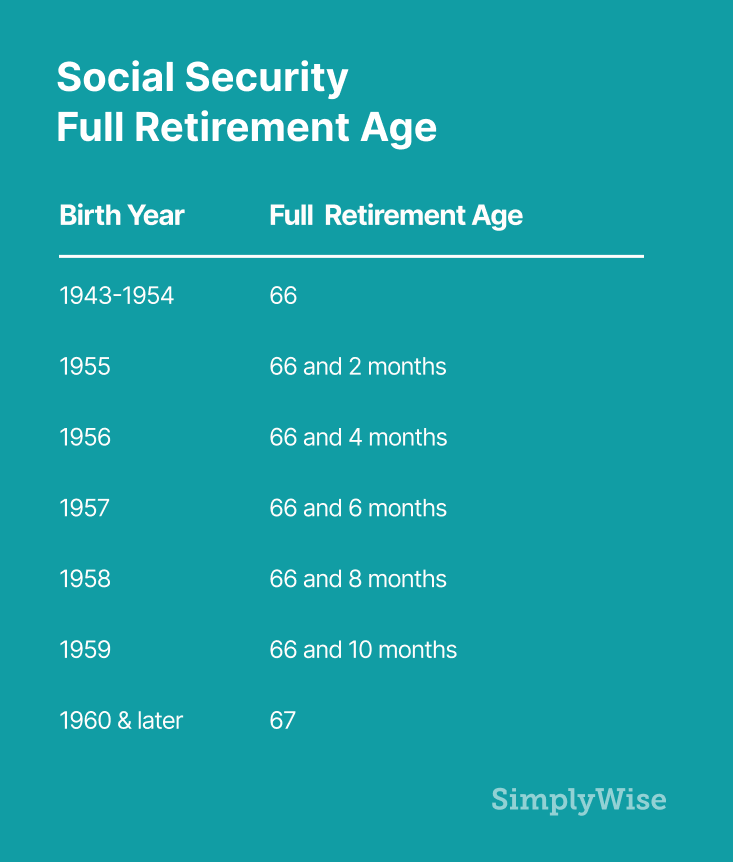
Your Full Retirement Age (FRA) is a pivotal concept in Social Security. It’s the age at which you become eligible to receive 100% of your primary insurance amount (PIA), which is your basic benefit calculated from your AIME. The FRA is not fixed for everyone; it varies depending on your birth year. For those born in 1937 or earlier, FRA was 65. For those born between 1943 and 1954, it’s 66. For subsequent birth years, it gradually increases until it reaches 67 for anyone born in 1960 or later.
Knowing your FRA is crucial because it serves as the benchmark against which early or delayed claiming decisions are measured. Claiming benefits before your FRA results in a permanent reduction, while delaying benefits past your FRA results in a permanent increase. It’s the “sweet spot” where you receive the full benefit your work history has earned, without penalty or bonus for the timing of your claim. Understanding your specific FRA is the key to evaluating the financial implications of your retirement timeline.
Claiming Age
Perhaps the most impactful decision you’ll make regarding your Social Security benefit is when to start claiming it. You have a window of opportunity, typically from age 62 up to age 70, to begin receiving benefits. This decision carries significant and permanent financial consequences.
-
Claiming Early (as early as age 62): While you can start receiving benefits at age 62, doing so will result in a permanent reduction of your monthly benefit amount. The reduction percentage varies based on your FRA and how many months early you claim. For someone with an FRA of 67, claiming at age 62 means a reduction of about 30%. This lower amount is what you will receive for the rest of your life. The rationale for claiming early often includes immediate financial need, poor health, or a desire to retire sooner.
-
Claiming at Full Retirement Age (FRA): As discussed, claiming at your FRA means you receive 100% of your calculated PIA, the amount your earnings history dictates without any reduction or increase. This is the baseline from which all other claiming ages are measured.
-
Delaying Benefits (up to age 70): If you delay claiming benefits past your FRA, your monthly benefit amount will increase by a certain percentage for each year you wait, up to age 70. These are known as Delayed Retirement Credits (DRCs). For those with an FRA of 66 or 67, DRCs typically add 8% to your benefit for each year you delay. This means waiting until age 70 could result in a monthly benefit that is 24% to 32% higher than your PIA. This strategy is often favored by those in good health, with other sufficient retirement income, or who wish to maximize their guaranteed lifetime income.
The choice of when to claim is a deeply personal one, requiring careful consideration of your financial situation, health, longevity expectations, and spousal benefits.
The Calculation Mechanics: From AIME to Primary Insurance Amount (PIA)
With the foundational factors in mind, let’s delve into how the SSA translates your Average Indexed Monthly Earnings (AIME) into your actual monthly benefit, known as your Primary Insurance Amount (PIA). This process involves a progressive formula that is designed to be somewhat progressive, meaning it replaces a higher percentage of earnings for lower-income workers than for higher-income workers.
The “Bend Points” and PIA Formula
The SSA doesn’t simply apply a single percentage to your entire AIME. Instead, it uses a three-tier formula involving what are called “bend points.” These bend points are specific dollar amounts in your AIME at which the percentage of earnings replaced changes. These points are adjusted annually based on the national average wage index.
For example, for someone becoming eligible for benefits in 2024, the formula works roughly like this:
- 90% of the first amount up to the first bend point (e.g., $1,174)
- Plus 32% of the amount between the first and second bend points (e.g., between $1,174 and $7,078)
- Plus 15% of the amount over the second bend point (e.g., above $7,078), up to the maximum taxable earnings limit.
The sum of these three calculations equals your Primary Insurance Amount (PIA). Your PIA is the monthly benefit you would receive if you start collecting benefits exactly at your Full Retirement Age (FRA). It’s crucial to understand that these bend points make the system progressive; the 90% replacement rate for the initial portion of earnings significantly benefits lower-income individuals, while the lower 15% rate for higher earnings means that higher earners have a smaller percentage of their total earnings replaced by Social Security. This formula ensures that Social Security provides a vital safety net for all workers, with a disproportionately larger benefit replacement rate for those with lower lifetime earnings.
Adjustments for Early or Delayed Claiming
Once your PIA is calculated, it’s subject to permanent adjustments based on your chosen claiming age relative to your Full Retirement Age (FRA). These adjustments are meticulously calculated month-by-month, not just by year.
-
Early Retirement Reductions: If you claim before your FRA, your PIA is permanently reduced. The reduction rate is approximately:
- 5/9 of 1% for each of the first 36 months you claim early.
- 5/12 of 1% for each additional month beyond 36 months.
For instance, someone with an FRA of 67 who claims at age 62 (60 months early) would face a reduction of 30% (36 months x 5/9% + 24 months x 5/12%). This reduced amount becomes your monthly benefit for life.
-
Delayed Retirement Credits (DRCs): Conversely, if you delay claiming past your FRA, your PIA is permanently increased by DRCs. These credits accrue until you reach age 70, at which point no further credits are earned. The rate of increase depends on your birth year:
- For those born between 1943 and 1959, DRCs add 8% to your benefit for each year (or 2/3 of 1% for each month) you delay.
- For those born in 1960 or later, the rate also stands at 8% per year.
If your FRA is 67, and you delay until age 70 (3 years), your benefit could be 24% higher (3 years x 8%) than your PIA. This increase compounds the benefit of working longer and can lead to a significantly larger monthly payment throughout your retirement. These adjustments highlight the critical financial implications of your claiming decision.
Essential Tools for Benefit Estimation
While understanding the calculation mechanics is insightful, you don’t have to perform complex arithmetic yourself. The Social Security Administration (SSA) provides powerful and accessible tools to help you estimate your benefits with remarkable accuracy. These tools are indispensable for any serious retirement planning.
Your My Social Security Account
The single most valuable resource for estimating your Social Security benefit is your personal My Social Security Account. This online portal, easily accessible through the SSA website, provides the most accurate and personalized information based directly on your official earnings record.
Once you create an account (which requires verification to ensure security), you can:
- Review Your Earnings Record: This is crucial. Your earnings record dictates your AIME. You can view a detailed breakdown of your reported earnings year-by-year and ensure there are no errors or omissions. Correcting inaccuracies early is vital, as it directly impacts your future benefits.
- Get Personalized Benefit Estimates: Your account provides estimates of your monthly benefit at various claiming ages:
- If you claim at the earliest age (62).
- If you claim at your Full Retirement Age (FRA).
- If you delay claiming until age 70.
- See Estimates for Family Members: If applicable, you can also see estimates for disability benefits, survivor benefits, and spousal benefits.
Regularly checking your My Social Security account (at least once a year) is a proactive step toward managing your retirement planning and ensuring the accuracy of your future benefits.
SSA’s Online Calculators
Beyond the personalized information in your My Social Security Account, the SSA website also offers a suite of generic and specific online calculators that can help you explore different scenarios.
- The Retirement Estimator: This is the flagship calculator. It allows you to plug in different “what-if” scenarios. You can adjust your expected future earnings, anticipated retirement age, and other factors to see how these changes might impact your estimated benefit. This tool is invaluable for scenario planning and understanding the levers you can pull to potentially increase your benefit.
- Other Calculators: The SSA provides specialized calculators for specific situations, such as:
- The Life Expectancy Calculator: To help you consider how long you might need to receive benefits.
- The Early or Late Retirement Calculator: To see the specific impact of claiming before or after your FRA.
- The Benefit Forfeit Calculator: To understand how working while receiving benefits might affect your payments if you’re below FRA.
While these tools don’t offer the same personalized accuracy as your My Social Security account, they are excellent for broader planning and understanding the general impact of various decisions.
Third-Party Financial Planning Tools
Many reputable financial planning software platforms and independent financial advisors incorporate Social Security benefit calculations into their comprehensive retirement planning services. These tools can go a step further by integrating your Social Security estimates with your other retirement assets, such as 401(k)s, IRAs, and pensions.
Working with a financial advisor or using sophisticated planning software allows you to:
- Holistic View: See how your Social Security benefits fit into your overall retirement income strategy.
- Optimization Strategies: Explore advanced claiming strategies, especially for couples (e.g., “file and suspend” or “restricted application” for those eligible), to maximize combined lifetime benefits.
- Tax Planning: Understand the potential tax implications of your Social Security benefits in conjunction with other income sources.
While the SSA’s tools are excellent for basic estimation, third-party resources can provide a more integrated and customized approach to your entire financial picture.
Strategies for Maximizing Your Social Security Benefit
Understanding how your Social Security benefit is calculated is empowering, but knowing how to potentially increase that benefit is truly strategic. While some factors are out of your control, several actions can significantly influence the size of your monthly payment in retirement.
Work Longer and Earn More
Given that your Social Security benefit is based on your highest 35 years of indexed earnings, working longer and maximizing your income during your career can have a profound impact.
- Replace Low-Earning Years: If you’ve had periods of unemployment, part-time work, or lower-paying jobs earlier in your career, continuing to work in a higher-earning capacity can “push out” those lower (or zero) earning years from your top 35. Each year of higher earnings replaces a lower-earning year, directly increasing your Average Indexed Monthly Earnings (AIME) and thus your Primary Insurance Amount (PIA).
- Consistent High Earnings: Aiming for consistent, strong earnings throughout your career, especially in your prime earning years, is key. Even if you’ve already accumulated 35 years of earnings, if your current earnings are higher than some of your earliest indexed years, continuing to work can still boost your overall average.
Strategic Claiming Age Decisions
As previously discussed, your claiming age is arguably the most powerful lever you have for adjusting your benefit amount. The decision of when to start collecting benefits should be a carefully considered one, weighing immediate needs against long-term financial gain.
- Weighing Trade-offs:
- Early Claiming (Age 62): Provides immediate income, which can be crucial if you have health issues, need to stop working, or have no other immediate income sources. However, it results in a permanently reduced benefit.
- Delayed Claiming (Up to Age 70): Maximizes your monthly benefit through Delayed Retirement Credits (DRCs), providing a significantly larger payment for life. This strategy is beneficial if you are in good health, anticipate a long lifespan, have other income sources to bridge the gap, or want to maximize survivor benefits for a spouse.
- Considering Personal Factors:
- Health and Longevity: If you have a family history of longevity or are in excellent health, delaying benefits often makes financial sense over your lifetime. Conversely, if your health is poor, claiming early might be prudent.
- Other Retirement Income: If you have substantial savings, pensions, or other investment income, you might be able to afford to delay Social Security and let your benefits grow.
- Spousal and Survivor Benefits: For married couples, strategic claiming can maximize combined lifetime benefits. For example, the higher-earning spouse might delay claiming to boost their benefit, which will also result in a higher potential survivor benefit for the lower-earning spouse. There are specific rules for spousal and survivor benefits that can be complex but offer opportunities for optimization.
Monitoring Your Earnings Record
It’s astonishing how often errors occur in earnings records, which can directly impact your future Social Security benefits. Regularly checking your earnings history is a simple yet crucial step to ensure accuracy.
- Annual Review: Log into your My Social Security account at least once a year. Review your reported earnings for each year. Ensure that all your employers reported your income correctly and that there are no gaps or discrepancies.
- Correcting Errors: If you find an error, contact the Social Security Administration immediately. You may need to provide proof of earnings, such as W-2 forms or tax returns. Correcting these errors can take time but is essential to ensure your benefit calculation is based on your true earnings history. A seemingly small error over several years could accumulate into a noticeable difference in your monthly benefit.

Conclusion
Calculating your Social Security benefit might seem daunting, but it boils down to understanding a few core principles and leveraging the right tools. Your lifetime earnings history, your Full Retirement Age, and your chosen claiming age are the three most critical factors that determine your Primary Insurance Amount and ultimately, your monthly payout.
The good news is that you don’t need to be an actuary to get a reliable estimate. Your My Social Security account is an indispensable resource, offering personalized estimates based on your actual earnings record. Complementing this with the SSA’s online calculators and potentially the expertise of a financial advisor can provide a comprehensive picture of your Social Security future.
By being proactive – working to maximize your earnings, carefully considering your claiming age, and diligently monitoring your earnings record – you can make informed decisions that significantly impact your financial well-being in retirement. Social Security is more than just a government program; it’s a vital component of your retirement income strategy, and understanding its mechanics empowers you to navigate your financial future with confidence.
aViewFromTheCave is a participant in the Amazon Services LLC Associates Program, an affiliate advertising program designed to provide a means for sites to earn advertising fees by advertising and linking to Amazon.com. Amazon, the Amazon logo, AmazonSupply, and the AmazonSupply logo are trademarks of Amazon.com, Inc. or its affiliates. As an Amazon Associate we earn affiliate commissions from qualifying purchases.