
In the intricate world of personal finance, understanding the essential identifiers that govern your money movement is paramount. Among these, the Routing Transit Number (RTN) stands as a critical nine-digit code, a foundational element for countless financial transactions within the United States. Often overlooked until explicitly needed, the RTN acts as a unique address for your bank, directing funds to and from your accounts with precision. Whether you’re setting up direct deposit for your paycheck, initiating a wire transfer, or managing automated bill payments, knowing how to locate this number is a fundamental financial literacy skill. This guide will demystify the RTN, explain its importance, and provide you with clear, practical methods to find it quickly and securely, ensuring your financial operations run smoothly and without hitches.

Understanding Your Routing Transit Number: A Financial Cornerstone
Before diving into the “how-to,” it’s crucial to grasp what a Routing Transit Number is, why it holds such significance in your financial life, and how it differs from other numbers associated with your bank account. This foundational knowledge empowers you to manage your money more effectively and with greater confidence.
What is a Routing Transit Number (RTN)?
A Routing Transit Number, often simply called a routing number or an ABA (American Bankers Association) number, is a nine-digit code used to identify a specific financial institution in the U.S. It’s akin to a postal code for your bank, ensuring that funds sent electronically arrive at the correct destination. Established in 1910 by the ABA, its primary purpose is to facilitate the processing of checks and electronic transfers between banks, preventing misdirection and ensuring transactions are settled efficiently. Each bank typically has at least one routing number, though larger banks might have several, often specific to different geographic regions or types of transactions.
The structure of an RTN is standardized: the first four digits identify the Federal Reserve Bank district where the financial institution is located, the next four digits identify the specific institution itself, and the final digit is a checksum digit used to validate the entire number. This intricate system is what allows for the smooth flow of billions of dollars daily across the U.S. banking system.
Why Your RTN Matters for Personal Finance
Your routing number is not just an obscure string of digits; it’s a critical component for a wide array of personal financial activities. Its importance spans both receiving and sending money, making it indispensable for modern financial management.
For receiving money, the RTN is fundamental for:
- Direct Deposit: The most common use case, enabling employers, government agencies (like the IRS for tax refunds), or benefit providers to deposit funds directly into your bank account. Without an accurate RTN, your paycheck or benefits could be delayed or returned.
- Automated Clearing House (ACH) Payments: This includes various electronic funds transfers, such as receiving payments from apps like PayPal or Venmo (when linked to a bank account) or receiving refunds from merchants.
For sending money, the RTN is crucial for:
- Online Bill Pay: Many services allow you to pay bills directly from your bank account using your routing and account numbers, bypassing paper checks.
- Wire Transfers: For larger, time-sensitive transfers, both domestic and international, an accurate routing number (along with a SWIFT/BIC code for international) is essential to ensure funds reach the intended recipient’s bank.
- Automated Payments and Transfers: Setting up recurring transfers to savings accounts, investment accounts, or automated loan payments relies on having the correct RTN for the destination institution.
Essentially, any electronic transaction that involves moving money between different U.S. financial institutions will require your bank’s routing number. It’s the lynchpin that connects your account to the broader financial network.
Differentiating RTN from Other Financial Identifiers
It’s common for individuals to confuse their routing number with other financial identifiers. Understanding the distinctions is vital to avoid errors that could lead to delayed transactions or, worse, funds being sent to the wrong place.
- Routing Transit Number (RTN): Identifies your bank or financial institution. It’s the same for all accounts at that specific branch or institution (though some banks have multiple RTNs for different purposes or regions).
- Account Number: Identifies your specific account at that bank. This number is unique to you and your account (e.g., checking, savings, money market). Together, the RTN and your account number precisely pinpoint where money should go.
- Check Number: A sequential number printed on each check, used for tracking and reconciliation purposes. It has no bearing on identifying your bank or account for electronic transfers.
- SWIFT/BIC Code: For international wire transfers, a SWIFT (Society for Worldwide Interbank Financial Telecommunication) or BIC (Bank Identifier Code) is required. This code identifies your bank globally, whereas an RTN is for domestic U.S. transfers only. Confusing these can lead to failed international transactions.
- IBAN (International Bank Account Number): Primarily used in Europe and some other regions, an IBAN is an internationally recognized standard for identifying bank accounts. It combines elements similar to a routing and account number but is structured for global use and is not used for domestic U.S. transfers.
Always double-check which number is being requested for a specific transaction to ensure accuracy and prevent financial complications.
Practical Methods to Locate Your RTN
Now that we understand the significance of the RTN, let’s explore the most reliable and convenient ways to find it. Depending on your preference for physical documents versus digital access, there are several straightforward methods at your disposal.
The Old Reliable: Checking Your Checkbook
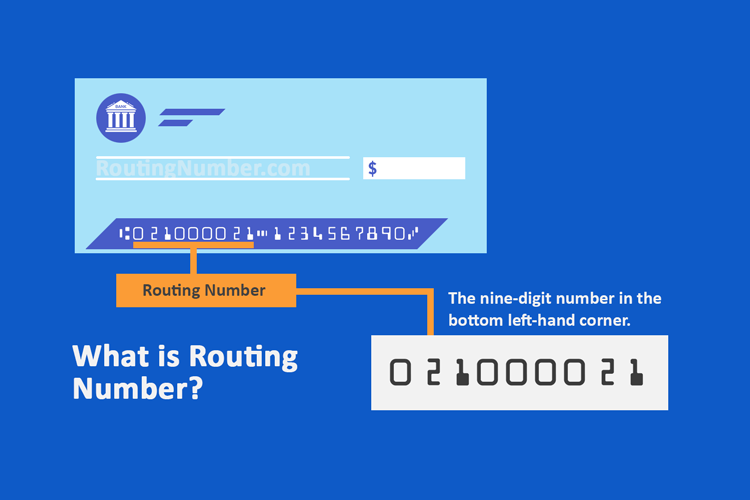
For many, the quickest and most traditional way to find their routing number is to simply look at a physical check. U.S. checks are designed with a standardized layout that includes all necessary banking information at the bottom.
On the bottom left corner of your check, you will typically find a series of three numbers separated by special characters. These numbers appear in a specific order, from left to right:
- Routing Transit Number (RTN): This is the first nine-digit number.
- Account Number: This is your individual account number, usually following the routing number.
- Check Number: This is the sequential number of the check itself.
Always verify that you’re looking at a personal check issued by your current bank. If you’re using a starter check from a new account or a temporary check, it might not always reflect your permanent routing number or could have a different format. Business checks also follow a similar layout.
Digital Convenience: Online Banking and Mobile Apps
In the digital age, accessing your banking information has never been easier. Most financial institutions provide robust online banking platforms and mobile applications that allow you to manage your accounts, view statements, and, crucially, find your routing number.
- Online Banking Website: Log in to your bank’s official website. Once logged in, navigate to your account details. This information is often found under sections like “Account Summary,” “Account Details,” “Profile,” “Statements,” or “Direct Deposit Information.” Your routing number is typically displayed prominently alongside your account number. Some banks might require you to click on a specific account (e.g., your checking account) to view its associated details.
- Mobile Banking App: The process is similar for mobile banking apps. Open the app, log in, and look for an option that provides account details. This might be under a menu labeled “Accounts,” “More,” or by simply tapping on your checking account. Many apps also have a dedicated “Direct Deposit Info” or “Wire Transfer Info” section that clearly lists the routing number.
Using digital platforms is often the fastest way to get your RTN, especially when you don’t have a checkbook handy. Always ensure you are on your bank’s official website or using their legitimate mobile app to protect your financial information.
Your Bank Statement: A Comprehensive Record
Your monthly bank statement, whether physical or electronic, is another reliable source for your routing number. These statements provide a detailed summary of your account activity, balances, and crucial identifiers.
- Paper Statements: If you receive paper bank statements in the mail, your routing number is almost always printed on it. Look towards the top or bottom of the statement, typically near your account number or other bank contact information.
- Electronic Statements (eStatements): Most banks offer eStatements, which you can access and download through your online banking portal. Once you’ve downloaded a PDF of your statement, open it and scan for the routing number in a similar location as you would on a physical statement.
Bank statements serve as excellent records, not just for transactions but also for verifying your bank’s routing information.
Direct Assistance: Contacting Your Financial Institution

If you’re unable to find your routing number through the methods above or if you have any doubt about its accuracy, contacting your bank directly is always a safe and recommended approach.
- Customer Service Hotline: Call your bank’s official customer service number. This number can usually be found on the back of your debit card, on your bank’s official website, or on a past bank statement. Be prepared to verify your identity with account numbers, your Social Security number, or other personal information. The representative will be able to provide you with the correct routing number for your account and specific transaction type (if applicable).
- In-Person at a Branch: Visiting a local branch of your bank is another option. A teller or customer service representative can provide you with your routing number. Remember to bring a form of identification, such as your driver’s license.
While perhaps less convenient than digital methods, contacting your bank directly offers the highest degree of accuracy and peace of mind, especially for critical transactions like wire transfers.
When and Where You’ll Need Your Routing Number
Knowing your routing number isn’t just about identification; it’s about enabling a wide range of essential financial activities. Understanding these use cases reinforces why this nine-digit code is so vital for personal financial management.
Streamlining Your Income: Direct Deposit Setup
Perhaps the most common and beneficial use of your routing number is setting up direct deposit. This allows your employer, government agencies, or benefit providers to electronically deposit funds directly into your checking or savings account. This eliminates the need for paper checks, reducing delays, mail loss risks, and trips to the bank.
When setting up direct deposit, you’ll typically be asked to provide:
- Your bank’s routing number.
- Your specific account number.
- The type of account (checking or savings).
Many employers and government entities offer a direct deposit form that you can fill out, sometimes requiring a voided check to confirm the details.
Securely Paying Bills and Transferring Funds
Your RTN is integral for various electronic payment methods, allowing you to manage your outflows efficiently.
- Automated Bill Payments: For utilities, loan payments, credit card bills, and other recurring expenses, you can often set up direct debits from your bank account using your routing and account numbers. This ensures payments are made on time, helping you avoid late fees and manage your budget.
- Electronic Funds Transfers (EFTs): Transferring money between your own accounts at different banks (e.g., moving money from your checking account to an external savings account or investment brokerage) often requires the routing number of the destination bank. This also applies to sending money to friends or family via bank-to-bank transfers.
International Transfers: A Different Story
While your routing number is crucial for domestic transfers, it’s generally not used for international wire transfers. For these global transactions, you’ll typically need a SWIFT/BIC code (Society for Worldwide Interbank Financial Telecommunication / Bank Identifier Code) for the recipient’s bank.
If you are receiving an international wire transfer, the sender might ask for your bank’s SWIFT code in addition to your account number. Your bank’s website or customer service can provide this. It’s vital to use the correct identifier for international transactions to prevent delays and ensure funds reach the intended country and bank.
Tax Refunds and Other Government Payments
The IRS and other government agencies rely heavily on direct deposit for efficiency and security. Whether it’s your annual tax refund, Social Security benefits, or other government payments, providing accurate routing and account numbers ensures you receive your funds promptly. Incorrect information can lead to significant delays, requiring paper checks to be mailed, which can take weeks or even months.
Best Practices and Security Considerations
Finding your routing number is usually straightforward, but handling it with care and understanding best practices is essential for safeguarding your financial well-being.
Verifying Your RTN for Accuracy
Always double-check your routing number before using it for any transaction, especially for significant sums or recurring payments. An incorrect digit can send money to the wrong bank or cause a transaction to fail, leading to delays and potential fees.
- Cross-Reference: If possible, verify the number from two different sources (e.g., your online banking and a physical check or bank statement).
- Bank Website: Some banks have a dedicated “Find a Routing Number” section on their public website, which can be a reliable source.
- ABA Routing Number Directory: The American Bankers Association (ABA) maintains an official directory of routing numbers. While not easily accessible to the public for individual lookups, banks use this authoritative source. Be wary of unofficial third-party websites claiming to provide routing numbers, as they may not always be up-to-date or accurate.
Safeguarding Your Financial Information
Your routing number, combined with your account number, is sensitive information that could potentially be used for fraudulent transactions if it falls into the wrong hands. While an RTN alone is generally not enough for someone to access your account, it’s best practice to protect it.
- Avoid Public Sharing: Do not post your routing number or full account details on social media or unsecured websites.
- Secure Documents: Shred old checks or bank statements that contain your full account information.
- Phishing Scams: Be vigilant against phishing attempts (emails, texts, calls) that ask for your routing and account numbers. Legitimate banks will rarely ask for this information unsolicited via these channels. Always initiate contact with your bank if you have concerns.
- Secure Online Access: Ensure your online banking is protected with strong, unique passwords and, ideally, two-factor authentication.
Avoiding Common Pitfalls and Scams
A common pitfall is confusing a bank’s “wire transfer” routing number with its “ACH transfer” routing number. While often the same, some larger banks may have different routing numbers for different types of transactions. When in doubt, clarify with your bank specifically for the type of transfer you intend to make.
Be extremely cautious of scams involving fake checks or requests for your banking information under false pretenses (e.g., winning a lottery, job offers requiring you to deposit a check and then wire money back). Always verify the legitimacy of any request for your banking details.
The Role of the ABA in Routing Numbers
The American Bankers Association (ABA) plays a foundational role in the RTN system. They are the official registrar of routing numbers, ensuring each nine-digit code is unique and correctly identifies a financial institution for clearing and settlement purposes. This oversight guarantees the integrity and efficiency of the U.S. payments system, underpinning billions of dollars in transactions daily and providing a robust framework for your personal financial interactions.
In conclusion, your routing transit number is more than just a sequence of digits; it’s a vital tool for navigating the modern financial landscape. By understanding its purpose, knowing how to locate it through various methods, and exercising caution in its use, you empower yourself to manage your personal finances with greater efficiency, security, and peace of mind.
aViewFromTheCave is a participant in the Amazon Services LLC Associates Program, an affiliate advertising program designed to provide a means for sites to earn advertising fees by advertising and linking to Amazon.com. Amazon, the Amazon logo, AmazonSupply, and the AmazonSupply logo are trademarks of Amazon.com, Inc. or its affiliates. As an Amazon Associate we earn affiliate commissions from qualifying purchases.