
Compound interest is often hailed as the “eighth wonder of the world,” and for good reason. It’s the engine behind long-term wealth creation, a fundamental concept every individual serious about personal finance, investing, and business finance must not only understand but also master. Far from being a complex mathematical enigma, solving compound interest simply involves understanding its mechanics and leveraging its immense power. This article will demystify compound interest, providing clear methods for calculation, strategic applications, and insights into maximizing its benefits to secure your financial future.
The Power and Mechanics of Compound Interest
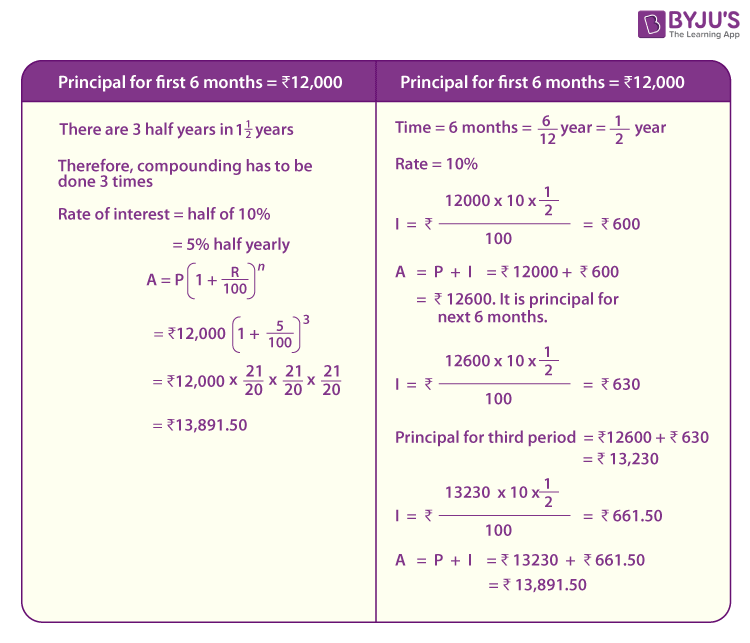
At its core, compound interest is interest earned on interest. Unlike simple interest, which is calculated only on the initial principal amount, compound interest continually recalculates itself on the original principal plus all accumulated interest from previous periods. This exponential growth is what makes it such a powerful force in financial planning.
Defining Compound Interest: More Than Just Simple Growth
Imagine you invest $1,000 at a 5% annual interest rate. With simple interest, you’d earn $50 each year, and after 10 years, you’d have $1,500 ($1,000 principal + $500 interest).
Now, consider compound interest. In the first year, you still earn $50. But in the second year, your interest is calculated not on $1,000, but on $1,050. This means you earn $52.50. This additional $2.50 might seem small, but over time, and with larger sums and longer periods, these seemingly small increments snowball into significant wealth. The key differentiator is that your earnings themselves begin to earn returns, creating a powerful positive feedback loop.
Why Compound Interest is a Wealth-Building Superpower
The true magic of compound interest lies in its exponential nature. The longer your money is invested, and the more frequently the interest is compounded (e.g., annually, semi-annually, quarterly, monthly, or even daily), the faster your wealth grows. This phenomenon is often referred to as the “snowball effect.” A small snowball rolling down a hill gathers more snow, grows larger, and picks up speed, becoming an unstoppable force. Similarly, your initial investment, empowered by compounding, grows over time, accumulating more interest, which in turn earns even more interest. This is why financial advisors consistently stress the importance of starting to invest early – time is a critical multiplier in the compound interest equation.
Key Variables: Principal, Rate, Time, and Compounding Frequency
To “solve” compound interest effectively, it’s crucial to understand the variables that influence its outcome:
- Principal (P): The initial amount of money invested or borrowed. The larger the principal, the greater the base for compounding.
- Interest Rate (r): The percentage rate at which interest is earned or charged, usually expressed as an annual percentage. A higher rate accelerates growth.
- Time (t): The duration over which the money is invested or borrowed, typically in years. This is arguably the most powerful variable, as compounding benefits significantly from longer horizons.
- Number of Compounding Periods (n): How many times per year the interest is calculated and added to the principal. More frequent compounding (e.g., monthly vs. annually) leads to higher overall returns, assuming the same annual rate.
Understanding these variables allows you to manipulate them strategically to your advantage, whether you’re saving for retirement, a down payment, or simply growing your investment portfolio.
Practical Methods for Calculating Compound Interest
While the concept of compound interest is powerful, its calculation doesn’t have to be daunting. There are several accessible methods, ranging from a fundamental formula to leveraging modern financial tools.
The Fundamental Compound Interest Formula Explained
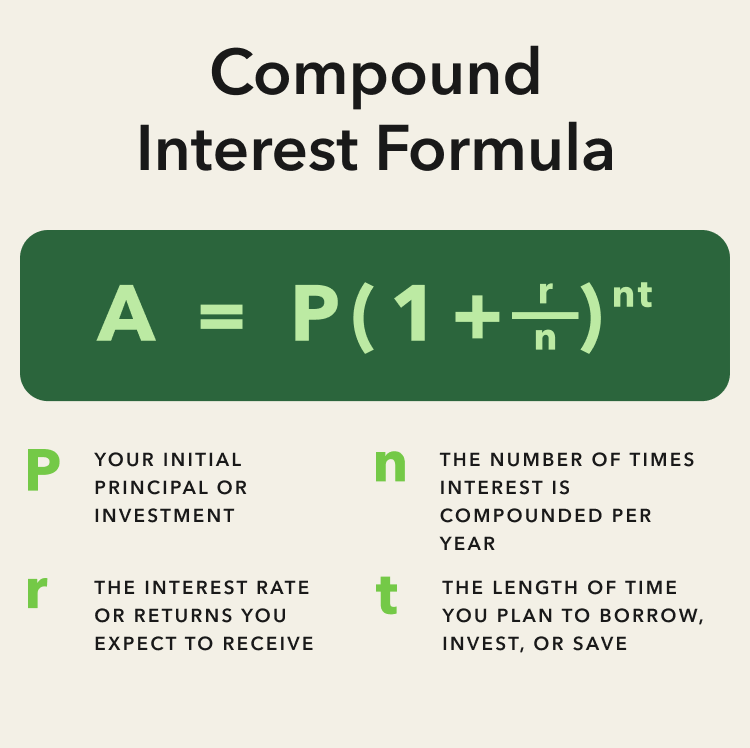
The universal formula for calculating the future value (FV) of an investment with compound interest is:
FV = P * (1 + r/n)^(n*t)
Where:
- FV = Future Value of the investment/loan, including interest
- P = Principal investment amount (the initial deposit or loan amount)
- r = Annual interest rate (as a decimal, e.g., 5% becomes 0.05)
- n = Number of times that interest is compounded per year
- t = Number of years the money is invested or borrowed for
Let’s break down each part of the formula:
- (r/n): This calculates the interest rate per compounding period.
- (1 + r/n): This represents the growth factor for each period, adding the interest rate per period to the original principal fraction.
- ^(n*t): This raises the growth factor to the power of the total number of compounding periods over the entire investment term.
Step-by-Step Manual Calculation Examples
Let’s apply the formula to a real-world scenario.
Example 1: Annual Compounding
You invest $10,000 for 5 years at an annual interest rate of 6%, compounded annually.
- P = $10,000
- r = 0.06
- n = 1 (compounded annually)
- t = 5 years
FV = $10,000 * (1 + 0.06/1)^(1*5)
FV = $10,000 * (1.06)^5
FV = $10,000 * 1.3382255776
FV = $13,382.26
After 5 years, your investment would be worth $13,382.26. The interest earned is $3,382.26.
Example 2: Monthly Compounding
Now, let’s see the impact if the same investment is compounded monthly.
- P = $10,000
- r = 0.06
- n = 12 (compounded monthly)
- t = 5 years
FV = $10,000 * (1 + 0.06/12)^(12*5)
FV = $10,000 * (1 + 0.005)^60
FV = $10,000 * (1.005)^60
FV = $10,000 * 1.3488501525
FV = $13,488.50
With monthly compounding, your investment grows to $13,488.50, earning an additional $106.24 compared to annual compounding over the same period. This illustrates the benefit of more frequent compounding.
Leveraging Online Calculators and Spreadsheet Functions
While manual calculations are excellent for understanding the mechanics, for quick and accurate results, especially with varying scenarios, online compound interest calculators are invaluable. Websites of banks, financial institutions, and personal finance portals often provide these tools. You simply input the principal, interest rate, compounding frequency, and time, and the calculator instantly provides the future value.
For those comfortable with spreadsheets, functions like FV in Microsoft Excel or Google Sheets offer powerful capabilities.
The FV function syntax is: FV(rate, nper, pmt, [pv], [type])
rate: The interest rate per period (r/n)nper: The total number of payment periods in an annuity (n*t)pmt: The payment made each period (for a single lump sum investment, this is 0)[pv]: The present value or the lump-sum amount that a series of future payments is worth right now (this is your initial principal, entered as a negative value)[type]: Optional. When payments are due (0 for end of period, 1 for beginning).
For our Example 2 (monthly compounding): =FV(0.06/12, 12*5, 0, -10000) would yield $13,488.50.
Understanding the Impact of Compounding Frequency
As demonstrated in the examples, the frequency of compounding significantly affects the final amount. The more often interest is compounded, the higher the total return. This is because the interest earned starts earning interest sooner. While the difference between daily and monthly compounding might seem negligible over short periods, over decades, it can add up to substantial sums, highlighting the importance of choosing accounts and investments that offer more frequent compounding when possible.
Strategic Applications: Maximizing Your Compound Interest Returns
Understanding the formula is one thing; leveraging it strategically is another. To truly harness compound interest, you need to implement smart financial habits and investment strategies.
Early Investment: The Magic of Time in Compounding
The single most impactful strategy for maximizing compound interest is to start investing as early as possible. Time is the greatest ally of compounding. A small amount invested early can easily outperform a much larger amount invested later due to the extended period over which it compounds. The difference in starting at age 25 versus 35, even with the same contributions and returns, can amount to hundreds of thousands or even millions of dollars over a lifetime. This principle underscores the importance of saving for retirement in your twenties and thirties.
Regular Contributions: Boosting Your Principal Growth
While initial principal is important, consistent, regular contributions to your investment over time dramatically amplify the effects of compounding. Each new contribution essentially becomes a new principal that starts compounding immediately. This is the foundation of dollar-cost averaging and regular contributions to retirement accounts like 401(k)s and IRAs. By adding money consistently, you not only increase the base on which interest is calculated but also smooth out market fluctuations.
Reinvesting Returns: The Snowball Effect
To fully benefit from compounding, ensure that any returns, dividends, or interest payments your investments generate are reinvested back into the original investment. For instance, if you own dividend stocks, enable dividend reinvestment plans (DRIPs). If your savings account pays interest, leave it in the account. This allows your earnings to join the principal, creating a larger base for the next compounding cycle, accelerating the “snowball effect.”
Minimizing Fees and Taxes: Protecting Your Gains
High fees and taxes can significantly erode the power of compound interest. Fees, whether for investment management, mutual funds, or trading, reduce your net return, leaving less money to compound. Similarly, taxes on investment gains or interest income reduce your effective principal. Utilize tax-advantaged accounts like 401(k)s, IRAs, and Roth IRAs, where investments can grow tax-deferred or tax-free, allowing your money to compound untouched by annual tax burdens. Be mindful of expense ratios on funds and opt for low-cost index funds or ETFs where appropriate.
Common Pitfalls and How to Avoid Them
While compound interest is a powerful ally, several factors can work against it, turning it from a boon into a burden.
The Illusion of Short-Term Gains
Compound interest requires patience. Its effects are often subtle in the early years but become profoundly impactful over longer durations. Expecting significant wealth in a few years often leads to risky investment decisions or discouragement. Understanding that the magic unfolds over decades helps temper expectations and encourages a long-term perspective.
Ignoring Inflation’s Erosion
Inflation is the silent killer of purchasing power. A 5% annual return might sound good, but if inflation is 3%, your real return is only 2%. Always consider inflation when evaluating returns. While your money might be growing numerically, its actual buying power might be increasing at a slower rate, or in some cases, even decreasing. Diversifying investments and investing in assets designed to outpace inflation (like equities or real estate) is crucial.
Debt and Reverse Compounding
Compound interest works both ways. Just as it can grow your wealth, it can rapidly escalate your debt. High-interest credit card debt, personal loans, or even mortgages represent “reverse compounding,” where interest is charged on your principal plus accumulated interest. This can quickly create an insurmountable financial burden. Prioritizing the elimination of high-interest debt is paramount, as the money saved from interest payments can then be redirected to investments where compound interest can work for you.
Beyond the Basics: Advanced Concepts and Tools
Once you’ve grasped the fundamentals, exploring more advanced concepts can refine your financial strategies.
Future Value vs. Present Value of Compound Interest
The compound interest formula calculates the Future Value (FV) of a present sum. Conversely, understanding Present Value (PV) allows you to determine how much you need to invest today to reach a specific future goal. The PV formula is essentially the FV formula rearranged: PV = FV / (1 + r/n)^(n*t). This is vital for retirement planning (“How much do I need today to have $1,000,000 in 30 years?”).
Annuities and Compound Interest
An annuity involves a series of equal payments made over a period, often accumulating compound interest. This is common in retirement planning where you might contribute a fixed amount monthly to a 401(k). The future value of an annuity formula is more complex but helps calculate the total accumulation from regular contributions alongside compounding interest.

The Rule of 72: A Quick Estimation Tool
The Rule of 72 is a handy mental shortcut to estimate how long it will take for an investment to double at a given annual fixed rate of return. Simply divide 72 by the annual interest rate. For example, at an 8% annual return, your money would roughly double in 9 years (72 / 8 = 9). Conversely, to find the rate needed to double your money in a certain number of years, divide 72 by the number of years. While an approximation, it’s a useful tool for quick financial estimations.
In conclusion, “solving” compound interest is less about intricate calculations and more about consistent application of sound financial principles. By understanding its mechanics, leveraging strategic applications like early and regular investing, and avoiding common pitfalls, you empower this incredible financial force to work tirelessly for you. Embrace compound interest as your most reliable partner on the journey to financial freedom and watch your wealth grow exponentially over time.
aViewFromTheCave is a participant in the Amazon Services LLC Associates Program, an affiliate advertising program designed to provide a means for sites to earn advertising fees by advertising and linking to Amazon.com. Amazon, the Amazon logo, AmazonSupply, and the AmazonSupply logo are trademarks of Amazon.com, Inc. or its affiliates. As an Amazon Associate we earn affiliate commissions from qualifying purchases.