
The concept of a “military branch” as we understand it today – distinct, specialized divisions like the Army, Navy, Air Force, or Marines – is a relatively modern construct, born from centuries of evolving warfare and technological advancement. However, the fundamental idea of specialized military units, defined by their unique tools, tactics, and operational domains, stretches back to the very dawn of organized conflict. To answer the question of the “first military branch,” we must delve into ancient history, examining how primitive technologies and the demands of battle forged the earliest forms of military specialization, laying the groundwork for the complex structures we see today.
The Dawn of Organized Warfare: Early Specialization as Proto-Branches
From the earliest human conflicts, the need for effective defense and offense drove innovation in weaponry and tactics. As societies grew in complexity, so too did their military organizations. The initial “branches” weren’t formally declared but emerged organically from the primary technologies available and the natural divisions of labor in combat.
The Primacy of Foot Soldiers: Adapting Early Tools
Long before cavalry or complex siege engines, the foot soldier, or infantry, was the bedrock of every fighting force. Their “technology” was initially simple: sharpened sticks, stones, and eventually, expertly crafted spears, swords, and axes. The development of shields, armor, and standardized close-quarter combat weapons represented significant technological leaps that defined this proto-branch. Early infantry units, such as those depicted in Sumerian art from the 3rd millennium BCE or the tightly packed phalanxes of ancient Greece, relied on their collective strength, discipline, and the efficacy of their hand-held tools.
These early forms of infantry were not monolithic. Even within foot soldiers, specialization emerged based on weapon technology: archers with their bows and arrows, slingers with their projectiles, and spearmen or swordsmen for direct engagement. The bow, a highly advanced composite weapon for its time, allowed for ranged engagement, creating a distinct role and a specialized set of skills and training. Similarly, the shield, initially a simple defensive tool, evolved into a strategic component for formation fighting, exemplified by the Roman scutum, enabling sophisticated tactical maneuvers. The evolution of metallurgy, producing stronger and sharper blades and more protective armor, continuously refined the capabilities of these fundamental ground forces.
Chariots and Cavalry: Mobile Platforms of Power
The advent of the wheel and the domestication of the horse marked a revolutionary technological shift that created the first truly distinct and highly mobile “branch” of ancient warfare: the chariot corps. Emerging in the Near East around the 2nd millennium BCE, chariots were formidable weapon platforms—fast, stable, and capable of delivering archers or javelin-throwers into enemy lines with devastating effect. The design of the chariot itself, from its lightweight construction to its axle placement and wheel spoke count, represented cutting-edge engineering. This technology demanded specialized training for both drivers and fighters, distinct from that of foot soldiers, thereby solidifying its status as a separate, elite component of ancient armies.
Following the chariot’s dominance, the gradual development of effective horsemanship and riding techniques gave rise to cavalry. Initially used for scouting and skirmishing, cavalry evolved with the introduction of saddles (though true stirrups came much later) and improved bridles. Cavalry offered unparalleled speed and maneuverability, allowing for flanking maneuvers, rapid pursuit, and shock charges. The technology here wasn’t just the horse, but the tack, the rider’s skill, and the development of specific weapons suitable for mounted combat, such as longer lances or composite bows that could be fired from horseback. This marked a significant departure from infantry and chariots, establishing cavalry as a separate, potent force capable of transforming battle outcomes.
Technological Leaps and Tactical Divisions
As ancient civilizations advanced, so did their capacity for technological innovation, leading to even greater military specialization. These advancements often defined new operational domains or enabled entirely new forms of warfare, leading to more formally recognized “branches.”
Siege Warfare: Engineering and Innovation

The need to capture or defend fortified settlements spurred the development of an entirely new class of military technology and, consequently, a specialized branch: siege engineers and artillery operators. From simple battering rams and scaling ladders, siege technology progressed to complex torsion-powered catapults (like the Roman onager and ballista), massive siege towers, and sophisticated tunneling techniques. These were truly advanced machines, requiring a deep understanding of mechanics, physics, and construction.
Operating and maintaining such equipment demanded highly skilled personnel—carpenters, engineers, mathematicians—whose expertise was distinct from that of frontline combatants. This technical corps was responsible for constructing, deploying, and operating these powerful “weapons systems” to breach enemy defenses. Their role was so specialized and critical that they effectively constituted a separate branch, focused entirely on the technological challenge of overcoming fortifications.
Naval Forces: Mastering the Aquatic Domain
When warfare extended beyond land, the development of naval technology became paramount. Early seafaring vessels, initially used for transport, were adapted for combat. The innovation of the ram, improved hull designs, and advancements in sail and oar propulsion led to the emergence of dedicated war fleets. The Greek trireme, for example, was a marvel of ancient engineering, designed for speed and maneuverability, powered by hundreds of oarsmen working in unison. Its effectiveness was a testament to both its design and the highly specialized training of its crew.
A naval force required a completely different set of skills and logistical support compared to land armies. Shipbuilders, navigators, oarsmen, and marines (who fought ship-to-ship) all formed a distinct operational unit. The technology of shipbuilding, naval tactics, and maritime logistics created a domain of warfare entirely separate from land-based operations, establishing the navy as arguably the earliest and most unequivocally distinct “branch” in the modern sense, with its own unique assets, personnel, and strategic objectives.
Defining a “Branch” in Antiquity: From Tools to Teams
While the term “branch” might not have been explicitly used, the functional separation based on technology and role became increasingly apparent in large, sophisticated ancient armies.
The Hellenistic Synthesis: Infantry, Cavalry, and Artillery Integration
The Hellenistic period, particularly under Alexander the Great and his successors, showcased a highly integrated military system where infantry (especially the Macedonian phalanx with its sarissas), cavalry (the Companion Cavalry), and siege engineers/artillery worked in concert. While the infantry remained the core, the strategic deployment of diverse units, each defined by its specific armaments and capabilities, demonstrated a sophisticated understanding of combined arms warfare. The technological interplay between these units — the phalanx pinning the enemy, cavalry exploiting flanks, and artillery providing supporting fire — highlighted their distinct but complementary roles, effectively functioning as specialized branches within a unified force. The sarissa itself, an enormously long pike, was a revolutionary piece of infantry technology that demanded new formations and training, creating a highly specialized type of heavy infantry.
Roman Military Engineering: A Branch of Its Own
The Roman Empire perhaps best exemplified the advanced integration of specialized “branches” within a highly organized military. While the legionary infantry was legendary, Rome’s genius lay in its military engineering. The construction of roads, bridges, forts, and an unparalleled array of siege engines was not an ancillary task but a core competency. Roman engineers were highly trained, organized units that could rapidly build sophisticated infrastructure and devastating war machines. Their tools—from surveying instruments to construction equipment and complex mechanical devices for siege—were far more advanced than what many contemporary forces possessed. This engineering corps was a professional, specialized “branch” responsible for the logistical and technological backbone of Roman military power, arguably as distinct as any modern engineering corps.
Legacy and Modern Parallels: Technology’s Enduring Influence
The journey from individual warriors with primitive tools to highly organized, technologically distinct military branches is a testament to humanity’s ceaseless drive for innovation in conflict. The earliest “branches” were fundamentally defined by the dominant military technologies of their era: the spear and shield for infantry, the horse and chariot for mobile forces, the ship for naval power, and sophisticated mechanisms for siege warfare.
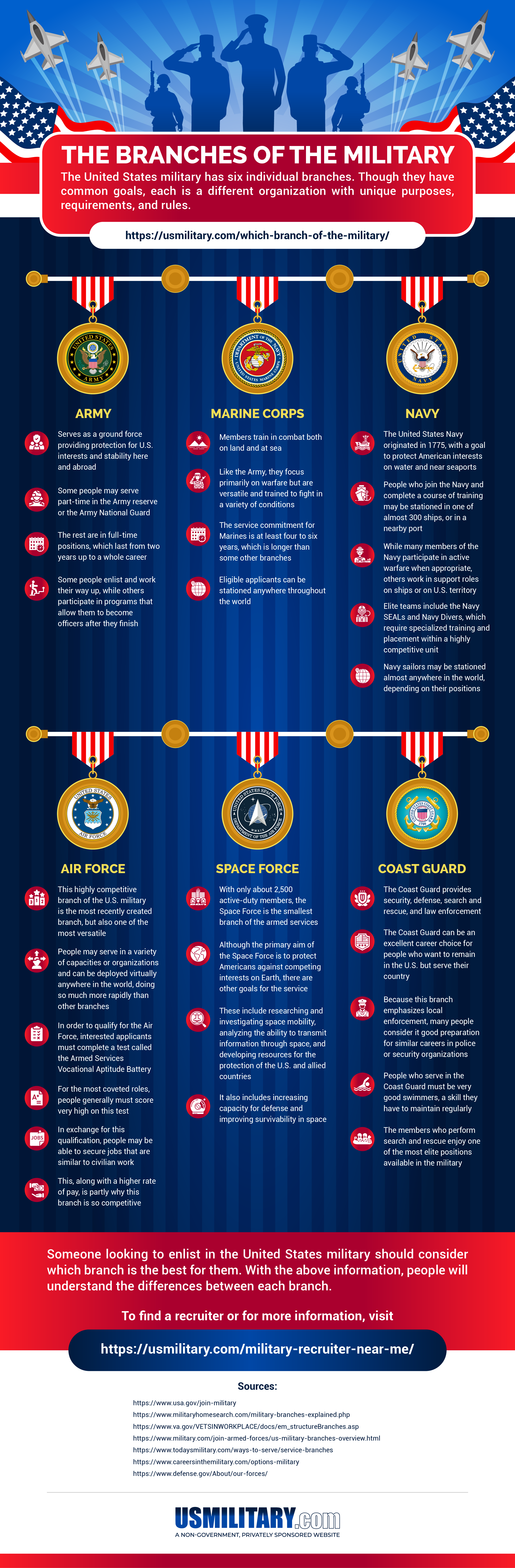
Even today, military branches are often defined by the primary technology or domain they operate within: ground vehicles for the Army, aircraft for the Air Force, naval vessels for the Navy, and increasingly, digital networks and AI tools for cyber warfare commands. The ancient world’s functional specialization, driven by the capabilities of early military technology, laid the enduring foundation for how armed forces organize, train, and deploy their diverse assets, demonstrating that technology has always been the ultimate architect of military structure.
aViewFromTheCave is a participant in the Amazon Services LLC Associates Program, an affiliate advertising program designed to provide a means for sites to earn advertising fees by advertising and linking to Amazon.com. Amazon, the Amazon logo, AmazonSupply, and the AmazonSupply logo are trademarks of Amazon.com, Inc. or its affiliates. As an Amazon Associate we earn affiliate commissions from qualifying purchases.