
Understanding the operating hours of the stock market is fundamental for any investor, whether seasoned or novice. While the general perception might be that markets operate like a standard business day, the reality involves complex schedules, pre-market and after-hours sessions, and a calendar punctuated by holidays and early closures. For individuals navigating personal finance, investing, or even business finance, knowing precisely when the market is accessible can significantly influence trading strategies, risk management, and overall investment success.
Understanding Standard Trading Hours
The primary stock exchanges in the United States, the New York Stock Exchange (NYSE) and the Nasdaq Stock Market (NASDAQ), adhere to a consistent schedule for their regular trading sessions. These hours are meticulously designed to provide liquidity and a fair playing field for millions of transactions daily.
Regular Session Schedules
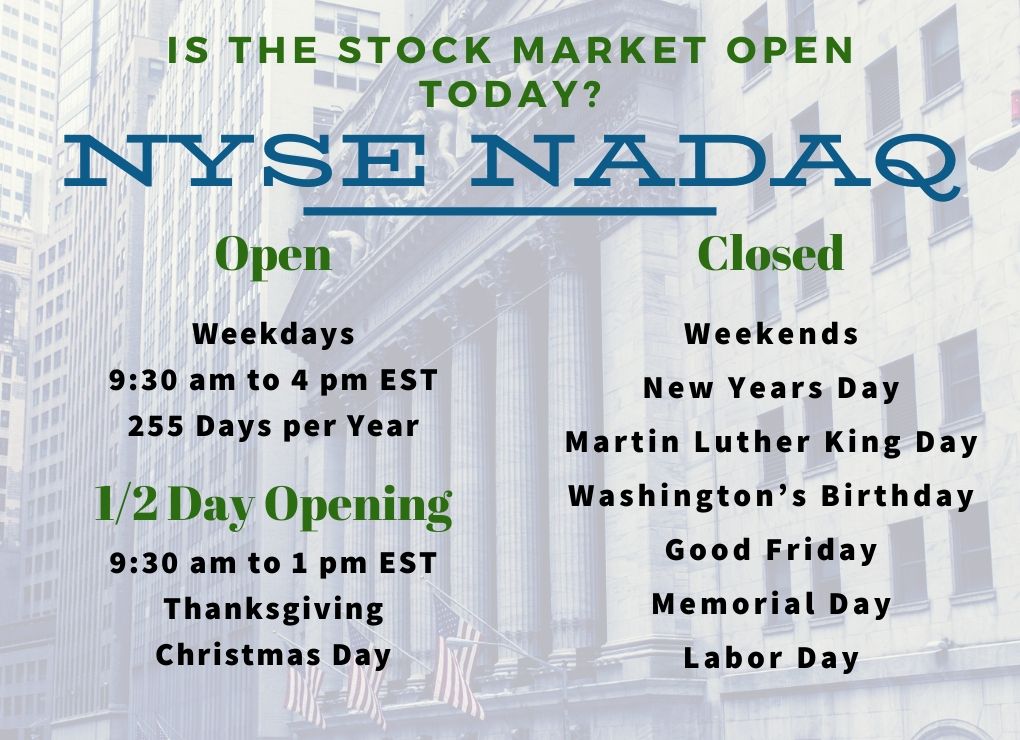
For most individual investors, the “stock market” refers to these standard operating hours. Both the NYSE and Nasdaq open for trading at 9:30 AM Eastern Time (ET) and close at 4:00 PM ET on weekdays. This 6.5-hour window is when the vast majority of trading volume occurs, characterized by high liquidity and tighter bid-ask spreads. These hours are crucial because they represent the period of greatest market depth, where numerous buyers and sellers converge, allowing for efficient price discovery and order execution. During these hours, news releases, economic data, and corporate announcements typically have their most immediate and pronounced effects on stock prices.
The Impact of Time Zones
While the market operates on Eastern Time, investors from across the globe participate. This means individuals in different time zones must adjust their understanding of market hours accordingly. For instance, an investor on the West Coast of the United States (Pacific Time) would see the market open at 6:30 AM PT and close at 1:00 PM PT. International investors, particularly from Europe or Asia, might find themselves trading late at night or early in the morning to align with US market activity, underscoring the global interconnectedness of financial markets.
Beyond the Bell: Pre-Market and After-Hours Trading
The notion that the stock market simply ‘closes’ at 4:00 PM ET is an oversimplification. While regular trading ceases, activity often continues in extended-hours sessions, known as pre-market and after-hours trading. These periods offer opportunities but also present distinct challenges and risks.
Pre-Market Trading Dynamics
Pre-market trading typically begins as early as 4:00 AM ET and extends until the regular market open at 9:30 AM ET. This session is crucial for investors who want to react to news, earnings reports, or global market developments that occur overnight or before the standard trading day begins. During pre-market hours, institutional investors, hedge funds, and active day traders often take positions based on early information.
However, pre-market sessions are characterized by significantly lower trading volume and liquidity compared to regular hours. This reduced activity can lead to wider bid-ask spreads, making it more challenging to execute trades at desired prices and potentially resulting in higher volatility for individual stocks. Prices during pre-market can also be less reliable indicators of where a stock will trade once the regular session begins.
After-Hours Trading Opportunities and Risks
After-hours trading typically commences immediately after the regular market close at 4:00 PM ET and can extend until 8:00 PM ET or even later. This period is often a flurry of activity following the release of corporate earnings reports or other significant company news that companies deliberately hold until after the market closes. These announcements can trigger rapid price movements as investors digest new information and adjust their positions.
Like pre-market trading, after-hours sessions come with inherent risks. The lower volume and liquidity translate into wider spreads and increased price volatility. It can be difficult for investors, especially those trading larger blocks of shares, to get their orders filled at favorable prices. Furthermore, since fewer participants are in the market, a single large trade can have a disproportionate impact on a stock’s price, leading to exaggerated swings that might not reflect the underlying long-term value. Investors contemplating extended-hours trading must be acutely aware of these factors and employ robust risk management strategies.
Stock Market Holidays and Early Closures
A critical aspect of knowing “what time is the stock market closed today” is understanding the specific days when the exchanges are entirely shut down or operate on a truncated schedule. These closures are typically aligned with federal holidays in the United States, providing a necessary respite for market participants and allowing for operational maintenance.
Federal Holidays Observed by Exchanges
The NYSE and Nasdaq generally observe the following federal holidays, during which the markets are fully closed:
- New Year’s Day (January 1)
- Martin Luther King, Jr. Day (Third Monday in January)
- Washington’s Birthday (Presidents’ Day) (Third Monday in February)
- Good Friday (Friday before Easter)
- Memorial Day (Last Monday in May)
- Juneteenth National Independence Day (June 19)
- Independence Day (July 4)
- Labor Day (First Monday in September)
- Thanksgiving Day (Fourth Thursday in November)
- Christmas Day (December 25)
It’s important to note that if a holiday falls on a weekend, the market typically observes it on the preceding Friday or the following Monday. For instance, if Christmas Day falls on a Saturday, the market might be closed on Friday, December 24th, or the nearest weekday. Always consult the official exchange calendars for definitive schedules.
Partial Trading Days and Special Circumstances
Beyond full closures, there are specific days when the stock market closes early. The most prominent example is the Friday after Thanksgiving (Black Friday), when the market typically closes at 1:00 PM ET. Similar early closures might occur on Christmas Eve or New Year’s Eve if they fall on a weekday, though this is not always guaranteed and is announced by the exchanges.
In very rare and extreme circumstances, such as national emergencies, severe weather events, or significant technological failures, exchanges might experience unscheduled closures or delays. These events are exceptional but highlight the operational complexities and the need for robust contingency planning within the financial infrastructure. Investors should always verify the market schedule, especially around holidays, using official exchange websites or reputable financial news sources.
The Strategic Implications of Market Hours for Investors
Understanding the nuances of market operating hours is not merely an academic exercise; it has significant strategic implications for investors across all segments of the financial market. From trade execution to managing risk, market timings are a crucial element of a well-rounded investment strategy.
Planning Trades Around Market Activity
The highly liquid standard trading hours (9:30 AM – 4:00 PM ET) are generally the most favorable for executing trades, particularly for retail investors. The depth of the market during these times ensures that orders can be filled efficiently and with minimal impact on prices. Conversely, attempting to execute large orders in the less liquid pre-market or after-hours sessions can lead to significant price slippage, where the actual execution price deviates unfavorably from the expected price. Savvy investors might use the initial and final hours of the regular session, often characterized by higher volatility, for specific short-term strategies, while others prefer the calmer mid-day period for long-term position adjustments.
Impact of News and Earnings Releases
One of the most profound strategic considerations relates to news and earnings releases. Companies often strategically release their quarterly earnings reports after the market closes or before it opens to allow investors time to digest the information without immediate, knee-jerk reactions within the main trading session. However, this often fuels intense price action in after-hours or pre-market trading, leading to significant “gap” openings or closings when the regular market resumes. Investors who anticipate such movements might choose to trade in extended hours, albeit with higher risk, while others might prefer to wait for the regular session to see how the broader market interprets the news with more liquidity.
Risk Management and Market Timings
Market timing plays a critical role in risk management. Holding positions overnight or over a weekend, when markets are closed, exposes an investor to “gap risk”—the possibility that adverse news or events occurring outside market hours could cause a stock’s price to open significantly lower (or higher) than its previous close. This can render stop-loss orders ineffective if the price gaps below the stop level, executing at the next available price. Experienced investors often adjust their position sizes, use options to hedge, or even close out risky positions before market close if they anticipate significant overnight news or volatility. Understanding settlement periods—typically T+2 business days for stock transactions—also informs when funds or shares become truly available after a trade, impacting subsequent investment decisions.
Global Markets: A 24/7 Perspective
While the question “what time is the stock market closed today” typically refers to major US exchanges, it’s important to recognize that from a global perspective, the “stock market” is a continuously operating entity. As one major financial center closes, another in a different time zone opens, creating an almost perpetual flow of trading activity around the world.
Interconnectedness of World Economies
Major exchanges in London, Tokyo, Shanghai, Frankfurt, Sydney, and many other cities operate on their respective local schedules. This creates a chain of activity that links global economies. News or economic data released in Asia can influence European markets, which then set the stage for US markets, and so forth. This interconnectedness means that even when the NYSE or Nasdaq is closed, events happening in other parts of the world can significantly impact how US-listed assets might trade once American markets reopen. Investors tracking global macroeconomic trends or investing in international equities must be aware of these varying schedules and their potential ripple effects.

Forex and Cryptocurrencies: True 24/7 Trading
In contrast to traditional stock markets with their defined operating hours, certain asset classes genuinely operate 24 hours a day, seven days a week. The foreign exchange (Forex) market, for instance, is decentralized and global, allowing currencies to be traded continuously from Sunday evening ET to Friday afternoon ET. Similarly, the burgeoning cryptocurrency market operates without any central exchange closures, enabling constant trading every day of the year. This distinction highlights that while traditional equities adhere to specific timetables, the broader financial landscape offers continuous trading opportunities, albeit with different structures, risks, and regulatory frameworks. Understanding these various operating models is key to building a diversified and resilient financial strategy in today’s globalized investment environment.
aViewFromTheCave is a participant in the Amazon Services LLC Associates Program, an affiliate advertising program designed to provide a means for sites to earn advertising fees by advertising and linking to Amazon.com. Amazon, the Amazon logo, AmazonSupply, and the AmazonSupply logo are trademarks of Amazon.com, Inc. or its affiliates. As an Amazon Associate we earn affiliate commissions from qualifying purchases.