
For anyone navigating the complex world of finance and investing, the S&P 500 index is an almost ubiquitous term. It’s referenced daily in financial news, discussed by economists, and serves as a critical benchmark for portfolio managers and individual investors alike. But beyond the frequent mentions, what exactly is the S&P 500, and why does it hold such profound significance in the global financial landscape?
At its core, the S&P 500 is a stock market index that represents the performance of 500 of the largest publicly traded companies in the United States. It’s far more than just a list of companies; it’s a dynamic measure designed to reflect the health and direction of the U.S. stock market and, by extension, the broader American economy. Understanding this index is not merely an academic exercise; it’s a fundamental step toward comprehending market movements, assessing investment opportunities, and building a robust financial strategy.

This comprehensive guide will demystify the S&P 500, delving into its construction, its critical role as an economic barometer, and practical ways investors can gain exposure to its performance. Whether you’re a seasoned investor or just beginning your financial journey, grasping the nuances of the S&P 500 is indispensable for making informed and strategic decisions.
Understanding the Benchmark of American Capitalism
The S&P 500 is not just a random collection of companies; it is a meticulously constructed financial instrument that serves as a vital snapshot of the American corporate sector. Its design and methodology contribute significantly to its accuracy and widespread acceptance as a market benchmark.
Definition and Purpose
The S&P 500, officially known as the Standard & Poor’s 500, is a market-capitalization-weighted index. This means that companies with larger market values have a greater impact on the index’s movement. It aims to capture approximately 80% of the total market capitalization of the U.S. stock market, making it an excellent proxy for the overall health and performance of large-cap U.S. equities.
Its primary purpose is twofold: first, to provide a comprehensive and robust measure of the performance of the largest U.S. publicly traded companies; and second, to serve as a benchmark against which investment managers and individual portfolios can be compared. If an active fund manager claims to outperform the market, the S&P 500 is often the “market” they’re referring to. For individual investors, it offers a diversified way to track the broad performance of the U.S. economy without having to pick individual stocks.
The “S&P” Behind the Numbers
The “S&P” in S&P 500 refers to S&P Dow Jones Indices, a joint venture between S&P Global and CME Group. While the concept of a broad market index existed before, Standard & Poor’s launched the current iteration of the S&P 500 on March 4, 1957. Since then, it has become the most widely recognized and followed equity index globally, largely due to its rigorous methodology and continuous oversight.
S&P Dow Jones Indices maintains a committee that regularly reviews the index’s constituents. This committee ensures that the index remains relevant and representative of the U.S. economy by adding new companies, removing those that no longer meet the criteria (due to mergers, acquisitions, or declining market capitalization), and making adjustments for corporate actions like stock splits. This active management by the committee helps maintain the index’s integrity and its utility as a benchmark.
How Companies are Selected and Weighted
The selection process for the S&P 500 is not arbitrary. Companies must meet specific criteria to be included, primarily focusing on size, liquidity, and sector representation. Key criteria include:
- Market Capitalization: Companies must have an unadjusted market capitalization of at least $14.5 billion (this figure is subject to change based on market conditions).
- U.S. Company: The company must be a U.S. company with its primary listing on a U.S. exchange.
- Liquidity: Shares must be highly liquid, ensuring they can be easily bought and sold without significantly impacting their price.
- Public Float: A significant portion of the company’s shares must be available for public trading (not held by insiders or governments).
- Profitability: The sum of the most recent four consecutive quarters’ GAAP earnings must be positive, and the most recent quarter’s GAAP earnings must also be positive.
Once selected, companies are weighted by their free-float market capitalization. This means the index value is influenced more by companies with larger market capitalizations. For example, a 1% move in Apple (a company with a massive market cap) will have a much greater impact on the S&P 500’s overall performance than a 1% move in a smaller constituent company. This weighting scheme naturally gives more prominence to the most impactful companies in the economy, making the index a more accurate reflection of market sentiment and economic trends.
Why the S&P 500 Matters to Investors
The S&P 500’s prominence in financial discussions isn’t just because it’s a well-known index; it’s because it offers profound insights and opportunities for investors across all experience levels. Its utility extends beyond mere tracking, informing investment strategies and providing a crucial economic lens.
A Barometer of the US Economy
Often referred to as the “stock market,” the S&P 500 is widely considered the best single gauge of large-cap U.S. equities and a leading indicator of the U.S. economy. When the S&P 500 is rising, it often signals investor confidence, robust corporate earnings, and a growing economy. Conversely, a declining S&P 500 can indicate economic contraction, uncertainty, or declining corporate profitability.
While it doesn’t represent the entire economy (it excludes small-cap companies and non-public entities), the sheer size and influence of the 500 constituent companies mean their collective performance offers a powerful snapshot. These companies employ millions of people, generate trillions in revenue, and drive innovation across virtually every sector. Monitoring the S&P 500’s trends can provide valuable context for understanding broader economic cycles and financial news.
Diversification Through a Single Index
One of the most compelling reasons for investors to pay attention to the S&P 500 is the instant diversification it offers. Investing in all 500 companies individually would be prohibitively expensive and logistically challenging for most people. However, by investing in a fund that tracks the S&P 500, an investor gains exposure to a broad swath of the U.S. economy across numerous sectors, including technology, healthcare, financials, consumer discretionary, industrials, and more.
This inherent diversification significantly reduces idiosyncratic risk – the risk associated with investing in a single company. If one or even a few companies within the index perform poorly, their negative impact is largely offset by the positive performance of the other 490+ companies. This makes the S&P 500 a relatively lower-risk entry point into the stock market compared to picking individual stocks.
Historical Performance and Long-Term Growth
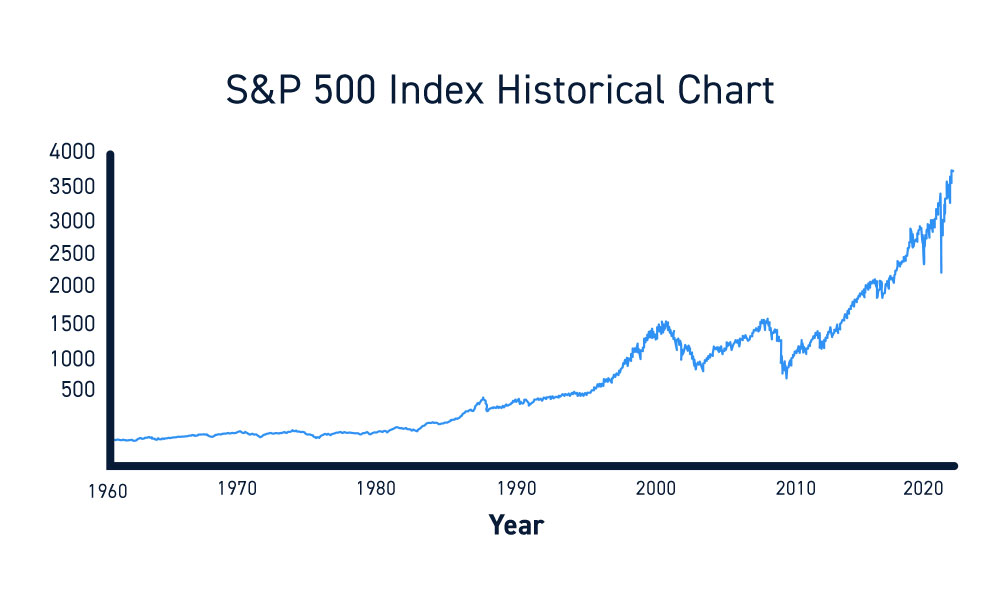
The S&P 500 has a remarkable track record of long-term growth. While past performance is no guarantee of future results, the index has delivered an average annual return of approximately 10-12% (including dividends) over several decades. This long-term growth is driven by the innovation, productivity, and profitability of American corporations, alongside the inherent compounding effect of reinvested dividends.
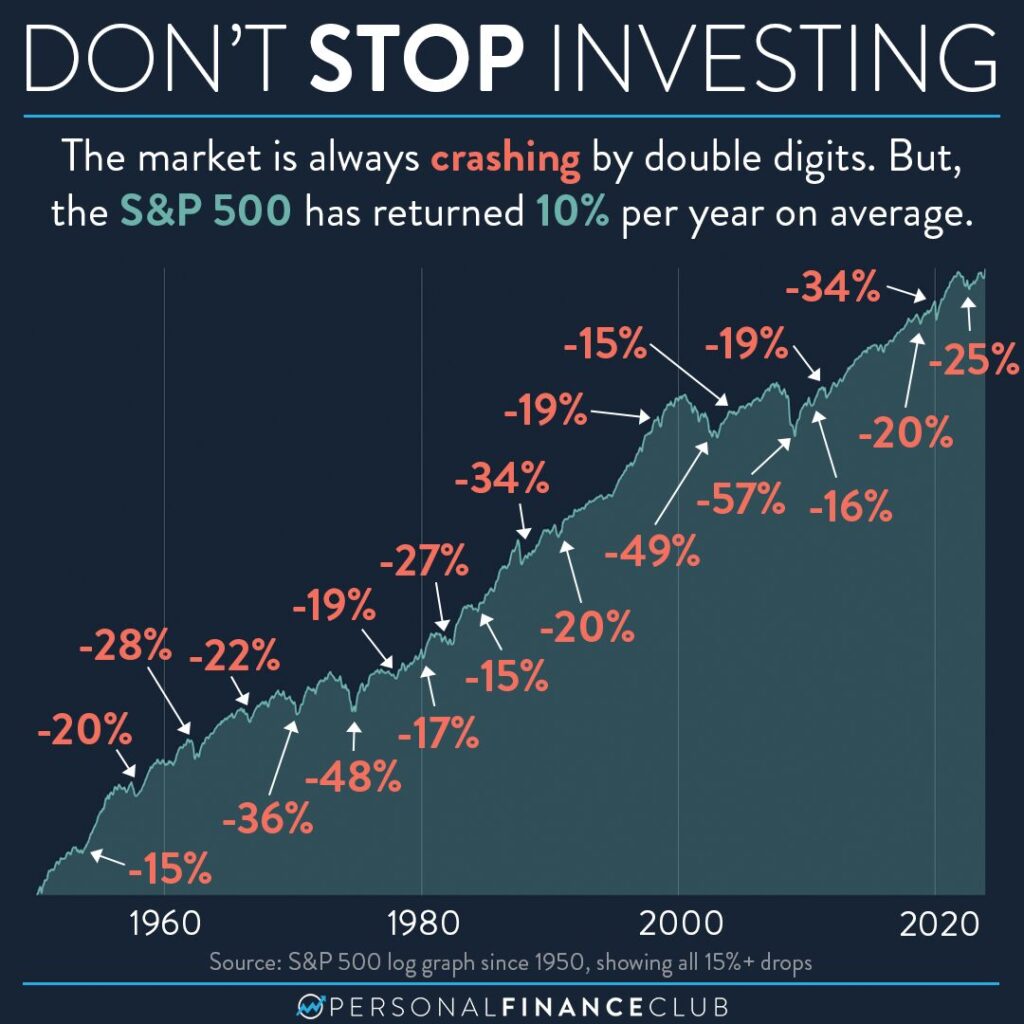
For investors with a long-term horizon, this historical performance underscores the power of patiently investing in a broad market index. Despite numerous market crashes, corrections, and economic downturns throughout history, the S&P 500 has consistently recovered and reached new highs over extended periods. This resilience makes it a cornerstone for retirement planning and wealth accumulation strategies, where time in the market often trumps attempts to time the market.
How to Invest in the S&P 500
Understanding the S&P 500’s importance is the first step; the next is knowing how to translate that knowledge into actionable investment strategies. Fortunately, gaining exposure to the S&P 500 is straightforward and accessible to nearly all investors.
Index Funds and ETFs: The Accessible Path
The most popular and efficient way for individual investors to invest in the S&P 500 is through index funds or Exchange-Traded Funds (ETFs). Both are designed to passively track the performance of the S&P 500.
- Index Funds: These are typically mutual funds that hold all (or a representative sample) of the stocks in the S&P 500, in the same proportions as the index. They are managed passively, meaning the fund manager’s goal is simply to replicate the index’s performance, not to outperform it. This leads to lower management fees compared to actively managed funds. Investors buy and sell shares of an index fund based on its Net Asset Value (NAV) at the end of the trading day.
- ETFs: ETFs that track the S&P 500 are similar to index funds in their passive management and goal of replicating the index. However, unlike traditional mutual funds, ETFs trade on stock exchanges throughout the day, just like individual stocks. This provides greater flexibility for investors who want to buy or sell at specific market prices during trading hours. Popular S&P 500 ETFs include SPY (SPDR S&P 500 ETF Trust), IVV (iShares Core S&P 500), and VOO (Vanguard S&P 500 ETF).
Both index funds and ETFs offer instant diversification, low costs, and transparency, making them ideal vehicles for S&P 500 exposure.
Mutual Funds and Brokerage Options
To invest in S&P 500 index funds or ETFs, you’ll need an investment account. Most major brokerage firms (e.g., Fidelity, Vanguard, Charles Schwab, E*TRADE) offer a wide selection of S&P 500-tracking products. You can open various account types, including:
- Taxable Brokerage Accounts: Suitable for general investing, with capital gains and dividends taxed annually or upon sale.
- Retirement Accounts: Such as 401(k)s, IRAs (Traditional or Roth), or SEP IRAs. Investing in the S&P 500 within these accounts offers significant tax advantages, either tax-deferred growth or tax-free withdrawals in retirement. Many 401(k) plans offer an S&P 500 index fund as one of their core investment options.
- Custodial Accounts: For minors, such as UGMA/UTMA accounts, allowing parents or guardians to invest on behalf of a child.
The process typically involves opening an account, funding it, and then purchasing shares of your chosen S&P 500 index fund or ETF.
Understanding Fees and Expense Ratios
One of the most attractive features of S&P 500 index funds and ETFs is their low cost. Unlike actively managed funds, which employ teams of analysts and traders trying to beat the market (and often fail to do so after fees), passive index funds merely aim to mirror the index. This requires less active management, resulting in significantly lower operating expenses.
The cost of owning an index fund or ETF is expressed as an expense ratio, a small annual percentage of the assets under management. For leading S&P 500 ETFs and index funds, expense ratios can be as low as 0.03% to 0.10% per year. This means for every $10,000 invested, you might pay only $3 to $10 in annual fees. Over decades, these low fees can make a substantial difference in an investor’s total returns, making them a powerful advantage for long-term wealth accumulation. Always compare expense ratios when selecting an S&P 500 fund.
The Benefits and Risks of S&P 500 Investing
While investing in the S&P 500 offers numerous advantages, it’s crucial to approach it with a balanced understanding of both its benefits and inherent risks, ensuring it aligns with your overall financial goals and risk tolerance.
Advantages: Simplicity, Diversification, and Low Cost
- Simplicity: Investing in the S&P 500 is incredibly straightforward. You don’t need to research individual companies, analyze financial statements, or constantly monitor news. You’re effectively investing in the collective success of America’s largest corporations. This makes it ideal for beginners and those who prefer a “set it and forget it” approach.
- Broad Diversification: As discussed, the index provides immediate diversification across 500 companies in various sectors. This significantly mitigates company-specific risk, meaning the failure or poor performance of any single company will have a minimal impact on your overall investment.
- Low Cost: The passive nature of S&P 500 index funds and ETFs translates into very low expense ratios. These minimal fees contribute to higher net returns over the long term, as less of your money is eaten away by administrative costs.
- Strong Historical Returns: The S&P 500 has a proven track record of delivering substantial returns over the long run, outpacing inflation and most other asset classes over extended periods.
- Transparency: You always know exactly what you own and how the investment is performing relative to the underlying index.
Risks: Market Volatility and Lack of Active Management
- Market Risk: While diversified, S&P 500 investments are still subject to market risk. Economic downturns, geopolitical events, pandemics, or broad market sentiment can cause the entire index to decline. There’s no guarantee against losses, especially over shorter time horizons.
- Lack of Active Management: While low fees are a benefit, the lack of active management means the fund will never “beat” the S&P 500. It will simply aim to match its performance, minus the small expense ratio. If you believe you or an active manager can consistently pick winning stocks or time the market, an S&P 500 index fund won’t fulfill that desire.
- Concentration Risk (Sector-wise): Although diversified across many companies, the S&P 500 can at times be heavily concentrated in a few dominant sectors (e.g., technology, as seen in recent years). If those dominant sectors face headwinds, the entire index can be significantly affected.
- No Downside Protection: Unlike some actively managed strategies, an S&P 500 index fund does not employ strategies to protect against market downturns. It rides the market up and down.
S&P 500 vs. Other Investment Strategies
The S&P 500 stands in contrast to several other investment approaches:
- Individual Stock Picking: This involves actively researching and selecting individual company stocks. It offers the potential for higher returns if successful, but also carries significantly higher risk and requires considerable time and expertise.
- Actively Managed Mutual Funds: These funds employ professional managers who actively try to outperform a benchmark (often the S&P 500) by selecting stocks, timing the market, or employing specific strategies. They typically come with much higher fees, and a vast majority fail to consistently beat their benchmark after fees.
- Global Diversification: While the S&P 500 offers broad U.S. exposure, it lacks international diversification. Many investors complement their S&P 500 holdings with international stock funds (e.g., MSCI EAFE or emerging markets funds) to reduce country-specific risk and capture growth opportunities abroad.
- Fixed Income: Bonds and other fixed-income investments generally offer lower returns but also lower volatility than equities. A balanced portfolio often includes both S&P 500 exposure and fixed income to manage overall risk.
For many investors, especially those focused on long-term wealth building with minimal hassle, the S&P 500 serves as an excellent foundational investment.
The S&P 500’s Role in a Broader Financial Strategy
Integrating the S&P 500 into a comprehensive financial plan can provide a robust foundation for achieving various monetary goals. It’s rarely the only investment, but often a crucial component.
As a Core Holding in a Diversified Portfolio
For a large number of investors, an S&P 500 index fund or ETF acts as the bedrock of their equity allocation. It provides reliable exposure to large-cap U.S. companies and forms a significant portion of the growth engine for a portfolio. A truly diversified portfolio, however, typically extends beyond just the S&P 500:
- Small and Mid-Cap Exposure: To capture growth opportunities from smaller companies, investors might add funds tracking small-cap or mid-cap indices.
- International Equities: Investing in developed markets (like Europe, Japan) and emerging markets helps diversify geographical risk and taps into global growth.
- Fixed Income: Bonds provide stability, income, and a hedge against stock market volatility. The allocation to bonds typically increases as an investor approaches retirement.
- Real Estate/Alternative Investments: Some investors diversify further into real estate (e.g., REITs) or other alternative assets, depending on their risk tolerance and goals.
The S&P 500’s role is often to provide core, low-cost exposure to the engine of the U.S. economy, allowing other asset classes to complement and balance the portfolio.
Retirement Planning and the S&P 500
The S&P 500 is a cornerstone for retirement planning for millions. Its long-term growth potential and diversification make it an ideal vehicle for capital appreciation over decades. Most 401(k) plans offer an S&P 500 index fund as a core option, and it’s a popular choice for IRA contributions.
- Compounding Growth: By regularly contributing to an S&P 500 fund within a retirement account, investors benefit significantly from the power of compounding. Early and consistent contributions allow your money to grow tax-advantaged for many years, turning small contributions into substantial wealth over time.
- Dollar-Cost Averaging: Investing a fixed amount regularly (e.g., monthly contributions to a 401(k)) allows for dollar-cost averaging. This strategy smooths out market fluctuations by buying more shares when prices are low and fewer when prices are high, potentially leading to a lower average cost per share over time.
- Long-Term Horizon: Retirement savings typically span 30-40 years for many individuals. This long horizon perfectly aligns with the S&P 500’s historical ability to overcome short-term volatility and deliver significant returns over the long run.
Staying Informed and Long-Term Perspective
While S&P 500 investing is largely passive, staying informed about broader economic trends and maintaining a long-term perspective are crucial for success.
- Economic Indicators: Understand how factors like interest rates, inflation, GDP growth, and corporate earnings influence the overall market. While you won’t be making day-to-day trading decisions, this knowledge helps contextualize market movements and maintain confidence during downturns.
- Avoid Emotional Decisions: The most common mistake investors make is reacting emotionally to market volatility. During sharp declines, panic selling can lock in losses. During bubbles, chasing rapidly rising assets can lead to significant losses when corrections occur. The S&P 500’s historical data unequivocally supports staying invested through market cycles.
- Rebalancing: Periodically reviewing and rebalancing your portfolio ensures your asset allocation remains consistent with your risk tolerance and goals. If your S&P 500 holdings grow significantly, you might need to trim them back to reallocate to other asset classes or fixed income, especially as you approach retirement.
In conclusion, the S&P 500 index is far more than just a number on a screen; it is a meticulously crafted representation of America’s corporate prowess and an indispensable tool for investors. Its ability to offer broad diversification, strong historical returns, and low-cost access makes it a cornerstone for informed financial planning and long-term wealth accumulation. By understanding its structure, benefits, and risks, investors can confidently integrate the S&P 500 into their strategy, leveraging its power to achieve their financial aspirations.
aViewFromTheCave is a participant in the Amazon Services LLC Associates Program, an affiliate advertising program designed to provide a means for sites to earn advertising fees by advertising and linking to Amazon.com. Amazon, the Amazon logo, AmazonSupply, and the AmazonSupply logo are trademarks of Amazon.com, Inc. or its affiliates. As an Amazon Associate we earn affiliate commissions from qualifying purchases.