
The question “How much should you be saving a month?” is one of the most fundamental queries in personal finance, yet it rarely has a simple, universal answer. It’s a question that delves deep into individual circumstances, financial goals, income levels, and even psychological biases. For some, it might be a modest percentage to build a safety net; for others, it could be an aggressive sum aimed at early retirement or a significant investment. Understanding your unique financial landscape is the first, crucial step toward determining a sustainable and effective monthly savings goal.
Saving isn’t merely about hoarding money; it’s about building financial security, achieving life aspirations, and gaining peace of mind. Whether you’re envisioning a down payment on a home, funding your children’s education, securing a comfortable retirement, or simply preparing for unexpected emergencies, a consistent savings habit is the bedrock of financial stability. This article will navigate the complexities of monthly savings, offering frameworks, strategies, and actionable advice to help you pinpoint the right amount for your personal journey and build a robust financial future.
Understanding the ‘Why’ Behind Your Savings Goals
Before you can determine how much to save, it’s vital to clarify why you are saving. Your financial goals act as the compass guiding your savings strategy, dictating both the urgency and the magnitude of your monthly contributions. Without clear objectives, saving can feel like a chore rather than a purposeful pursuit.
Short-Term Goals: Building an Emergency Fund
Perhaps the most critical immediate savings goal is establishing an emergency fund. Life is unpredictable, and unexpected expenses — a job loss, medical emergency, car repair, or home maintenance issue — can quickly derail financial progress if you’re unprepared. An emergency fund acts as a financial buffer, preventing you from incurring high-interest debt or liquidating long-term investments during crises.
Experts generally recommend saving at least three to six months’ worth of essential living expenses in an easily accessible, liquid account, such as a high-yield savings account. For individuals with less stable incomes or dependents, extending this to nine or twelve months can provide an even greater sense of security. Calculating your essential monthly expenses (rent/mortgage, utilities, groceries, transportation, insurance, minimum debt payments) is the first step in setting this vital short-term goal. Once established, this fund should be maintained and replenished as needed, serving as the foundational layer of your financial security.
Mid-Term Goals: Major Purchases and Life Events
Mid-term goals typically span one to five years and often involve significant anticipated expenses. These might include a down payment for a house, a new car, a wedding, funding further education, or even an ambitious vacation. Unlike emergency funds, which are reactive, mid-term goals are proactive, requiring careful planning and consistent contributions over a defined period.
For these goals, it’s beneficial to specify both the target amount and the timeline. For instance, if you aim to save $30,000 for a down payment in three years, you’ll need to save approximately $833 per month ($30,000 / 36 months). Breaking down large goals into manageable monthly targets makes them feel less daunting and provides clear benchmarks for your progress. Separating these savings into distinct, named accounts can also help you visualize your progress and resist the temptation to dip into funds designated for other purposes.
Long-Term Goals: Retirement and Financial Independence
Long-term goals, stretching beyond five years, are arguably the most impactful for your future well-being. Chief among these is retirement planning, but it also encompasses broader aspirations like achieving financial independence – the point where your passive income covers your living expenses. These goals often require the largest cumulative savings and benefit immensely from the power of compound interest, making early and consistent contributions incredibly valuable.
The amount needed for retirement can seem astronomical, leading many to postpone saving. However, starting early, even with modest amounts, allows your investments more time to grow. Financial advisors often suggest aiming to replace 70-80% of your pre-retirement income, but this is highly variable based on lifestyle and desired retirement age. Many recommend saving 10-15% of your gross income specifically for retirement, often through tax-advantaged accounts like 401(k)s, IRAs, or other investment vehicles. The specific target will vary based on your age, current savings, and desired lifestyle in retirement, often requiring a deeper dive into retirement calculators and professional financial advice.
Popular Saving Rules and Guidelines
While personal circumstances dictate the precise figures, several popular saving rules and guidelines offer excellent starting points and frameworks for managing your money. These rules provide general percentages or strategies that can be adapted to fit most financial situations, helping you establish a disciplined approach to saving.
The 50/30/20 Rule: A Practical Framework
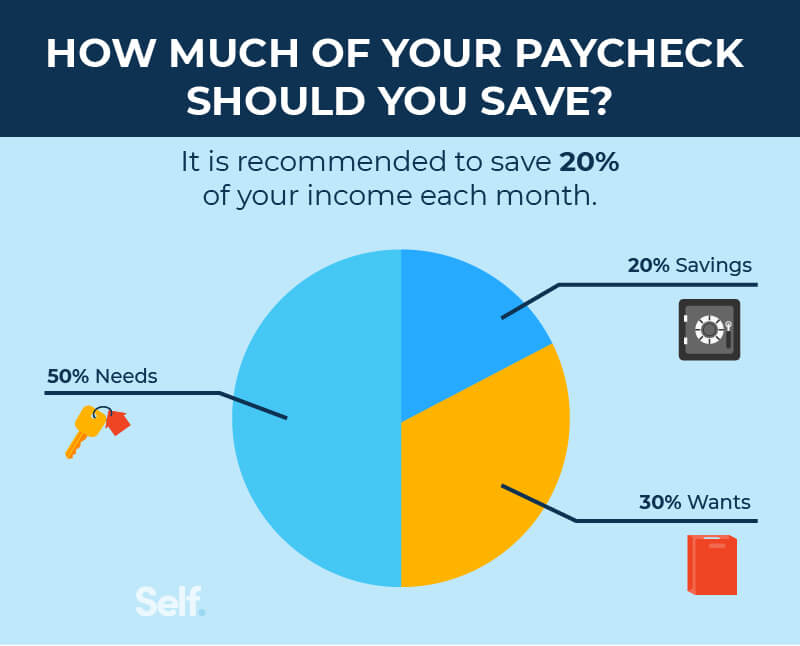
One of the most widely cited and user-friendly budgeting frameworks is the 50/30/20 rule, popularized by Senator Elizabeth Warren. This rule suggests dividing your after-tax income into three main categories:
- 50% for Needs: This covers essential expenses like housing (rent/mortgage), utilities, groceries, transportation, insurance premiums, and minimum debt payments. These are the non-negotiable costs required for living.
- 30% for Wants: This category includes discretionary spending that improves your quality of life but isn’t strictly necessary. Examples are dining out, entertainment, hobbies, travel, new clothes, and subscription services.
- 20% for Savings and Debt Repayment: This crucial portion is dedicated to building your emergency fund, contributing to retirement accounts, saving for mid-term goals, and paying down any high-interest consumer debt above the minimum payments.
The beauty of the 50/30/20 rule lies in its simplicity and flexibility. It provides a clear guideline, allowing individuals to quickly assess whether their spending aligns with healthy financial habits. If your “Needs” are eating up more than 50% of your income, it signals a need to cut back or increase income. Similarly, if you’re not allocating at least 20% to savings and debt, adjustments are necessary.
The “Pay Yourself First” Principle
A cornerstone of effective saving, the “pay yourself first” principle advocates for prioritizing your savings at the very beginning of each pay period, rather than saving whatever is left over after all other expenses. This strategy flips the traditional saving mindset on its head, making savings a non-negotiable expense rather than an optional one.
By automating transfers from your checking account to your savings or investment accounts immediately after your paycheck hits, you ensure that your financial goals are consistently met. This approach minimizes the temptation to spend the money and builds a powerful habit of consistent saving. Even if you start with a small amount, the act of consistently paying yourself first reinforces financial discipline and significantly boosts your long-term wealth accumulation. This principle is especially effective when combined with percentage-based saving targets, making your contributions automatic and systematic.
Percentage-Based Saving: What’s Realistic?
Beyond the 50/30/20 rule, a general guideline often suggested by financial experts is to aim for saving 10-20% of your gross income. This range acknowledges that individual circumstances vary.
- 10% as a starting point: For those new to saving, carrying significant debt, or earning lower incomes, 10% can be a realistic and achievable target. It’s more important to start saving something consistently than to aim for an unachievable target and get discouraged.
- 15% as a good benchmark: Many financial planners consider 15% of gross income to be a solid benchmark for someone aiming for a comfortable retirement and reasonable financial security, especially if they start saving in their 20s or early 30s.
- 20% or more for accelerated goals: If you have aggressive financial goals, such as early retirement, buying a home sooner, or accumulating substantial wealth, pushing your savings rate to 20% or even higher will dramatically accelerate your progress. This often requires significant discipline, budget optimization, and potentially boosting your income.
The “realistic” percentage depends heavily on your current income, fixed expenses, and age. Someone starting later in life may need to save a higher percentage, while someone with a high income might find it easier to exceed 20%. The key is to find a percentage that is challenging but sustainable, and then gradually increase it as your income grows or expenses decrease.
Tailoring Your Savings Strategy to Your Reality
While general rules provide a useful framework, your personal financial reality—your income, expenses, debts, and life stage—must ultimately shape your specific monthly savings amount. A truly effective savings plan isn’t a rigid template but a dynamic strategy that adapts to your unique circumstances.
Assessing Your Current Financial Snapshot

The first step in tailoring your strategy is to gain a clear, honest picture of your current financial situation. This involves a comprehensive review of your:
- Income: What is your total net (after-tax) monthly income from all sources? Include your primary salary, side hustle income, rental income, etc.
- Expenses: Track every dollar you spend for at least one to three months. Categorize your spending into fixed costs (rent, loan payments, insurance) and variable costs (groceries, entertainment, dining out). Many budgeting apps and spreadsheets can automate this process. Understanding where your money actually goes is often an eye-opener and reveals areas for potential savings.
- Debts: List all your outstanding debts, including credit cards, student loans, car loans, and mortgage. Note the interest rates and minimum monthly payments. High-interest debt can severely impede your savings efforts.
- Assets: While not directly contributing to monthly savings, understanding your existing assets (savings accounts, investment portfolios, real estate) provides context for your overall financial health and indicates how much more you need to save to reach your goals.
This thorough assessment reveals your discretionary income—the money you have left after essential expenses and debt payments—which is the primary source for your savings. It also highlights potential areas for cost reduction, directly freeing up funds for saving.
Optimizing Your Budget for Savings
Once you have a clear financial snapshot, the next logical step is to optimize your budget to maximize your savings capacity. This isn’t about deprivation but about intentional spending and finding efficiencies.
- Identify Wasteful Spending: Look closely at your variable expenses. Are there subscriptions you don’t use? Dining out too frequently? Can you reduce grocery costs by meal planning or choosing generic brands? Small, consistent cuts can add up significantly over time.
- Negotiate and Shop Around: Periodically review your fixed expenses. Can you negotiate lower rates for insurance, internet, or phone plans? Refinancing high-interest debt can also drastically reduce your monthly outgoings, freeing up cash for savings.
- Automate Savings Transfers: Implement the “pay yourself first” principle by setting up automatic transfers from your checking account to your savings and investment accounts on payday. This removes the temptation to spend the money and ensures consistent progress towards your goals.
- Embrace Frugality (Consciously): Adopt a mindset of conscious spending. Before making a purchase, ask yourself if it aligns with your values and financial goals. Distinguish between needs and wants, and delay gratification for larger, more impactful financial gains.
Optimizing your budget is an ongoing process. Regular reviews (quarterly or annually) help you adjust to changing income, expenses, and financial goals, ensuring your budget remains a powerful tool for savings.
The Role of Debt in Your Savings Plan
Debt, especially high-interest consumer debt like credit card balances, plays a significant role in determining how much you can and should be saving. Before aggressively saving for long-term goals, it’s often wise to address high-interest debt first. The interest accumulating on credit card debt (often 15-25% APR or more) can easily outpace any returns you’d earn in a basic savings account or even many investments.
A common strategy is the “debt snowball” or “debt avalanche.” The debt snowball prioritizes paying off the smallest debt first to gain psychological momentum, while the debt avalanche tackles debts with the highest interest rates first to save the most money overall. In either case, the focus is on allocating extra funds towards principal repayment, thereby reducing interest charges and accelerating debt freedom.
A balanced approach often involves simultaneously building a small emergency fund (e.g., $1,000) for immediate needs, then aggressively paying down high-interest debt, and only then ramping up long-term savings. Once high-interest debt is eliminated, the money previously allocated to debt payments can be redirected entirely to savings and investments, turbocharging your financial growth. Student loans and mortgages, with their typically lower interest rates, can often be managed alongside significant savings contributions, but a personalized analysis is always recommended.
Tools and Strategies to Boost Your Savings
Beyond budgeting and goal setting, several practical tools and strategies can significantly enhance your ability to save consistently and efficiently. Leveraging technology and smart financial practices can make saving easier, more automatic, and ultimately more rewarding.
Automating Your Savings
As highlighted with the “pay yourself first” principle, automation is perhaps the most powerful tool in your savings arsenal. By setting up recurring, automatic transfers from your checking account to your savings, investment, and retirement accounts, you eliminate the need for conscious decision-making each month. This reduces the likelihood of spending the money prematurely and ensures consistency, regardless of your willpower on any given day.
Most banks and financial institutions offer easy ways to set up recurring transfers. You can schedule them to coincide with your paydays, ensuring the money is moved before you even have a chance to miss it. Consider splitting your direct deposit at work so a portion automatically goes into your savings or retirement account, bypassing your checking account entirely. Automating builds a habit that, over time, becomes second nature, quietly contributing to your financial security without constant effort.
Leveraging High-Yield Savings Accounts and Investments
Where you keep your savings also matters. While an emergency fund needs to be highly liquid and accessible, it doesn’t need to sit idly in a low-interest checking account.
- High-Yield Savings Accounts (HYSAs): For short-term and emergency funds, HYSAs offer significantly better interest rates than traditional savings accounts, often 10-20 times higher. While the returns aren’t dramatic, they help your money grow faster, providing a small but steady boost to your savings without taking on investment risk.
- Investment Accounts for Long-Term Goals: For mid-term and especially long-term goals like retirement, investing is crucial. Keeping all your long-term savings in a basic savings account means you’re missing out on the power of compound interest and growth potential. Tax-advantaged accounts like 401(k)s (especially if your employer offers a match – which is free money!), IRAs (Traditional or Roth), and HSAs (Health Savings Accounts) are excellent vehicles for retirement savings. For other mid-term goals, taxable brokerage accounts can be used to invest in diversified portfolios of stocks, bonds, and mutual funds.
The key is to match the savings vehicle to the goal’s timeline and risk tolerance. Emergency funds stay in HYSAs; long-term retirement savings go into diversified investment portfolios.
The Power of Side Hustles and Income Growth
Sometimes, even after optimizing your budget, the amount you can save feels insufficient. In such cases, focusing on increasing your income can be a game-changer.
- Side Hustles: Exploring side hustles—from freelancing, online tutoring, delivering food, or selling crafts—can generate additional income directly earmarked for savings. Even a few hundred extra dollars a month can significantly boost your progress towards your goals, especially when combined with diligent budgeting.
- Negotiating Salary and Career Advancement: Regularly evaluating your market value and negotiating salary increases at your current job, or seeking new opportunities with higher pay, are fundamental ways to boost your income. Investing in new skills or education can also open doors to higher-paying roles over time.
- Monetizing Hobbies or Skills: Think creatively about how you can turn a hobby or skill into an income stream. What are you good at? What do people often ask your help with? These can be starting points for generating extra cash for your savings.
Every extra dollar earned, especially if a significant portion is directed straight to savings, acts as an accelerator for your financial plan, making your savings goals more attainable and your financial freedom closer within reach.
Overcoming Obstacles and Staying Motivated
Saving money, especially consistently over long periods, comes with its challenges. Life throws curveballs, temptations arise, and motivation can wane. Developing strategies to overcome these obstacles and maintain discipline is as important as the initial plan itself.
Dealing with Unexpected Expenses
Even with an emergency fund, unexpected expenses can sometimes exceed what you’ve saved or pop up before your fund is fully established. When this happens, it’s crucial to have a plan:
- Prioritize Replenishment: If you have to dip into your emergency fund, make replenishing it your top financial priority once the immediate crisis passes. Treat it like a debt that needs to be paid off to yourself.
- Avoid High-Interest Debt: If you lack an emergency fund and face an unexpected expense, try to avoid high-interest credit card debt. Explore options like personal loans with lower interest rates or payment plans if absolutely necessary.
- Review and Adjust: After an unexpected expense, review your budget and emergency fund target. Was the fund adequate? Do you need to adjust your monthly contribution to account for increased costs or a larger buffer? This helps you learn and adapt for future challenges.
Regularly Reviewing and Adjusting Your Plan
Your financial life is not static, and neither should your savings plan be. Life changes—a new job, marriage, children, a major purchase, or even just economic shifts—will necessitate adjustments.
- Annual Financial Check-ups: Schedule an annual “financial check-up” to review your income, expenses, debt, and progress towards your savings goals.
- Re-evaluate Goals: Are your goals still relevant? Have new ones emerged? Adjust your monthly savings targets accordingly. For example, a pay raise might mean you can increase your retirement contributions, while a new baby might require shifting some funds towards a college savings plan.
- Track Progress: Regularly tracking your net worth and savings progress (e.g., quarterly) provides tangible proof of your efforts and can be a huge motivator. Seeing your numbers grow reinforces good habits.

Celebrating Milestones and Maintaining Discipline
The journey to financial security is a marathon, not a sprint. To stay motivated and disciplined, it’s important to acknowledge your progress along the way.
- Celebrate Small Wins: Reaching your initial emergency fund goal, paying off a credit card, or hitting a certain investment milestone are all reasons to celebrate. These small wins provide psychological boosts and reinforce positive behavior.
- Reward Yourself (Sensibly): A small, non-financial reward or a modest treat (within your budget) can be a great way to mark achievements without derailing your overall plan.
- Educate Yourself Continuously: Stay informed about personal finance, investing, and economic trends. The more knowledgeable you are, the more confident and disciplined you’ll become in managing your money.
- Find an Accountability Partner: Sharing your goals with a trusted friend, family member, or financial advisor can provide external motivation and accountability, helping you stay on track when your resolve wavers.
Ultimately, how much you should be saving a month is a deeply personal question with no single right answer. It’s a dynamic figure that evolves with your life stage, income, and aspirations. By understanding your “why,” applying sensible guidelines, tailoring strategies to your reality, leveraging effective tools, and maintaining unwavering discipline, you can build a robust savings habit that underpins your financial security and empowers you to achieve your most cherished life goals. The most important step is simply to start, to be consistent, and to adapt as you go.
aViewFromTheCave is a participant in the Amazon Services LLC Associates Program, an affiliate advertising program designed to provide a means for sites to earn advertising fees by advertising and linking to Amazon.com. Amazon, the Amazon logo, AmazonSupply, and the AmazonSupply logo are trademarks of Amazon.com, Inc. or its affiliates. As an Amazon Associate we earn affiliate commissions from qualifying purchases.