
In the dynamic landscape of modern commerce, businesses, from burgeoning side hustles to established enterprises, rely heavily on efficient payment processing to convert sales into revenue. Square has emerged as a ubiquitous financial tool, empowering millions to accept credit card payments with relative ease. However, beneath the surface of convenience lies a crucial financial consideration: the Square processing fee. Understanding this fee is paramount for effective business finance, impacting everything from profit margins to pricing strategies. This article delves into the intricacies of Square’s fee structure, exploring its components, implications, and how businesses can optimally manage these costs within their financial models.
Understanding Square’s Core Service and Fee Structure
Square revolutionized payment acceptance by simplifying the process for small businesses and individuals. By providing straightforward hardware and a user-friendly app, it lowered the barrier to entry for accepting card payments. However, facilitating these transactions involves a complex ecosystem of financial institutions, card networks, and regulatory bodies, each requiring compensation. This is where processing fees come into play, covering the costs associated with authorizing, clearing, and settling transactions.
The Role of Payment Processors in Business Finance
Payment processors like Square act as intermediaries between a merchant, the customer’s bank (issuing bank), and the merchant’s bank (acquiring bank). When a customer swipes, dips, or taps their card, Square securely transmits the transaction data, verifies funds, and ensures the money moves from the customer’s account to the merchant’s. This critical service enables businesses to access a broader customer base and participate in the digital economy. For online income generation and side hustles, a reliable payment processor is non-negotiable, acting as the financial backbone of operations.
Why Transaction Fees Are Necessary
Transaction fees are not arbitrary charges; they reflect the inherent costs and risks involved in moving money securely across financial networks. These costs include interchange fees (paid to the issuing bank), assessment fees (paid to card networks like Visa and Mastercard), and the payment processor’s markup for their services, fraud prevention, and technology. For businesses, these fees represent a necessary operational expense, much like rent or utilities, that must be factored into financial planning and pricing.
A Detailed Look at Square’s Transaction Fees
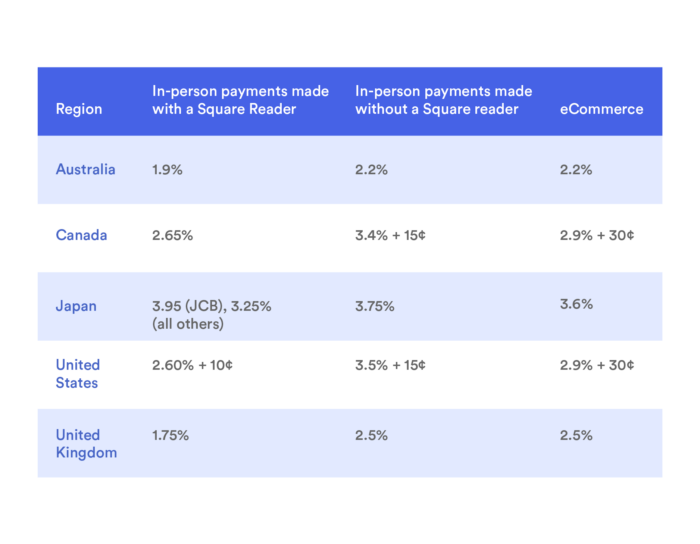
Square is known for its transparent, flat-rate pricing model, which simplifies budgeting for many businesses. Unlike complex tiered or interchange-plus models, Square charges a consistent percentage plus, in some cases, a small fixed amount per transaction, depending on how the payment is accepted. This predictability is a key financial tool for small businesses and those generating online income.
In-Person Transactions: The Standard Swipe, Dip, Tap Rate
For payments processed through Square hardware (such as the Square Reader, Square Terminal, or Square Register), the fee structure is typically the lowest. This covers transactions where a physical card is present and authenticated via chip, tap (NFC), or swipe.
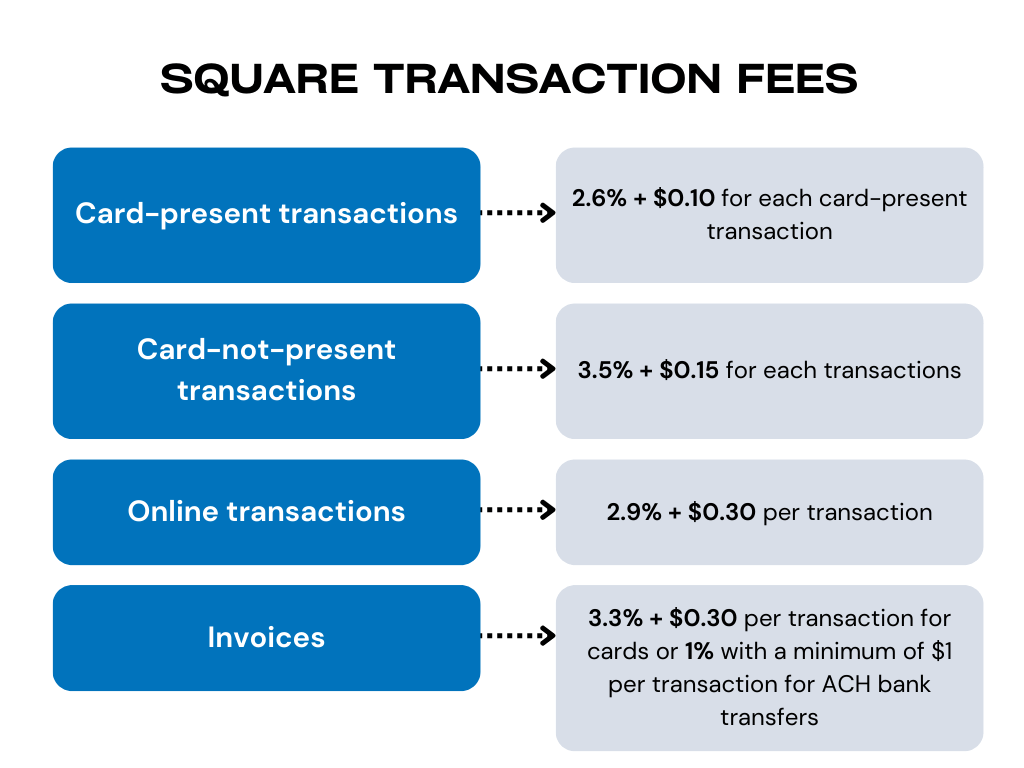
- Current Standard Rate: Square generally charges a flat rate, for example, 2.6% + $0.10, for most in-person transactions. This rate applies whether the customer pays with a credit card or a debit card. This simplicity helps businesses quickly calculate their gross margins.
Online Sales: E-commerce and Invoiced Payments
When transactions occur online or through invoicing, the processing fees are slightly higher due to the increased risk of fraud and the absence of a physical card. These are often referred to as “card-not-present” (CNP) transactions.
- Online Store & Invoices: For payments processed through Square Online Store, Square Invoices, or third-party e-commerce integrations, the fee is typically higher, such as 2.9% + $0.30 per transaction. This higher fixed component reflects the additional security measures and fraud protection services required for online commerce.
- Square Virtual Terminal: If a business keys in card details manually using a computer or mobile device via Square’s Virtual Terminal, the rate mirrors online transaction fees.
Manual Entry and Card-on-File Transactions: Higher Risk, Higher Cost
The highest processing fees are usually reserved for transactions where the card information is manually entered by the merchant, or when a card is stored on file and charged later without the customer’s direct interaction at the point of sale.
- Manual Entry: When a card is manually entered into the Square app or Virtual Terminal without using a reader, the fee can be, for instance, 3.5% + $0.15. This higher rate accounts for the increased fraud risk associated with manual keying.
- Card-on-File: Stored card information for recurring billing or repeat customers also incurs a similar higher rate, reflecting the financial responsibility Square undertakes for securely storing and processing this sensitive data.
Specialized Solutions: Square Terminal, Register, and API
Square also offers specialized hardware and software solutions, which maintain similar underlying transaction fee structures. Whether using a full Square Register system, a dedicated Square Terminal, or integrating Square’s payment API into a custom application, the core percentage and fixed fees for in-person, online, or keyed-in transactions generally apply as outlined above. These tools are designed to streamline operations, but the financial cost per transaction remains consistent with the method of payment acceptance.
Beyond the Standard: Additional Square Costs and Services
While transaction fees constitute the primary cost, businesses leveraging Square as a comprehensive financial tool should be aware of other potential expenses that can impact their overall business finance.
Hardware Costs: Readers, Registers, and Stands
Square offers a range of hardware, from free mobile card readers to sophisticated point-of-sale (POS) systems.
- Free Reader: Square often provides its basic magstripe reader for free to new merchants, facilitating immediate payment acceptance.
- Chip & Tap Readers: More advanced readers, like the Square Reader for contactless and chip payments, have a one-time purchase cost, typically ranging from $49-$59.
- Square Terminal & Register: Full-fledged POS systems like the Square Terminal and Square Register come with a significant upfront investment, ranging from hundreds to over a thousand dollars. While these are not processing fees, they are capital expenditures essential for many businesses’ operational finance.
Value-Added Services: Payroll, Loyalty, and Marketing
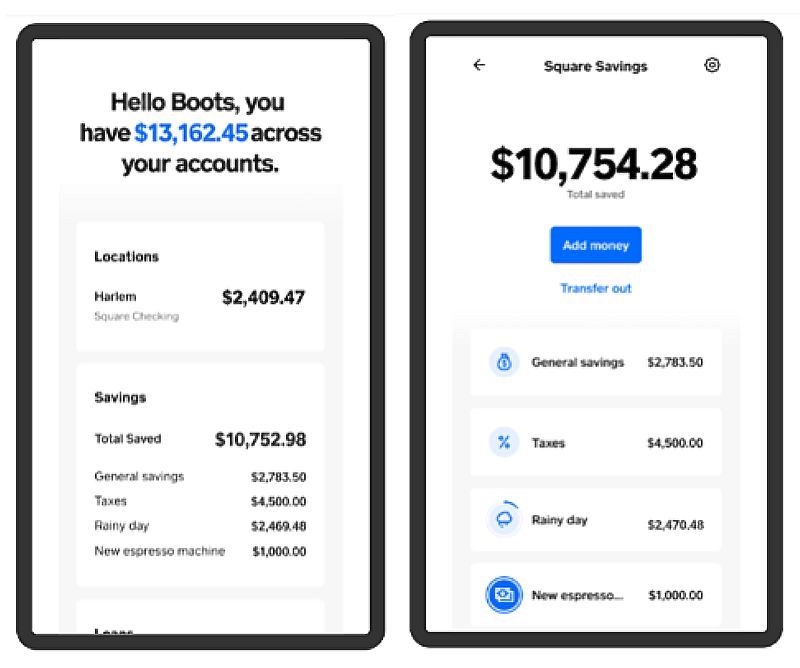
Square offers an ecosystem of additional services designed to help businesses grow and manage operations. These often come with separate subscription fees or usage-based charges.
- Square Payroll: This service helps manage employee wages, taxes, and direct deposits, incurring a monthly base fee plus a per-employee fee.
- Square Loyalty: A customer loyalty program can be implemented for a monthly subscription fee, designed to drive repeat business and improve customer retention metrics.
- Square Marketing: Tools for email marketing and promotions carry monthly subscription fees, aiding in customer engagement and sales growth.
These services, while enhancing a business’s operational capacity, represent distinct financial outlays that must be budgeted for separately from transaction fees.
Instant Transfer Fees: Accessing Funds Faster
Square typically deposits funds into a merchant’s linked bank account within 1-2 business days for free. However, for businesses needing immediate access to their cash flow, Square offers an “Instant Transfer” option.
- Instant Transfer Fee: This service usually incurs an additional fee, often 1.5% of the transfer amount, to move funds to a linked debit card almost instantly. While valuable for managing urgent cash flow needs, it’s an extra cost that impacts net income.
Chargebacks and Disputes: Hidden Financial Risks
While not a direct Square processing fee in the traditional sense, chargebacks represent a significant financial risk for businesses. When a customer disputes a transaction with their bank, the funds are temporarily withheld from the merchant, and a chargeback fee may be levied.
- Chargeback Fee: Square often charges a fee (e.g., $15-$25) to cover administrative costs if a dispute results in a chargeback against the merchant. While Square provides tools and support to fight illegitimate chargebacks, successful disputes can still result in financial losses and administrative overhead. Effective financial management includes strategies to minimize chargebacks through clear policies and good customer service.
Optimizing Your Business Finances: Strategies to Manage Square Fees
Understanding Square’s fee structure is the first step; strategically managing these costs is crucial for maximizing profitability and optimizing business finance.
Encouraging Preferred Payment Methods
Since different transaction types carry varying fees, businesses can subtly guide customers towards payment methods with lower processing costs.
- Promote In-Person Card Present Transactions: For brick-and-mortar stores, ensuring card readers are easily accessible and promoting tap/chip payments can reduce reliance on manual entry.
- Consider ACH/Bank Transfers for Large Invoices: For significant B2B transactions or high-value services, directly accepting ACH or bank transfers (if supported and secure) can sometimes bypass traditional credit card fees, offering a more cost-effective solution. Square also offers bank-to-bank payments for invoices at a lower fee.
Understanding Interchange Plus vs. Flat-Rate Pricing
While Square’s flat-rate pricing is simple, it’s not always the cheapest option for every business.
- Flat Rate Pros: Predictability, ease of understanding, good for small and inconsistent volumes.
- Flat Rate Cons: May be more expensive for businesses with high average transaction values or a large proportion of lower-cost debit card transactions.
- Interchange Plus (IC+): This model passes through the exact interchange and assessment fees, adding a fixed markup from the processor. While more complex, it can be more cost-effective for high-volume businesses with specific transaction profiles. Businesses should periodically evaluate if their volume and transaction mix warrant exploring an IC+ model with another processor.
Leveraging Software Integrations for Efficiency
Square integrates with numerous third-party software solutions for accounting, inventory, CRM, and e-commerce.
- Automated Accounting: Integrating Square with accounting software (e.g., QuickBooks, Xero) can automate reconciliation, accurately track fees as expenses, and provide a clearer financial picture, saving time and reducing errors.
- Inventory Management: Efficient inventory management reduces waste and optimizes sales, indirectly improving the profitability of each transaction even after fees are applied.
Budgeting for Processing Costs
Treat Square fees as a standard operating expense in your financial forecasts and budgets.
- Revenue Adjustments: Always calculate your net revenue after deducting processing fees when analyzing sales performance.
- Pricing Strategy: Incorporate these fees into your product or service pricing. While directly passing fees onto customers can be controversial and is often prohibited by card network rules (except for cash discounts or surcharging where permitted), understanding the effective cost per sale allows for more informed pricing decisions.
- Monitor Fee Statements: Regularly review your Square statements to ensure accurate billing and to understand your average effective processing rate over time.
Comparing Square to Other Payment Processors: A Financial Perspective
Choosing a payment processor is a critical financial decision that impacts a business’s bottom line. While Square excels in simplicity and accessibility, a comprehensive financial evaluation often requires comparing its offerings to competitors.
Flat-Rate vs. Tiered vs. Interchange Plus Models
- Square (Flat-Rate): Ideal for businesses with unpredictable sales volumes, low average transaction values, or those prioritizing simplicity over granular cost optimization.
- Tiered Pricing: Groups transactions into qualified, mid-qualified, and non-qualified categories, each with different rates. Can be less transparent and often leads to higher effective rates than advertised for many businesses.
- Interchange Plus (IC+): Generally considered the most transparent and often the most cost-effective for businesses with higher processing volumes, as it clearly separates direct card network costs from the processor’s markup.
Volume Considerations: When Square is Best (or Not)
- Low Volume/New Businesses: Square’s no-monthly-fee model and ease of setup are highly attractive for startups, side hustles, and businesses with low or intermittent transaction volumes. The flat rate provides predictability without commitment.
- High Volume/Established Businesses: As a business scales, its processing fees become a more significant expense. Businesses processing tens of thousands of dollars or more per month might find that an interchange-plus model with a different processor or even Square’s custom pricing for larger accounts could lead to substantial savings. It’s a matter of performing a cost-benefit analysis based on actual transaction data.
Hidden Fees and Transparent Pricing
When comparing processors, always scrutinize for hidden fees beyond the per-transaction rate. These can include:
- Monthly Fees: Account maintenance, PCI compliance, or gateway fees.
- Annual Fees: For specific services or account maintenance.
- Batch Fees: Charged each time you settle your day’s transactions.
- Early Termination Fees: If you switch processors before a contract ends.
Square’s strength lies in its relative transparency with very few (if any) of these common hidden fees, which makes it an excellent financial tool for businesses seeking straightforward cost structures. However, understanding what to look for when evaluating alternatives is key to making an informed financial decision that supports your business’s long-term profitability.
aViewFromTheCave is a participant in the Amazon Services LLC Associates Program, an affiliate advertising program designed to provide a means for sites to earn advertising fees by advertising and linking to Amazon.com. Amazon, the Amazon logo, AmazonSupply, and the AmazonSupply logo are trademarks of Amazon.com, Inc. or its affiliates. As an Amazon Associate we earn affiliate commissions from qualifying purchases.