
The perennial quest for a pest-free environment often leads to a myriad of solutions, from chemical sprays to elaborate traps. However, a less intrusive and increasingly technologically sophisticated approach involves harnessing the power of light itself. The fundamental question of “what color light repels bugs?” delves into the fascinating intersection of entomology and advanced lighting technology, revealing how specific wavelengths can be strategically deployed to mitigate insect presence. This exploration is deeply rooted in tech, leveraging advancements in LED illumination, smart home systems, and a nuanced understanding of insect photoreception.
The Photoreception of Pests: Understanding Insect Vision
To effectively repel bugs with light, it’s crucial to first understand how insects perceive their illuminated world. Unlike humans, whose vision peaks in the green-yellow spectrum, many insects possess vastly different photoreceptive capabilities. Their compound eyes are exquisitely tuned to specific wavelengths, often extending into the ultraviolet (UV) spectrum, which is invisible to the human eye.
Insect Eye Structure and Light Perception
Insects utilize compound eyes, composed of numerous individual optical units called ommatidia, each with its own lens and photoreceptor cells. This structure provides a wide field of view and excellent motion detection. Crucially, the spectral sensitivity of these photoreceptors varies significantly across species. Many nocturnal insects, for instance, are highly attracted to short-wavelength light, including UV and blue light, because these wavelengths are prevalent at dawn and dusk, aiding navigation and foraging. UV light, in particular, is often a beacon for insects, as it’s reflected by flowers and is essential for communication and mating in some species.
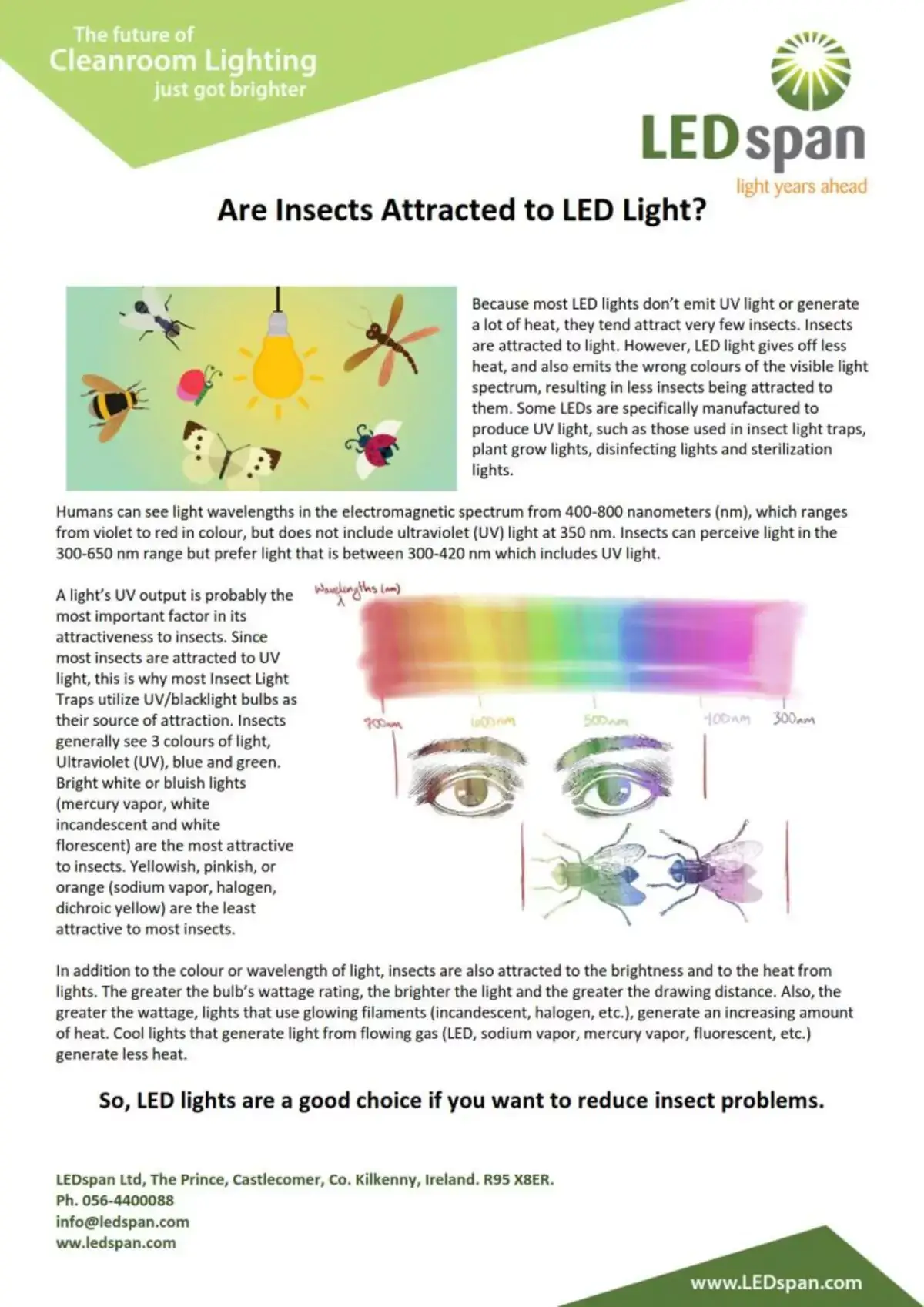
The visible spectrum for insects typically ranges from approximately 300 nanometers (UV-A) to around 650 nanometers (red). Within this range, blue and UV light (shorter wavelengths) are often highly attractive, while longer wavelengths—yellow, orange, and red—tend to be less perceived or actively avoided by many common nuisance insects. This differential perception forms the scientific basis for light-based bug repulsion.
Wavelengths That Attract and Repel
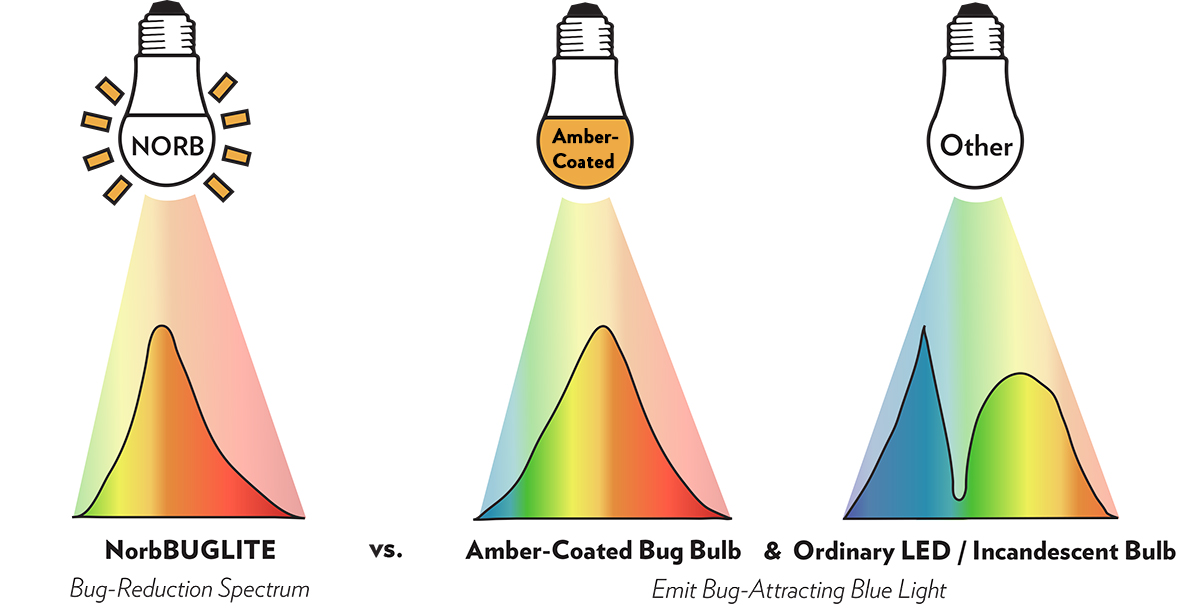
The key to understanding which light colors repel bugs lies in understanding which colors attract them. Insects such as mosquitoes, moths, and various flies are notoriously drawn to traditional incandescent bulbs and older LED lights that emit significant amounts of UV and blue light. These shorter wavelengths, often referred to as “cold” light, mimic natural cues that insects use for navigation, mating, and finding food sources.
Conversely, light on the longer end of the visible spectrum—yellow, orange, and red—is generally less attractive to many insect species. These “warm” light colors are less visible to the insect eye or do not carry the same behavioral triggers. While not actively “repelling” in the sense of physically pushing them away, these colors significantly reduce the likelihood of attraction, effectively creating a less inviting environment for pests. This principle is fundamental to modern bug-repelling lighting technology.
Leveraging LED Technology for Targeted Repulsion
The advent of Light Emitting Diode (LED) technology has revolutionized the ability to precisely control the spectral output of light sources. Unlike traditional incandescent bulbs, which emit a broad spectrum of light including significant UV, LEDs can be engineered to produce very narrow, specific wavelengths. This precision is paramount in developing effective bug-repelling lights.
The Spectrum of Repulsion: Yellow, Orange, and Red Light
Modern “bug lights” predominantly utilize LED technology to emit light in the yellow, orange, and red parts of the spectrum.
- Yellow Light (approx. 570-590 nm): This is the most common wavelength for consumer-grade bug-repelling lights. Yellow LEDs produce light that is sufficiently long in wavelength to be less attractive to many common insects, yet still provides adequate illumination for human vision.
- Orange Light (approx. 590-620 nm): Moving further into the longer wavelengths, orange light offers an even lower attraction profile for many insect species compared to yellow.
- Red Light (approx. 620-750 nm): Red light is generally considered the least attractive to a broad range of insects. Its significantly longer wavelength falls outside the primary spectral sensitivity range for many insect photoreceptors. While highly effective at not attracting bugs, red light provides less functional illumination for human tasks, often making it more suitable for ambient or decorative applications where extreme pest deterrence is prioritized.
The technology behind these lights involves specific semiconductor materials and phosphors that convert blue LED light into these desired longer wavelengths, or directly emit them. This allows manufacturers to create bulbs that are both energy-efficient and optimized for pest deterrence without relying on harmful chemicals.
Advancements in “Bug Lights”: From Incandescent to Smart LEDs
Historically, “bug lights” were typically incandescent bulbs with a yellow coating. While somewhat effective due to the filter blocking some shorter wavelengths, they were inefficient and still emitted some attractive light. Modern LED bug lights represent a significant technological leap. They are designed from the ground up to minimize UV and blue light emission, focusing output squarely in the less attractive yellow-orange-red spectrum.
Furthermore, advancements extend to multi-spectrum LEDs capable of switching between standard white light and bug-repelling yellow or amber light. These smart LED bulbs often feature integrated sensors or connectivity that allows them to automatically adjust their color temperature or spectral output based on time of day, presence detection, or even insect activity, providing a dynamic and adaptive solution to pest management.
Smart Lighting Systems: Integrating Pest Management into the Connected Home
The convergence of LED technology with smart home platforms has opened new frontiers for sophisticated pest control. Smart lighting systems allow users unprecedented control over their home’s illumination, including the ability to tailor light characteristics specifically for bug deterrence.
Programmable Wavelengths and Automation
Smart LED bulbs, accessible via apps or voice commands, offer the ability to dynamically adjust color temperature and even specific color outputs. For pest control, this means users can program their outdoor and even indoor lights to emit yellow, amber, or red light during peak insect activity hours (e.g., dusk till dawn). Automation schedules can be set to transition from bright white task lighting during the day to a bug-repelling warm glow in the evening. Some advanced systems might even integrate with environmental sensors that detect rising insect populations or specific weather conditions conducive to insect activity, automatically adjusting light profiles in response.
This level of programmability moves beyond static “bug lights,” offering a flexible and energy-efficient approach to managing insect presence without compromising overall lighting utility. The software-defined nature of smart lighting ensures that users can experiment with different color settings to find what works best for their specific pest challenges and geographic location.
Outdoor Smart Lighting Solutions
Outdoor spaces—patios, decks, gardens, and entryways—are prime targets for nuisance insects. Smart outdoor lighting fixtures are increasingly incorporating bug-repelling features. These robust, weather-resistant units often feature:
- Integrated spectral control: Allowing users to switch between standard white and bug-repelling amber or yellow.
- Motion sensors: To activate bug-repelling light only when needed, conserving energy.
- Dawn-to-dusk sensors: Automatically activating the desired light color as evening approaches.
- Connectivity: Integration with home Wi-Fi and smart home ecosystems (e.g., Amazon Alexa, Google Home, Apple HomeKit) for remote control, scheduling, and scene creation.
These integrated systems provide a seamless and aesthetically pleasing solution, transforming outdoor lighting into an active component of an overall pest management strategy.
Energy Efficiency and Longevity
One of the significant technological advantages of using LED-based smart lighting for bug repulsion is energy efficiency. LEDs consume dramatically less power than traditional incandescent or even CFL bulbs, leading to substantial energy savings over time. Furthermore, LEDs boast an exceptionally long operational lifespan, often tens of thousands of hours. This longevity reduces the frequency of bulb replacement, lowering maintenance costs and environmental impact. For a solution that might be running for extended periods, especially outdoors, these technological benefits are considerable, making the initial investment in smart LED bug lights a sound one.
Beyond Color: Holistic Tech Approaches to Photonic Pest Control
While specific light colors play a crucial role in repelling bugs, the broader tech landscape offers additional photonic solutions that either complement or operate on different principles of insect interaction with light.
UV Traps and Electrocution Grids
In contrast to repelling light, many established pest control devices attract insects using light. UV light traps (e.g., “bug zappers”) are designed to emit high levels of UV and blue light to lure phototactic insects towards an electrified grid or sticky trap. While effective at killing specific types of insects, these devices are fundamentally different from bug-repelling lights. They aim to reduce populations through attraction and destruction, whereas repelling lights aim to deter insects from entering or lingering in an area. Understanding this distinction is key to deploying the right light technology for a given pest challenge.
Integrated Pest Management (IPM) Systems
Modern pest control increasingly leans towards Integrated Pest Management (IPM), a holistic approach that combines multiple strategies for long-term prevention and suppression. Light technology, particularly bug-repelling LEDs, can be a vital component of an IPM system. These systems often involve a combination of monitoring, exclusion, habitat modification, and targeted application of control methods. Smart lighting’s ability to create unwelcoming light environments for pests, combined with its energy efficiency and automation capabilities, makes it a valuable, non-chemical tool within an broader tech-driven IPM framework. This could include using motion-activated bug-repelling lights in conjunction with smart security cameras to identify and deter nocturnal pests.

Future Innovations in Photonic Pest Control
The field of photonic pest control is continually evolving. Researchers are exploring advanced techniques such as:
- Hyperspectral imaging: Using cameras that capture a wide range of light wavelengths to identify specific insect species and their behavioral patterns, leading to even more precisely targeted light interventions.
- Light-based sterilization: Using specific light frequencies (e.g., UV-C) to sterilize insect pests, disrupting their reproductive cycles. This is currently more applicable in agricultural or industrial settings but may see future domestic applications.
- Bio-inspired photonic solutions: Studying the intricate light-sensing mechanisms of various insects to design biomimetic lighting solutions that exploit these sensitivities for highly effective repulsion or attraction.
- Light-based barriers: Creating virtual light “fences” using precisely modulated lasers or LEDs that insects perceive as impassable barriers.
These emerging technologies promise even more sophisticated and precise methods for controlling pests using light, further cementing light technology as a critical frontier in modern pest management. The simple question of “what color light repels bugs” has opened the door to a complex and ever-advancing technological landscape aimed at creating more comfortable, pest-free environments through intelligent illumination.
aViewFromTheCave is a participant in the Amazon Services LLC Associates Program, an affiliate advertising program designed to provide a means for sites to earn advertising fees by advertising and linking to Amazon.com. Amazon, the Amazon logo, AmazonSupply, and the AmazonSupply logo are trademarks of Amazon.com, Inc. or its affiliates. As an Amazon Associate we earn affiliate commissions from qualifying purchases.