
Understanding the daily fluctuations of the stock market requires a keen eye on a complex interplay of macroeconomic factors, sector-specific dynamics, corporate performance, and prevailing market sentiment. A downturn on any given day is rarely attributable to a single cause but rather a confluence of forces that influence investor confidence and capital allocation. Unpacking these elements provides crucial insights for both seasoned investors and those new to the financial markets.
The Macroeconomic Undercurrents Driving Market Declines
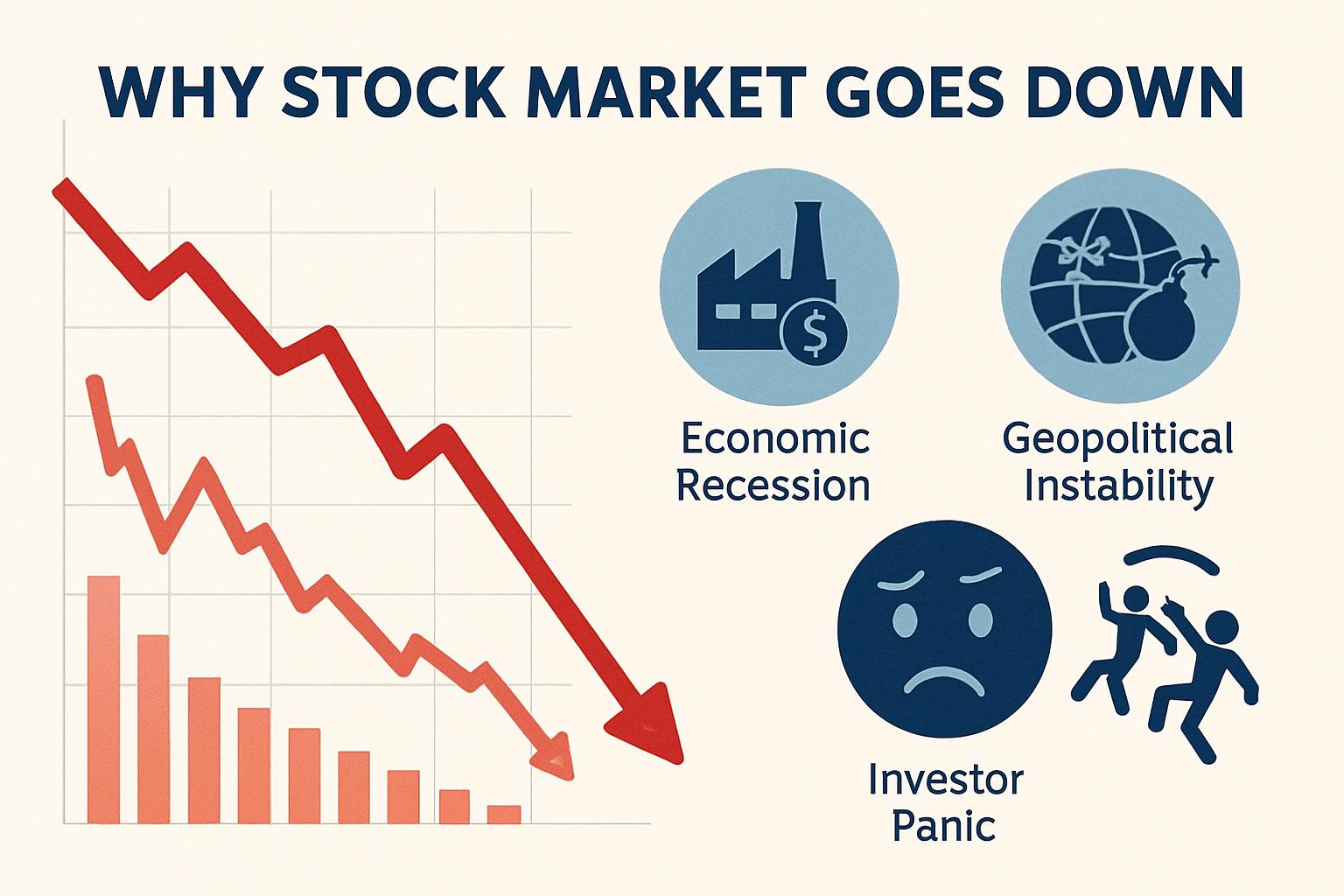
Global economic conditions form the bedrock upon which stock valuations are built. When these foundations shift, markets inevitably react, often with significant daily movements. Today’s downturn can largely be attributed to a combination of persistent inflationary pressures, the Federal Reserve’s monetary policy stance, lingering recessionary fears, and geopolitical instability.
Persistent Inflationary Pressures
Inflation, the rate at which the general level of prices for goods and services is rising, remains a primary concern for investors. When inflation outpaces expectations, it erodes the purchasing power of consumers and increases the cost of doing business for corporations. Higher input costs, such as raw materials, labor, and transportation, squeeze profit margins, leading companies to revise down their earnings forecasts. This direct impact on profitability, coupled with the uncertainty it creates regarding future economic stability, often triggers a sell-off as investors re-evaluate the intrinsic value of equities. Furthermore, sticky inflation can signal that central banks may need to maintain a hawkish stance for longer than anticipated, intensifying other market pressures.
Central Bank Policies and Interest Rate Hikes
The actions of central banks, particularly the U.S. Federal Reserve, are pivotal in influencing market direction. To combat stubborn inflation, central banks typically resort to raising benchmark interest rates. Higher interest rates increase the cost of borrowing for both businesses and consumers. For businesses, this means more expensive capital for expansion, potentially curbing growth initiatives and reducing future earnings. For consumers, higher rates translate to more expensive mortgages, car loans, and credit card debt, leading to reduced discretionary spending. From a valuation perspective, higher rates also increase the discount rate used to value future corporate earnings, making future profits less valuable in today’s terms. This disproportionately affects growth stocks, which derive much of their valuation from projected long-term earnings, making them particularly vulnerable to rate hikes.
Rising Recession Fears
The specter of a potential recession frequently casts a long shadow over equity markets. A recession, defined as a significant decline in economic activity spread across the economy, can lead to widespread job losses, decreased consumer spending, and a sharp contraction in corporate profits. Indicators such as an inverted yield curve (where short-term Treasury yields exceed long-term yields), declining manufacturing indices, and a slowdown in housing starts often fuel these fears. When investors perceive an increased likelihood of an economic downturn, they typically de-risk their portfolios by selling off equities, particularly those in cyclical sectors most sensitive to economic fluctuations, and moving towards safer assets like bonds or cash. Today’s market decline may reflect growing concerns that the economy is heading for a hard landing amidst the ongoing battle against inflation.
Geopolitical Instability and Supply Chain Disruptions
Global events, from international conflicts and trade disputes to unforeseen natural disasters, can introduce significant uncertainty into the markets. Geopolitical instability can disrupt critical supply chains, leading to shortages and further exacerbating inflationary pressures. It can also lead to unpredictable swings in commodity prices, particularly oil and gas, which have a broad impact across industries. Such disruptions increase operational costs for businesses and reduce consumer confidence, directly translating into lower corporate earnings expectations and heightened market volatility. The interconnectedness of the global economy means that crises in one region can quickly cascade, affecting investor sentiment worldwide.
Sector-Specific Vulnerabilities and Performance Disparities
While macroeconomic factors often drive broad market movements, different sectors respond uniquely to the same pressures. Certain industries are inherently more sensitive to interest rate changes, consumer spending habits, or commodity price fluctuations, leading to varied performance even on a down day.
Technology and Growth Stocks Under Pressure
The technology sector, characterized by companies with high growth potential and often higher valuations based on future earnings, is particularly susceptible to rising interest rates. As previously noted, higher discount rates diminish the present value of those future earnings, making tech stocks appear relatively less attractive. Furthermore, many tech companies rely on venture capital or debt financing for expansion, and higher borrowing costs can stifle innovation and growth initiatives. This sensitivity often leads to sharper pullbacks in the tech sector during periods of monetary tightening, contributing significantly to overall market declines given its substantial weight in major indices.
Cyclical Sectors and Commodity Volatility
Sectors like industrials, financials, and consumer discretionary are often referred to as cyclical because their performance is closely tied to the broader economic cycle. In an environment of rising recession fears, these sectors tend to underperform as investors anticipate a slowdown in demand for durable goods, financial services, or non-essential consumer products. The energy sector, while also cyclical, adds another layer of complexity. Fluctuations in crude oil and natural gas prices, driven by supply-demand dynamics and geopolitical events, can lead to significant volatility. A sudden drop in commodity prices, for instance, might cause a downturn in energy stocks, while a spike might paradoxically raise inflation concerns, further rattling the broader market.
Corporate Performance and Market Sentiment
Beyond the macro landscape, individual corporate performance and the collective psychology of investors play a crucial role in daily stock movements. Disappointing earnings or a shift in market mood can amplify underlying pressures.
Disappointing Earnings and Guidance
Even in a challenging economic environment, individual company performance can surprise investors. However, when several key companies, particularly those within influential sectors, report earnings that fall short of analyst expectations or provide weak forward guidance, it can trigger a significant market reaction. Poor guidance signals that management expects future challenges, impacting investor confidence in the broader economic outlook. These negative reports often act as a catalyst, reinforcing existing fears about economic headwinds and leading to a broader sell-off across related industries or the entire market.
The Psychology of Fear and Profit-Taking
Financial markets are not purely rational; human psychology plays a profound role. Fear and uncertainty can spread rapidly, leading to panic selling, especially if the market has recently experienced a significant rally. Investors might be quick to “take profits” off the table at the first sign of trouble, particularly if their portfolios have seen substantial gains. This collective rush to liquidate positions can create a self-fulfilling prophecy, driving prices down further irrespective of underlying fundamentals. Algorithms and high-frequency trading programs, which react instantly to news and price movements, can exacerbate these swings, turning a moderate downturn into a more pronounced decline.
Technical Analysis and Key Support Levels
Many institutional investors and traders utilize technical analysis, studying historical price patterns and trading volumes to predict future market movements. When major stock indices (like the S&P 500 or Nasdaq Composite) break below critical “support levels”—price points where buying interest has historically emerged—it can trigger further selling. This is often due to stop-loss orders being activated or large institutional players adjusting their positions based on technical indicators, reinforcing the downward momentum and contributing to a day’s decline.
Navigating Market Volatility: An Investor’s Guide
A day of market decline can be unsettling, but it’s crucial for investors to maintain perspective and adhere to sound financial principles. Volatility is an inherent characteristic of equity markets, and understanding how to navigate it is key to long-term success.
Maintaining a Long-Term Perspective
Daily market movements, while garnering significant attention, are often just noise in the context of a long-term investment horizon. Historically, equity markets have demonstrated a consistent upward trend over extended periods, recovering from numerous downturns and crises. Focusing on long-term financial goals rather than reacting to short-term fluctuations helps to avoid impulsive decisions that can derail investment plans. Reviewing your investment thesis and the underlying fundamentals of your holdings, rather than succumbing to daily headlines, is paramount.
The Power of Diversification
Diversification remains one of the most effective strategies for mitigating risk. Spreading investments across various asset classes (stocks, bonds, real estate), different sectors, geographies, and company sizes helps to cushion the impact of a downturn in any single area. When one part of your portfolio is underperforming, another might be holding steady or even gaining, providing balance. A well-diversified portfolio is better equipped to weather market storms and capture growth opportunities as they emerge.
Dollar-Cost Averaging and Strategic Rebalancing
Dollar-cost averaging (DCA) involves investing a fixed amount of money at regular intervals, regardless of market fluctuations. This strategy allows investors to buy more shares when prices are low and fewer when prices are high, effectively averaging out the purchase price over time and reducing the risk of timing the market incorrectly. Alongside DCA, strategic rebalancing involves periodically adjusting your portfolio back to its original asset allocation targets. If stocks have performed poorly, you might sell some overperforming bonds (if applicable) and buy more stocks, effectively buying low. Conversely, if stocks have outperformed, you would sell some stocks to buy bonds, locking in gains.
Avoiding Emotional Decisions
Perhaps the most challenging aspect of investing during volatile periods is controlling emotional responses. Fear can lead to panic selling at market lows, locking in losses, while greed can tempt investors to chase speculative assets during bull runs. Successful investing often requires a disciplined, unemotional approach, sticking to a pre-defined investment plan, and focusing on the fundamentals of the companies and assets owned. Understanding the “why” behind market movements, rather than simply reacting to the “what,” empowers investors to make informed decisions that align with their financial objectives.
aViewFromTheCave is a participant in the Amazon Services LLC Associates Program, an affiliate advertising program designed to provide a means for sites to earn advertising fees by advertising and linking to Amazon.com. Amazon, the Amazon logo, AmazonSupply, and the AmazonSupply logo are trademarks of Amazon.com, Inc. or its affiliates. As an Amazon Associate we earn affiliate commissions from qualifying purchases.