
Blockchain technology, often heralded as a revolutionary force akin to the internet itself, has transitioned from an obscure academic concept to a cornerstone of modern digital innovation. While most commonly associated with cryptocurrencies like Bitcoin and Ethereum, its underlying principles extend far beyond digital money, promising to redefine how we manage data, establish trust, and facilitate transactions across myriad industries. At its heart, blockchain is a decentralized, distributed ledger technology that securely records transactions across a network of computers. This article delves into the intricate mechanisms that power blockchain, dissecting its core components, the lifecycle of a transaction, its defining characteristics, and its burgeoning applications.
The Foundational Pillars: Understanding Blockchain’s Core Components
To truly grasp how blockchain technology operates, one must first understand the fundamental building blocks and principles upon which it is constructed. These elements combine to create a system that is robust, transparent, and remarkably resistant to manipulation.
Blocks and Chains: The Ledger’s Structure
At its most basic level, a blockchain is precisely what its name suggests: a chain of blocks. Each “block” is a bundle of digital information containing a set of validated transactions, along with crucial metadata. Think of it as a page in a ledger. Each block typically includes:
- Timestamp: The precise time the block was created.
- Data: A list of transactions (e.g., cryptographic signatures, timestamps, and amounts of crypto transactions, or any other data depending on the blockchain’s purpose).
- Cryptographic Hash of the Current Block: A unique digital fingerprint that identifies the block and all its contents. Any change to the data within the block would alter this hash.
- Cryptographic Hash of the Previous Block: This is the critical link that creates the “chain.” By including the hash of the preceding block, each new block is inextricably linked to the one before it. This chronological and cryptographic linkage is what makes the blockchain tamper-proof. If someone were to alter a transaction in an older block, its hash would change, breaking the chain and invalidating all subsequent blocks.
This sequential linkage ensures immutability. Once a block is added and confirmed, it becomes virtually impossible to alter its contents without consensus from the entire network, making the historical record permanent and auditable.
Cryptography and Hashing: The bedrock of Security
Cryptography is the mathematical backbone of blockchain technology, providing the mechanisms for security, integrity, and authenticity.
-
Cryptographic Hash Functions: These are one-way mathematical algorithms that take an input (of any size) and produce a fixed-size string of characters, known as a hash or digest. Key properties of these functions are crucial:
- Deterministic: The same input will always produce the same output.
- One-Way: It’s computationally infeasible to reverse the process and determine the original input from the hash.
- Collision Resistance: It’s extremely difficult to find two different inputs that produce the same hash output.
- Avalanche Effect: Even a tiny change in the input will result in a completely different hash output.
This property is vital for linking blocks. The hash of the previous block acts as a unique identifier, and if any data in that previous block is altered, its hash changes, immediately signaling tampering and invalidating the subsequent chain.
-
Digital Signatures: Transactions on a blockchain are secured using public-key cryptography. Each participant has a pair of cryptographic keys: a public key (which can be shared openly, like an address) and a private key (which must be kept secret, like a password). When a user initiates a transaction, they “sign” it with their private key. Anyone on the network can then verify this signature using the user’s public key, confirming two things:
- The transaction truly originated from the owner of that private key.
- The transaction has not been altered since it was signed.
This system ensures non-repudiation and authenticity without needing a central authority to verify identities.
Decentralization: The Distributed Ledger
Perhaps the most revolutionary aspect of blockchain is its decentralized nature. Unlike traditional centralized databases, where a single entity (like a bank or government) controls and maintains the ledger, a blockchain is distributed across a vast network of computers, often called “nodes.”
- No Central Authority: There is no single point of control or failure. Instead, all participating nodes in the network maintain an identical copy of the entire blockchain ledger.
- Peer-to-Peer Network: Nodes communicate directly with each other, sharing new transactions and blocks. When a new block is created and validated, it is broadcast to all nodes, which then add it to their local copy of the blockchain.
- Consensus Mechanisms: For the distributed network to agree on the valid state of the ledger, a “consensus mechanism” is required. This mechanism ensures that all nodes agree on which transactions are legitimate and which blocks can be added to the chain. The most well-known mechanisms are Proof of Work (PoW) and Proof of Stake (PoS), each with its own method for achieving agreement and securing the network.
This distributed architecture eliminates the need for intermediaries, reduces the risk of censorship, and makes the system incredibly resilient to attacks. Even if a significant number of nodes go offline, the network can continue to operate as long as a sufficient number remain.
The Transaction Lifecycle: From Initiation to Confirmation
Understanding the core components is one thing; seeing them in action during a transaction provides a clearer picture of blockchain’s operational flow.
Initiating a Transaction
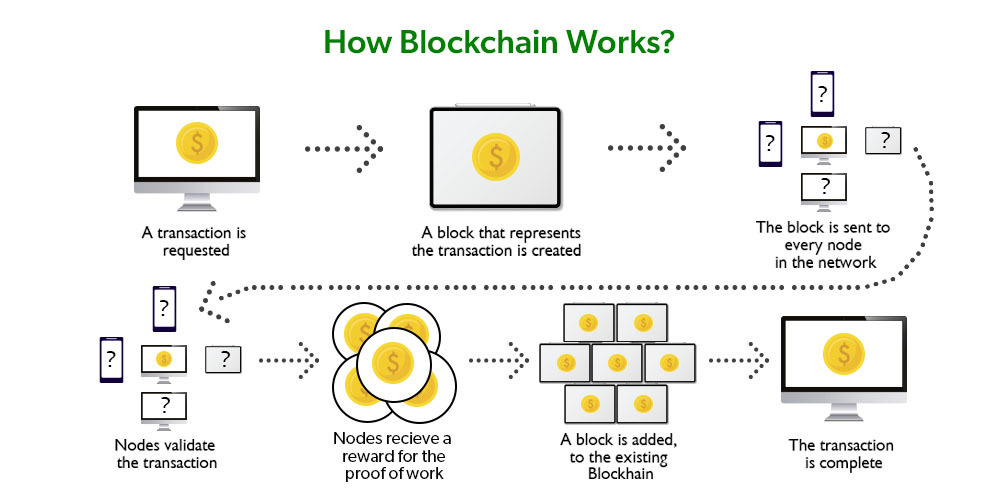
The process begins when a user wants to perform an action on the blockchain—for example, sending cryptocurrency from one address to another, or executing a smart contract.
- Transaction Creation: The user creates the transaction using their blockchain wallet or an application. This includes the sender’s address, the recipient’s address, the amount, and any other relevant data.
- Digital Signing: The user then digitally signs this transaction with their private key. This cryptographic signature proves ownership of the funds/assets and authenticates the transaction.
Broadcasting and Validation
Once signed, the transaction isn’t immediately added to the blockchain.
- Broadcasting to the Network: The signed transaction is broadcasted to the blockchain’s peer-to-peer network. It enters a “mem-pool” or “transaction pool” where it awaits confirmation.
- Node Validation: Nodes in the network receive the broadcasted transaction. Each node independently verifies the transaction’s legitimacy:
- Is the digital signature valid?
- Does the sender have sufficient funds/assets?
- Does the transaction adhere to all network rules (e.g., correct format, valid addresses)?
If valid, the nodes add the transaction to their pool of unconfirmed transactions, awaiting inclusion in a new block.
Mining/Staking and Block Creation
This is where the network’s consensus mechanism comes into play, determining how new blocks are created and added to the chain.
- Consensus Mechanism at Work:
- Proof of Work (PoW): In PoW blockchains (like Bitcoin), “miners” compete to solve a complex computational puzzle (finding a “nonce” that, when combined with the block data, produces a hash below a certain target). This process is energy-intensive but ensures high security. The first miner to solve the puzzle “wins” the right to propose the next block.
- Proof of Stake (PoS): In PoS blockchains (like Ethereum 2.0), “validators” are chosen to create new blocks based on the amount of cryptocurrency they have “staked” (locked up) as collateral. This mechanism is more energy-efficient and scalable.
- Block Assembly: The winning miner or validator collects a batch of verified, unconfirmed transactions from their transaction pool, bundles them into a new block, and includes the hash of the previous block, a timestamp, and other metadata. For PoW, they also include the “nonce” that solved the puzzle.
Appending to the Blockchain
The final stage involves adding the newly created block to the distributed ledger.
- Block Broadcast and Verification: The newly created block is broadcasted to all other nodes in the network.
- Network Consensus: Each node independently verifies the new block:
- Is the block structure valid?
- Are all transactions within the block valid?
- Does the previous block’s hash match?
- For PoW, was the puzzle correctly solved?
- Adding to the Chain: If the block is valid, nodes accept it and append it to their copy of the blockchain. This block is now considered “confirmed.” Subsequent blocks will build upon this new block, making it progressively more difficult to alter. For strong finality, multiple confirmations (blocks added after the new one) are usually waited for.
Key Characteristics and Their Implications
The intricate workings of blockchain technology culminate in a set of defining characteristics that bestow upon it unique advantages and implications for various industries.
Immutability and Transparency

Once a transaction or piece of data is recorded and confirmed on the blockchain, it becomes virtually impossible to alter or delete. This immutability stems from the cryptographic links between blocks; changing one block would invalidate all subsequent blocks in the chain, an act that would be immediately detected and rejected by the network.
- Transparency: For public blockchains, the entire ledger is openly accessible and viewable by anyone. While individual identities might be pseudonymous (represented by public addresses), the history of all transactions is transparent. This auditability fosters trust, as users can independently verify the ledger’s integrity without relying on a central authority.
- Auditability: Businesses can leverage this for supply chain tracking, financial record-keeping, and regulatory compliance, offering an unparalleled level of verifiable history.
Security and Resilience
Blockchain’s architecture provides a robust defense against cyber threats and system failures.
- Cryptographic Security: The use of hash functions and digital signatures makes it incredibly difficult to forge transactions or tamper with data.
- Decentralized Resilience: Since the ledger is distributed across thousands of nodes, there is no single point of failure. If one or even many nodes are compromised or go offline, the network continues to operate, drawing on the remaining copies of the blockchain.
- Resistance to 51% Attack: While theoretically possible, a “51% attack” (where a single entity controls over half of the network’s computing power or staked assets) is exceedingly difficult and expensive to execute on large, well-established blockchains. The economic incentives often align with maintaining the network’s integrity rather than attacking it.
Trustlessness and Censorship Resistance
These are perhaps the most profound implications of blockchain’s design.
- Trustlessness: Participants can interact and transact with each other without needing to trust a third-party intermediary (like a bank, lawyer, or government). Trust is instead placed in the cryptographic security and the transparent, immutable rules of the blockchain protocol itself. The system ensures that rules are followed without human intervention or discretion.
- Censorship Resistance: Because there is no central authority to approve or deny transactions, and because all valid transactions broadcast to the network are eventually included in a block, blockchain networks are highly resistant to censorship. This ensures that individuals and organizations can conduct transactions and store data freely, as long as they adhere to the network’s rules.
Beyond Cryptocurrency: Diverse Applications of Blockchain
While initially conceptualized for digital cash, blockchain’s core properties have unlocked a vast array of applications across various sectors, extending far beyond financial transactions.
Smart Contracts
Smart contracts are self-executing contracts with the terms of the agreement directly written into lines of code. They run on the blockchain and automatically execute when predefined conditions are met.
- Automation: They eliminate the need for intermediaries to enforce agreements, automating processes like payments, escrow, and record updates.
- Use Cases: Smart contracts are foundational for decentralized finance (DeFi), enabling automated lending, borrowing, and trading. They also find applications in supply chain management (triggering payments upon delivery), insurance (automating payouts for specific events), and intellectual property rights. Ethereum was the first major blockchain to popularize smart contract functionality.
Supply Chain Management
Blockchain offers unprecedented transparency and traceability in complex supply chains.
- Tracking and Authenticity: Companies can record every step of a product’s journey, from raw material sourcing to manufacturing, shipping, and retail. This creates an immutable audit trail, allowing consumers to verify product authenticity and origin.
- Efficiency and Trust: Reduces fraud, improves recall management, and enhances trust between supply chain participants by providing a single, shared source of truth.
Digital Identity and Data Management
Blockchain holds immense potential for empowering individuals with greater control over their digital identities and personal data.
- Self-Sovereign Identity: Users can own and manage their digital identities, selectively sharing verified credentials without relying on centralized identity providers.
- Secure Data Sharing: Blockchain can facilitate secure, auditable, and permission-based sharing of sensitive data, which is crucial in sectors like healthcare where patient records need robust protection.
Other Emerging Applications
The list of potential applications continues to grow, demonstrating blockchain’s versatility:
- Healthcare: Securely managing patient records, ensuring data integrity, and facilitating research while maintaining privacy.
- Voting Systems: Creating tamper-proof and transparent voting systems that can enhance public trust in election outcomes.
- Real Estate: Streamlining property transfers, title management, and record-keeping, reducing fraud and bureaucracy.
- Gaming and Metaverse: Enabling true digital ownership of in-game assets (NFTs), creating verifiable digital economies, and establishing interoperable virtual worlds.
Challenges and Future Outlook
Despite its transformative potential, blockchain technology is not without its hurdles.
Scalability Concerns
One of the most significant challenges is scalability, often referred to as the “blockchain trilemma” – the inherent difficulty in simultaneously achieving decentralization, security, and high transaction throughput. Early blockchains like Bitcoin can process only a handful of transactions per second, compared to thousands for traditional payment networks.
- Solutions: Researchers and developers are actively working on solutions, including:
- Layer 2 Solutions: Protocols built on top of existing blockchains (e.g., Lightning Network for Bitcoin, Optimistic Rollups and ZK-Rollups for Ethereum) to handle transactions off-chain, then batching them for final settlement on the main chain.
- Sharding: Dividing a blockchain into smaller, more manageable segments (shards) that can process transactions in parallel.
- New Consensus Mechanisms: Exploring alternatives to PoW and PoS that offer better scalability without compromising security or decentralization.
Regulatory Landscape
The rapid evolution of blockchain and its applications has presented a complex challenge for regulators worldwide. Different jurisdictions are adopting varied approaches to classify and govern cryptocurrencies, smart contracts, and decentralized autonomous organizations (DAOs), leading to legal uncertainties and potential fragmentation. A clear and consistent regulatory framework is crucial for mainstream adoption.
Energy Consumption (for PoW)
Proof of Work consensus mechanisms, while highly secure, consume substantial amounts of electricity dueating to environmental concerns. The transition of major blockchains like Ethereum from PoW to PoS is a significant step towards addressing this, but for networks still relying on PoW, finding more sustainable solutions remains a priority.

User Experience and Adoption
Despite its technical sophistication, blockchain applications often suffer from steep learning curves, complex interfaces, and reliance on cryptographic keys that can be daunting for the average user. Improving user experience (UX) and abstracting away technical complexities are vital for broader, mainstream adoption.
In conclusion, blockchain technology represents a paradigm shift in how digital information is managed and trusted. Its intricate mechanism, built on cryptographic principles, decentralization, and immutable ledgers, offers a robust framework for secure, transparent, and censorship-resistant systems. While challenges related to scalability, regulation, and user experience persist, the continuous innovation in the space, coupled with the burgeoning array of applications beyond cryptocurrencies, firmly positions blockchain as a pivotal technology destined to reshape the digital future across virtually every industry. Understanding its inner workings is no longer just for tech enthusiasts but a necessity for anyone navigating the evolving landscape of digital trust and innovation.
aViewFromTheCave is a participant in the Amazon Services LLC Associates Program, an affiliate advertising program designed to provide a means for sites to earn advertising fees by advertising and linking to Amazon.com. Amazon, the Amazon logo, AmazonSupply, and the AmazonSupply logo are trademarks of Amazon.com, Inc. or its affiliates. As an Amazon Associate we earn affiliate commissions from qualifying purchases.