
Unveiling Saturn’s Veil: The Technological Frontier
Understanding the intricate and dynamic atmosphere of Saturn, a gas giant shrouded in mystery and beauty, is a testament to humanity’s relentless pursuit of knowledge through advanced technology. For decades, a series of sophisticated probes and telescopes have served as our eyes and ears in the distant reaches of the solar system, meticulously gathering data that allows us to piece together the atmospheric puzzle of the ringed planet. Without these technological marvels, our comprehension of Saturn’s atmospheric composition, structure, and phenomena would remain largely speculative.
The initial glimpses into Saturn’s atmospheric secrets came from the Pioneer and Voyager missions in the 1970s and early 1980s. These trailblazing spacecraft carried an array of instruments designed to measure magnetic fields, cosmic rays, and planetary radio emissions, alongside basic imaging capabilities. Their flybys, though brief, provided the first close-up photographs of Saturn’s swirling cloud tops, revealing the banded structure characteristic of gas giants and hints of its complex weather patterns. Spectrometers on board began to identify hydrogen and helium as the dominant atmospheric constituents, marking the beginning of our analytical understanding.
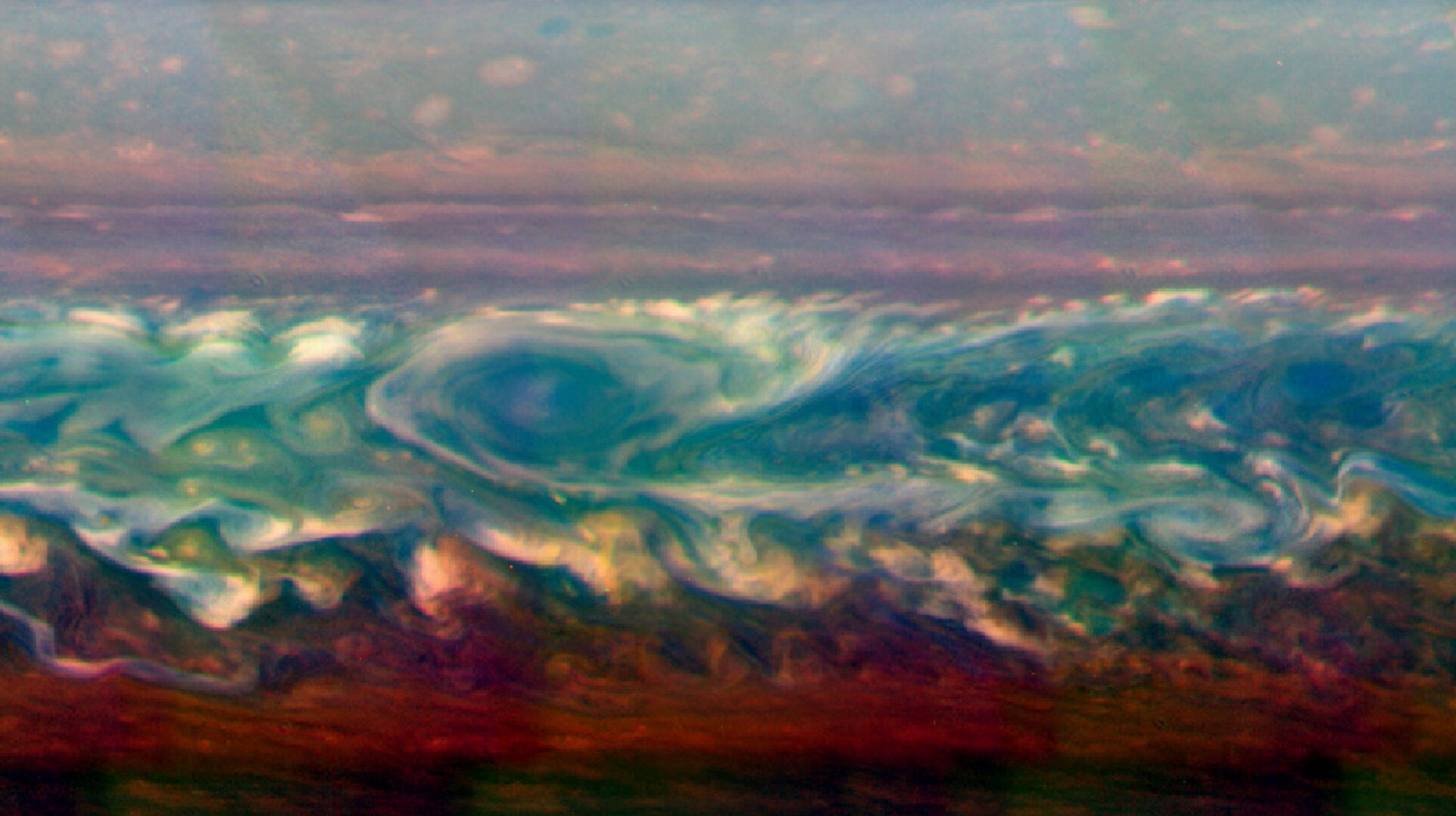
However, it was the Cassini-Huygens mission, a collaborative endeavor between NASA, ESA, and ASI, that truly revolutionized our understanding. Launched in 1997 and orbiting Saturn from 2004 to 2017, Cassini was a masterpiece of planetary exploration technology. Equipped with a comprehensive suite of 12 highly sensitive instruments, including an Imaging Science Subsystem (ISS), a Visible and Infrared Mapping Spectrometer (VIMS), a Composite Infrared Spectrometer (CIRS), and a Radio and Plasma Wave Science (RPWS) instrument, Cassini delivered an unprecedented wealth of data. These instruments enabled scientists to peer through the planet’s haze, map its global wind patterns, analyze the chemical composition of its clouds and hazes layer by layer, and even detect lightning within its formidable storms. The mission’s longevity and the sheer volume of high-resolution data provided a dynamic, time-resolved view of Saturn’s atmosphere, revealing seasonal changes, long-lived storms like the Hexagon at the north pole, and the intricate dynamics of its jet streams. Operating such a complex probe for over a decade in the harsh environment of deep space, many billions of kilometers from Earth, showcased extraordinary engineering and mission control capabilities.
Decoding the Data: Software, AI, and Big Data Analytics
The sheer volume and complexity of data transmitted by missions like Cassini demand equally sophisticated technological solutions for analysis and interpretation. Raw signals from deep space are just the beginning; transforming them into scientific insights requires an intricate web of software, artificial intelligence (AI), and advanced big data analytics.
From the moment data packets arrive on Earth, they undergo rigorous processing using specialized algorithms for noise reduction and image processing. This crucial step cleans up the raw images and spectral readings, enhancing their clarity and preparing them for detailed analysis. For instance, spectroscopic analysis software plays a vital role in identifying the specific chemical signatures within Saturn’s atmosphere. By analyzing the unique wavelengths of light absorbed or emitted by different molecules, scientists can precisely determine the presence and abundance of hydrogen, helium, methane, ammonia, water ice, and other trace compounds, building a detailed chemical profile of the atmosphere’s various layers.
The advent of AI in atmospheric modeling and prediction has opened new frontiers. Machine learning algorithms are now employed to identify subtle patterns in cloud movements, track the evolution of massive storm systems, and detect anomalies that might indicate unknown phenomena. For example, neural networks can be trained on vast datasets of atmospheric images and sensor readings to predict the trajectory of jet streams or the onset of major storms with increasing accuracy. Computational Fluid Dynamics (CFD) simulations, often powered by supercomputers, are used to create complex 3D models of Saturn’s global atmospheric circulation, allowing researchers to test hypotheses about the planet’s internal heat sources and the mechanisms driving its powerful winds. These simulations are instrumental in understanding how energy is transported through the atmosphere and how different layers interact.
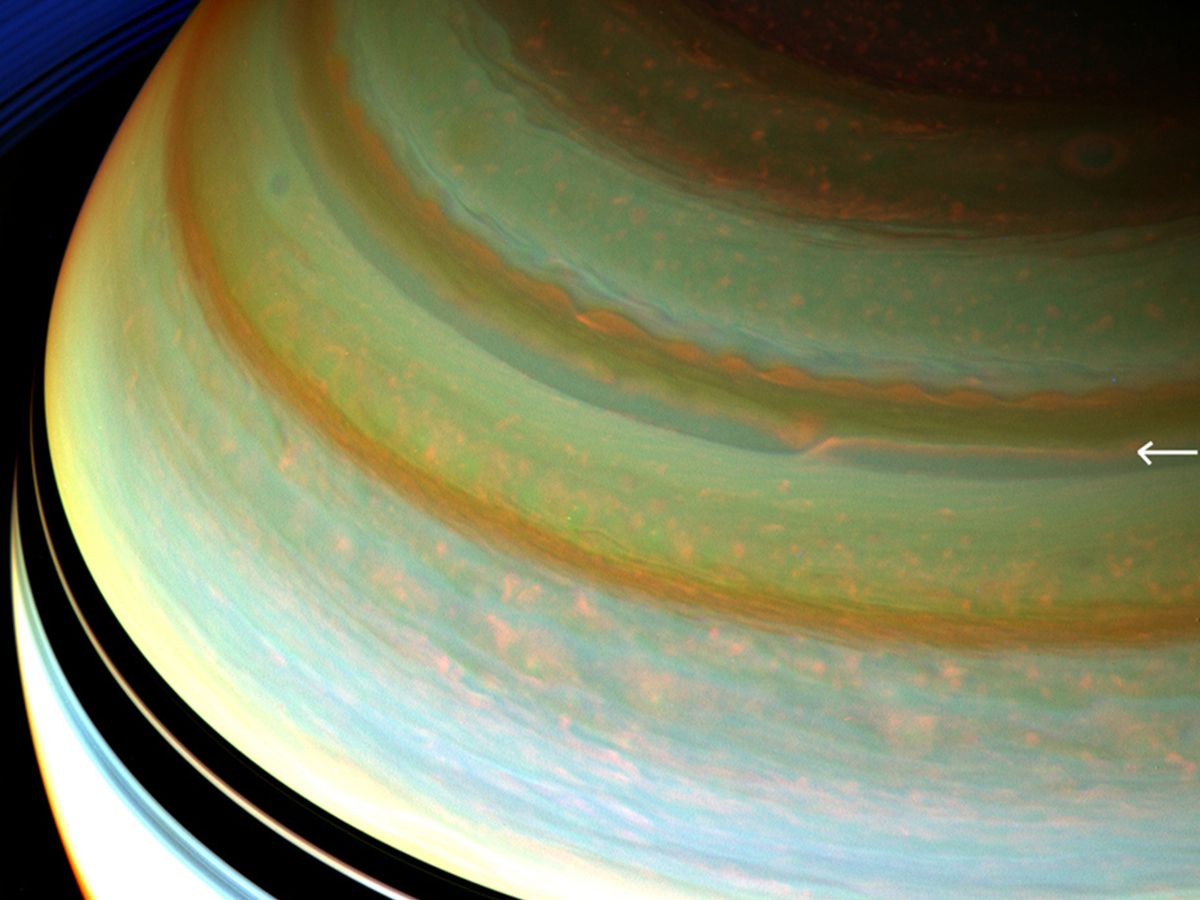
Managing cosmic data from missions that can generate terabytes of information requires robust digital infrastructure. Cloud computing platforms and specialized data repositories have become essential for storing, archiving, sharing, and processing this vast trove of planetary data. These platforms not only ensure the long-term preservation of scientific findings but also facilitate collaboration among researchers worldwide, enabling interdisciplinary studies and accelerating the pace of discovery. The ability to quickly access and process massive datasets is paramount for identifying transient events or subtle long-term trends in Saturn’s atmosphere.
Future Tech: The Next Generation of Saturn Exploration
Our understanding of Saturn’s atmosphere is continually evolving, driven by an insatiable curiosity and the development of even more advanced technologies. The next generation of exploration promises deeper insights through innovative remote sensing, advanced probes, and autonomous systems.
Advanced telescopes and remote sensing continue to be at the forefront of this effort. The James Webb Space Telescope (JWST), with its unparalleled infrared sensitivity, is already providing new perspectives on the atmospheres of outer planets, including Saturn. Its ability to penetrate deeper into the planet’s atmospheric layers and detect fainter molecular signatures from Earth orbit will offer new data points that complement past in-situ observations. Simultaneously, new generations of ground-based observatories, equipped with adaptive optics and advanced spectrographs, are pushing the boundaries of what can be observed from our home planet, offering continuous monitoring capabilities for long-term atmospheric studies.
Beyond remote observation, innovative probe concepts are being designed to provide direct, in-situ measurements. While Cassini orbited, future missions could involve atmospheric entry probes, similar in concept to the Galileo probe that descended into Jupiter’s atmosphere. Such probes would plunge directly into Saturn’s thick atmosphere, taking direct samples and performing real-time chemical analyses as they descend, offering a vertical profile of composition, temperature, pressure, and wind speed that cannot be achieved through remote sensing alone. Even more ambitiously, concepts for balloon-based platforms or “aerobots” are being explored. These autonomous vehicles could float within Saturn’s atmosphere for extended periods, drifting with the winds and conducting sustained measurements from within the cloud layers, providing an unprecedented view of the planet’s dynamic weather systems. The development of autonomous AI-driven spacecraft is also crucial for navigating complex planetary environments, enabling probes to make independent decisions and optimize scientific data collection in environments where communication delays with Earth are substantial.
The Digital Twin of a Gas Giant: Simulating Saturn’s Atmosphere
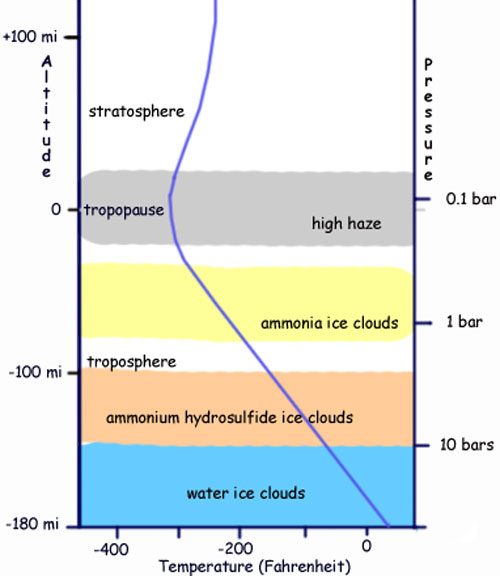
The convergence of advanced sensing technologies and powerful computational capabilities allows for the creation of sophisticated digital replicas of celestial bodies. For Saturn’s atmosphere, this means building a “digital twin” – a high-fidelity virtual model that mirrors the physical dynamics, chemistry, and meteorology of the real gas giant.
Creating high-fidelity simulations and virtual environments involves integrating all available observational data—from Cassini’s detailed measurements to JWST’s spectral insights—with complex physical models. These digital models can replicate Saturn’s atmospheric conditions down to intricate details, allowing scientists to run experiments, test theories about atmospheric convection, turbulence, and storm formation, and predict how the atmosphere might evolve over time. This capability is invaluable for both fundamental research and future mission planning, enabling engineers to design probes that can withstand the extreme conditions of Saturn’s environment. Beyond scientific research, these detailed simulations can be used for public engagement, offering immersive experiences that make complex planetary science accessible to a broader audience.
Furthermore, the application of VR/AR for immersive exploration is transforming how scientists and the public interact with atmospheric data. Virtual reality (VR) and augmented reality (AR) technologies allow researchers to “fly through” complex 3D visualizations of Saturn’s atmosphere, manipulating data layers to highlight specific phenomena like the polar vortex or intricate cloud formations. This immersive approach helps in identifying subtle correlations and patterns that might be missed in traditional 2D analyses. VR and AR are also becoming critical tools for training future astronauts and mission specialists, allowing them to familiarize themselves with the challenging environments they might encounter. Moreover, these technologies offer compelling ways to showcase scientific discoveries, transporting viewers directly into the heart of Saturn’s storms or across its vast cloud decks, making the wonders of planetary science more tangible and engaging than ever before. Through these technological advancements, the “atmosphere of Saturn” transforms from a distant mystery into an intimately understood and virtually explorable realm.
aViewFromTheCave is a participant in the Amazon Services LLC Associates Program, an affiliate advertising program designed to provide a means for sites to earn advertising fees by advertising and linking to Amazon.com. Amazon, the Amazon logo, AmazonSupply, and the AmazonSupply logo are trademarks of Amazon.com, Inc. or its affiliates. As an Amazon Associate we earn affiliate commissions from qualifying purchases.