
In the intricate world of personal and business finance, a seemingly small detail can hold immense importance. The routing number is one such detail, an eleven-digit code that acts as a financial GPS, directing funds to the correct banking institution for countless transactions. For customers of Chase Bank, one of the largest and most influential financial institutions globally, knowing how to quickly and accurately locate their routing number is not just a convenience but a fundamental necessity for managing their money effectively. This guide delves into the significance of routing numbers within the financial ecosystem, outlines the critical scenarios where you’ll need Chase’s specific code, and provides a detailed roadmap for finding it through various reliable methods, all while emphasizing accuracy and security in your financial dealings.

Understanding the Cornerstone of Financial Transactions: What is a Routing Number?
At its core, a routing number, officially known as an ABA (American Bankers Association) routing transit number, is a nine-digit code used to identify a financial institution in the United States. It was established in 1910 by the ABA to facilitate the processing of paper checks. Today, its role has expanded significantly, serving as a critical identifier for various electronic funds transfers (EFTs), ensuring that money moves from one bank to another without error.
Think of it as the bank’s unique address in the vast postal system of money transfers. When you send or receive money, this number tells the sending or receiving bank exactly which institution to route the funds to. Without it, transactions would be akin to sending a letter without a street address – destined for delays or misdirection.
The Role of ACH and Wire Transfers
Two primary types of electronic transactions heavily rely on routing numbers: ACH (Automated Clearing House) transfers and wire transfers.
- ACH Transfers: These are common electronic payments between bank accounts, including direct deposits for salaries, automatic bill payments, and online transfers between your own accounts at different banks. ACH transfers are typically processed in batches, making them less immediate but more cost-effective. Your Chase routing number is essential for these routine, high-volume transactions.
- Wire Transfers: Wire transfers are faster, typically processed individually and often completed within hours, sometimes even minutes, for domestic transfers. They are generally used for larger, time-sensitive payments, such as real estate closings or international remittances. While quicker, wire transfers often come with higher fees. It’s crucial to note that some banks, including Chase, might use a different routing number specifically for incoming wire transfers compared to ACH transfers. This distinction is vital for accurate financial operations.
Why Specificity Matters for Chase
Chase, being a national bank with branches across numerous states, often utilizes different routing numbers depending on the geographical location where the account was opened and, in some cases, the specific type of transaction (e.g., ACH vs. wire). This nuance is extremely important because using the wrong routing number can lead to:
- Delayed Transactions: Your funds could be held up, pending investigation or correction.
- Rejected Transactions: The transfer might simply fail, requiring you to resubmit the entire process.
- Misdirected Funds (Rare but Possible): Though banks have robust systems, incorrect routing information increases the risk of funds going to an unintended destination, creating significant financial and administrative headaches.
Therefore, for Chase customers, pinpointing the exact routing number associated with their specific account and transaction type is paramount for seamless financial management.
Essential Scenarios: When You’ll Need Your Chase Routing Number
Understanding what a routing number is segues naturally into comprehending when you’ll require it. In various facets of personal and business finance, your Chase routing number serves as a critical piece of information. Mishandling or not knowing it can interrupt crucial financial flows.
Setting Up Direct Deposit
Perhaps one of the most common uses, your employer will require your Chase routing number (along with your account number) to set up direct deposit for your paycheck. This ensures your salary lands directly into your bank account, bypassing paper checks and providing immediate access to your funds. Similarly, if you receive government benefits (like Social Security) or other regular payments, the payer will need this information.
Facilitating Online Bill Payments and Transfers
When you link your Chase account to external services for bill payments (e.g., utility companies, credit card providers at other banks, loan servicers), or when you transfer money between your Chase account and an account at another financial institution, you’ll often need to provide Chase’s routing number. This allows the external service to initiate an ACH debit or credit transaction with your Chase account.
Initiating Wire Transfers
If you need to send or receive a wire transfer, especially for larger sums or time-sensitive payments, your routing number is indispensable. As mentioned, Chase might have a specific routing number for incoming wire transfers, distinct from the ACH routing number found on your checks. Verifying this specific number is crucial for successful wire transactions.
Other Key Financial Operations
Beyond these primary uses, your Chase routing number may be requested for:
- Tax Refunds: If you opt for direct deposit of your tax refund, the IRS will need your bank’s routing number.
- Investment Accounts: Linking your Chase bank account to a brokerage or investment platform for funding or withdrawals.
- Peer-to-Peer Payment Apps: While many apps like Zelle or Venmo handle routing numbers internally once accounts are linked, during the initial setup or for certain types of transfers, this information may be required.
- Applying for Loans or Mortgages: Financial institutions often ask for your primary bank’s routing number as part of the application process to verify your banking relationship.
In essence, any transaction that involves directly moving money into or out of your Chase account to or from another financial entity will almost certainly require its routing number.
Comprehensive Methods to Locate Your Chase Routing Number
Now that we understand the importance and applications of your Chase routing number, let’s explore the most reliable and convenient methods to find it. Chase provides several avenues, ensuring accessibility regardless of your preferred banking method.
Your Personal Chase Checks
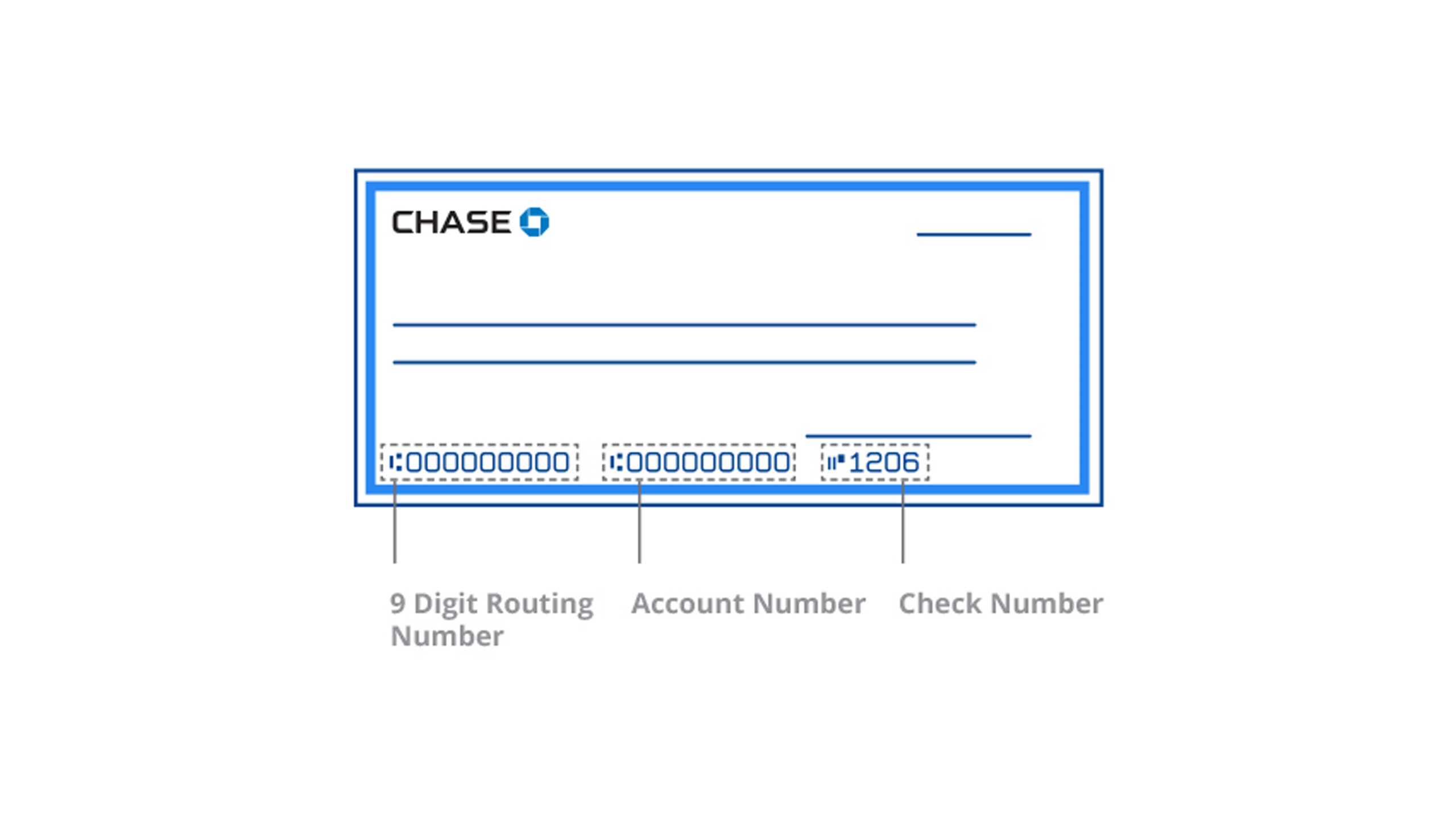
This is often the quickest and most traditional way to locate your routing number. Look at the bottom of one of your personal Chase checks. You will typically see three sets of numbers printed in a special magnetic ink:
- The first set of nine digits (on the left) is your routing number.
- The second set (in the middle) is your account number.
- The third set (on the right) is the check number.
Important Note: This routing number is primarily for ACH transactions and generally applies to the state where the check was issued. If you have an older check from an account opened in a different state or are dealing with a wire transfer, other methods might be more accurate.
Via Chase Online Banking and Mobile App
For modern financial management, online and mobile platforms are indispensable. Chase has made it easy to find your routing number through these digital channels:
- Chase Online Banking:
- Log in to your Chase online banking account at Chase.com.
- Select the specific checking or savings account for which you need the routing number.
- Look for “Account Details” or similar information. The routing number will typically be displayed prominently here, often alongside your account number.
- Chase Mobile App:
- Open the Chase Mobile App on your smartphone or tablet.
- Log in to your account.
- Select the relevant checking or savings account.
- Tap on “Show Details” or scroll down to find “Account Details.” Your routing number will be listed.
These digital methods are particularly useful as they display the routing number specific to your account, taking into account its origination state, and often clarify if it’s for ACH or wire transfers.
Consulting Your Bank Statements
Your monthly or quarterly Chase bank statements are another reliable source of your routing number. Whether you receive paper statements by mail or access digital statements through online banking:
- Look for the routing number typically printed near your account number at the top or bottom of the statement.
- Digital statements, which you can download as PDFs, will also have this information.
Bank statements provide a historical record and confirm the routing number associated with your account as of the statement date.
Utilizing the Official Chase Website
Chase provides a dedicated resource on its official website to help customers find routing numbers. This is especially useful if you don’t have a check or access to your online banking, or if you need to clarify routing numbers for different states or transaction types:
- Visit Chase.com.
- Navigate to the “Customer Service” or “Help” section.
- Search for “routing number” or “ABA routing number.”
- Chase typically provides a list of routing numbers organized by state and sometimes by transaction type (e.g., “for direct deposit and ACH transfers” vs. “for wire transfers”). You’ll need to select the routing number corresponding to the state where you opened your account.
This method is excellent for general inquiry and for verifying state-specific numbers.
Direct Contact with Chase Customer Service
If all else fails, or if you have a complex situation (e.g., specific wire transfer requirements or an account opened long ago in a now-closed state), don’t hesitate to contact Chase directly:
- Phone: Call Chase customer service using the number on the back of your debit card or found on their official website. Be prepared to verify your identity before they provide account-specific information.
- Visit a Branch: A Chase branch representative can assist you in person, providing the correct routing number for your account. This is often the best option for complex or high-value transactions like international wire transfers, where a face-to-face verification can provide extra peace of mind.
While convenient, relying on customer service should be a last resort for routine inquiries, given the ease of finding this information digitally.
Navigating Chase’s Multiple Routing Numbers: State and Transaction Specifics
One of the most common points of confusion for Chase customers stems from the fact that Chase Bank, as a massive national entity, does not always use a single routing number for all accounts and all transactions. Understanding this nuance is crucial for avoiding financial missteps.
Routing Numbers by State
Chase’s routing numbers are primarily determined by the state in which your account was originally opened. This is due to historical banking regulations and geographical organization within the financial system. For example, an account opened in California will likely have a different routing number than one opened in New York, even if both are Chase accounts.
When using online tools or consulting the Chase website, you will often find a list that maps states to their corresponding routing numbers. It’s imperative that you use the number associated with the state where your specific account was established, not necessarily your current residence if you’ve moved. Your checks or online account details will always show the correct routing number for your account’s origination.
Distinguishing ACH and Wire Transfer Routing Numbers
While less common, some large banks, including Chase, may use a distinct routing number for incoming wire transfers compared to the routing number used for ACH transactions (which is typically found on your checks).
- ACH Routing Number: This is the standard routing number used for direct deposits, online bill payments, and most electronic transfers. It’s usually the one printed on your checks and found in your online account details.
- Wire Transfer Routing Number: For incoming domestic wire transfers, Chase might use a separate routing number. It’s always best practice to specifically search for “Chase wire transfer routing number” or contact customer service to confirm the correct number if you are expecting a wire transfer. Using the wrong number for a wire transfer can lead to significant delays or rejections, as wire transfers are often irreversible.
Always clarify with the sender or receiver if a specific wire transfer routing number is required, particularly for international transactions where additional SWIFT/BIC codes are also necessary.
Ensuring Accuracy and Security in Your Financial Dealings
Finding your Chase routing number is only part of the equation; using it correctly and securely is equally vital for smooth financial operations and protecting your assets.
Double-Checking for Precision
The nine digits of a routing number are a precise identifier. A single incorrect digit can lead to issues. Before finalizing any transaction that requires your routing number:
- Verify Multiple Sources: If possible, cross-reference the number you’ve found on your check with the one in your online banking portal or on a bank statement.
- Confirm with Receiver/Sender: If you’re providing your routing number to someone (e.g., an employer for direct deposit), or if someone is providing one to you, it’s good practice to verbally confirm it or have them send it in a secure, verifiable manner.
- Pay Attention to Transaction Type: Always confirm whether the number is for an ACH transfer or a specific wire transfer, especially for Chase where these can differ.
Safeguarding Your Financial Information
Your routing number, combined with your account number, provides the necessary information for funds to be transferred. While routing numbers are publicly available for banks, your account number is highly sensitive. When sharing this information:
- Use Secure Channels: Avoid sending full bank details via unsecured email or public messaging apps. Use secure online portals provided by employers or payment services.
- Be Wary of Phishing Scams: Legitimate financial institutions will rarely ask for your full banking details via unsolicited emails or texts. Always be suspicious of requests for this information.
- Shred Old Documents: Once financial documents like checks or statements are no longer needed, shred them to prevent identity theft.
- Monitor Your Accounts: Regularly check your Chase bank statements and online transaction history for any unauthorized activity.
What to Do If You Use the Wrong Number
Despite best efforts, errors can occur. If you realize you’ve used an incorrect Chase routing number for a transaction:
- Act Immediately: Time is of the essence. Contact Chase customer service as soon as you identify the mistake.
- Provide Details: Have all transaction details ready, including the date, amount, recipient (if applicable), and the incorrect routing number used.
- Follow Bank Guidance: Chase will guide you on the steps to take, which may involve attempting to recall the funds, especially for wire transfers. For ACH transactions, reversals are sometimes possible, but they are not guaranteed.
- Prepare for Delays: Understand that correcting errors can take time, and your funds may be inaccessible during this period.
In conclusion, finding your Chase Bank routing number is a fundamental financial skill. By understanding its purpose, recognizing when it’s needed, utilizing the various reliable methods to locate it, and exercising diligence in its application and security, you can ensure your financial transactions are handled efficiently and accurately, fostering greater control over your personal and business finances.
aViewFromTheCave is a participant in the Amazon Services LLC Associates Program, an affiliate advertising program designed to provide a means for sites to earn advertising fees by advertising and linking to Amazon.com. Amazon, the Amazon logo, AmazonSupply, and the AmazonSupply logo are trademarks of Amazon.com, Inc. or its affiliates. As an Amazon Associate we earn affiliate commissions from qualifying purchases.