
In an era defined by fluctuating economies and diverse financial aspirations, mastering personal finance has never been more crucial. While countless budgeting apps promise salvation, one tool has consistently risen above the fray, championing a distinct, proactive approach to money management: You Need A Budget (YNAB). More than just an expense tracker, YNAB is a philosophy, a methodology, and a powerful software designed to fundamentally transform your relationship with money. This guide will walk you through the essential steps of using YNAB, empowering you to gain control, clarity, and confidence in your financial life.

Understanding the YNAB Philosophy: The Four Rules
At the heart of YNAB’s effectiveness lies its unique philosophy, encapsulated in four deceptively simple rules. These aren’t just features of the software; they are principles that, when embraced, unlock a new level of financial awareness and control. Unlike traditional budgeting which often focuses on restricting spending, YNAB centers on intentional money allocation and adaptability.
Rule One: Give Every Dollar a Job
This is the cornerstone of YNAB. Instead of thinking about future income, YNAB prompts you to budget only the money you have right now. Every dollar that enters your possession must be assigned a purpose. Whether it’s for rent, groceries, a future vacation, or debt repayment, each dollar receives a “job.” This immediate allocation eliminates ambiguity, prevents impulsive spending, and ensures your money is working towards your priorities. It’s a shift from reactive spending to proactive planning, putting you firmly in the driver’s seat.
Rule Two: Embrace Your True Expenses
Life is full of irregular, non-monthly expenses – car insurance premiums, annual subscriptions, holiday gifts, home maintenance, or even medical deductibles. Traditional budgets often overlook these, leading to financial surprises and emergency debt. YNAB encourages you to identify these “true expenses” and break them down into smaller, monthly savings goals. By setting aside a little money each month for these anticipated costs, you eliminate the stress and financial instability they often cause, turning potential crises into planned expenditures.
Rule Three: Roll with the Punches
No budget is perfect, and life is inherently unpredictable. YNAB acknowledges this reality with its “Roll with the Punches” rule. If you overspend in one category, you don’t necessarily need to panic or give up. Instead, YNAB teaches you to cover the overspending by moving money from another category where you have a surplus. This flexibility is crucial. It transforms budgeting from a rigid, guilt-inducing exercise into a dynamic, adaptive process, preventing minor setbacks from derailing your entire financial plan. It fosters forgiveness and continuous improvement.
Rule Four: Age Your Money
This rule is the ultimate goal of YNAB: increasing the time between when you earn money and when you spend it. When you first start, you might be spending money almost as soon as you earn it. As you consistently apply the first three rules, you’ll gradually build up a buffer, eventually reaching a point where you’re spending money you earned 30, 60, or even 90+ days ago. This “aged money” provides immense financial stability, reducing the stress of living paycheck to paycheck and creating a true sense of financial freedom. It signifies that you’re living on last month’s income, a powerful indicator of financial health.
Getting Started with YNAB: Initial Setup and Funding Your Budget
Diving into YNAB might seem daunting at first, but the software is designed for intuitive setup, guiding you through the initial steps to align with its core principles. The key is to connect your accounts and define your financial landscape.
Linking Your Accounts and Initial Balances
The first practical step is to link your bank accounts (checking, savings, credit cards, loans) to YNAB. This allows for automatic import of transactions, streamlining the tracking process. While manual entry is always an option and even encouraged by some for greater awareness, linking provides convenience. YNAB will then pull in your current account balances. It’s crucial to remember that YNAB only budgets the money you have right now. Your “To Be Budgeted” (TBB) amount will reflect the total cash available across all your linked accounts. This is the pool of money you’ll be assigning jobs to.
Creating Your Budget Categories (and their importance)
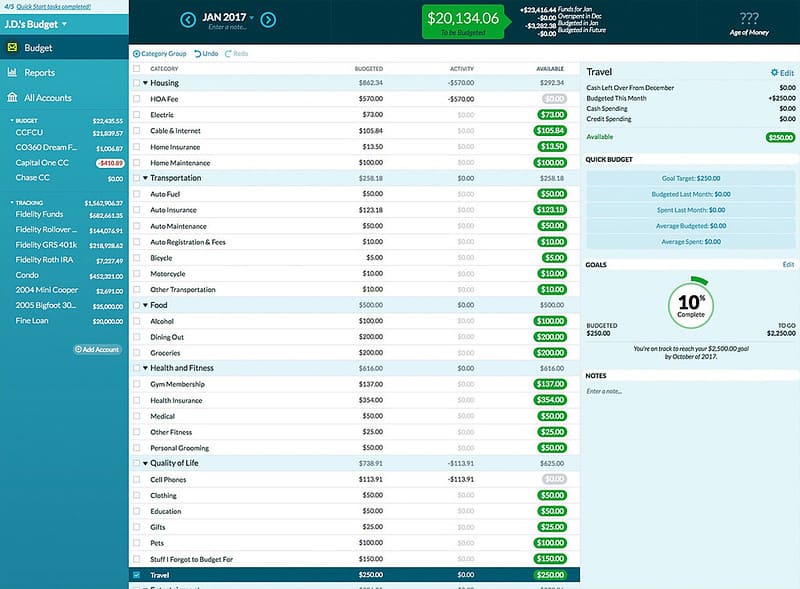
Once your accounts are linked, you’ll move to setting up your budget categories. YNAB provides a sensible starter template (e.g., Household, Transportation, Food, Personal), but you’ll want to customize these to reflect your unique spending patterns and priorities. Think broadly about all your expenses, both fixed and variable, monthly and infrequent. The goal is to create categories that are specific enough to be meaningful for tracking, but not so granular that they become overwhelming. A well-organized category structure is vital for clearly understanding where your money is going and aligning it with your values.
Funding Your Categories: The “To Be Budgeted” Amount
This is where Rule One comes alive. With your “To Be Budgeted” (TBB) amount displayed prominently, you’ll begin allocating every single dollar to a specific category. Start with your highest priority, non-negotiable expenses like rent/mortgage, utilities, and debt payments. Then move to essential variable expenses like groceries and transportation. Don’t forget your “True Expenses” (Rule Two) – allocate funds for those future irregular bills. As you assign money, your TBB amount will decrease until it reaches zero. When TBB is zero, you know every dollar you currently possess has a job. If you receive new income, that amount will appear in TBB, ready to be assigned.
Day-to-Day Operations: Tracking Spending and Adapting
Once your initial budget is set, YNAB transitions from a setup tool to an active daily companion. Consistent transaction tracking and agile budget adjustments are critical for its ongoing success.
Recording Transactions: Manual Entry vs. Linked Accounts
The true power of YNAB emerges from diligently recording your spending. For maximum awareness and immediate reconciliation, many YNAB enthusiasts advocate for manual entry via the mobile app. As soon as you make a purchase, open the app, enter the amount, select the category, and hit save. This creates an immediate feedback loop, reinforcing your budget categories and spending limits. For convenience, linked accounts will automatically import transactions, which you then need to “approve” and categorize. Regardless of method, regularly reviewing and categorizing transactions is essential to keep your budget accurate and reflective of your real-time financial situation.
Handling Overspending: The “Roll with the Punches” in Action
Despite your best intentions, overspending will happen. This is where Rule Three, “Roll with the Punches,” comes into play. If you spend more than you budgeted in a category, YNAB will highlight this with a negative balance. Instead of feeling defeated, simply cover the overspending. Look for a category with a surplus – perhaps you budgeted too much for dining out, or you found a good deal on groceries. Move money from that surplus category to the overspent one until it’s back to zero. This simple act acknowledges reality, keeps your budget intact, and prevents you from going off track. It’s a continuous learning process, not a rigid set of commandments.
Reconciling Accounts: Keeping Your Budget Accurate
To ensure your YNAB balances perfectly match your bank’s records, regular reconciliation is vital. This process involves comparing the cleared transactions in YNAB with those in your actual bank account statement. YNAB makes this easy with a reconcile feature that prompts you to enter your current bank balance. If there’s a discrepancy, it helps you identify missing transactions or errors. Reconciling regularly (weekly or bi-weekly) provides peace of mind, verifies the accuracy of your budget, and prevents small errors from snowballing into significant problems. It’s like checking the odometer against the gas gauge – ensuring both tell the same story.
Advanced YNAB Strategies for Financial Growth
While the core rules and daily operations are fundamental, YNAB offers robust features that can elevate your financial planning beyond just tracking expenses, pushing you towards significant growth and goal achievement.
Setting Financial Goals: Savings, Debt Payoff, and Investments
YNAB isn’t just about managing today’s money; it’s a powerful tool for shaping your financial future. Utilize YNAB’s “Targets” feature to define specific financial goals. Want to save for a down payment, pay off a credit card, or build an emergency fund? Create a target for each goal, specifying the amount and desired date. YNAB will then calculate the monthly amount you need to budget for that category to reach your target. This transforms abstract aspirations into concrete, actionable steps, making ambitious financial goals feel achievable.
Utilizing Targets for Automated Planning
Targets are more than just reminders; they’re intelligent planning aids. When you create a target (e.g., “Save $1,200 for Car Maintenance by December”), YNAB helps you budget the appropriate monthly amount. When new income comes in, YNAB can suggest how much to budget for each category based on its target. This semi-automated planning removes much of the guesswork from budgeting, ensuring you consistently allocate funds towards your objectives without having to manually calculate each time. It fosters consistent progress towards long-term financial health.
Leveraging Reports for Insight and Improvement
YNAB’s reporting features offer invaluable insights into your spending habits and financial progress. The “Spending Report” visually breaks down where your money is going by category and payee, helping you identify areas for optimization. The “Net Worth Report” tracks your assets versus liabilities over time, providing a clear picture of your financial trajectory. The “Income vs. Expense” report helps you understand your overall cash flow. Regularly reviewing these reports allows you to identify trends, celebrate progress, and make informed adjustments to your budget and financial strategy, turning data into actionable knowledge.
Beyond the Basics: Building Long-Term Financial Habits
Mastering YNAB is not a one-time setup; it’s an ongoing commitment to conscious financial decision-making. The real magic happens when the software helps you cultivate lasting habits that transcend the app itself.
Consistency and Review: The Key to Success
The most powerful aspect of YNAB is its ability to foster financial discipline through consistency. Regularly budgeting new income, promptly categorizing transactions, and monthly reconciliation are not chores; they are habits that build financial strength. Make it a routine – a few minutes each day or a dedicated session once a week. Periodically review your budget with fresh eyes, perhaps monthly, to ensure categories are still relevant and allocations align with your current priorities. This consistent engagement prevents financial drift and reinforces your commitment to your goals.
Adapting to Life Changes with YNAB
Life is dynamic, and your financial situation will evolve. A new job, a major purchase, a family expansion, or an unexpected expense – YNAB’s flexibility makes it an ideal companion through all of life’s transitions. When your income or expenses change significantly, simply adjust your category allocations. When an unexpected cost arises, “Roll with the Punches” to reallocate funds. YNAB becomes a reliable financial anchor, allowing you to adapt to new circumstances without losing sight of your overarching financial objectives.
The Transformative Power of Financial Awareness
Ultimately, YNAB’s greatest contribution is the profound financial awareness it cultivates. By forcing you to confront every dollar, assign it a job, and track its journey, you develop an intimate understanding of your money. This awareness empowers you to make intentional spending decisions, prioritize savings, eliminate debt, and build wealth with confidence. It’s a journey from feeling reactive and uncertain about money to becoming proactive and empowered, fundamentally changing your financial narrative.
Conclusion
You Need A Budget is more than just a financial tool; it’s a paradigm shift in how you approach your money. By embracing its four simple rules – Give Every Dollar a Job, Embrace Your True Expenses, Roll with the Punches, and Age Your Money – you unlock a path to financial clarity, control, and freedom. The initial setup requires dedication, and ongoing use demands consistency, but the rewards are immeasurable: reduced financial stress, intentional spending aligned with your values, and a clear trajectory towards your most ambitious financial goals. Start your YNAB journey today, and begin mastering your money, one dollar at a time.
aViewFromTheCave is a participant in the Amazon Services LLC Associates Program, an affiliate advertising program designed to provide a means for sites to earn advertising fees by advertising and linking to Amazon.com. Amazon, the Amazon logo, AmazonSupply, and the AmazonSupply logo are trademarks of Amazon.com, Inc. or its affiliates. As an Amazon Associate we earn affiliate commissions from qualifying purchases.