
The Foundational Concepts in a Digital World
In an era increasingly defined by data, sensors, and real-time processing, understanding fundamental physical concepts becomes crucial for developing and optimizing technology. Speed, a measure of how quickly an object is moving, is one such concept, but its interpretation can vary significantly depending on context. The distinction between average speed and instantaneous speed is not merely an academic exercise; it underpins the functionality of countless digital tools, from navigation apps to autonomous vehicles and network performance monitoring systems. Grasping this difference is essential for anyone working within or analyzing the tech landscape.
Defining Average Speed: The Macro Perspective
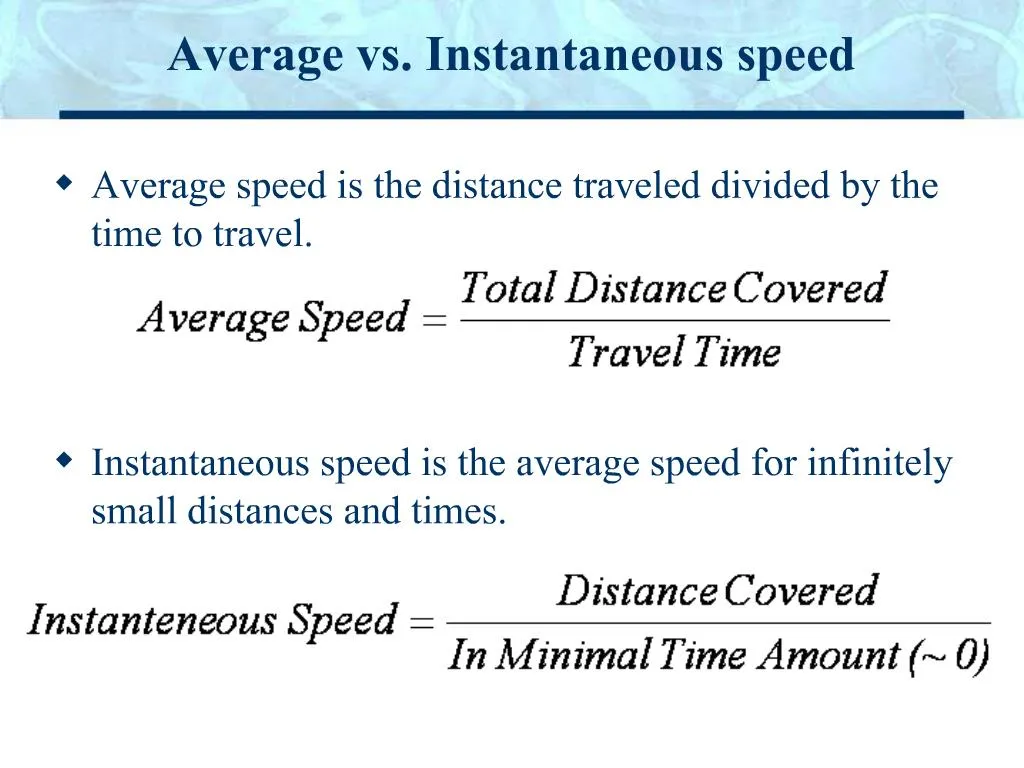
Average speed provides a macroscopic view of motion over a specific duration. It is calculated by taking the total distance traveled and dividing it by the total time taken for that journey. For example, if a car travels 100 kilometers in 2 hours, its average speed is 50 kilometers per hour (km/h). This calculation smooths out all the variations that might have occurred during the trip – stops at traffic lights, acceleration on highways, deceleration in congested areas. From a technological standpoint, average speed is invaluable for assessing overall efficiency, estimating arrival times, or evaluating the long-term performance of systems. For instance, a delivery service might track the average speed of its fleet to optimize routes or a data center might monitor the average data transfer rate over a day to understand network capacity utilization. It provides a generalized metric that helps in planning and historical analysis, offering insights into aggregate performance rather than moment-to-moment dynamics.
Defining Instantaneous Speed: The Micro Moment
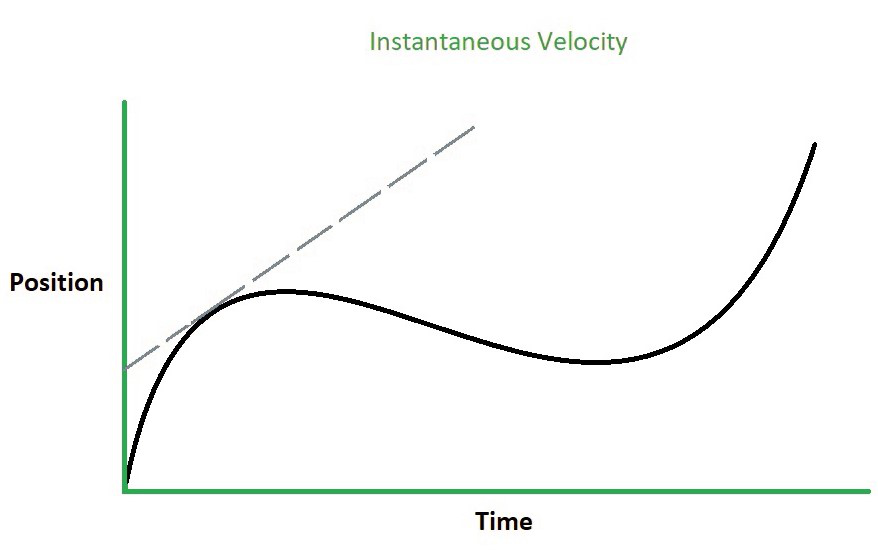
Instantaneous speed, by contrast, offers a granular, real-time snapshot of an object’s velocity at a precise moment in time. It is what a car’s speedometer displays: the speed at this very instant, irrespective of how fast the vehicle was moving moments before or will move moments later. Mathematically, instantaneous speed is derived by considering an infinitesimally small time interval. In practical technological applications, measuring instantaneous speed requires sophisticated sensors capable of high-frequency sampling and rapid data processing. GPS receivers constantly update their position to calculate current speed, accelerometers in smartphones track immediate changes in motion, and network monitoring tools provide real-time bandwidth usage. This micro-level data is critical for dynamic systems that need to react immediately to changing conditions, such as collision avoidance systems in autonomous vehicles or adaptive streaming services adjusting video quality based on current network speeds.
Why This Distinction Matters in Technology
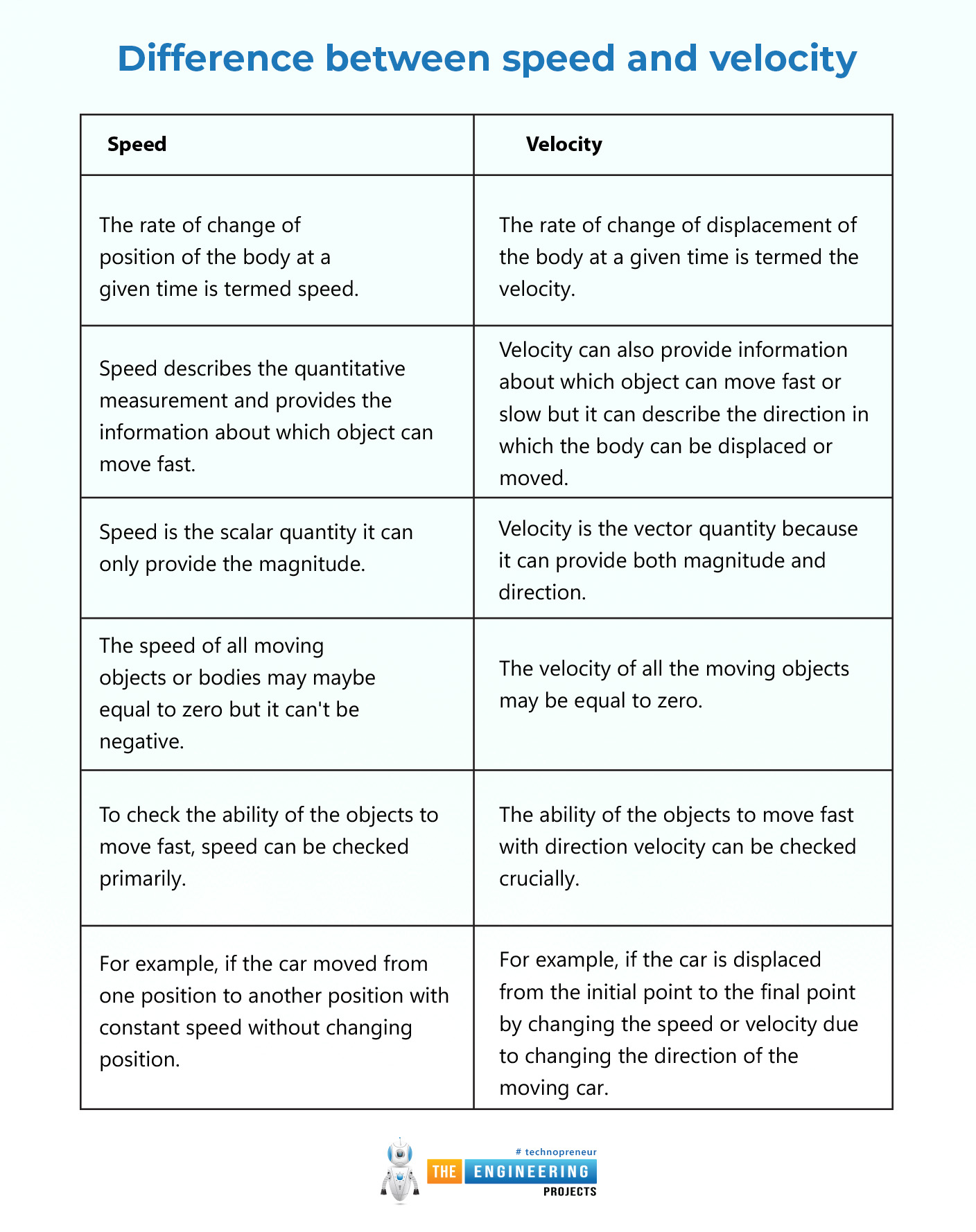
The divergent nature of average and instantaneous speed necessitates different approaches in technological design and application. Average speed is excellent for reporting, capacity planning, and long-term trend analysis. It simplifies complex motion into an easily digestible figure for human interpretation or high-level algorithmic processing. Instantaneous speed, however, is the lifeblood of real-time control systems, safety mechanisms, and responsive user interfaces. A navigation app might display an average speed for an entire journey segment to give a sense of progress, but it relies heavily on instantaneous speed data to provide turn-by-turn directions, calculate dynamic estimated times of arrival (ETAs) that adapt to current traffic, and warn of speed limits. The blend of these two perspectives allows technology to provide both a comprehensive overview and the critical moment-to-moment precision required for complex tasks.
Sensors, Data, and Real-Time Applications
The ability to accurately measure and process both average and instantaneous speed is fundamental to a wide array of modern technologies. From personal gadgets to industrial systems, advanced sensors and sophisticated algorithms work in tandem to provide the necessary insights.
GPS and Navigation Systems: A Daily Example
Global Positioning System (GPS) devices and smartphone navigation apps exemplify the interplay of average and instantaneous speed. A GPS receiver continuously calculates its position by triangulating signals from multiple satellites. By tracking changes in position over extremely short time intervals, it can derive the instantaneous speed of a vehicle or pedestrian. This real-time data is crucial for displaying current speed, determining if a user is exceeding a speed limit, and accurately placing the vehicle on a map. Simultaneously, navigation algorithms use a blend of instantaneous speeds, historical traffic data, and predicted traffic patterns to calculate average speeds for road segments, estimate total travel times, and suggest optimal routes. The dynamic recalculation of ETAs as a driver proceeds is a testament to the continuous processing of instantaneous speed information being aggregated and interpreted to provide an updated average for the remaining journey.
Automotive Tech: From Cruise Control to Autonomy
Modern automotive technology is deeply intertwined with both speed metrics. Traditional cruise control systems primarily maintain a set instantaneous speed, though more advanced adaptive cruise control (ACC) systems dynamically adjust this instantaneous speed based on the instantaneous speed of preceding vehicles, demonstrating a responsive interplay. The leap to autonomous driving, however, elevates the importance of instantaneous speed to an unprecedented level. Self-driving cars rely on an array of sensors—Lidar, radar, cameras—to continuously measure the instantaneous speed of the vehicle itself, other vehicles, pedestrians, and obstacles. This real-time, micro-second accurate data is fed into complex AI algorithms that must make immediate decisions regarding acceleration, braking, and steering. While average speeds might be used for route planning and overall efficiency assessments, the safety and operational integrity of an autonomous vehicle hinge entirely on precise instantaneous speed measurements and predictions.
Fitness Trackers and Wearables: Quantifying Movement
Fitness trackers and smartwatches use built-in accelerometers and gyroscopes to track movement. By analyzing the frequency and amplitude of these sensor readings, they can estimate an individual’s instantaneous speed during activities like running or cycling. This data helps in calculating metrics such as pace, stride length, and cadence, providing real-time feedback to the user. Over time, these instantaneous readings are aggregated to compute average speeds for workouts, daily activity levels, and long-term fitness trends. For instance, a runner might want to see their instantaneous pace to maintain a target during a race, while an average pace for the entire run helps evaluate performance and track progress over weeks or months. The seamless integration of these two speed concepts allows wearables to offer a comprehensive picture of physical activity.
Processing Speed and Network Performance
Beyond physical movement, the concepts of average and instantaneous speed also manifest critically in the realm of computing and network infrastructure, albeit often in slightly different terminology. Here, “speed” refers to the rate at which data is processed or transmitted.
Benchmarking and System Optimization
In computing, processor speed (clock rate), memory speed, and data transfer rates are all measures of instantaneous performance. When benchmarking a CPU, for example, tests measure how many operations it can perform per second at a given moment. Similarly, assessing the instantaneous read/write speed of an SSD reveals its peak performance capabilities. However, when evaluating the overall efficiency of a system or software, average performance metrics become crucial. A web server’s average response time over a day, an application’s average load time, or a database’s average query execution speed provides a more realistic picture of user experience and system capacity under varying loads. Optimizing systems often involves identifying bottlenecks in instantaneous performance that adversely impact average performance metrics.
Network Throughput: Latency vs. Bandwidth
Network performance is a classic example where average and instantaneous speeds are constantly analyzed. Bandwidth typically refers to the maximum instantaneous data transfer rate a connection theoretically supports (e.g., 1 Gigabit per second). However, the average throughput experienced by users can vary wildly due to factors like network congestion, server load, and geographical distance. Instantaneous throughput is what speed test tools measure at a given moment, reflecting the current capacity. Average throughput, measured over longer periods, provides a more accurate representation of the quality of service (QoS) and user experience. Low latency, crucial for real-time applications like online gaming or video conferencing, is a measure related to instantaneous response time, while high bandwidth supports a higher average data rate.
Digital Security: Anomaly Detection and Response Times
In cybersecurity, the speed at which events occur and are detected is paramount. Instantaneous speeds might relate to the rate of incoming network traffic, the frequency of failed login attempts, or the speed of data exfiltration. Anomalies in these instantaneous rates—sudden spikes or drops—can be indicators of a cyberattack. Security Information and Event Management (SIEM) systems continuously monitor vast streams of event data, looking for deviations from established baselines (which are often calculated from average activity over time). The instantaneous detection of an intrusion, followed by a rapid instantaneous response, is critical to mitigating damage. Average speeds might be used for long-term threat intelligence, identifying typical attack patterns or average dwell times of attackers, but immediate defensive actions rely on processing and reacting to instantaneous data.
AI, Predictive Analytics, and the Future of Speed Data
Artificial intelligence and machine learning thrive on data, and the nuanced understanding of speed—both average and instantaneous—is a cornerstone for many advanced applications, driving predictive capabilities and enabling more sophisticated control.
Machine Learning for Traffic Prediction
Traffic prediction systems, vital for smart cities and navigation, leverage vast datasets of historical and real-time speed data. Machine learning models analyze instantaneous vehicle speeds from road sensors, GPS data, and even anonymized mobile phone location data. They combine this with average speeds observed over various times of day, days of the week, and weather conditions to learn complex patterns. By understanding the typical average flow and being able to detect instantaneous changes in traffic density, AI can predict future congestion, estimate travel times more accurately, and suggest dynamic re-routing strategies to individual drivers or entire traffic management systems. This hybrid approach allows for robust predictions that adapt to unforeseen events.
Robotics and Precision Control
Robotics requires an extremely precise understanding of motion. Industrial robots performing intricate tasks, or even domestic robotic vacuum cleaners, constantly monitor their own instantaneous speed and position using encoders and sensors. This real-time feedback is crucial for maintaining trajectory, avoiding collisions, and ensuring accuracy in their operations. While a robot might be programmed to complete a task within an average time, the individual movements and adjustments it makes at every millisecond rely on its instantaneous speed and acceleration data. AI algorithms enable robots to learn optimal paths and speeds for specific tasks, adapting dynamically to environmental changes and ensuring both efficiency (average speed) and precision (instantaneous speed control).
The Edge Computing Imperative
The rise of edge computing is directly tied to the need for rapid processing of instantaneous speed data. For applications like autonomous vehicles, industrial IoT, or real-time augmented reality, sending all raw sensor data to a centralized cloud for processing introduces unacceptable latency. Instead, computation is moved closer to the data source (the “edge”). This allows for immediate analysis of instantaneous sensor readings—such as the instantaneous speed of a pedestrian suddenly stepping into a road or a machine component failing—enabling near-instantaneous decision-making and action, without relying on the average network latency to a remote server. Edge AI processes these critical instantaneous data points to ensure safety and operational efficiency in time-sensitive environments.
The Interplay of Measurement and Interpretation
Ultimately, the utility of distinguishing between average and instantaneous speed in technology lies in the intelligent design of systems that can both measure and interpret these different forms of data effectively.
Challenges in Accurate Measurement
Measuring speed, especially instantaneous speed, with high accuracy in real-world technological applications presents numerous challenges. GPS signals can be obstructed, sensor noise can introduce errors, and environmental factors like weather can affect radar or lidar performance. Engineers and data scientists must develop robust algorithms for data filtering, fusion, and error correction to derive reliable speed metrics. For average speed, challenges often involve ensuring data consistency over time and accurately defining the “total distance” and “total time,” especially when dealing with complex, multi-modal journeys or intermittent network connections.
The Role of Algorithms in Deriving Insights
Beyond mere measurement, algorithms play a pivotal role in translating raw speed data into actionable insights. They determine when to use average speed for strategic planning versus instantaneous speed for tactical decision-making. Machine learning models can identify patterns in instantaneous speed fluctuations that predict system failures or network congestion. Predictive algorithms can use historical average speeds combined with current instantaneous data to forecast future performance, traffic conditions, or resource requirements. The choice of algorithm and how it processes these different speed metrics directly impacts the intelligence and responsiveness of the technology.
User Experience and Data Visualization
Finally, how average and instantaneous speed data are presented to the user significantly impacts the user experience. A car’s dashboard clearly separates the instantaneous speedometer from the average fuel economy display. A fitness app shows both real-time pace and average pace for a workout. Navigation apps blend estimated arrival times (based on averages) with real-time updates and speed limit warnings (based on instantaneous data). Effective data visualization helps users understand complex motion dynamics, make informed decisions, and interact intuitively with the technology, highlighting the ongoing relevance of these two distinct yet complementary concepts of speed.
aViewFromTheCave is a participant in the Amazon Services LLC Associates Program, an affiliate advertising program designed to provide a means for sites to earn advertising fees by advertising and linking to Amazon.com. Amazon, the Amazon logo, AmazonSupply, and the AmazonSupply logo are trademarks of Amazon.com, Inc. or its affiliates. As an Amazon Associate we earn affiliate commissions from qualifying purchases.