
The automotive landscape has transformed dramatically over the past few decades, evolving from purely mechanical marvels to sophisticated, rolling computers. Consequently, the art and science of vehicle repair have undergone a profound technological revolution. What once required a keen ear, a set of wrenches, and a grease-stained manual now often demands a laptop, specialized diagnostic software, and an understanding of complex digital networks. For enthusiasts, professional technicians, and even the average car owner, embracing this technological shift is paramount to effectively diagnosing and repairing modern vehicles. This guide delves into the tech-centric world of vehicle repair, highlighting the tools, software, and digital literacy required to keep today’s automobiles running smoothly.
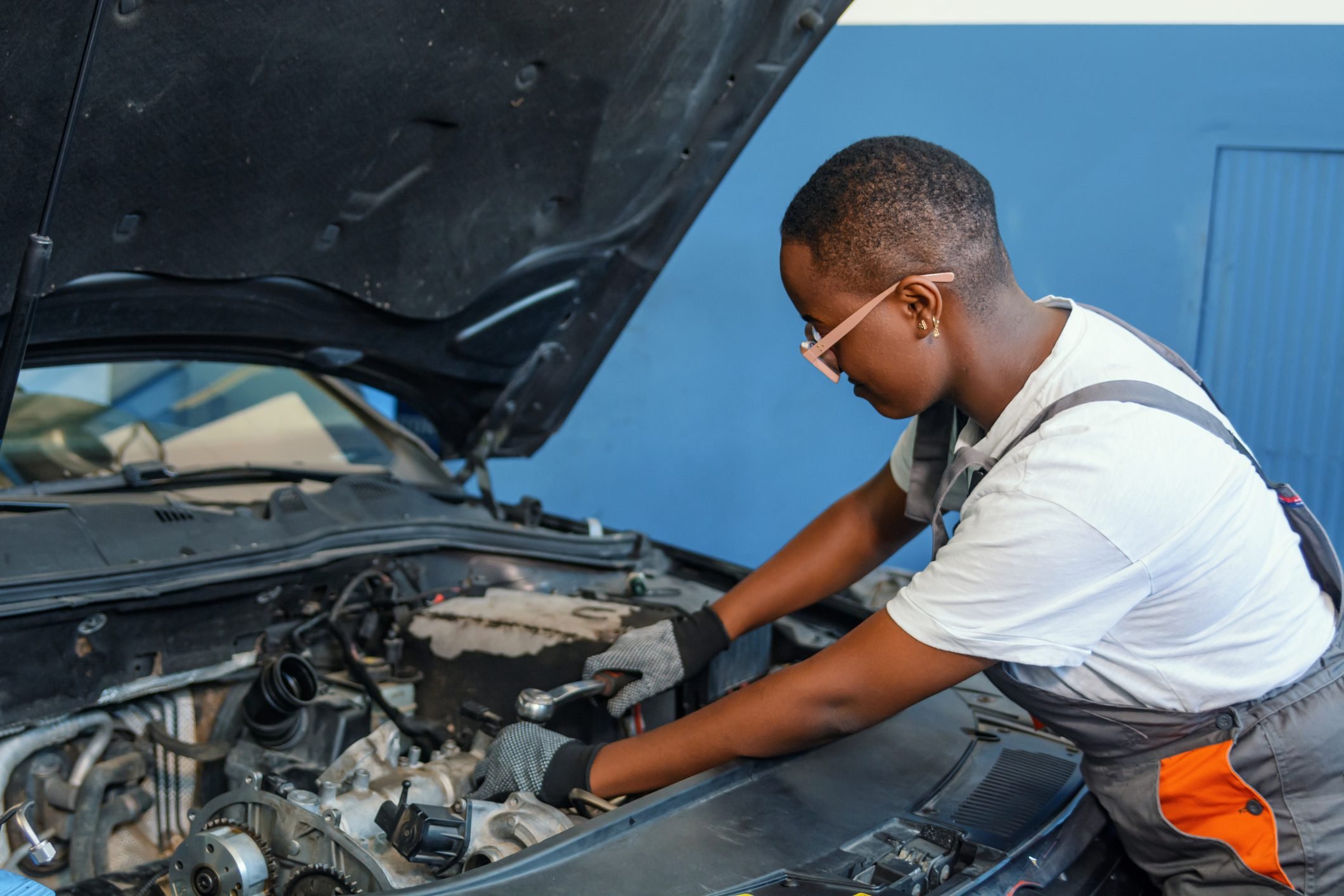
The Digital Diagnostics Revolution: Pinpointing Vehicle Woes
Gone are the days when a simple visual inspection or a rudimentary test light was sufficient to identify most vehicle problems. Today’s cars generate vast amounts of data, and the key to effective repair lies in the ability to access, interpret, and act upon this digital information. The diagnostic process has become a prime example of technology’s pervasive influence in automotive repair.
Leveraging OBD-II Scanners and Diagnostic Software
The On-Board Diagnostics II (OBD-II) system, mandated on all cars and light trucks sold in the United States since 1996 (and similar systems globally), is the cornerstone of modern vehicle diagnostics. It’s not just a warning light on your dashboard; it’s a gateway to your car’s central nervous system. OBD-II scanners, ranging from simple code readers to sophisticated professional-grade tools, allow users to retrieve Diagnostic Trouble Codes (DTCs) that pinpoint specific system malfunctions.
However, merely reading a code is often just the first step. Modern diagnostic software takes this a significant leap further. These applications, often running on dedicated hardware or laptops, provide live data streaming, allowing technicians to monitor sensors, actuators, and various system parameters in real-time. This includes readings for engine RPM, coolant temperature, oxygen sensor voltage, fuel trim, and more. Advanced software also enables bidirectional control, meaning the user can activate components (like fuel pumps or cooling fans) directly from the tool, bypassing the vehicle’s control modules to test their functionality. Furthermore, these tools often offer waveform analysis capabilities, allowing for detailed examination of electrical signals, crucial for identifying intermittent faults or sensor degradation. Understanding how to navigate these interfaces, interpret complex data sets, and distinguish between primary and secondary fault codes is a critical tech skill for anyone undertaking vehicle repair today.
Advanced Sensor Data Interpretation and Telematics
Modern vehicles are replete with an array of sensors – from wheel speed sensors feeding ABS and traction control systems, to exhaust gas temperature sensors, manifold absolute pressure (MAP) sensors, and myriad others monitoring everything from tire pressure to cabin air quality. Each sensor provides a data stream that, when correctly interpreted, paints a comprehensive picture of the vehicle’s operational status. A faulty sensor might not always trigger an immediate DTC, but its erratic readings can lead to performance issues or misdiagnoses if not properly analyzed.
Telematics, the blend of telecommunications and informatics, is further enhancing diagnostic capabilities. Increasingly, vehicles are equipped with systems that transmit operational data wirelessly to manufacturers or third-party service providers. This allows for remote diagnostics, over-the-air (OTA) software updates, and even proactive maintenance alerts. Fleet managers and savvy individual owners can leverage telematics apps and platforms to monitor vehicle health, track performance metrics, and even receive predictive warnings about potential failures, allowing for repairs to be scheduled before a breakdown occurs. This remote data access transforms reactive repair into proactive maintenance, heavily relying on secure data transmission and cloud-based analytics.
Harnessing AI for Predictive Maintenance and Anomaly Detection
The frontier of automotive diagnostics is rapidly moving towards artificial intelligence and machine learning. AI tools are being developed to analyze vast datasets from vehicle sensors and telematics systems, identifying patterns that human technicians might miss. By comparing a vehicle’s current performance data against a baseline of healthy operation or historical data from similar models, AI can detect subtle anomalies that signal impending component failure.
This capability is particularly powerful in predictive maintenance. Instead of waiting for a component to fail, AI algorithms can forecast when a part is likely to wear out based on driving conditions, usage patterns, and sensor readings. This allows for scheduled maintenance and part replacement, minimizing downtime, preventing more severe damage, and optimizing vehicle uptime. For example, AI might analyze engine vibration patterns or subtle changes in fuel efficiency to predict an upcoming injector failure, prompting a preventative repair rather than an emergency roadside breakdown. Embracing AI-powered diagnostic platforms represents a significant technological leap in how we approach vehicle repair, transforming it from a reactive fix to a data-driven, predictive science.
Essential Tech Tools for the Modern Mechanic (DIY & Professional)
The toolkit of a modern mechanic looks vastly different from that of their predecessors. While traditional hand tools remain indispensable, they are now complemented, and often overshadowed, by an array of sophisticated electronic and digital gadgets. Mastering these tools is crucial for tackling the complexities of today’s vehicles.
Beyond Wrenches: Digital Multimeters and Oscilloscopes
While a wrench tightens a bolt, a digital multimeter (DMM) and an oscilloscope diagnose the lifeblood of modern vehicles: electricity. A DMM is essential for checking voltage, current, and resistance in electrical circuits. From testing battery health to troubleshooting wiring harness issues, understanding how to use a DMM safely and effectively is fundamental. Beyond simple continuity checks, a DMM can identify parasitic draws that drain a battery or confirm the proper operation of sensors by measuring their output voltage.
An automotive oscilloscope, however, takes electrical diagnostics to an entirely new level. Unlike a DMM that provides a numerical snapshot, an oscilloscope displays electrical signals as waveforms over time. This allows technicians to visualize signal integrity, identify intermittent glitches, and precisely measure timing. It’s invaluable for diagnosing problems with crank and cam sensors, injector pulse width, CAN bus communications, and ignition system integrity. Interpreting these complex waveforms requires specific training and knowledge, making it a distinctly tech-heavy skill. Many modern oscilloscopes are PC-based, integrating directly with diagnostic software for enhanced analysis and data logging.
Specialized Programming Tools and Firmware Updates
Modern vehicles are essentially computers on wheels, and like any computer, they require software updates and sometimes even reprogramming. When a component such as an engine control unit (ECU), transmission control unit (TCU), or even a new sensor is replaced, it often needs to be programmed or “flashed” with the correct firmware to communicate properly with the vehicle’s other modules. This process requires specialized programming tools, often manufacturer-specific, that connect to the vehicle’s diagnostic port.
Firmware updates are also routinely released by manufacturers to address bugs, improve performance, or enhance features. Performing these updates requires specific software interfaces and a stable internet connection. Incorrect programming or an interrupted update can “brick” an electronic control module, turning a simple repair into a costly replacement. The increasing integration of software across all vehicle systems means that understanding programming procedures and having access to the correct tools and software subscriptions is an undeniable technical requirement for effective repair.
The Rise of AR/VR in Automotive Repair and Training
Augmented Reality (AR) and Virtual Reality (VR) are emerging as groundbreaking technologies in automotive repair and training. VR can be used to simulate complex repair scenarios, allowing aspiring technicians to practice intricate procedures in a safe, controlled environment without risking damage to actual vehicles. This dramatically accelerates learning curves and builds confidence.
AR, perhaps even more revolutionary for practical repair, overlays digital information onto a real-world view. Imagine using a tablet or smart glasses to view a vehicle’s engine bay, and the AR system highlights specific components, provides step-by-step repair instructions, overlays diagnostic data directly onto parts, or even projects 3D models of internal structures. This “x-ray vision” can guide technicians through complex wiring harnesses, identify hidden fasteners, or provide real-time torque specifications. Several major manufacturers are already piloting AR tools for their dealerships, reducing repair times and improving accuracy. This technology holds immense potential to democratize complex repairs by providing instant, contextual guidance, transforming the repair process into a highly interactive digital experience.
Navigating Complex Systems: Electrical, Electronic, and Software Repairs
The sheer interconnectedness of vehicle systems means that a fault in one area can cascade, affecting seemingly unrelated components. Understanding these complex digital architectures is key to effective troubleshooting.
Decoding the Modern Vehicle’s Network: CAN Bus and LIN Bus
At the heart of a modern vehicle’s electronic complexity is its communication network, primarily the Controller Area Network (CAN bus) and Local Interconnect Network (LIN bus). These systems allow various electronic control units (ECUs)—such as the engine, transmission, ABS, airbag, and body control modules—to exchange data seamlessly and efficiently. A single CAN bus can handle data flow for dozens of ECUs, reducing the complexity of wiring harnesses but increasing the challenge of diagnosing network-related faults.
Troubleshooting a CAN bus involves more than just checking wires. It requires understanding data protocols, termination resistors, and the integrity of the data signals themselves, often visualized with an oscilloscope. A fault in one module can disrupt communication across the entire network, leading to seemingly random symptoms. Similarly, LIN bus systems are used for less critical, simpler communication between components like power window motors and door lock actuators. Identifying communication errors, bus conflicts, or faulty modules within these networks is a sophisticated technical challenge, demanding expertise in network topology and digital signal analysis.
Troubleshooting Infotainment and Advanced Driver-Assistance Systems (ADAS)
Infotainment systems, once a luxury, are now integral to the driving experience, offering navigation, media playback, connectivity, and vehicle settings control. These systems are highly software-dependent and frequently receive updates or require specific diagnostic procedures. Issues can range from software glitches that freeze the screen to hardware failures in head units, amplifiers, or display panels. Diagnostics often involve checking software versions, performing factory resets, or using manufacturer-specific tools to test individual modules within the infotainment architecture.
Even more critical are Advanced Driver-Assistance Systems (ADAS), which include features like adaptive cruise control, lane-keeping assist, automatic emergency braking, and blind-spot monitoring. These systems rely on an intricate array of sensors (radar, lidar, ultrasonic, cameras) and sophisticated algorithms to interpret the driving environment. Repairing or even calibrating ADAS components after a simple bumper replacement often requires specialized calibration equipment, precise measurement tools, and proprietary software. Misalignment of a camera or radar unit by even a fraction of a degree can render an ADAS system ineffective or dangerous. The tech involved in ADAS calibration is highly precise and often requires certified technicians, highlighting the need for specialized knowledge and tools.
Battery Management Systems (BMS) in Electric Vehicles
Electric Vehicles (EVs) present a unique set of technological challenges, particularly concerning their high-voltage battery systems. The Battery Management System (BMS) is the brain of the EV battery, constantly monitoring individual cell voltages, temperatures, and current flow to ensure optimal performance, safety, and longevity. A fault within the BMS can significantly impact range, charging capabilities, or even render the vehicle inoperable.
Diagnosing BMS issues requires highly specialized diagnostic equipment capable of communicating with the high-voltage battery pack and interpreting its complex data streams. Technicians must understand battery cell balancing, thermal management strategies, and the intricate communication between the BMS and other vehicle control modules. Furthermore, working with high-voltage systems (often hundreds of volts) necessitates strict safety protocols, specialized insulated tools, and extensive training to prevent severe electrical shock. The transition to EVs is pushing the boundaries of automotive repair expertise, demanding a new level of technological proficiency centered on high-voltage electrical systems and sophisticated software management.
Digital Resources and Continuous Learning for Automotive Tech
The rapid evolution of automotive technology means that continuous learning is not just an advantage but a necessity for anyone involved in vehicle repair. The digital age provides unprecedented access to information and training resources.
Online Databases, Technical Service Bulletets (TSBs), and Digital Manuals
The days of greasy paper manuals are largely over. Today, technicians rely heavily on online databases that provide access to repair procedures, wiring diagrams, component locations, and specifications for virtually every make and model. Subscriptions to platforms like ALLDATA, Mitchell 1, or OEM-specific service information portals are indispensable. These databases are regularly updated, ensuring access to the latest information, including recalls and known issues.
Technical Service Bulletins (TSBs) are particularly valuable. Issued by manufacturers, TSBs address common problems that may not warrant a full recall but provide specific diagnostic steps and repair solutions for recurring issues that might otherwise stump a technician. Accessing and regularly reviewing TSBs can significantly reduce diagnostic time and improve repair accuracy. Digital manuals offer hyperlinked navigation, searchable content, and often integrated video tutorials, far surpassing the utility of their paper counterparts.
Community Forums and AI-Powered Troubleshooting Assistants
Beyond official documentation, the collective knowledge of the automotive community is a powerful resource. Online forums and dedicated social media groups allow technicians and DIYers to share experiences, ask questions, and collaborate on challenging diagnoses. These platforms can provide insights into obscure problems or offer alternative repair strategies not found in official manuals. While information needs to be critically evaluated, the peer-to-peer support can be invaluable.
Furthermore, AI-powered troubleshooting assistants are beginning to emerge. These tools can ingest symptoms, diagnostic codes, and even sensor data, then leverage machine learning to suggest probable causes and recommended repair steps based on vast amounts of historical repair data. While not yet a replacement for human expertise, these AI assistants act as powerful decision-support tools, particularly for less experienced technicians or for diagnosing intermittent and complex faults.
Staying Current: The Pace of Automotive Software Updates and Training
The pace of technological change in the automotive sector is relentless. New vehicle models introduce advanced systems, existing software receives frequent updates, and diagnostic tools themselves are constantly evolving. Staying current requires a commitment to ongoing education. This includes enrolling in manufacturer-specific training programs, attending industry webinars, pursuing certifications in areas like ADAS or EV repair, and regularly updating diagnostic software and firmware on tools. Without this continuous investment in learning, even experienced technicians risk falling behind, unable to effectively service the latest vehicles. The commitment to digital literacy and ongoing technical education is a hallmark of success in modern automotive repair.
Strategic Repair: When Technology Dictates Professional Intervention
While the rise of technology empowers both DIY enthusiasts and independent repair shops with unprecedented diagnostic capabilities, there remain instances where the complexity, specialized tools, or inherent risks necessitate professional intervention. Understanding these boundaries is a crucial aspect of responsible vehicle repair.
Proprietary Tools and Dealer-Level Software Access
Vehicle manufacturers invest heavily in proprietary technologies, and this often extends to diagnostic and programming tools. While aftermarket scanners offer broad coverage, they often lack the depth and specific functionalities found in dealership-level diagnostic software (e.g., Mercedes-Benz XENTRY, BMW ISTA, VAG-COM for VW/Audi). These OEM tools provide unparalleled access to every module, offer detailed guided diagnostics, and are often the only way to perform certain critical programming tasks, such as module replacement, key programming, or complex system adaptations.
Furthermore, access to these proprietary software suites often requires substantial financial investment in licenses, subscriptions, and dedicated hardware, which is typically beyond the reach of the average DIYer and even many independent shops. For issues requiring these specific tools or access to manufacturer-restricted data, a visit to a franchised dealership or a highly specialized independent shop with OEM tool access becomes unavoidable. Attempting repairs without the proper proprietary tools can lead to incomplete fixes, component damage, or even rendering the vehicle inoperable.
High-Voltage Systems and Specialized Certification Requirements
The proliferation of hybrid and electric vehicles introduces an entirely new dimension of complexity and safety considerations: high-voltage electrical systems. These systems operate at voltages that can be lethal (often 300-800 volts DC or higher). Working on or even near these components requires stringent safety protocols, specialized insulated tools, personal protective equipment, and, critically, specific certifications.
Technicians must undergo extensive training in high-voltage safety, system de-energization procedures, and the specific architecture of EV powertrains and battery packs. Without such certification and the proper equipment, any attempt to diagnose or repair high-voltage components poses an extreme risk of severe injury or death. Therefore, issues related to EV battery packs, power electronics, and high-voltage cabling are almost exclusively the domain of trained and certified professionals working in facilities equipped to handle such risks. This is a clear example where technological advancement dictates the absolute necessity of expert, certified intervention.

The Evolving Landscape of Vehicle Cybersecurity and Software Integrity
As vehicles become more connected and software-defined, the issue of cybersecurity grows in importance, impacting repair and maintenance. Manufacturers are increasingly implementing robust security measures to protect vehicle networks from unauthorized access and tampering. This means that merely having the right diagnostic tool might not be enough; the tool itself must be authorized and authenticated by the vehicle’s secure gateway module (SGM) to access certain control units.
Performing software updates, programming new modules, or even clearing certain codes can be restricted by these cybersecurity protocols. The integrity of vehicle software is paramount not only for operation but also for safety and regulatory compliance. Modifying software incorrectly or introducing unverified code can have severe consequences. Ensuring that repairs respect the vehicle’s cybersecurity architecture and maintain software integrity is an emerging challenge that often requires official manufacturer channels or highly specialized, legally compliant services. The need to maintain software security adds another layer of technological expertise and authorized access requirements to the repair process.
In conclusion, the journey from purely mechanical systems to highly integrated digital platforms has redefined vehicle repair. Success in this new paradigm hinges on a deep understanding of digital diagnostics, proficiency with specialized tech tools, continuous learning in evolving software and electronic systems, and a pragmatic understanding of when professional, technologically equipped intervention is essential. Embracing this tech-driven approach is not just about fixing cars; it’s about navigating the future of automotive engineering.
aViewFromTheCave is a participant in the Amazon Services LLC Associates Program, an affiliate advertising program designed to provide a means for sites to earn advertising fees by advertising and linking to Amazon.com. Amazon, the Amazon logo, AmazonSupply, and the AmazonSupply logo are trademarks of Amazon.com, Inc. or its affiliates. As an Amazon Associate we earn affiliate commissions from qualifying purchases.