
Social Security stands as a cornerstone of financial security for millions of Americans, providing a vital safety net in retirement, disability, and for survivors. Yet, despite its pervasive influence, the precise methodology by which the Social Security Administration (SSA) calculates individual benefits remains a mystery for many. Understanding this complex formula is not merely an academic exercise; it’s a critical component of informed financial planning, enabling individuals to estimate their future income, make strategic retirement decisions, and ultimately, achieve greater economic well-being. This article aims to demystify the SSA calculation process, breaking down the key factors and steps that determine your monthly benefit amount.

The Foundation: Your Earnings Record and Indexed Wages
The journey to calculating your Social Security benefit begins with your work history and, more specifically, your earnings record. The SSA meticulously tracks every dollar you earn that is subject to Social Security taxes throughout your working life. However, not all earnings are treated equally, and a sophisticated indexing process is applied to ensure fairness across different generations.
The 35 Highest-Earning Years: A Critical Threshold
The first crucial step in the calculation involves identifying your 35 highest-earning years. While many individuals work for 40 years or more, and some for less, the SSA’s formula specifically uses the 35 years in which you earned the most, adjusted for inflation. If you have fewer than 35 years of earnings, the missing years will be recorded as zeros, which can significantly reduce your overall benefit. This emphasizes the importance of a consistent work history and earning good wages over a substantial period. For those who exceed 35 years of work, their lower-earning years will simply be dropped from the calculation, ensuring that your benefit is based on your most productive periods.
Wage Indexing: Adjusting for Inflation and Economic Growth
A dollar earned in 1980 holds significantly less purchasing power than a dollar earned today. To account for the general rise in wages and standards of living over time, the SSA employs a process called “wage indexing.” This mechanism adjusts your past earnings to reflect the average national wage levels in the years leading up to your eligibility for benefits. Specifically, earnings from past years are multiplied by an indexing factor, bringing them up to a common level, typically the national average wage index for the second year before you turn 62. This ensures that your early career earnings are not penalized by inflation and are instead given a value comparable to what they would be worth in today’s economy. Without wage indexing, benefits for older retirees would be disproportionately lower due to historical economic differences.
The Social Security Taxable Wage Base: A Ceiling on Contributions
It’s important to note that not all income is subject to Social Security taxes. Each year, there’s a maximum amount of earnings, known as the “Social Security taxable wage base,” that is subject to these taxes. Any earnings above this limit are not taxed for Social Security purposes and, consequently, do not count towards your benefit calculation. This wage base is adjusted annually to account for changes in average wages. For instance, in 2023, the taxable wage base was $160,200. This ceiling means that individuals with very high incomes contribute a smaller percentage of their total income to Social Security compared to those with lower or middle incomes, creating a somewhat progressive tax structure for the program.
From Indexed Earnings to Average Indexed Monthly Earnings (AIME)
Once your 35 highest years of earnings have been identified and indexed, the SSA moves on to calculating your Average Indexed Monthly Earnings (AIME). This figure is a crucial intermediate step that directly feeds into the final benefit determination.
Summing Your Indexed Earnings: A Cumulative Effort
After indexing, your 35 highest-earning years are totaled. This cumulative sum represents the entirety of your inflation-adjusted contributions to the Social Security system over your most productive working life. It’s the grand total that reflects your financial commitment and economic contribution to the national program. This sum can be substantial, reflecting decades of work and contributions.
Dividing by 420 Months: Arriving at a Monthly Average
To convert this grand total of indexed earnings into a meaningful monthly average, the SSA divides the sum by 420. Why 420? Because 420 months is simply 35 years multiplied by 12 months per year. The result is your Average Indexed Monthly Earnings (AIME). This AIME is the foundation upon which your Primary Insurance Amount (PIA) will be built. It represents the average amount you earned each month, adjusted for inflation, over your top 35 years of work. A higher AIME generally translates to a higher benefit, illustrating the direct correlation between lifetime earnings and Social Security payouts.
Determining Your Primary Insurance Amount (PIA)
The AIME is not your benefit amount, but rather the input for determining your Primary Insurance Amount (PIA). The PIA is the monthly benefit you are entitled to receive if you begin collecting Social Security benefits at your Full Retirement Age (FRA). The calculation of PIA is intentionally progressive, designed to provide a higher replacement rate for lower-income workers compared to high-income earners.
The Bend Points: A Progressive Formula for Fairness
The progressive nature of the PIA calculation is achieved through “bend points.” These are specific dollar amounts in your AIME at which the percentage of your earnings used in the calculation changes. For those turning 62 in a given year (which is the year the bend points are set for), a certain percentage of your AIME up to the first bend point is counted, a lower percentage is counted for the AIME between the first and second bend points, and an even lower percentage for the AIME above the second bend point.
For example, for someone turning 62 in 2023, the bend points are:
- 90% of the first $1,115 of your AIME.
- 32% of your AIME between $1,115 and $6,721.
- 15% of your AIME above $6,721.
These bend points are adjusted annually based on the national average wage index. The progressive structure ensures that lower-income workers receive a larger percentage of their pre-retirement earnings as a Social Security benefit, thus providing a crucial safety net for those who might otherwise struggle in retirement.
Calculating Your Basic Benefit: What You Get at FRA
By applying these percentages to your specific AIME, the SSA calculates your Primary Insurance Amount (PIA). This is the monthly benefit you would receive if you file for benefits exactly at your Full Retirement Age (FRA). The PIA is the bedrock of all other benefit calculations, including those for spouses, survivors, and individuals who claim early or delay their retirement. It’s the fundamental amount that all adjustments will be based on. Understanding your PIA is key to understanding your potential retirement income.
Claiming Your Benefits: The Impact of Age
While your PIA represents your full benefit at FRA, the actual amount you receive can vary significantly depending on the age at which you choose to start collecting benefits. This decision is one of the most critical financial choices retirees face, with long-lasting implications for their monthly income.
Full Retirement Age (FRA): The Benchmark for Unreduced Benefits
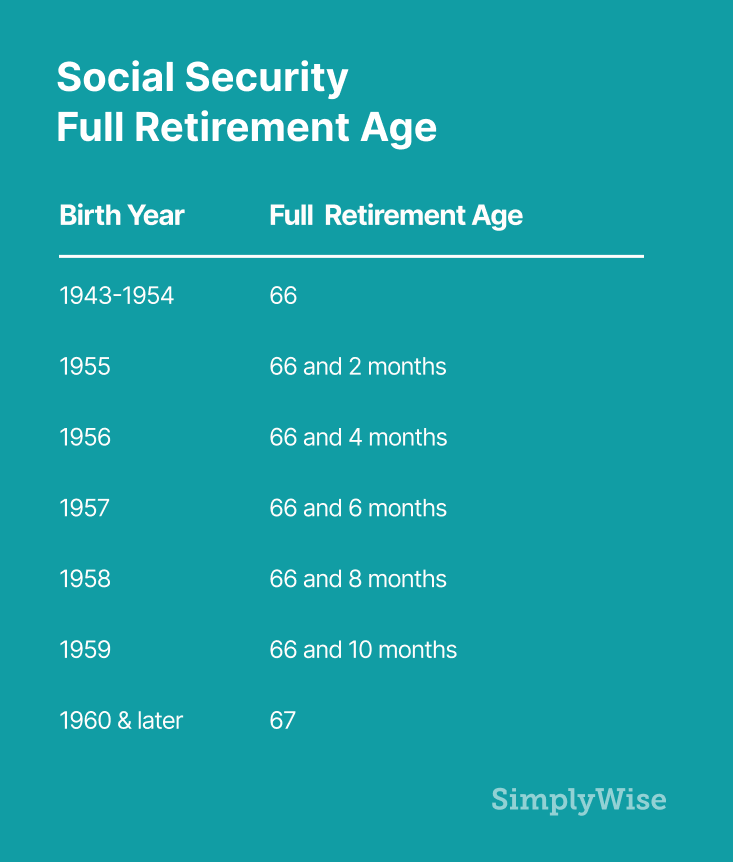
Your Full Retirement Age (FRA) is the age at which you are entitled to receive 100% of your Primary Insurance Amount (PIA). This age is not universal; it depends on your birth year. For those born in 1937 or earlier, FRA was 65. For those born between 1943 and 1954, it is 66. For those born in 1960 or later, FRA is 67. The gradual increase in FRA was part of the 1983 Social Security amendments, reflecting changes in life expectancy. Claiming at FRA is often considered the baseline for planning, as it provides your full earned benefit without reduction or increase for early or delayed claiming.
Early Retirement: Permanently Reduced Benefits
You can begin collecting Social Security retirement benefits as early as age 62. However, choosing to retire early comes with a permanent reduction in your monthly benefit amount. The benefit is reduced for each month you claim before your FRA. For example, if your FRA is 67 and you claim at 62, your benefit will be reduced by approximately 30%. The exact reduction percentage depends on your FRA and how many months early you claim. While tempting for those eager to leave the workforce, this reduction can significantly impact your lifetime income, making it a decision that requires careful financial modeling and consideration of personal circumstances. The reduced benefit is applied for the rest of your life, making this a critical factor in retirement planning.
Delayed Retirement Credits: Boosting Your Monthly Income
Conversely, if you choose to delay claiming your benefits beyond your Full Retirement Age, you can earn “Delayed Retirement Credits” (DRCs). These credits permanently increase your monthly benefit amount for each month you wait past your FRA, up until age 70. The increase is typically 8% per year (or two-thirds of 1% per month) for those with an FRA of 66 or 67. For example, if your FRA is 67 and you delay claiming until age 70, you could increase your monthly benefit by 24% (3 years * 8% per year). This strategy is particularly appealing for individuals who are healthy, have other sources of income, and anticipate a long lifespan, as it can lead to substantially higher lifetime Social Security income.
Beyond the Basics: Other Factors and Considerations
While the core calculation revolves around indexed earnings and claiming age, several other factors can influence the final Social Security benefits received by individuals and their families.
Maximum and Minimum Benefits: A Range of Support
There are both maximum and minimum Social Security benefits. The maximum benefit applies to individuals with a long history of high earnings at or above the Social Security taxable wage base throughout their careers. For someone claiming at FRA in 2023, the maximum monthly benefit was $3,627. Conversely, there is also a special minimum benefit designed to provide a basic level of support for long-term low earners. However, this special minimum benefit is often less than what would be calculated for a standard earner due to the progressive bend points in the PIA formula. Most beneficiaries will fall somewhere between these two extremes.
Spousal and Survivor Benefits: Protecting Families
Social Security is not just for individual retirees; it also provides crucial protection for families. Spousal benefits allow a non-working or lower-earning spouse to claim up to 50% of their partner’s PIA, provided certain conditions are met. Survivor benefits offer financial support to widows, widowers, and dependent children after the death of a covered worker. These benefits are also based on the deceased worker’s earnings record and PIA, underscoring the broad protective nature of the Social Security program. Understanding these auxiliary benefits is vital for comprehensive family financial planning and ensuring loved ones are protected in unforeseen circumstances.
Cost-of-Living Adjustments (COLAs): Keeping Pace with Inflation
Once you begin receiving Social Security benefits, your monthly payment isn’t static. It is subject to annual Cost-of-Living Adjustments (COLAs), which are designed to help benefits keep pace with inflation. COLAs are determined by the Consumer Price Index for Urban Wage Earners and Clerical Workers (CPI-W). If the CPI-W increases from the third quarter of the previous year to the third quarter of the current year, benefits are adjusted upward by that percentage. This ensures that the purchasing power of your Social Security benefits is largely maintained over time, providing ongoing financial stability in retirement.

Taxation of Social Security Benefits: An Important Consideration
It’s also important for financial planners and individuals to recognize that Social Security benefits may be subject to federal income tax, depending on your “provisional income.” Provisional income includes your adjusted gross income, tax-exempt interest, and half of your Social Security benefits. If your provisional income exceeds certain thresholds, a portion of your benefits (up to 50% or 85%) may become taxable. Some states also tax Social Security benefits. This potential tax liability is a key factor in overall retirement income planning.
In conclusion, understanding how your Social Security benefits are calculated is an empowering step toward securing your financial future. From the meticulous tracking of your indexed earnings over 35 years to the progressive application of bend points in the PIA calculation, and finally, to the critical impact of your claiming age, each element plays a vital role. While complex, the system is designed to provide a robust and equitable safety net. Utilizing the SSA’s online tools, such as the “my Social Security” account, can provide personalized estimates and allow you to monitor your earnings record, offering invaluable insights for making informed decisions about your retirement planning. By grasping these mechanics, you can better plan for a more secure and predictable retirement.
aViewFromTheCave is a participant in the Amazon Services LLC Associates Program, an affiliate advertising program designed to provide a means for sites to earn advertising fees by advertising and linking to Amazon.com. Amazon, the Amazon logo, AmazonSupply, and the AmazonSupply logo are trademarks of Amazon.com, Inc. or its affiliates. As an Amazon Associate we earn affiliate commissions from qualifying purchases.