
The world of investing can often seem complex, brimming with acronyms and financial jargon. Yet, for many seeking broad market exposure with simplicity and low cost, the Vanguard S&P 500 ETF, commonly known as VOO, stands out as a prime choice. This exchange-traded fund has garnered immense popularity for its efficient approach to tracking one of the most widely recognized benchmarks of the U.S. equity market: the S&P 500 Index. But what exactly does it mean to “invest in VOO,” and more importantly, what companies comprise its holdings?

This article will demystify VOO, breaking down its structure, revealing the prominent companies that constitute its core, and exploring why it remains a cornerstone for countless investment portfolios. Whether you’re a novice investor or a seasoned financial planner, understanding the composition of VOO is crucial for making informed decisions about your financial future.
Understanding VOO: The S&P 500 at Your Fingertips
To grasp what stocks are in VOO, one must first understand the nature of the fund itself and the index it endeavors to replicate. VOO isn’t a collection of hand-picked stocks by a fund manager; rather, it’s a passive investment vehicle designed to mirror the performance of a specific market index.
What is VOO?
VOO is an Exchange Traded Fund (ETF) offered by Vanguard, one of the largest investment management companies globally. An ETF is a type of investment fund that holds assets such as stocks, bonds, or commodities, and trades like a regular stock on a stock exchange. VOO’s primary objective is straightforward: to track the investment performance of the S&P 500 Index. This means that if the S&P 500 Index rises by 1%, VOO aims to rise by approximately 1% (before fees), and vice-versa. This passive approach eschews active management fees and the often-futile attempt to beat the market, instead opting to be the market.
The S&P 500 Index Explained
The heart of VOO lies in the S&P 500 Index. This index, maintained by S&P Dow Jones Indices, is a market-capitalization-weighted index of 500 of the largest publicly traded companies in the United States. “Market-capitalization-weighted” means that companies with larger market values (share price multiplied by the number of outstanding shares) have a greater impact on the index’s performance. For instance, a 1% move in Apple (a company with a massive market cap) will affect the S&P 500 much more than a 1% move in a smaller S&P 500 component like Best Buy.
The S&P 500 is widely considered one of the best gauges of large-cap U.S. equities and a proxy for the health of the U.S. economy. Its constituents are selected by a committee based on criteria such as market size, liquidity, and sector representation, ensuring it remains representative of the broader U.S. stock market.
Why Invest in VOO?
The appeal of VOO for investors is multifaceted:
- Diversification: By holding a stake in 500 companies, VOO offers instant diversification across various industries and sectors, significantly reducing the idiosyncratic risk associated with owning individual stocks. If one company performs poorly, its impact on your overall portfolio is mitigated.
- Low Expense Ratio: Vanguard is renowned for its low-cost investment products, and VOO is no exception. Its expense ratio is remarkably low, meaning a very small percentage of your investment goes towards management fees, allowing more of your returns to compound over time.
- Liquidity: As an ETF, VOO trades throughout the day on exchanges, offering excellent liquidity. This means you can buy or sell shares easily at market prices during trading hours.
- Simplicity: For investors seeking broad exposure to the U.S. equity market without the need to research and select individual stocks, VOO provides a simple, “set it and forget it” solution.
Diving Deep into VOO’s Core Holdings
Now that we understand VOO’s foundational principles, let’s peel back the layers and examine the types of companies that populate this popular ETF. It’s crucial to remember that VOO’s holdings are dynamic, constantly adjusting to reflect the composition and weightings of the S&P 500 Index.
The Dominance of Large-Cap Tech
Due to the S&P 500’s market-capitalization weighting methodology, a handful of extremely large companies can significantly influence the index’s (and thus VOO’s) performance and composition. In recent years, this has meant a pronounced concentration in the technology sector, particularly among the largest tech giants.
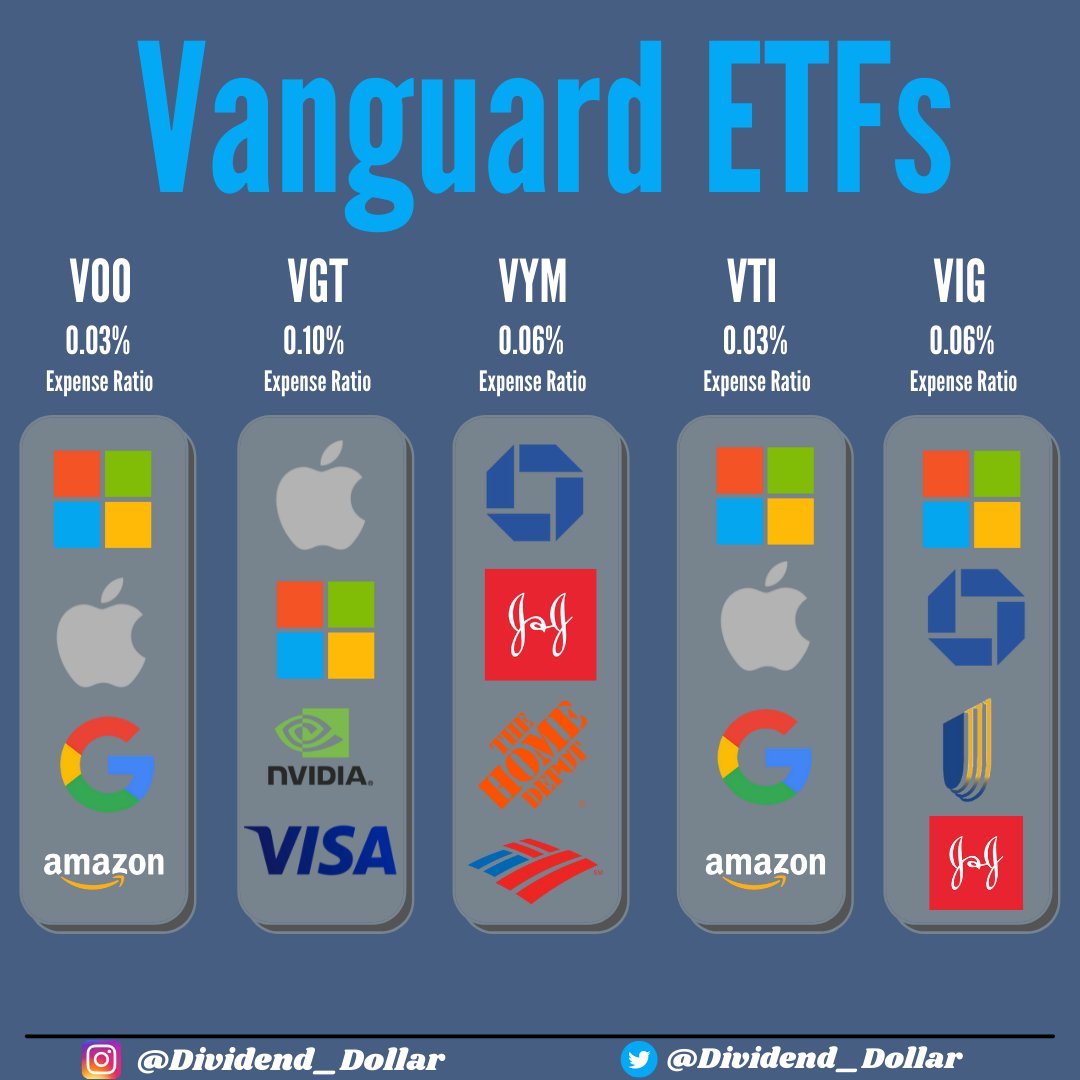
You will consistently find companies like Apple (AAPL), Microsoft (MSFT), Amazon (AMZN), Alphabet (GOOGL/GOOG) (Google’s parent company), NVIDIA (NVDA), Meta Platforms (META) (Facebook’s parent), and Tesla (TSLA) among VOO’s top holdings. These companies, often collectively referred to as some variation of “The Magnificent Seven” or “Big Tech,” command immense market capitalizations, driving their substantial weighting within the index. Their innovation, global reach, and robust profitability make them powerful engines of growth, and consequently, critical components of any S&P 500-tracking fund.
Sectoral Representation within VOO
While tech giants often grab headlines, VOO provides exposure to a diverse array of sectors, reflecting the broad landscape of the U.S. economy. The typical sector allocation within VOO includes:
- Information Technology: Consistently the largest sector, comprising hardware, software, semiconductors, and IT services.
- Financials: Banks, investment firms, insurance companies, and real estate services.
- Healthcare: Pharmaceutical companies, biotech, medical device manufacturers, and healthcare providers.
- Consumer Discretionary: Companies that sell non-essential goods and services, like retail, automotive, and entertainment.
- Communication Services: Telecommunications, media, and interactive entertainment.
- Industrials: Aerospace and defense, machinery, construction, and transportation.
- Consumer Staples: Companies providing essential goods like food, beverages, and household products.
- Energy: Oil and gas exploration, production, and refining.
- Utilities: Electric, gas, and water companies.
- Real Estate: REITs (Real Estate Investment Trusts) and real estate development.
- Materials: Mining, chemicals, and construction materials.
These sector weights are not static. Economic shifts, technological advancements, and company growth rates can lead to significant reallocations over time. For example, once-dominant sectors like Energy or Financials may shrink in proportional weight as Technology or Healthcare sectors grow.
How VOO’s Holdings Change (and Why)
VOO’s holdings are not immutable. As a passive index fund, its composition directly mirrors changes in the S&P 500 Index. The S&P Dow Jones Indices committee regularly reviews and rebalances the index. Key reasons for changes include:
- Company Growth or Decline: Companies whose market capitalization grows significantly may be added to the index, displacing smaller or less liquid companies. Conversely, companies whose market value declines, or that no longer meet the index’s criteria (e.g., profitability), may be removed.
- Mergers and Acquisitions: When two S&P 500 companies merge, or an S&P 500 company is acquired, the index must adjust to reflect the new corporate structure.
- Index Methodology Adjustments: While less frequent, the S&P committee may make minor adjustments to its inclusion criteria to ensure the index remains representative.

These changes are typically implemented quarterly, ensuring VOO continuously reflects the current composition of the S&P 500. Investors in VOO don’t need to manually adjust their portfolios; the fund handles all the rebalancing automatically.
The Benefits and Considerations of VOO Investing
While VOO offers compelling advantages, like any investment, it comes with specific characteristics that investors should understand to integrate it effectively into their broader financial strategy.
Advantages for Long-Term Investors
For those with a long-term investment horizon, VOO can be an exceptionally powerful tool:
- Compounding Returns: Historically, the S&P 500 has delivered robust long-term returns. By consistently investing in VOO, investors can harness the power of compounding, where earnings generate further earnings over decades.
- Dollar-Cost Averaging: Regular investments into VOO, regardless of market fluctuations, allow investors to buy more shares when prices are low and fewer when prices are high, averaging out their purchase price over time. This strategy helps mitigate market timing risk.
- Reduced Individual Stock Risk: The diversification provided by VOO means that the poor performance of a single company will have a minimal impact on the overall portfolio, contrasting sharply with the higher risk of individual stock picking.
- Easy Rebalancing: As a single ETF, VOO itself is inherently diversified, simplifying portfolio management. It serves as an excellent core holding that can be easily scaled up or down based on your financial plan.
What VOO Doesn’t Offer
It’s equally important to acknowledge VOO’s limitations:
- No Small-Cap or International Exposure: VOO exclusively tracks large-cap U.S. companies. It does not provide exposure to smaller U.S. companies (small-cap or mid-cap) or international markets, which can be crucial for broader diversification.
- Market Risk: While diversified, VOO is still subject to overall market risk. If the entire U.S. stock market experiences a downturn, VOO’s value will decline alongside it. It does not provide protection against bear markets.
- No Active Outperformance: By design, VOO aims to match the S&P 500’s performance, not beat it. Investors seeking to outperform the market through active stock selection will find VOO doesn’t align with that specific goal.
- Concentration Risk: Although diversified across 500 companies, the market-cap weighting means VOO can have a significant concentration in its top few holdings and the technology sector. This can be a risk if those specific companies or the tech sector experience a prolonged downturn.
Strategic Integration into a Portfolio
VOO often serves as an excellent core holding in a diversified investment portfolio. For many, it can represent a significant portion (e.g., 50-70%) of their equity allocation. To achieve broader diversification, VOO can be complemented with:
- International Equity ETFs: To gain exposure to developed and emerging markets outside the U.S.
- Small-Cap and Mid-Cap ETFs: To capture growth opportunities in smaller U.S. companies.
- Bond Funds: To add stability and income, especially for investors with lower risk tolerance or nearing retirement.
- Alternative Investments: For very sophisticated investors seeking further diversification or inflation hedging.
The optimal allocation depends entirely on an individual’s financial goals, time horizon, and personal risk tolerance.
Practical Steps to Research VOO’s Current Holdings
Understanding the general nature of VOO’s holdings is one thing, but knowing where to find the most up-to-date, precise information is vital for any diligent investor.
Official Sources for Real-Time Data
For the most accurate and current information on VOO’s holdings, always refer to primary sources:
- Vanguard’s Official Website: The dedicated product page for VOO on Vanguard’s website is the authoritative source. It provides detailed breakdowns of top holdings, sector allocations, performance data, expense ratios, and other critical information.
- S&P Dow Jones Indices Website: This is where you can find detailed information about the S&P 500 Index itself, including its methodology, components, and rebalancing schedules.
- Financial Data Providers: Reputable financial platforms like Yahoo Finance, Google Finance, Bloomberg, Morningstar, and others offer comprehensive pages for VOO, listing its top holdings, sector weights, country exposure, and various financial metrics.
Key Metrics to Look For
When reviewing VOO’s holdings information, pay attention to:
- Top 10 Holdings and Their Weights: This quickly reveals the most influential companies within the fund.
- Sector Allocation: Provides a snapshot of the fund’s exposure to different parts of the economy.
- Geographic Allocation: While primarily U.S., it’s good to confirm.
- Expense Ratio: This is crucial for understanding the ongoing cost of the investment.
- Trading Volume and Bid/Ask Spread: Indicators of liquidity.
- Dividend Yield: If income generation is part of your strategy.
Staying Informed
The market is constantly evolving, and while VOO is passively managed, its underlying assets are subject to market forces. Regularly checking the fund’s details (at least annually or semi-annually, or after significant market events) helps you stay informed about its composition and performance in relation to your overall financial plan. Economic news, industry trends, and global events can all influence the performance of the companies within VOO and, by extension, the ETF itself.
Conclusion
The Vanguard S&P 500 ETF (VOO) offers an accessible, low-cost gateway to the U.S. large-cap equity market. By holding a diversified portfolio of 500 of America’s largest and most established companies—ranging from dominant technology behemoths to robust financial institutions and essential healthcare providers—VOO provides instant diversification and a direct link to the performance of the broader U.S. economy.
Understanding “what stocks are in VOO” is fundamentally about recognizing that you own a piece of these 500 companies, weighted by their market value. This clarity empowers investors to make informed decisions, whether VOO serves as a foundational building block for a diversified portfolio or a strategic component within a broader investment strategy. For long-term growth and broad market exposure, VOO remains a compelling and often indispensable tool in the investor’s arsenal.
aViewFromTheCave is a participant in the Amazon Services LLC Associates Program, an affiliate advertising program designed to provide a means for sites to earn advertising fees by advertising and linking to Amazon.com. Amazon, the Amazon logo, AmazonSupply, and the AmazonSupply logo are trademarks of Amazon.com, Inc. or its affiliates. As an Amazon Associate we earn affiliate commissions from qualifying purchases.