
For anyone engaging with the financial world, from seasoned investors to curious newcomers, understanding the operational hours of the stock market is fundamental. It’s not merely a question of “when can I trade?”; it’s a critical piece of the puzzle that dictates market dynamics, liquidity, and ultimately, investment strategy. The rhythmic opening and closing bells signify periods of intense activity, strategic planning, and sometimes, profound shifts in value. Delving into these hours reveals much about how global finance functions and how individual investors can best navigate its complexities.
This guide aims to demystify stock market hours, providing a thorough overview of standard trading sessions, the increasingly important extended hours, the impact of time zones, and the strategic implications for every investor. By the end, you’ll have a clear understanding not just of when the market opens, but why those times are significant.
Understanding Standard Trading Hours
The phrase “stock market hours” most commonly refers to the core operational period of the major exchanges in the United States, particularly the New York Stock Exchange (NYSE) and the Nasdaq Stock Market. These hours are the bedrock upon which most daily financial news and trading activity are based.
The Core Session: NYSE and NASDAQ
In the United States, the primary stock exchanges – the New York Stock Exchange (NYSE) and the Nasdaq Stock Market (NASDAQ) – adhere to a consistent schedule for their regular trading sessions. These critical hours are:
- Opening Time: 9:30 AM Eastern Time (ET)
- Closing Time: 4:00 PM Eastern Time (ET)
This 6.5-hour window, Monday through Friday, is when the vast majority of trading volume occurs. During these hours, liquidity is at its highest, bid-ask spreads are typically narrowest, and market participants have the greatest confidence in price discovery. The opening bell, often a ceremonial event on the NYSE, marks the official start of the trading day, usually accompanied by a flurry of activity as investors react to overnight news and economic data. Similarly, the closing bell signifies the end of regular trading, though post-market movements can still influence opening prices the following day.
It’s crucial to remember that this schedule is based on Eastern Time, which means investors in different time zones must adjust accordingly. For example, a West Coast investor (Pacific Time) would see the market open at 6:30 AM PT and close at 1:00 PM PT. This time zone difference is a constant consideration for remote traders and those managing portfolios across geographical boundaries.
Weekends and Federal Holidays
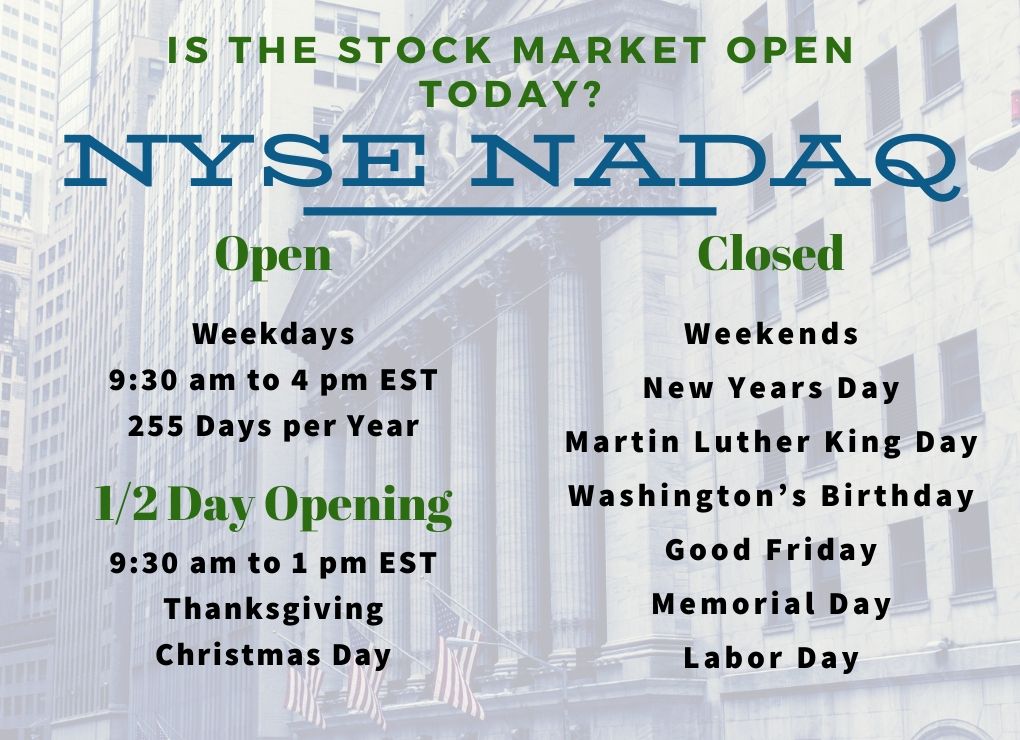
While the 9:30 AM to 4:00 PM ET schedule is consistent during the week, the stock market does not operate on weekends or designated federal holidays. These closures are essential for market stability, allowing time for settlement processes, preventing trading on days when many financial institutions are closed, and providing breaks for market participants.
Key holidays that typically result in market closures include:
- New Year’s Day
- Martin Luther King, Jr. Day
- Presidents’ Day
- Good Friday
- Memorial Day
- Juneteenth National Independence Day
- Independence Day (July 4th)
- Labor Day
- Thanksgiving Day
- Christmas Day
It’s also worth noting that sometimes the market may close early on days preceding or following a major holiday, such as the day after Thanksgiving (Black Friday) or Christmas Eve. These early closures are usually announced well in advance by the exchanges. Investors should always consult the official holiday schedules published by the NYSE and NASDAQ at the beginning of each year to avoid any surprises. Relying on an outdated calendar can lead to missed trading opportunities or unexecuted orders. These scheduled breaks are vital for the integrity and efficiency of the financial system, providing necessary downtime and allowing for system maintenance and updates.
Beyond the Bell: Pre-Market and After-Hours Trading
The 9:30 AM to 4:00 PM ET regular session is undoubtedly the most active, but it’s not the only time investors can trade. The advent of electronic communication networks (ECNs) and advanced trading platforms has extended trading possibilities significantly, allowing activity to commence before the opening bell and continue long after the market closes. These “extended hours” trading sessions offer both unique opportunities and distinct challenges.
Exploring Extended Hours Trading
Extended hours trading is typically divided into two main periods:
- Pre-Market Trading: This session usually runs from 4:00 AM ET to 9:30 AM ET, leading up to the regular market opening.
- After-Hours Trading: This session typically begins at 4:00 PM ET and can extend as late as 8:00 PM ET.
These extended periods allow investors to react to news and events that occur outside of regular market hours. For instance, many companies release quarterly earnings reports after the market closes, or significant economic data might be published before the market opens. Pre-market and after-hours trading enable immediate responses to such information, preventing investors from having to wait until the next regular session to execute trades.
The ability to trade during these hours is primarily facilitated by electronic trading systems that match buy and sell orders directly, rather than through a traditional exchange floor. While not all brokers offer the full spectrum of extended hours, most major platforms provide access to these sessions, granting increased flexibility to their clients. This flexibility is particularly attractive to investors who cannot monitor the markets during standard business hours due to work or other commitments.
Advantages and Disadvantages of Off-Hours Trading
While the flexibility of extended hours trading is appealing, it comes with a unique set of characteristics that investors must understand:
Advantages:
- Immediate Reaction to News: The most significant benefit is the ability to react instantly to breaking news, earnings reports, or economic data released outside regular hours. This can be crucial for managing risk or capitalizing on early price movements.
- Flexibility: For investors with busy schedules, extended hours provide a window to trade when it’s convenient for them, without needing to disrupt their regular daytime activities.
- Potential for Price Discovery: Significant price movements can occur during these hours, potentially allowing savvy traders to enter or exit positions at advantageous prices before the wider market reacts.
Disadvantages:
- Lower Liquidity: This is arguably the biggest drawback. Fewer participants trade during extended hours, leading to significantly lower trading volume. This means it can be harder to find a buyer or seller for your desired shares, especially for less popular stocks.
- Wider Bid-Ask Spreads: Due to lower liquidity, the difference between the highest price a buyer is willing to pay (bid) and the lowest price a seller is willing to accept (ask) can be much wider. This makes executing trades at desirable prices more challenging and can increase transaction costs.
- Increased Volatility: Lower liquidity can also lead to exaggerated price swings. A relatively small order can have a disproportionate impact on a stock’s price, potentially leading to rapid and unpredictable movements.
- Limited Order Types: Not all order types available during regular hours may be accessible in extended sessions. Market orders, for example, are generally discouraged in extended hours due to high volatility and wide spreads; limit orders are typically preferred.
- Competition with Professionals: Many participants in extended hours are institutional investors or professional traders with sophisticated tools and real-time data access. Retail investors might be at a disadvantage in this environment.
Understanding these pros and cons is paramount. Extended hours trading requires a different mindset and strategy compared to regular session trading, often demanding quicker decision-making and a higher tolerance for risk. It’s not suitable for all investors or all trading strategies.
Navigating Time Zones and Global Markets
The financial world is interconnected, and while the US stock market is a global leader, it operates within a complex web of international exchanges, each with its own hours and conventions. Understanding the interplay of time zones and the existence of other major markets is crucial for anyone seeking a comprehensive view of global finance.
The Impact of Geographic Location
As mentioned, the US stock market operates on Eastern Time (ET). This seemingly simple fact has profound implications for investors located outside this time zone. For example:
- Central Time (CT): 8:30 AM to 3:00 PM CT
- Mountain Time (MT): 7:30 AM to 2:00 PM MT
- Pacific Time (PT): 6:30 AM to 1:00 PM PT
This means that for a West Coast investor, the market opens and closes significantly earlier in their local day. This can be advantageous for early risers who wish to manage their investments before their workday begins, or challenging for those who prefer to trade later in the day.
The implications extend beyond just convenience. Economic reports from the US government or major corporations are often released at specific times, usually 8:30 AM ET, 10:00 AM ET, or after 4:00 PM ET. Investors in different time zones must factor this into their planning to ensure they are available to react to critical information. Furthermore, market-moving news from Asia or Europe might break overnight relative to the US, necessitating a strategy to address pre-market movements for US-based traders.
A Glimpse at International Stock Exchanges
The global nature of finance means that markets are continuously opening and closing around the world. When the NYSE closes, other major exchanges are in full swing or just beginning their day. This continuous cycle means that global news and economic events can impact US stocks even when the US market is closed.
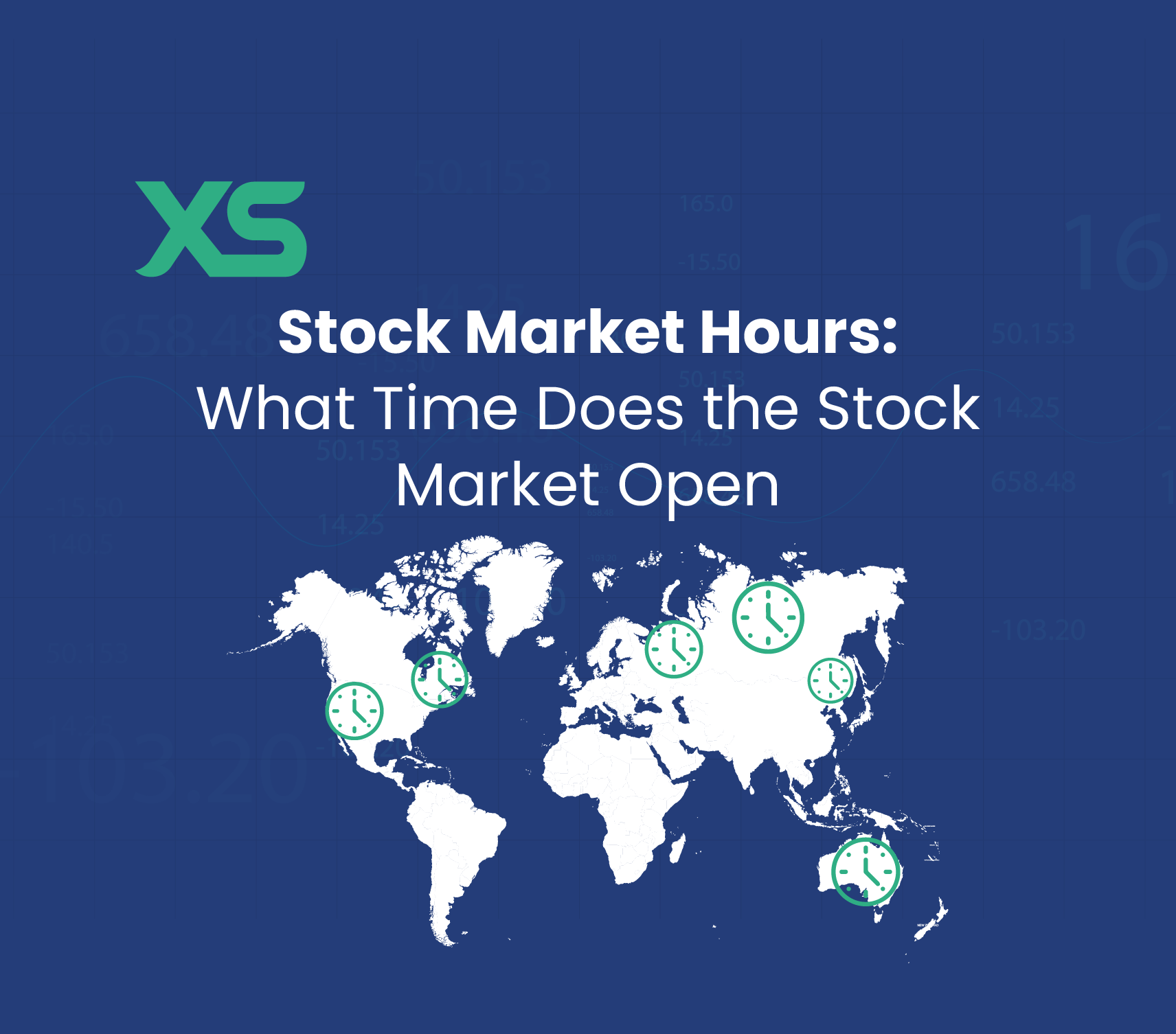
Here’s a brief look at some major international exchanges and their typical local operating hours (approximate, excluding holidays):
- Tokyo Stock Exchange (TSE), Japan: 9:00 AM – 3:00 PM JST (Japan Standard Time)
- Shanghai Stock Exchange (SSE), China: 9:30 AM – 3:00 PM CST (China Standard Time)
- London Stock Exchange (LSE), UK: 8:00 AM – 4:30 PM GMT (Greenwich Mean Time)
- Euronext (various European countries, e.g., Paris, Amsterdam): 9:00 AM – 5:30 PM CET (Central European Time)
- Frankfurt Stock Exchange (XTRA), Germany: 9:00 AM – 5:30 PM CET
- Australian Securities Exchange (ASX), Australia: 10:00 AM – 4:00 PM AEST (Australian Eastern Standard Time)
Understanding these global hours is especially relevant for investors with international portfolios, those trading in global ETFs, or anyone keeping an eye on commodities or currencies that trade around the clock. News originating from one major economic region can create ripple effects that manifest in US pre-market trading, even if the primary US indices haven’t officially opened. This global interplay highlights the 24/7 nature of financial markets, even if individual exchanges have specific opening and closing times.
Why Do Trading Hours Matter?
Beyond the logistical convenience, the specific timing of market operations deeply influences trading dynamics, market behavior, and strategic decision-making for all types of investors. The structure of trading hours is not arbitrary; it’s designed to balance efficiency, fairness, and market stability.
Market Liquidity and Volatility
The most significant impact of trading hours is on market liquidity and volatility.
- Liquidity: During regular trading hours (9:30 AM – 4:00 PM ET), there is a massive convergence of buyers and sellers, from individual retail investors to large institutional funds. This high volume of participation ensures that there are always readily available counterparts for trades, leading to high liquidity. High liquidity means you can buy or sell shares quickly without significantly impacting the price. It’s easier to enter and exit positions, and bid-ask spreads are tight, meaning you pay less for the privilege of trading.
- Volatility: While regular hours exhibit high volume, they can also experience periods of intense volatility, especially at the open and close, or around major news releases. However, the sheer volume of participants often acts as a dampener, absorbing larger orders without causing extreme price dislocations. In contrast, during pre-market and after-hours sessions, due to significantly lower liquidity, individual trades can have a much more pronounced effect on a stock’s price, leading to much higher volatility and potentially wider, less predictable price swings. This low-liquidity, high-volatility environment makes extended-hours trading inherently riskier.
The closing bell also provides a period of reflection and re-evaluation. Traders analyze the day’s performance, assimilate new information, and strategize for the next session. This “cooling off” period can prevent continuous panic selling or buying and allows for more rational decision-making once markets reopen.
Strategic Implications for Investors
Understanding market hours is not just about knowing when to click “buy” or “sell”; it has profound strategic implications:
- Day Traders: For day traders, market hours are everything. They rely on the liquidity and volatility of the regular session to execute numerous short-term trades. Extended hours are often too risky due to low liquidity and wide spreads for their strategies.
- Swing Traders: Swing traders, who hold positions for a few days or weeks, need to be aware of how overnight news might impact their holdings and utilize pre-market/after-hours information to adjust their strategies or manage risk, though they typically execute during regular hours.
- Long-Term Investors: Even buy-and-hold investors should be aware of market hours, particularly for placing orders. Executing a market order outside regular hours could lead to an unexpected fill price. Long-term investors often use limit orders during regular hours to ensure they buy or sell at their desired price points.
- News-Driven Trading: Traders relying on news events (e.g., earnings reports, FDA approvals) must synchronize their trading with release times. Many critical announcements are strategically timed before market open or after market close to allow for analysis and prevent immediate, uncontrolled reactions during active trading.
- Risk Management: Knowing market hours helps in effective risk management. For instance, holding a volatile stock overnight or over a weekend means accepting exposure to unforeseen events that can’t be immediately reacted to until the market reopens. This “gap risk” is a critical consideration.
In essence, market hours create the temporal framework for investment decisions. They influence everything from when to place an order to how to manage risk, and even how to interpret daily news. A disciplined approach to understanding and respecting these hours is a hallmark of an informed and successful investor.
Tools and Resources for Tracking Market Hours
In today’s fast-paced financial environment, staying informed about market hours, especially with global considerations and holiday schedules, is easier than ever thanks to a plethora of digital tools and resources. Leveraging these can prevent missteps and ensure you’re always aligned with market operations.
Financial Platforms and Apps
Most reputable online brokerage platforms and financial news applications integrate real-time market status and future schedules directly into their interfaces.
- Brokerage Platforms: Your primary trading platform (e.g., Fidelity, Charles Schwab, E*TRADE, Interactive Brokers, Robinhood) is usually the best first stop. These platforms typically display the current market status (open, closed, pre-market, after-hours) prominently. They also provide information on holiday closures and often allow you to set specific order types (e.g., good-till-cancel, extended-hours) that respect market timings. Many will alert you if you try to place a market order outside of regular hours, prompting you to consider a limit order.
- Financial News Websites & Apps: Major financial news outlets like Bloomberg, Reuters, The Wall Street Journal, Yahoo Finance, and Google Finance offer comprehensive market summaries that include operating hours for major global exchanges. Many have dedicated sections for market holidays and special trading hours. Their apps often send notifications about market openings and closings, or significant news events that might influence extended-hours trading.
- Dedicated Market Hours Trackers: There are also specialized apps and websites designed solely to track global market hours, often displaying a world clock alongside the opening and closing times of various exchanges adjusted to your local time zone. These can be particularly useful for investors with a global focus.
Always double-check information from unofficial sources against official exchange calendars or your brokerage’s announcements, especially for upcoming holidays or special trading days.
Planning Your Trading Day
Effective planning is crucial for maximizing opportunities and minimizing risks, and it heavily relies on knowing market hours.
- Before the Open: Use the pre-market hours to review overnight news, assess global market performance, check any economic data releases, and review your watchlist. This is a good time to set up potential limit orders for the opening bell.
- During the Regular Session: This is prime time for executing trades, monitoring your portfolio, and reacting to real-time market movements. Be aware of key economic announcements scheduled for during the day (e.g., Fed minutes, jobless claims) which can cause sharp, immediate reactions.
- After the Close: The after-hours period is for reviewing the day’s performance, analyzing your trades, and reading any post-market company announcements. For some, it’s also a time for strategic extended-hours trading, especially if they are reacting to specific news.
- Holiday Planning: Proactively check market holiday schedules to avoid liquidity traps or missed opportunities. Some investors prefer to reduce exposure before long market closures (e.g., over a long weekend) to mitigate “gap risk” from unexpected news.
By consistently utilizing these tools and integrating market hours into your daily financial routine, you build a more disciplined and informed approach to investing. Understanding “what time does the stock market open” transcends a simple inquiry; it becomes a foundational element of sound financial planning and strategic market engagement.
aViewFromTheCave is a participant in the Amazon Services LLC Associates Program, an affiliate advertising program designed to provide a means for sites to earn advertising fees by advertising and linking to Amazon.com. Amazon, the Amazon logo, AmazonSupply, and the AmazonSupply logo are trademarks of Amazon.com, Inc. or its affiliates. As an Amazon Associate we earn affiliate commissions from qualifying purchases.