
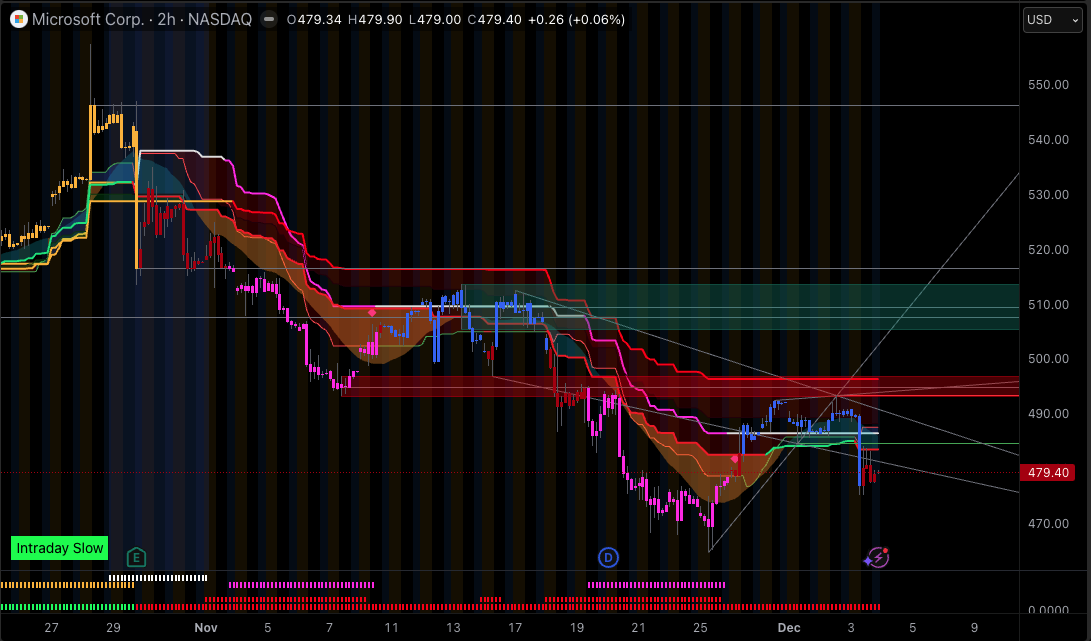
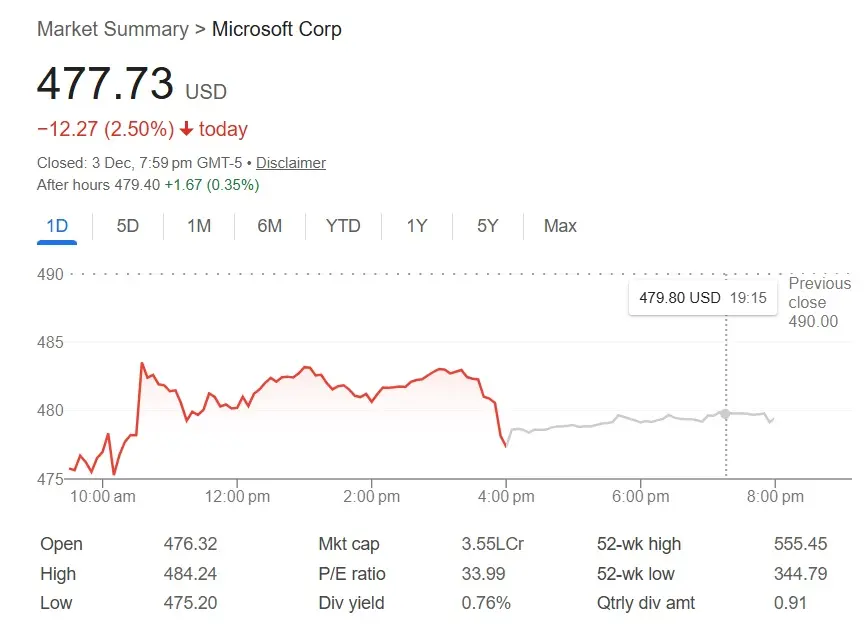
Even the most robust and innovative companies, those that define entire industries, are not immune to the inherent volatility of financial markets. Microsoft, a titan of technology whose influence spans cloud computing, productivity software, gaming, and enterprise solutions, occasionally experiences periods where its stock price takes a hit. While such drops can be unsettling for investors, they are often a confluence of macroeconomic forces, company-specific performance indicators, and shifts in investor sentiment rather than a singular catastrophic event. Understanding the multi-faceted reasons behind a stock drop, particularly for a behemoth like Microsoft, is crucial for any investor seeking to navigate the complexities of modern financial landscapes. This article delves into the financial and market-driven factors that can lead to a dip in Microsoft’s stock, providing a professional and insightful look into the mechanics of market corrections.
Macroeconomic Headwinds and Broader Market Sentiment
No company, regardless of its size or market dominance, operates in a vacuum. The broader economic environment and prevailing market sentiment play a significant role in how investors perceive and value even the most fundamentally sound businesses. When Microsoft’s stock drops, it’s often a reaction to larger systemic pressures that ripple through the entire market.
Interest Rate Hikes and Inflationary Pressures
One of the most potent macroeconomic forces impacting stock valuations, especially for growth-oriented technology companies, is a shift in monetary policy. Central banks, in their efforts to combat inflation, often resort to raising interest rates. This seemingly distant economic lever has a profound and direct impact on stock prices. Higher interest rates increase the cost of borrowing for companies, which can suppress future investment and growth. More importantly, from an investor’s perspective, they increase the “discount rate” used to calculate the present value of a company’s future earnings.
Growth stocks like Microsoft, which are valued significantly on their projected future profitability, become less attractive when those future earnings are discounted at a higher rate. Investors demand a greater return for holding stocks when safer assets, like bonds, offer more competitive yields. This capital reallocation from riskier growth assets to more stable, income-generating investments can trigger a broad sell-off in the tech sector, pulling Microsoft’s stock down with it. Additionally, persistent inflation erodes purchasing power, potentially reducing consumer and enterprise spending on software, hardware, and cloud services, impacting Microsoft’s revenue streams and profit margins.
Global Economic Slowdown Fears
The specter of a global economic slowdown or a full-blown recession is another powerful catalyst for market downturns. When economic activity contracts, businesses often reduce their capital expenditures, including spending on IT infrastructure, cloud services (like Azure), and new software licenses. Consumers, faced with economic uncertainty, may delay purchases of new devices (Surface, Xbox consoles) or cut back on subscription services. Given Microsoft’s deep integration into both enterprise and consumer markets worldwide, a slowdown in key economies can directly translate into weakened demand and slower growth prospects.
Geopolitical events, such as trade wars, energy crises, or significant political instability in major markets, further exacerbate these fears. They can disrupt supply chains, increase operational costs, and create a climate of uncertainty that makes investors hesitant to commit capital. The ripple effect of these global events can trigger widespread risk aversion, prompting investors to pull out of equities in favor of safer assets, inevitably impacting even the most resilient stocks like Microsoft.
Sector-Specific Rotation and Risk Aversion
During periods of heightened economic uncertainty, investors often engage in “sector rotation.” This involves shifting capital out of sectors perceived as higher risk or overvalued, and into those considered more stable or undervalued. Technology stocks, particularly those with high valuation multiples based on future growth, are often among the first to see capital outflows during such rotations.
Instead, investors might pivot towards “value stocks” – companies with lower price-to-earnings ratios, strong balance sheets, and consistent dividend payments, often found in more traditional sectors like utilities, consumer staples, or healthcare. This increased risk aversion means that even if Microsoft’s fundamentals remain strong, the prevailing market mood could lead to a broad sell-off across the tech sector, pulling down its stock price as investors rebalance their portfolios away from growth and towards perceived safety and profitability.
Company-Specific Performance and Financial Indicators
While macroeconomic factors paint a broad stroke, specific performance metrics and strategic moves by Microsoft itself can directly influence investor confidence and stock valuation. A drop in stock price often reflects how the company’s operational reality aligns, or misaligns, with market expectations.
Missed Earnings Expectations or Lowered Guidance
One of the most immediate and impactful triggers for a stock drop is when Microsoft fails to meet the consensus earnings estimates set by financial analysts. These estimates encompass critical metrics such as revenue, earnings per share (EPS), and operating income. A miss, even a slight one, can signal to the market that the company’s growth trajectory is slowing or that its profitability is under unexpected pressure.
Equally significant is the company’s forward guidance – its projections for future financial performance. If Microsoft issues a conservative outlook for upcoming quarters or the full fiscal year, indicating slower revenue growth, reduced profit margins, or increased capital expenditures, investors often react by selling shares. This is because market valuations are heavily based on future expectations; a dampened outlook suggests lower future returns. For instance, slower-than-expected growth in Azure, a dip in PC sales impacting Windows and Surface revenue, or weaker demand in the gaming segment (Xbox) could individually or collectively contribute to a miss or cautious guidance, triggering a notable stock decline.
Competitive Pressures and Market Share Concerns
Despite its dominant position, Microsoft operates in highly competitive landscapes. Intensified competition across its various segments can threaten its market share and future growth potential. In cloud computing, Amazon Web Services (AWS) and Google Cloud Platform (GCP) are formidable rivals, constantly innovating and vying for enterprise clients. A perceived slowdown in Azure’s market share gains or increased pricing pressures due to competition could worry investors.
Similarly, in gaming, Sony’s PlayStation and Nintendo’s Switch platforms offer fierce rivalry, alongside emerging threats from cloud gaming services and new intellectual property. Even in productivity software, Google Workspace (formerly G Suite) continues to chip away at Microsoft 365’s dominance, particularly in smaller businesses and educational institutions. Any indication that Microsoft is losing its competitive edge, struggling to innovate at the pace of its rivals, or facing significant market share erosion in key growth areas could lead to a reassessment of its long-term value and a subsequent stock drop.
Regulatory Scrutiny and Antitrust Concerns

As one of the world’s largest technology companies, Microsoft is increasingly under the microscope of regulatory bodies globally. Concerns over monopolistic practices, data privacy, or the impact of its market power on smaller competitors can lead to government investigations, potential fines, or even forced changes to its business model. The ongoing scrutiny of its acquisition of Activision Blizzard, for example, highlighted the potential for regulatory hurdles to impact strategic growth initiatives.
Increased regulatory scrutiny creates uncertainty, which investors typically dislike. The prospect of costly legal battles, significant fines, or restrictions on how Microsoft can operate or acquire other companies can dampen investor enthusiasm. Such developments suggest potential impediments to future growth and profitability, prompting investors to divest shares to mitigate risk.
Investor Perception, Valuation, and Technical Factors
Beyond the hard numbers and economic realities, the psychology of the market and specific trading dynamics play a crucial role in short-to-medium term stock movements. How investors perceive Microsoft’s value and the technical movements on trading charts can precipitate a stock drop.
Overvaluation and Profit-Taking
Periods of significant and rapid stock price appreciation can sometimes lead to a state of “overvaluation,” where the company’s stock trades at a price-to-earnings (P/E) ratio or other valuation multiples that are considerably higher than its historical averages or industry peers, relative to its growth prospects. While high valuations can be sustained during bull markets, they make the stock particularly vulnerable to corrections when market sentiment shifts.
When the market enters a period of uncertainty or corrects, investors who have seen substantial gains in their Microsoft holdings may decide to “take profits.” This means selling a portion or all of their shares to lock in those gains. Institutional investors, hedge funds, and even individual traders might execute such strategies, leading to considerable selling pressure that can drive the stock price down. This phenomenon is often cyclical; after a long run-up, a correction is a natural, albeit sometimes painful, part of the market cycle.
Analyst Downgrades and Media Sentiment
Financial analysts at major investment banks and research firms wield considerable influence over market perception. Their reports, which include ratings (e.g., “buy,” “hold,” “sell”) and price targets, are closely watched by institutional and retail investors alike. An analyst downgrade of Microsoft’s stock, perhaps due to a revised growth outlook, competitive concerns, or a reassessment of its valuation, can trigger an immediate sell-off. Similarly, a reduction in the company’s target price signals to the market that the stock might be overvalued at current levels.
Beyond formal analyst reports, broader media sentiment also plays a role. Negative news stories, critical opinion pieces, or influential social media discussions about Microsoft’s products, services, or business practices can erode investor confidence. Even if the underlying fundamentals remain strong, a sustained wave of negative media attention can prompt a psychological retreat among investors, leading to selling pressure.
Technical Market Indicators and Algorithmic Trading
In the realm of active trading and short-term market movements, technical analysis and algorithmic trading can amplify stock drops. Technical analysts study historical price patterns and trading volumes to predict future movements. If Microsoft’s stock price breaches key technical support levels – price points where buying interest has historically emerged – it can trigger a cascade of automated sell orders from algorithmic trading systems.
These algorithms are programmed to execute trades based on predefined technical conditions, and a break below a critical moving average or support line can signal a shift in momentum from bullish to bearish. This can accelerate selling pressure, creating a downward spiral that is largely driven by technical factors rather than immediate fundamental news, further contributing to the stock’s decline.
Microsoft’s Resilience and Long-Term Outlook
While a stock drop can be alarming, it’s essential for investors to differentiate between short-term market noise and long-term fundamental strength. Microsoft, by virtue of its diversified business model and strong financial position, possesses inherent resilience that often allows it to navigate downturns and recover.
Diversified Business Model
One of Microsoft’s greatest strengths is its highly diversified business model. It is not solely reliant on a single product or market. Its revenue streams are spread across the intelligent cloud (Azure), productivity and business processes (Office 365, LinkedIn, Dynamics 365), and more personal computing (Windows, Surface, Xbox). This diversification acts as a significant shock absorber. If one segment faces headwinds (e.g., a slowdown in the PC market affecting Windows), other segments (like the consistently growing Azure cloud platform) can often help offset the impact, providing a more stable overall financial performance than less diversified companies. This breadth allows Microsoft to adapt and pivot its strategy in response to changing market conditions.
Strong Balance Sheet and Cash Flow
Microsoft boasts an exceptionally strong balance sheet, characterized by substantial cash reserves and robust free cash flow generation. This financial fortress provides several advantages during market downturns. It enables the company to continue investing heavily in research and development, ensuring it remains at the forefront of innovation. It also supports strategic acquisitions, share buyback programs (which can boost EPS and support stock price), and consistent dividend payments, all of which are attractive to investors seeking stability and returns. A healthy financial position allows Microsoft to weather economic storms, maintain its competitive edge, and even capitalize on opportunities that arise when weaker competitors struggle.
Innovation Pipeline and Strategic Growth Areas
Despite its size, Microsoft remains a powerhouse of innovation, constantly exploring new frontiers and integrating cutting-edge technologies into its offerings. The company’s strategic focus on artificial intelligence (AI) across its entire product portfolio, including its significant investment in OpenAI, positions it strongly for future growth. Initiatives in the metaverse, continued expansion of its cloud services globally, and ongoing development of sophisticated enterprise solutions ensure a vibrant pipeline of future revenue drivers. For long-term investors, these strategic growth areas and the company’s commitment to innovation provide a compelling narrative that can offset short-term market anxieties and underpin its value proposition for years to come.
Conclusion
A drop in Microsoft’s stock, while concerning, is rarely attributable to a single factor. Instead, it is typically a complex interplay of macroeconomic forces, company-specific performance metrics, shifts in investor sentiment, and technical market dynamics. From rising interest rates and global economic slowdowns to missed earnings expectations, competitive pressures, and profit-taking, various elements can contribute to a stock correction. For investors, understanding these multifaceted drivers is paramount. It allows for a more nuanced assessment of whether a stock drop signifies a fundamental weakening of the company or merely a temporary market adjustment. Given Microsoft’s diversified business, robust financial health, and commitment to innovation, such dips, while challenging, often represent a test of resilience rather than an indication of terminal decline, providing a balanced perspective for those focused on long-term investment strategies.
aViewFromTheCave is a participant in the Amazon Services LLC Associates Program, an affiliate advertising program designed to provide a means for sites to earn advertising fees by advertising and linking to Amazon.com. Amazon, the Amazon logo, AmazonSupply, and the AmazonSupply logo are trademarks of Amazon.com, Inc. or its affiliates. As an Amazon Associate we earn affiliate commissions from qualifying purchases.