
The question of “when did Tesla come out” is often met with two different answers depending on whether one is referring to the company’s legal incorporation or the debut of its first hardware. Founded in July 2003 by Martin Eberhard and Marc Tarpenning, Tesla Motors (as it was then known) did not release its first commercial product until 2008. However, the “emergence” of Tesla as a dominant force in the technology sector is a story that spans over two decades, transitioning from a niche startup to a global leader in artificial intelligence, software-defined vehicles, and sustainable energy infrastructure.

To understand Tesla’s arrival on the world stage, one must look beyond the metal and rubber of its vehicles. Tesla did not just release a car; it introduced a new technological architecture that challenged the century-old foundations of internal combustion engineering.
1. The Genesis of the Silicon Valley Automaker (2003–2008)
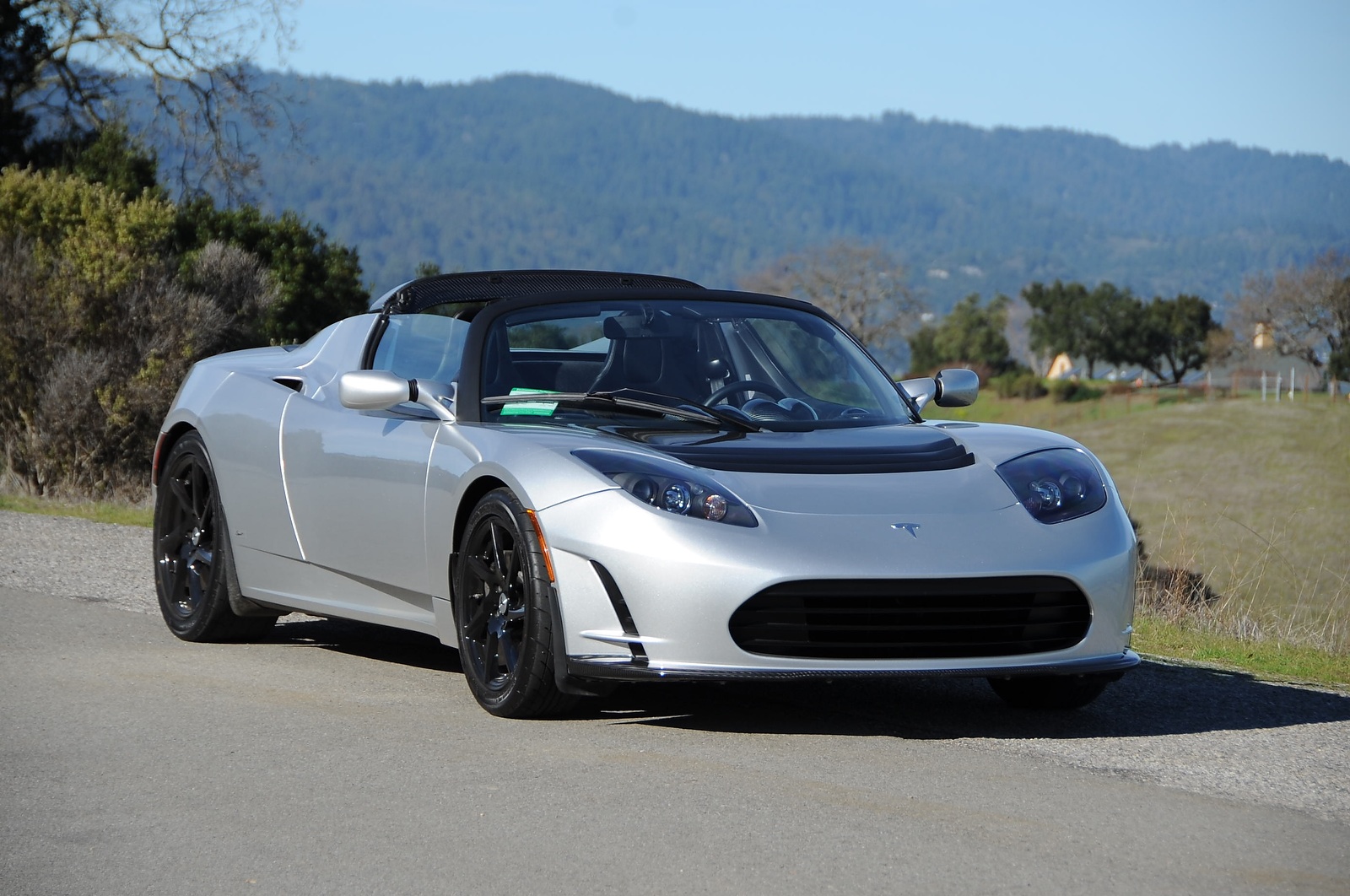
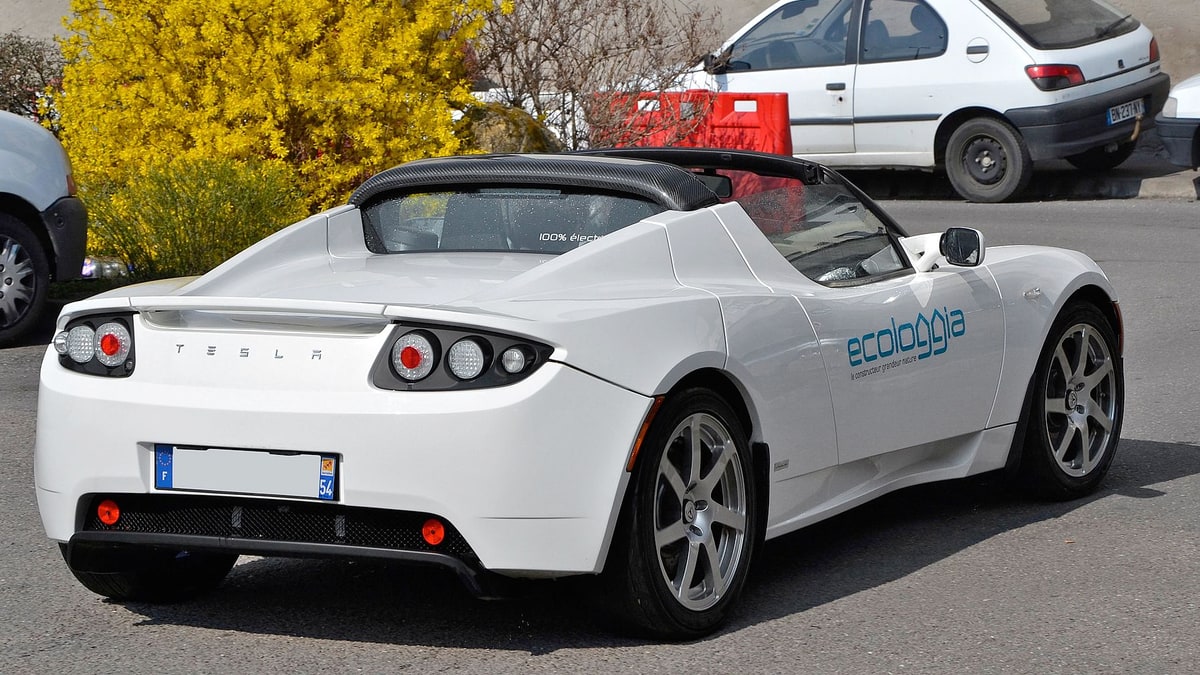
When Tesla first emerged, the automotive industry viewed electric vehicles (EVs) as glorified golf carts—slow, unappealing, and limited by lead-acid battery technology. Tesla’s first major technological “coming out” occurred with the unveiling of the Roadster prototype in 2006, followed by its official production release in 2008.
Breaking the “Golf Cart” Stereotype
The Roadster was a proof of concept that utilized a lithium-ion battery pack—the same technology found in laptops at the time—to achieve a range of over 200 miles per charge. This was a radical departure from the Nickel-Metal Hydride batteries used in early hybrids. By leveraging high-density energy storage, Tesla proved that electric propulsion could offer high performance, achieving 0-60 mph in under four seconds. This era marked the first time that consumer electronics technology was successfully integrated into high-performance automotive hardware.
The Lithium-Ion Breakthrough
The core of Tesla’s early tech advantage lay in its Battery Management System (BMS). Unlike traditional automakers, Tesla’s engineers developed sophisticated software to monitor and balance thousands of individual battery cells. This prevented overheating and maximized longevity, solving the primary technical hurdle that had killed previous attempts at mass-market electric cars. This focus on battery chemistry and thermal management remains a cornerstone of the company’s technological identity today.
2. The Rise of the Software-Defined Vehicle (The Model S Era)
If the Roadster proved that EVs could be fast, the Model S, which debuted in 2012, proved that a car could be a computer on wheels. This period represents the most significant shift in how tech enthusiasts viewed the automobile.
Over-the-Air (OTA) Updates: A Paradigm Shift
Before Tesla, the hardware of a car was static. Once you drove a vehicle off the lot, its features were frozen in time. Tesla introduced the concept of Over-the-Air (OTA) updates, a technology borrowed from the smartphone industry. This allowed Tesla to fix bugs, improve braking distances, increase acceleration, and even add entirely new features—like “Dog Mode” or “Sentry Mode”—without the customer ever visiting a service center. This architectural choice meant the vehicle’s software was decoupled from its hardware, allowing the car to improve over time.
Vertical Integration of Infotainment and Control
The Model S famously replaced the cluttered dashboard of buttons with a 17-inch touchscreen. While critics initially called it a distraction, it was a calculated move to centralize the vehicle’s control systems. By running the car’s functions through a central computer, Tesla gained the ability to collect data and optimize performance in real-time. This centralized compute architecture is now the industry standard, but in 2012, it was a radical technological experiment that redefined the user interface of the modern car.
3. The Path to Autonomy: AI and Neural Networks
Tesla’s most ambitious technological leap began in 2014 with the introduction of Autopilot hardware. This shifted the company’s focus from being a battery-tech firm to being an artificial intelligence and computer vision powerhouse.
Computer Vision vs. LiDAR
One of the most debated topics in tech circles is Tesla’s “Vision-Only” approach. While competitors like Waymo and Cruise rely on LiDAR (Light Detection and Ranging) to map the world in 3D, Tesla opted for a suite of cameras processed by sophisticated neural networks. The technological philosophy here is that humans drive using vision and biological neural nets; therefore, a machine should be able to do the same. This requires immense processing power and complex software algorithms to interpret 2D images into 3D spatial awareness in real-time.
The Role of Dojo and Supercomputing Infrastructure
To train these neural networks, Tesla built Dojo, a custom-designed supercomputer optimized for AI machine learning. Dojo processes the billions of miles of driving data collected from the global fleet of Tesla vehicles. This “data flywheel” is a unique technological moat. Every time a driver intervenes while using Autopilot, that data point is sent to the cloud, labeled, and used to train the next iteration of the software. This transition from heuristic-based coding (if-then statements) to “Neural Network” based driving (End-to-End AI) represents the cutting edge of modern software engineering.
4. Hardware Innovation: Inverters, Motors, and the Octovalve
While software and AI often dominate the headlines, Tesla’s “under-the-hood” hardware innovations are equally significant in the tech landscape. The company has consistently pushed the boundaries of power electronics and mechanical engineering.
Silicon Carbide Inverters and Efficiency
A critical component of an EV is the inverter, which converts DC power from the battery to AC power for the motor. Tesla was one of the first to implement Silicon Carbide (SiC) power modules. These chips are more efficient than traditional silicon, allowing for less heat loss and more range from the same battery size. This obsession with efficiency extends to their motor designs, which utilize permanent magnets and innovative cooling paths to achieve industry-leading power-to-weight ratios.
Thermal Management and the Octovalve
The introduction of the “Octovalve” in the Model Y showcased Tesla’s ability to solve complex thermodynamic problems. The Octovalve is a centralized thermal management system that can move heat from the motors or battery to the cabin, or vice versa. By treating the entire car as a single thermal system, Tesla significantly improved cold-weather efficiency, a traditional weakness of electric technology. This level of hardware integration is a hallmark of high-end tech engineering, where every joule of energy is accounted for.
5. The Future Horizon: Robotics and Generative AI
Tesla’s evolution has led it to a point where it is no longer just “coming out” with cars, but rather deploying general-purpose AI. The company’s trajectory suggests that its most impactful technology might not be a vehicle at all.
Optimus: The Evolution of Tesla Bot
Announced in 2021, the Tesla Optimus (or Tesla Bot) uses the same AI stack found in their cars. The “Vision” system that identifies a stop sign is being repurposed to identify a tool or a door handle. This represents a convergence of edge computing and robotics. By using the same actuators, sensors, and neural network training pipelines, Tesla is attempting to solve “Real-World AI”—the ability for a machine to navigate and interact with the unpredictable human environment.
The Convergence of Robotics and Edge Computing
As Tesla moves forward, the focus is increasingly on the inference computer—the hardware inside the car or robot that runs the AI models. With the development of the AI5 chip, Tesla is moving toward custom silicon designed specifically for neural network inference. This puts Tesla in direct competition with semiconductor giants, as they strive to create the most power-efficient AI hardware in the world.
Conclusion: A Legacy of Technical Disruption
Tesla “came out” in the early 2000s as a bold experiment, but it matured into a technological titan that forced the entire global economy to pivot toward electrification and digitization. From the early days of lithium-ion experimentation in the Roadster to the current era of supercomputers and humanoid robots, Tesla’s journey is defined by a refusal to accept the limitations of legacy engineering. For the tech world, Tesla is not just an automaker; it is a case study in how software, hardware, and artificial intelligence can be integrated to solve the most pressing challenges of the modern era. As we look to the future, the technology birthed in those early years continues to evolve, promising a world where AI and sustainable energy are seamlessly integrated into the fabric of daily life.
aViewFromTheCave is a participant in the Amazon Services LLC Associates Program, an affiliate advertising program designed to provide a means for sites to earn advertising fees by advertising and linking to Amazon.com. Amazon, the Amazon logo, AmazonSupply, and the AmazonSupply logo are trademarks of Amazon.com, Inc. or its affiliates. As an Amazon Associate we earn affiliate commissions from qualifying purchases.