
In an increasingly subscription-driven world, understanding the true cost of our digital entertainment is paramount to maintaining a healthy personal finance strategy. Streaming services, once considered a niche luxury, have become a cornerstone of household entertainment, offering vast libraries of content at our fingertips. Among these, Paramount Plus stands out with its diverse offering of live sports, breaking news, and an expansive on-demand catalog featuring iconic shows, original series, and blockbuster movies. However, the critical question for any financially conscious consumer isn’t just about what’s available, but how much it will impact their annual budget. This article will delve into the financial mechanics of a Paramount Plus subscription, specifically focusing on its annual cost, potential savings, and how it fits into a broader personal finance framework, helping you make an informed decision about this particular streaming investment.
Understanding Paramount Plus Subscription Tiers and Annual Savings
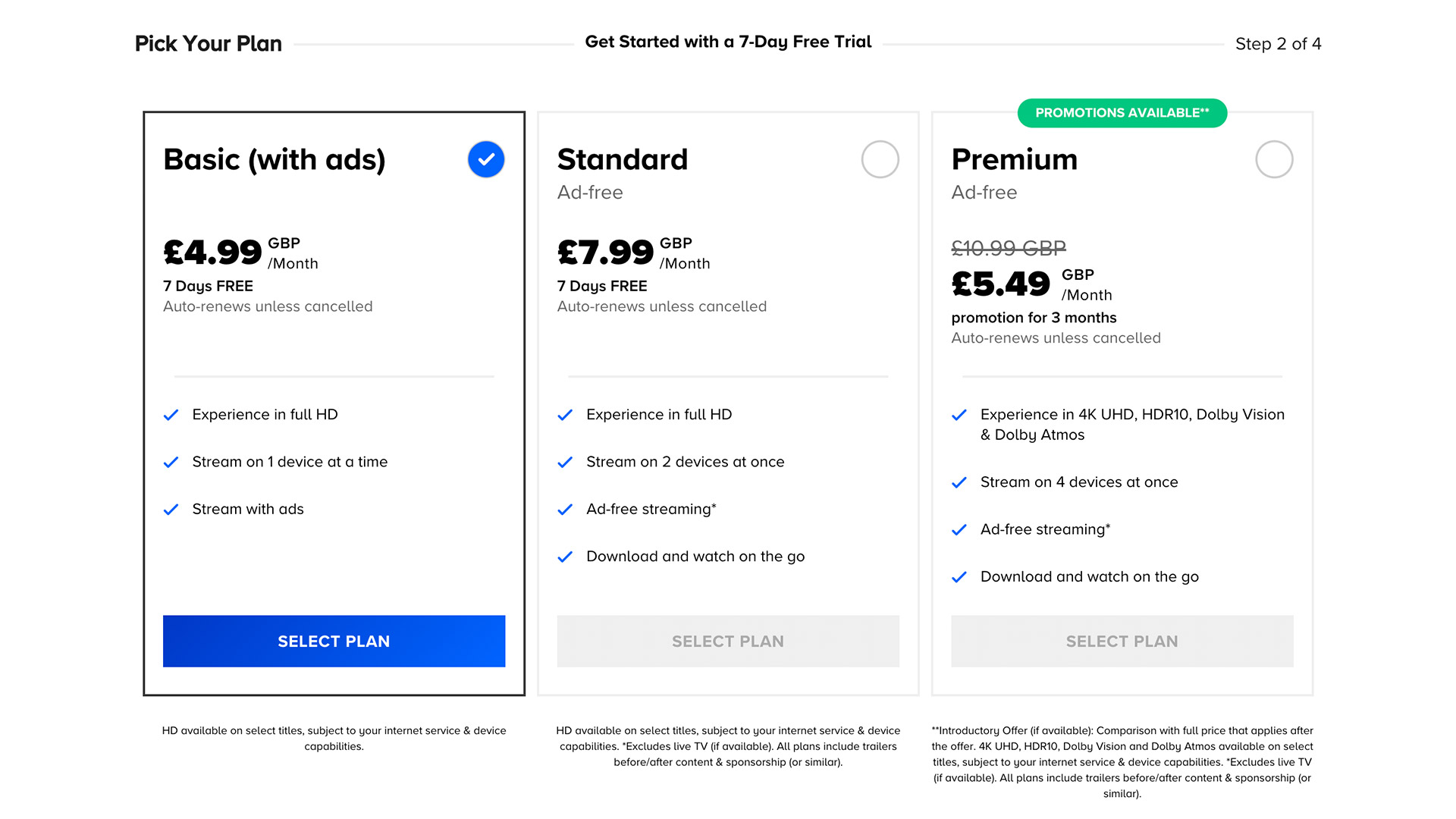
Paramount Plus, like many of its competitors, offers a tiered subscription model designed to cater to different user preferences and budget considerations. Each tier comes with its own set of features, and critically, a distinct price point, especially when viewed through the lens of annual billing. Opting for an annual subscription over a month-to-month plan almost invariably offers a significant financial advantage, a common industry practice designed to incentivize longer-term commitments.
The Essential Plan: Cost-Effectiveness and Features
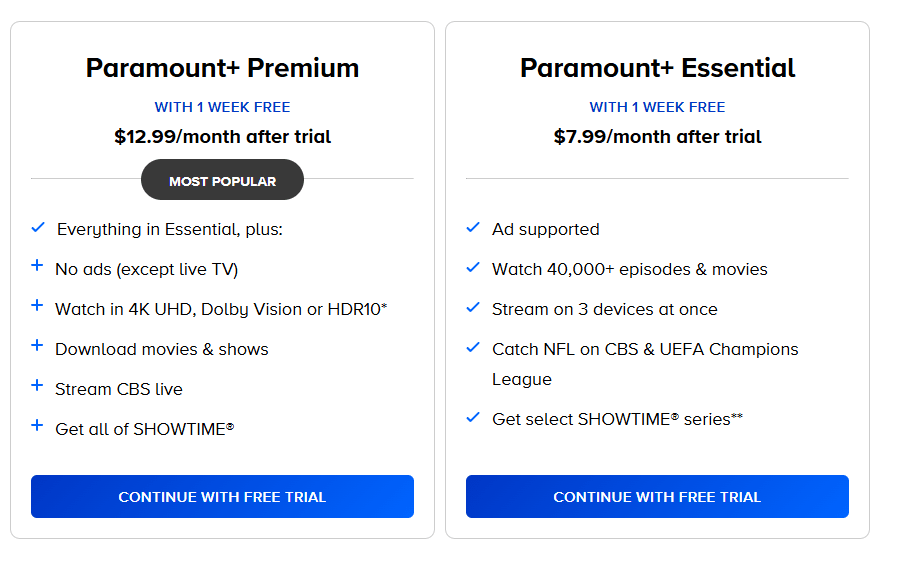
The Essential plan is the more budget-friendly option, designed for viewers who prioritize access to content at the lowest possible cost. This tier typically includes access to the full on-demand library, covering thousands of episodes and movies, plus live NFL on CBS and UEFA Champions League. A notable characteristic of the Essential plan is the inclusion of limited commercial interruptions during on-demand content. While some might find ads disruptive, the trade-off is a lower monthly and, more significantly, a lower annual fee. For individuals or families looking to stretch their entertainment dollar, the Essential plan represents a strong value proposition, providing a vast amount of content for a relatively modest annual outlay. When calculating the yearly cost, subscribers often find themselves saving a substantial percentage compared to paying month-to-month, a saving that can be redirected to other financial goals or necessities. It’s a classic example of economizing without sacrificing access to a broad content offering, making it an attractive choice for those meticulously managing their entertainment budget.
The Premium Plan: Value Proposition and Ad-Free Experience
For those who prefer an uninterrupted viewing experience and additional features, the Premium plan is the elevated offering. This tier provides everything in the Essential plan but crucially removes most commercials from the on-demand library. Furthermore, the Premium plan often includes access to your local CBS live stream, which can be a significant draw for news and local sports enthusiasts, something not typically available on the Essential tier. The additional cost for the Premium plan reflects these enhanced features and the improved user experience. From a financial perspective, the “value” here is subjective; it depends on how much one values the absence of ads and the inclusion of live local CBS programming. For many, the time saved by not watching commercials and the convenience of live TV integration justify the higher annual investment. When considering the annual cost of the Premium plan, it’s essential to weigh these benefits against the increased financial commitment. For some, the enhanced experience translates directly into a higher return on investment (ROI) in terms of entertainment satisfaction and convenience.
Why Annual Billing Offers Superior Financial Value
The strategic choice between monthly and annual billing is perhaps the most critical financial decision when subscribing to Paramount Plus or any streaming service. The industry standard across most subscription models is to offer a discount for annual prepayment, and Paramount Plus is no exception. By committing to a full year upfront, subscribers typically receive a reduction in the effective monthly cost, accumulating into significant savings over twelve months.
From a personal finance perspective, choosing annual billing is akin to making a bulk purchase at a discount. It locks in a lower rate and eliminates the recurring mental effort and potential transaction fees associated with monthly payments. This strategy helps in long-term budget planning, as a single annual charge is easier to account for than twelve smaller, continuous deductions. Moreover, by prepaying, you mitigate the risk of potential price increases that might occur during the year if you were on a monthly plan. For the financially savvy consumer, the annual plan isn’t just about convenience; it’s a deliberate financial maneuver to optimize spending on entertainment, ensuring more of your hard-earned money stays in your pocket rather than going towards higher effective monthly rates.
Analyzing the True Cost: Beyond the Sticker Price
While the advertised annual prices for Paramount Plus plans provide a clear starting point, a truly comprehensive financial analysis requires looking beyond the sticker price. Hidden savings, promotional offers, and a comparison with alternative entertainment investments can significantly alter the perceived “true cost” and overall value proposition of the service.
Hidden Savings: Bundles, Promotions, and Student Discounts
The financial landscape of streaming is constantly evolving, with providers frequently offering incentives to attract and retain subscribers. Paramount Plus is no stranger to this strategy, and actively seeking out these “hidden savings” can drastically reduce your annual expenditure.
Promotional Offers: Keep an eye out for introductory deals, limited-time discounts during holiday seasons, or partnerships with other companies. These promotions might offer a reduced annual rate for the first year, or even a period of free access, which effectively lowers the overall annual cost if you plan to subscribe long-term.
Bundles: Paramount Plus occasionally partners with other services (e.g., Showtime, specific mobile carriers, or internet providers) to offer bundled subscriptions. These bundles can present a significant discount when purchasing multiple services together compared to subscribing to each individually. For consumers already paying for or considering these other services, a bundle can unlock substantial aggregate savings, optimizing their overall entertainment budget.
Student Discounts: Many streaming services recognize the budget constraints of students. If you’re a student, always check for specific student discounts, which can often provide a percentage off the standard monthly or annual rate. This targeted saving can make a premium service much more accessible to a demographic with limited disposable income.
Utilizing these opportunities requires a proactive approach but can yield considerable financial benefits, making the annual cost of Paramount Plus even more attractive.
Maximizing Value: Content Library vs. Subscription Cost
The financial wisdom of any subscription service extends beyond its price to the actual value derived from its usage. For Paramount Plus, this means evaluating its vast content library against your personal viewing habits and the annual subscription cost. Are you genuinely engaging with the content available?
Content Relevance: Do the shows, movies, and live sports offerings align with your interests? If you’re a fan of specific franchises (e.g., Star Trek, Yellowstone, NFL), the value proposition is naturally higher. Conversely, if you only occasionally find something to watch, the annual fee might feel disproportionately high.
Usage Frequency: Consider how often you actually use the service. An annual subscription that is heavily utilized throughout the year represents a better “cost per hour of entertainment” than one that sits mostly dormant.
Exclusivity: Does Paramount Plus offer content that you cannot get elsewhere? Exclusive originals and specific live sports rights significantly increase its unique value, potentially justifying the annual cost over other services.
Ultimately, maximizing value is about ensuring your annual financial outlay translates into consistent and meaningful entertainment. It’s a personal ROI calculation – the return on investment in terms of enjoyment and utility versus the monetary cost.
Opportunity Cost: Comparing Paramount Plus to Other Streaming Investments
Every dollar spent on Paramount Plus is a dollar that cannot be spent elsewhere, representing an “opportunity cost.” In the realm of streaming, this means comparing the financial commitment of Paramount Plus against other entertainment options or even other financial goals.
Competing Streaming Services: How does the annual cost of Paramount Plus compare to Netflix, HBO Max, Disney+, Hulu, or Amazon Prime Video? Each service has its own strengths and financial outlay. A common strategy for budget-conscious consumers is to rotate subscriptions, activating one for a few months to binge specific content, then canceling and subscribing to another. If you plan to keep multiple services simultaneously, their combined annual cost can quickly escalate, warranting a careful review of each one’s necessity.
Alternative Entertainment: Beyond streaming, consider other forms of entertainment. Could that annual fee be better spent on books, movie tickets, dining out, or even savings and investments? This comparison helps put the financial commitment of Paramount Plus into a broader lifestyle context.
Financial Goals: For individuals striving to save for a down payment, pay off debt, or build an emergency fund, every discretionary expense needs scrutiny. While entertainment is important for well-being, understanding its financial impact relative to larger financial goals is crucial.
Evaluating the opportunity cost encourages a holistic view of your spending, ensuring that your investment in Paramount Plus aligns with your overall financial objectives and provides competitive value within your entertainment budget.
Budgeting for Your Streaming Entertainment
Integrating streaming costs into your household budget is a crucial step for financial control in the digital age. As the number of available services proliferates, so too does the potential for subscription creep to erode your monthly or annual discretionary income. A deliberate approach to budgeting for entertainment ensures that these expenses are managed proactively rather than becoming an unexpected drain on your finances.
Integrating Streaming Costs into Your Household Budget
Effective budgeting is the cornerstone of sound personal finance. When it comes to streaming services like Paramount Plus, it means allocating a specific portion of your income towards entertainment, rather than treating these subscriptions as amorphous, unaccounted-for charges.
Categorization: Create a dedicated category in your budget for “Streaming Services” or “Digital Entertainment.” This allows you to track all your subscriptions in one place, providing a clear overview of your total expenditure in this area.
Fixed vs. Variable Expenses: While monthly streaming payments are often considered fixed expenses, an annual Paramount Plus subscription simplifies this by being a single, larger fixed expense once a year. Budget for this annual lump sum by setting aside a small amount each month (e.g., 1/12th of the annual cost) into a dedicated savings pot, so when the renewal date arrives, the funds are readily available without causing a financial shock.
Review Periodically: Your entertainment needs and content preferences can change. Periodically review your budget (quarterly or annually) to ensure your streaming allocations still make sense and that you are getting maximum value from each service. This proactive review prevents wasted money on subscriptions you no longer use or need.
By consciously integrating Paramount Plus and other streaming costs into your budget, you transform them from overlooked deductions into managed, intentional financial decisions.
Strategies for Cutting Down on Entertainment Expenses
Even if you love your streaming services, there are strategies to enjoy them without overspending. For Paramount Plus, and streaming in general, adopting a frugal mindset can unlock significant savings.
Subscription Rotation: As mentioned earlier, consider subscribing to one or two services at a time, binge-watching the content you want, and then canceling and moving on to another. This “churn and burn” method prevents multiple simultaneous subscriptions from compounding costs. For instance, subscribe to Paramount Plus for a few months to catch up on its exclusive series, then pause or cancel and move to another service.
Leveraging Free Trials: Always utilize free trials. They offer a no-cost way to assess the content library and user experience before committing any money. Just remember to set a reminder to cancel before the trial ends if you decide it’s not worth the annual investment.
Using Reward Points/Gift Cards: Explore if credit card reward points or loyalty programs can be redeemed for gift cards usable for streaming services or general online purchases that can then fund your subscription. Some mobile carriers or credit cards even offer specific perks or rebates for streaming services.
Public Library Access: Don’t forget traditional resources. Many public libraries offer free access to streaming platforms like Kanopy or Hoopla, which can supplement your entertainment needs without incurring additional costs.
Implementing these strategies helps ensure your entertainment spending remains controlled, allowing you to enjoy your favorite content without compromising your financial well-being.
The Financial Benefits of Periodically Reviewing Subscriptions
The phenomenon of “subscription fatigue” is real, often leading to consumers paying for services they rarely use simply because they forgot to cancel. A proactive, periodic review of all your subscriptions, including Paramount Plus, offers tangible financial benefits.
Eliminate Unnecessary Spending: The most immediate benefit is identifying and canceling dormant or underutilized subscriptions. This frees up money that can be reallocated to savings, debt repayment, or more actively used entertainment.
Optimize Value: During a review, you can assess if your current plan tier is still the best fit. Perhaps your viewing habits have changed, and you could downgrade from the Premium to the Essential plan (or vice-versa if your needs have increased).
Negotiate/Compare: While less common with streaming services than with, say, internet providers, being aware of competitor pricing and your service’s current offers puts you in a better position to make optimal choices. Sometimes, simply calling to cancel might prompt a retention offer.
Reallocate Funds: The money saved from optimizing or canceling subscriptions isn’t just “found money”; it’s a conscious decision to reallocate resources to align better with your current financial priorities and entertainment preferences.
This regular financial audit ensures that your recurring expenses, including annual streaming fees, are always serving your best interests and providing genuine value for your money.
Making an Informed Financial Decision on Paramount Plus
The decision to commit to an annual Paramount Plus subscription should be a deliberate financial choice, not an impulse purchase. It involves assessing personal habits, understanding financial flexibility, and knowing when to adjust or discontinue the service. This final step synthesizes all previous considerations into actionable financial advice.
Assessing Your Viewing Habits and ROI (Return on Investment)
Before clicking “subscribe” for an entire year, engage in an honest self-assessment of your viewing habits. Your personal return on investment (ROI) in entertainment is a subjective but critical metric.
Content Consumption: How many hours a week do you realistically anticipate spending on Paramount Plus? If it’s a significant amount, the annual cost per hour of entertainment becomes very low, indicating a strong ROI. If you only watch a few specific shows and then log off, the ROI might be diminishing.
Exclusivity Factor: Are there specific shows, movies, or live events that are only available on Paramount Plus that you absolutely cannot miss? The higher the number of “must-see” exclusives for you, the stronger the argument for its value and ROI.
Household Usage: For families, the ROI is often amplified. One annual subscription can entertain multiple individuals, increasing the overall value derived from the single payment. Consider how many family members will regularly use the service.
Calculating your personal ROI helps you justify the annual financial commitment, transforming a simple purchase into a valued investment in your leisure.
The Financial Flexibility of Monthly vs. Annual Payments
While annual payments typically offer financial savings, the decision between monthly and annual also hinges on your personal financial flexibility and cash flow.
Annual Payment (Pros):
- Cost Savings: Lower effective monthly rate.
- Convenience: One less recurring monthly payment to track.
- Price Lock: Immune to potential price increases for the year.
Annual Payment (Cons): - Larger Upfront Cost: Requires a significant lump sum payment at once.
- Less Flexibility: If your financial situation changes or you lose interest in the service mid-year, you’ve already paid for the full term. No refunds are typically issued for early cancellation of annual plans.
Monthly Payment (Pros):
- Budget Friendly: Smaller, manageable recurring payments.
- High Flexibility: Easy to cancel anytime if your needs change or budget tightens.
- Lower Initial Outlay: No large upfront payment required.
Monthly Payment (Cons): - Higher Overall Cost: More expensive than the annual plan over 12 months.
- Subscription Creep: Easier to overlook the cumulative cost.
For individuals with stable finances and a strong commitment to the service, the annual plan is usually the financially superior choice. However, if your budget is tight, or your interest in the content is uncertain, the flexibility of a monthly plan, despite its higher cumulative cost, might be a safer financial bet.

When to Consider Cancelling or Pausing Your Subscription
Even the most cherished subscriptions can reach a point where they no longer offer sufficient financial or entertainment value. Knowing when to cancel or pause Paramount Plus is a key aspect of smart financial management.
Loss of Interest/Usage: If you find yourself rarely logging in, or have exhausted the content you were interested in, it’s a clear signal to evaluate cancellation.
Budget Constraints: Unexpected financial hardships or shifting priorities (e.g., saving for a large purchase) might necessitate cutting discretionary expenses. Streaming services are often among the first to be considered.
Content Rote: If the content library starts feeling stale, or new offerings don’t align with your tastes, the service’s value diminishes.
Better Alternatives: If a competitor offers a compelling deal or more appealing content that better suits your needs, it might be time to switch.
Many services, including Paramount Plus, offer the option to pause a subscription for a certain period, which can be a great alternative to outright cancellation if you anticipate returning later. This strategy helps maintain your account without incurring charges during periods of non-use.
In conclusion, understanding “how much is Paramount Plus for a year” goes far beyond simply looking up the current annual price. It involves a strategic financial assessment of subscription tiers, seeking out hidden savings, evaluating personal value, comparing against opportunity costs, and integrating the expense into a disciplined budget. By taking these steps, you empower yourself to make a truly informed financial decision, ensuring your entertainment choices align perfectly with your broader personal finance goals.
aViewFromTheCave is a participant in the Amazon Services LLC Associates Program, an affiliate advertising program designed to provide a means for sites to earn advertising fees by advertising and linking to Amazon.com. Amazon, the Amazon logo, AmazonSupply, and the AmazonSupply logo are trademarks of Amazon.com, Inc. or its affiliates. As an Amazon Associate we earn affiliate commissions from qualifying purchases.