
For many, a car is not just a mode of transport; it’s a necessity, a freedom, and often, one of the most significant purchases they’ll make after a home. While the sticker price grabs immediate attention, a crucial element that profoundly impacts the overall affordability and long-term cost of a vehicle is its interest rate on the accompanying loan. Understanding “what’s the interest rate on a car loan” is not merely about a percentage point; it’s about deciphering a complex financial mechanism that can save or cost you thousands over the life of your loan.
An interest rate, in its simplest form, is the cost of borrowing money, expressed as a percentage of the principal loan amount. For a car loan, this percentage is added to your monthly payments, increasing the total amount you repay over the loan term. It’s a critical component of your monthly budget and overall financial health. Neglecting to understand or optimize this rate can lead to significant overspending, tying up valuable financial resources that could be allocated elsewhere. This article delves deep into the nuances of car loan interest rates, exploring what determines them, how they vary, and crucially, how you can position yourself to secure the most favorable terms, ensuring your dream car doesn’t turn into a financial burden.
Understanding Car Loan Interest Rates: More Than Just a Number
To truly grasp the implications of a car loan, it’s essential to move beyond the superficial understanding of an interest rate. This percentage dictates a substantial portion of your total repayment and influences your monthly financial commitments for years to come.
Defining Interest Rates and APR
While often used interchangeably, “interest rate” and “Annual Percentage Rate (APR)” are distinct, though related, concepts. The interest rate is the percentage charged by the lender for the principal amount borrowed. It’s the pure cost of borrowing money. However, the APR provides a more comprehensive picture of the total cost of the loan over a year. It includes the interest rate plus any additional fees or charges imposed by the lender, such as origination fees, documentation fees, or other closing costs.
For car loans, the APR is often the more transparent figure to consider because it incorporates all mandatory costs associated with the loan, offering a truer reflection of what you’ll pay annually. When comparing loan offers, always focus on the APR, as a lower interest rate might be offset by higher fees, resulting in a less favorable APR overall. Understanding this distinction empowers you to make a more informed decision and prevents being misled by seemingly attractive interest-only rates.
Why Interest Rates Matter for Your Budget
The interest rate is a powerful lever that directly impacts both your monthly payment and the total cost of your car. A difference of even a few percentage points can translate into hundreds, if not thousands, of dollars over the loan’s duration. For instance, a $30,000 loan over five years at 3% interest might result in a total repayment of around $32,350, with monthly payments of approximately $539. The same loan at 7% interest could push the total repayment closer to $35,500, with monthly payments around $592. That’s a difference of over $3,000 and $50 per month – significant figures that can impact your ability to save, invest, or manage other expenses.
Beyond the raw numbers, a higher interest rate restricts your financial flexibility. It means a larger portion of your income is allocated to debt servicing, potentially delaying other financial goals like homeownership, retirement savings, or even just building an emergency fund. Conversely, securing a lower interest rate frees up cash flow, allowing you greater control over your finances and accelerating your path to financial well-being. This demonstrates why optimizing your car loan interest rate is not merely a preference but a crucial component of prudent personal finance management.
Key Factors Influencing Your Car Loan Interest Rate
Car loan interest rates are not arbitrarily assigned; they are the result of a complex interplay of various factors that lenders assess to determine the risk associated with lending to you. Understanding these elements is the first step towards influencing the rate you receive.
Your Credit Score: The Ultimate Determinant
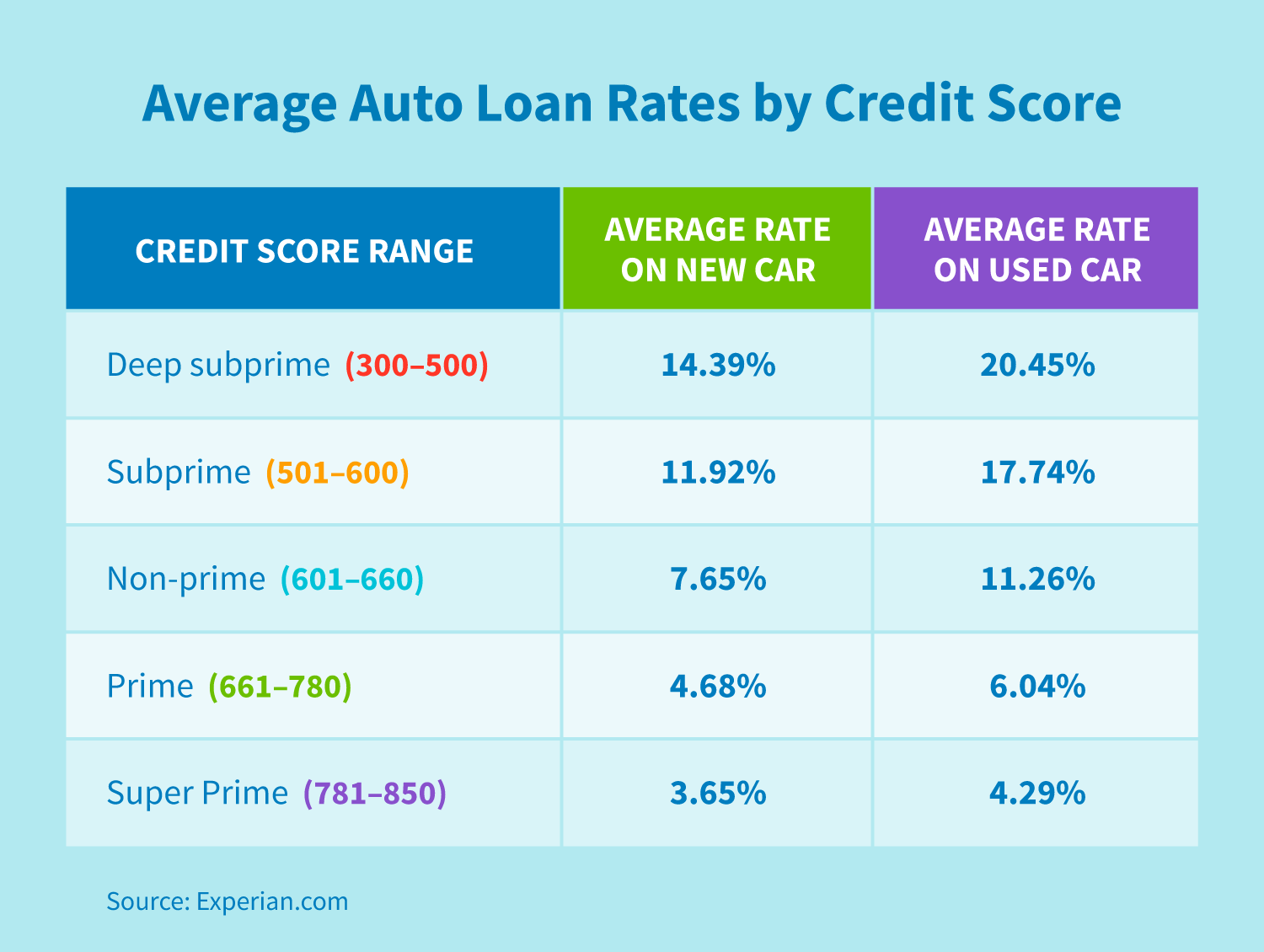
Undoubtedly, your credit score is the single most influential factor in determining the interest rate you’ll be offered. Lenders use credit scores (like FICO or VantageScore) as a quick snapshot of your creditworthiness and your likelihood of repaying the loan. A higher credit score (typically 700+) indicates a responsible borrower with a history of timely payments and low debt, signaling a lower risk to the lender. Consequently, individuals with excellent credit qualify for the lowest, most competitive interest rates.
Conversely, a lower credit score (below 600) suggests a higher risk of default, often due to past missed payments, high credit utilization, or bankruptcies. Lenders compensate for this increased risk by charging higher interest rates. This is why improving your credit score before applying for a car loan can have a dramatic positive impact on the rates you’re offered. Every point on your credit score can translate into tangible savings on your interest rate.
Loan Term and Vehicle Type: New vs. Used
The duration for which you borrow money, known as the loan term, also plays a significant role. Generally, shorter loan terms (e.g., 36 or 48 months) tend to come with lower interest rates. This is because the lender is exposed to risk for a shorter period, and the overall likelihood of market fluctuations or your financial situation changing unfavorably is reduced. While shorter terms mean higher monthly payments, they often lead to substantial savings on total interest paid. Longer loan terms (e.g., 60, 72, or even 84 months) reduce your monthly payments, making the car more “affordable” in the short term, but they typically carry higher interest rates due to increased risk over time. This extends the period over which interest accrues, leading to a much higher total cost.
The type of vehicle you purchase—new vs. used—also influences the rate. New cars typically qualify for lower interest rates than used cars. This is primarily because new cars retain their value better initially, making them less of a depreciating asset for the lender to recover in case of default. Used cars, especially older models, present a higher risk due to their faster depreciation, potential for mechanical issues, and less predictable resale value, leading lenders to apply higher rates to offset this perceived risk.
The Power of Your Down Payment
Making a substantial down payment is one of the most effective ways to lower your interest rate. A larger down payment reduces the amount you need to borrow, which immediately translates to lower monthly payments and less interest paid over the life of the loan. More importantly, it signals to lenders that you have financial skin in the game and are less likely to default. It also reduces the loan-to-value (LTV) ratio, which is the amount borrowed compared to the car’s value. A lower LTV means less risk for the lender because if the car needs to be repossessed, the lender is more likely to recover their losses. Lenders often reward borrowers with higher down payments with more favorable interest rates. Aim for at least 10-20% of the vehicle’s purchase price as a down payment if possible.
Lender Type and Market Conditions
The entity providing the loan can also affect the interest rate. Different types of lenders—banks, credit unions, dealership financing, and online lenders—have varying business models, risk appetites, and overheads, which translate into different rate offerings. Credit unions, for example, are non-profit organizations that often offer some of the most competitive rates to their members. Dealership financing can be convenient but may sometimes bundle the loan with other products or mark up rates. Online lenders have emerged as strong contenders, often providing quick approvals and competitive rates due to lower overheads.
Finally, broader market conditions play a significant role. The Federal Reserve’s federal funds rate, inflation, and the overall economic climate impact lending rates across the board. When the Fed raises rates, borrowing becomes more expensive, and car loan rates generally follow suit. Conversely, in a low-interest-rate environment, car loans tend to be cheaper. Keeping an eye on these macroeconomic trends can help you decide if it’s a good time to buy or refinance a vehicle.
Navigating the Averages: What to Expect
While the factors above determine your individual rate, it’s helpful to understand the general landscape of car loan interest rates to gauge what’s considered “good” or “average” in the market. These averages fluctuate based on economic conditions, but they provide a baseline for comparison.
Typical Rates for New Cars by Credit Tier
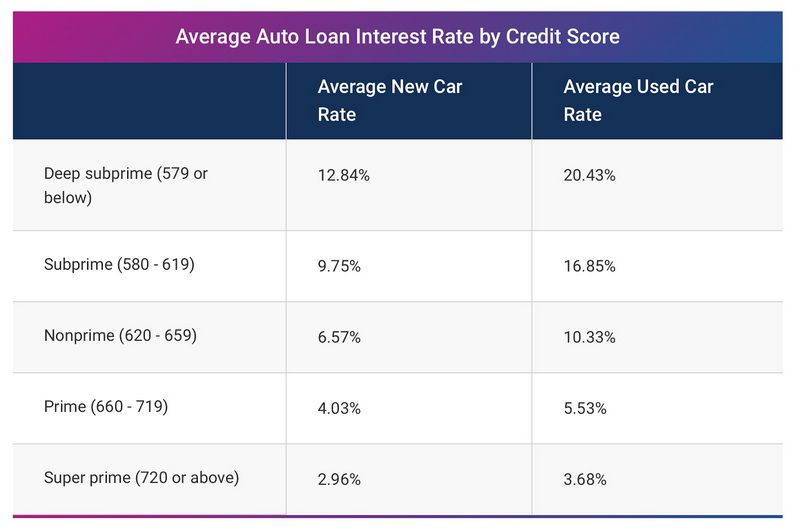
For new car loans, rates are generally lower and more uniform across different credit tiers, though significant differences still exist:
- Excellent Credit (780+): Borrowers in this tier typically qualify for the lowest rates, often between 3.5% and 6%. They are considered prime borrowers with minimal risk.
- Good Credit (670-739): Those with good credit can expect rates in the range of 6% to 9%. While still competitive, these rates reflect a slightly higher perceived risk than excellent credit scores.
- Fair Credit (580-669): Borrowers with fair credit might see rates anywhere from 10% to 14%. Lenders are taking on more risk here, and the rates reflect that.
- Poor Credit (Below 580): For individuals with poor credit, rates can be exceptionally high, often exceeding 15% and sometimes going into the 20s or even higher. These subprime loans are designed to offset the significant risk of default.
It’s crucial to remember that these are averages and actual rates can vary based on the specific lender, loan term, and current market conditions.
Average Rates for Used Cars: A Different Landscape
Used car loan rates are almost universally higher than new car rates, primarily due to the accelerated depreciation and potentially higher maintenance risks associated with pre-owned vehicles.
- Excellent Credit (780+): Even with excellent credit, used car rates are typically higher than new car rates, often starting around 5% to 8%.
- Good Credit (670-739): Expect rates in the 8% to 12% range for used car loans.
- Fair Credit (580-669): Rates for fair credit can jump significantly, often between 13% and 18%.
- Poor Credit (Below 580): For poor credit, used car loan rates can be extremely high, frequently above 20% and sometimes reaching over 25%, making these loans very expensive.
The age and mileage of the used car can also influence these rates, with older, higher-mileage vehicles typically attracting higher interest.
How Economic Trends Shape Interest Rates
Beyond individual credit profiles, macro-economic factors profoundly influence the direction of car loan interest rates. The Federal Reserve’s monetary policy is a primary driver. When the Fed raises its benchmark interest rate (the federal funds rate) to combat inflation, commercial banks and lenders typically increase their prime lending rates, which, in turn, translates to higher rates for consumers on products like car loans. Conversely, when the Fed lowers rates to stimulate economic growth, car loan rates tend to decrease.
Inflation also plays a role. In periods of high inflation, lenders might charge higher interest rates to ensure that the purchasing power of the money they’ll receive back in the future is preserved. The overall economic outlook and consumer confidence can also affect rates. During economic downturns, lenders might tighten their lending standards and offer higher rates due to increased perceived risk, while a booming economy might see more competitive offers. Staying informed about these broader economic trends can provide valuable context when shopping for a car loan.
Strategies to Secure the Best Car Loan Interest Rate
Armed with the knowledge of what influences interest rates, you can take proactive steps to position yourself for the most favorable terms. Securing a lower interest rate is often a combination of preparation, comparison, and negotiation.
Boost Your Credit Score
This is perhaps the most impactful strategy. Before even setting foot in a dealership or applying for a loan, dedicating time to improve your credit score can yield significant returns.
- Pay bills on time, every time: Payment history is the biggest factor in your credit score.
- Reduce credit card debt: Aim to keep your credit utilization ratio (debt vs. available credit) below 30%, ideally even lower.
- Avoid opening new lines of credit: New credit inquiries can temporarily lower your score.
- Check your credit report for errors: Dispute any inaccuracies that could be dragging down your score.
Even a modest improvement can move you into a better credit tier, unlocking lower rates.
Shop Around and Compare Lenders
Never take the first offer you receive, especially from a dealership. Just as you comparison shop for the car itself, you should comparison shop for the loan.
- Banks: Traditional banks often offer competitive rates to their existing customers.
- Credit Unions: Known for member-friendly rates, credit unions are an excellent option.
- Online Lenders: Companies like LightStream, Capital One Auto Finance, and others offer streamlined applications and competitive rates.
- Dealership Financing: While convenient, dealership rates are often marked up. However, they can sometimes offer promotional low-APR financing on new cars directly from the manufacturer. It’s best to have outside offers in hand to compare.
Gathering multiple pre-approvals within a short window (typically 14-45 days, depending on the credit scoring model) will be treated as a single hard inquiry on your credit report, minimizing the impact while maximizing your options.
The Advantage of Pre-Approval
Getting pre-approved for a car loan before you visit a dealership is a powerful negotiating tool. Pre-approval means a lender has conditionally agreed to lend you a specific amount at a certain interest rate. This gives you several advantages:
- Know your budget: You know exactly how much you can afford and at what rate, preventing you from overspending.
- Focus on the car price: With financing secured, you can negotiate the car’s price as a cash buyer, free from the pressure of discussing monthly payments that can obscure the actual cost.
- Leverage against dealership financing: If the dealership can beat your pre-approved rate, great! If not, you have a solid offer to fall back on.
Consider a Larger Down Payment and Shorter Term
While these strategies might require more upfront capital or higher monthly payments, they are incredibly effective at reducing the total cost of your loan.
- Larger Down Payment: As discussed, a bigger down payment reduces the loan amount, lowers risk for the lender, and often results in a lower interest rate. It also builds equity in your car faster.
- Shorter Loan Term: Opting for a 36- or 48-month loan instead of a 60- or 72-month term will usually secure a lower interest rate. While monthly payments will be higher, the total interest paid over the life of the loan will be significantly less, saving you money in the long run. Assess your budget to see if you can comfortably afford the higher payments for a shorter term.
Beyond the Rate: Understanding the True Cost of Your Loan
While the interest rate is undeniably important, focusing solely on it can lead to overlooking other crucial aspects that contribute to the actual expense of your car loan. A truly insightful financial decision requires a holistic view.
Decoding the Annual Percentage Rate (APR)
As highlighted earlier, the APR is often a more accurate representation of your loan’s cost than the interest rate alone. It includes not just the interest but also various lender fees. When comparing loan offers, always ask for and scrutinize the APR. A loan might advertise a very low interest rate, but if it comes with high origination fees, application fees, or other charges, its APR could be higher than a loan with a slightly higher interest rate but no additional fees. Lenders are legally required to disclose the APR, making it your most reliable metric for comparing loan products fairly. Don’t let a catchy low interest rate distract you from the true cost embedded in the APR.
Beware of Hidden Fees and Charges
Beyond the interest and what’s included in the APR, be vigilant for other fees that can inflate the total cost. These might include:
- Prepayment Penalties: Some loans charge a fee if you pay off your loan early. While less common on car loans than other types of debt, it’s worth checking, especially if you plan to pay off your car quickly.
- Late Payment Fees: Standard across most loans, these can add up quickly if you miss a payment.
- Processing or Documentation Fees: Dealerships and some lenders may charge these administrative fees. While some are legitimate, others can be negotiable or excessive.
- Credit Insurance or Extended Warranties: While potentially valuable, these are often high-profit items for dealerships and lenders and are sometimes bundled into the loan without clear explanation or consent. Always understand what you’re buying and if it’s necessary.
Always request a full breakdown of all fees and charges before signing any loan agreement. Understanding every line item ensures you’re not paying for anything unnecessary or unexpected.
Calculating Your Total Loan Cost
To truly understand the financial impact of your car loan, you need to calculate the total cost you’ll pay over the loan’s lifetime. This involves adding the principal loan amount to the total interest accrued over the loan term, plus any non-interest fees. For example:
- Loan Amount: $25,000
- APR: 6%
- Loan Term: 60 months (5 years)
- Total Interest Paid: Approximately $4,000
- Total Repayment (Principal + Interest): $29,000
- Any Other Fees (e.g., $300 documentation fee not in APR): $300
- Total Cost of the Loan: $29,300
Online car loan calculators are excellent tools for estimating these figures. By understanding your total cost, you can evaluate whether the vehicle is truly within your budget and if the interest rate you’ve secured aligns with your financial goals. It puts the monthly payment into perspective, revealing the long-term commitment you’re making.

Conclusion: Driving Towards Financial Prudence
The interest rate on a car loan is far more than an abstract percentage; it’s a dynamic financial lever that dictates the true affordability and long-term cost of your vehicle. From the foundational influence of your credit score to the subtle impacts of market conditions and the strategic advantages of a down payment, numerous factors converge to determine the rate you ultimately receive.
By proactively managing your credit, diligently shopping around for lenders, understanding the comprehensive nature of the Annual Percentage Rate (APR), and being mindful of the loan term and potential fees, you empower yourself to navigate the complexities of car financing with confidence. Securing a favorable interest rate isn’t just about saving money; it’s about exercising financial prudence, optimizing your budget, and ensuring that your car ownership experience is one of freedom and convenience, rather than an unforeseen financial burden. Approach your next car loan with knowledge and preparation, and you’ll be well on your way to making a smart financial decision that serves your long-term goals.
aViewFromTheCave is a participant in the Amazon Services LLC Associates Program, an affiliate advertising program designed to provide a means for sites to earn advertising fees by advertising and linking to Amazon.com. Amazon, the Amazon logo, AmazonSupply, and the AmazonSupply logo are trademarks of Amazon.com, Inc. or its affiliates. As an Amazon Associate we earn affiliate commissions from qualifying purchases.