
Purchasing a car is a significant financial decision for many individuals and families. Beyond the excitement of choosing a make and model, understanding the financial commitment involved is paramount. A car payment isn’t just an arbitrary number; it’s a meticulously calculated figure influenced by several key variables, directly impacting your monthly budget and overall financial health. Mastering the art of calculating car payments empowers you to make informed decisions, negotiate effectively, and avoid common financial pitfalls. This guide will demystify the process, breaking down the formula and the factors that influence your final payment, all to help you drive away with confidence, not just a car.

The Essentials of Car Loan Calculations: Understanding the Variables
Before diving into complex formulas, it’s crucial to grasp the fundamental components that collectively determine your monthly car payment. Each variable plays a distinct role, and a change in one can significantly alter the final figure. A comprehensive understanding of these elements is the first step towards accurate calculation and savvy negotiation.
Deconstructing the Purchase Price and Down Payment
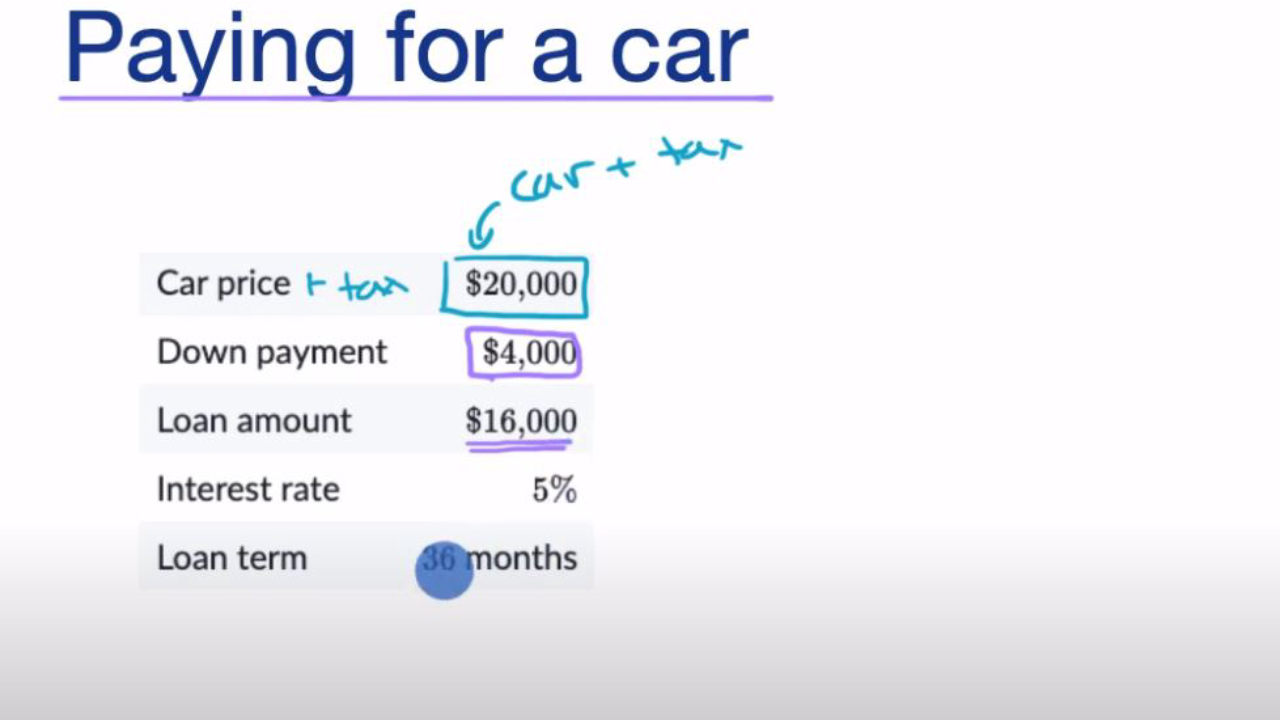
The starting point for any car loan calculation is the car’s purchase price. This is the negotiated price of the vehicle itself, before any taxes, fees, or additional options are added. It’s the sticker price, adjusted for any discounts or dealer markups. From this, your down payment is subtracted. A down payment is the initial sum of money you pay upfront towards the car’s purchase. The larger your down payment, the less money you need to borrow, which directly translates to a lower principal amount for your loan. This reduces both your monthly payments and the total interest paid over the life of the loan. While some lenders offer zero-down options, a substantial down payment is almost always a financially prudent move. It demonstrates financial stability to lenders and immediately builds equity in your vehicle.
The Critical Role of Interest Rates (APR) and Loan Terms
Perhaps the most impactful variables after the principal are the interest rate and the loan term. The interest rate, often expressed as an Annual Percentage Rate (APR), is essentially the cost of borrowing money. It’s a percentage of the principal amount that the lender charges you for the privilege of using their capital. Your creditworthiness is the primary determinant of the APR you’ll be offered; individuals with higher credit scores typically qualify for lower interest rates. Even a seemingly small difference in APR can amount to hundreds, if not thousands, of dollars saved over the life of a loan.
The loan term, on the other hand, is the duration over which you agree to repay the loan, typically expressed in months (e.g., 36, 48, 60, 72, or even 84 months). A longer loan term will generally result in lower monthly payments because you are spreading the repayment of the principal over a greater number of periods. However, this comes at a cost: a longer term usually means you’ll pay significantly more in total interest, as the interest accrues for a longer duration. Conversely, a shorter term leads to higher monthly payments but substantially less total interest paid, getting you out of debt faster. Balancing the affordability of the monthly payment with the total cost of interest is key here.
Factoring in Trade-Ins and Additional Costs
If you’re trading in your current vehicle, its trade-in value will act much like a down payment. This value is subtracted from the car’s purchase price, further reducing the amount you need to finance. It’s crucial to get an accurate estimate of your car’s trade-in value before negotiating to ensure you receive a fair deal. Websites like Kelley Blue Book or Edmunds can provide good starting points.
Beyond the negotiated price, several additional costs can creep into the total financed amount. These include sales tax, registration fees, documentation fees charged by the dealership, and sometimes even extended warranty plans or gap insurance (which covers the difference between what you owe on a car and what your insurance company pays if the car is stolen or totaled). While some of these are mandatory (like taxes and registration), others are optional. Always scrutinize the final paperwork to understand every line item and ensure you’re not paying for unnecessary extras that increase your loan principal.
Step-by-Step: Mastering the Car Loan Payment Formula
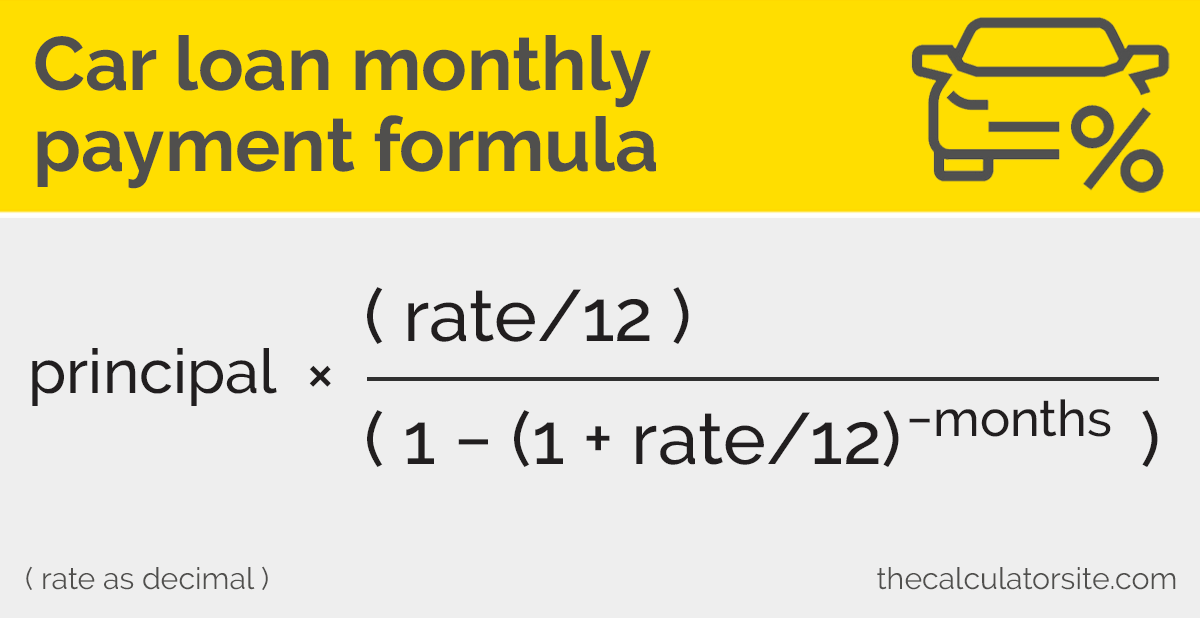
Understanding the individual variables is one thing; combining them into a coherent calculation is another. While many online calculators can do the heavy lifting, knowing the underlying formula not only provides a deeper insight but also helps you verify the results. The standard formula for calculating a fixed monthly loan payment is the amortization formula:
M = P [ i(1 + i)^n ] / [ (1 + i)^n – 1 ]
Where:
M= Your monthly paymentP= The principal loan amount (the amount you need to borrow)i= Your monthly interest raten= Total number of payments (loan term in months)
Let’s break down how to derive each of these components.
Determining Your Loan Principal (P)
Your principal loan amount is the actual sum of money you need to borrow from the lender. It’s calculated by taking the car’s purchase price, subtracting any down payment you make, and also subtracting your trade-in value (if applicable). Don’t forget to factor in any mandatory taxes or fees that you intend to roll into the loan, though it’s often advisable to pay these upfront if possible to reduce your principal.
Principal (P) = (Car Purchase Price + Applicable Taxes/Fees) - Down Payment - Trade-in Value
For example, if a car costs $30,000, sales tax is $2,000, you have a $5,000 down payment, and a $3,000 trade-in:
P = ($30,000 + $2,000) - $5,000 - $3,000 = $24,000
Unpacking the Monthly Interest Rate (i)
The interest rate you’re quoted is typically an Annual Percentage Rate (APR). For the purpose of calculating monthly payments, you need to convert this annual rate into a monthly rate. You do this by dividing the APR by 12 (the number of months in a year) and then converting it from a percentage to a decimal.
Monthly Interest Rate (i) = (APR / 100) / 12
So, if your APR is 6%:
i = (6 / 100) / 12 = 0.06 / 12 = 0.005
Calculating the Total Number of Payments (n)
This is straightforward. Your loan term is usually given in years (e.g., 5 years, 6 years). To get the total number of payments, simply multiply the loan term in years by 12.
Total Number of Payments (n) = Loan Term in Years * 12
For a 5-year loan:
n = 5 * 12 = 60
Applying the Amortization Formula for Accuracy
Once you have your P, i, and n values, you can plug them into the amortization formula. Let’s use our example:
P = $24,000
i = 0.005
n = 60
M = 24000 [ 0.005(1 + 0.005)^60 ] / [ (1 + 0.005)^60 – 1 ]
M = 24000 [ 0.005(1.005)^60 ] / [ (1.005)^60 – 1 ]
First, calculate (1.005)^60:
(1.005)^60 ≈ 1.34885
Now, substitute this back:
M = 24000 [ 0.005 * 1.34885 ] / [ 1.34885 – 1 ]
M = 24000 [ 0.00674425 ] / [ 0.34885 ]
M = 161.862 / 0.34885
M ≈ $463.95
So, your estimated monthly payment would be approximately $463.95. While manually doing this can be tedious, understanding the mechanics helps you appreciate how changes in P, i, or n affect M.
Beyond the Formula: Influencers on Your Monthly Car Payment
While the formula provides the mathematical basis, several external factors significantly influence the terms you’re offered and thus your final monthly payment. Being aware of these elements can give you leverage during negotiations and help you secure better financing.
The Impact of Your Credit Score
Your credit score is arguably the single most important factor determining the interest rate you’ll receive on a car loan. Lenders use your credit score as a quick assessment of your creditworthiness and your likelihood of repaying the loan. A higher credit score (typically 700+) indicates a lower risk, making you eligible for the most competitive interest rates (often referred to as “tier 1” rates). Conversely, a lower credit score will result in a higher APR, sometimes significantly so, leading to higher monthly payments and substantially more interest paid over the loan’s life. Before shopping for a car, check your credit report and score, and take steps to improve it if necessary. Even a few points can save you money.
The Double-Edged Sword of Loan Terms
As discussed, a longer loan term (e.g., 72 or 84 months) will reduce your monthly payment by spreading the principal over more periods. This can make an otherwise unaffordable car seem within reach financially. However, it’s a double-edged sword. You’ll pay significantly more in total interest due to the extended period of accrual. Furthermore, a longer term increases the likelihood of becoming “upside down” on your loan, meaning you owe more than the car is worth, especially in the early years of the loan when depreciation is steepest. This can be problematic if your car is totaled or stolen, as your insurance payout might not cover the outstanding loan balance. A shorter loan term (e.g., 36 or 48 months) results in higher monthly payments but drastically reduces the total interest paid and helps you build equity faster. The ideal term balances affordability with the total cost of ownership.
Hidden Costs: Taxes, Fees, and Insurance Implications
It’s crucial to remember that the calculated monthly payment often doesn’t encompass the total cost of car ownership. Besides the sales tax and registration fees that might be rolled into your loan, you’ll also have to budget for car insurance. Insurance premiums vary widely based on your age, driving record, location, the car’s make and model, and the type of coverage you select. Many lenders require comprehensive and collision coverage for financed vehicles, adding a substantial recurring cost that isn’t part of your loan payment. Other ongoing costs include fuel, maintenance, repairs, and potential parking fees. When assessing affordability, always consider these “hidden” or external costs alongside your monthly car payment to get a realistic picture of your financial commitment.
Practical Tools and Strategies for Smarter Car Financing
Calculating your car payment is just the beginning. The real financial savvy comes from using this knowledge to your advantage, leveraging available tools, and employing strategies to optimize your financing deal.
Leveraging Online Calculators and Spreadsheets
While the manual formula is great for understanding, online car payment calculators are indispensable for quick, accurate calculations. Websites of banks, credit unions, and automotive portals typically offer these tools. They allow you to easily input different purchase prices, down payments, interest rates, and loan terms to see how each variable impacts your monthly payment. This “what-if” analysis is incredibly powerful for budgeting and comparing different scenarios.
For those who prefer a more personalized approach, spreadsheets (like Excel or Google Sheets) can be even more versatile. You can build your own payment calculator using the amortization formula, allowing you to track other financial aspects, compare offers side-by-side, and even project the total cost of ownership over the loan’s life. Many pre-built loan amortization templates are also available, making it easier to visualize how your principal and interest are repaid over time.
Strategies to Potentially Lower Your Monthly Payment
Once you understand the mechanics, you can proactively seek ways to reduce your monthly outlay:
- Increase Your Down Payment: The most direct way to lower your principal and thus your payments is to put more money down upfront.
- Improve Your Credit Score: A higher credit score qualifies you for lower APRs, which significantly reduces both your monthly payment and total interest. Focus on paying bills on time, reducing debt, and correcting any errors on your credit report.
- Shop for the Best Interest Rate: Don’t just accept the first offer. Get pre-approved for a loan from multiple lenders (banks, credit unions, online lenders) before visiting the dealership. This provides a baseline and negotiating leverage.
- Negotiate the Car Price: A lower purchase price means a lower principal amount to finance. Don’t be afraid to haggle.
- Consider a Shorter Loan Term (if affordable): While this increases monthly payments, it drastically reduces total interest, saving you money in the long run. If you can afford the higher payments, it’s often the financially smarter choice.
- Avoid Unnecessary Add-ons: Be wary of high-pressure sales tactics for extended warranties, paint protection, or other extras. Only finance what you truly need and understand.
Budgeting for Total Car Ownership: A Holistic Approach
Calculating your car payment is a crucial first step, but it’s only one piece of the puzzle. A truly financially intelligent approach involves budgeting for the total cost of car ownership. This means factoring in all expenses beyond the loan payment:
- Insurance Premiums: Get quotes before you buy.
- Fuel Costs: Estimate based on mileage and the car’s fuel efficiency.
- Maintenance: Oil changes, tire rotations, brake pads, and other routine services. Budget an emergency fund for unexpected repairs.
- Registration and Licensing: Annual fees.
- Depreciation: While not a monthly cash outlay, it’s a significant financial loss over time.
- Parking Fees, Tolls, Car Washes: If applicable.
By considering all these aspects, you create a realistic budget that prevents financial surprises and ensures your car remains a convenience, not a burden. Use a personal budgeting tool or spreadsheet to track these expenses monthly.
Making an Informed Decision: The Path to Affordable Car Ownership
Calculating car payments is more than just a mathematical exercise; it’s a fundamental aspect of responsible financial planning when acquiring a vehicle. By understanding the variables, mastering the formula, and recognizing the external factors that influence your loan terms, you equip yourself with the knowledge to navigate the complex world of automotive financing.
Empowerment comes from preparation. Take the time to understand your credit score, shop around for the best interest rates, accurately assess your down payment and trade-in value, and meticulously calculate your potential payments. Always look beyond the attractive monthly figure and consider the total cost of the loan and the long-term financial implications. With this approach, you can confidently make a decision that not only puts you behind the wheel of your desired car but also keeps your personal finances firmly in control, paving the way for truly affordable and stress-free car ownership.
aViewFromTheCave is a participant in the Amazon Services LLC Associates Program, an affiliate advertising program designed to provide a means for sites to earn advertising fees by advertising and linking to Amazon.com. Amazon, the Amazon logo, AmazonSupply, and the AmazonSupply logo are trademarks of Amazon.com, Inc. or its affiliates. As an Amazon Associate we earn affiliate commissions from qualifying purchases.