
In an era defined by digital transformation, the way we consume media has undergone a profound metamorphosis. Traditional broadcast television, once the undisputed king of home entertainment, has steadily yielded ground to innovative streaming services. Among the most prominent and technologically advanced players in this evolving landscape is YouTube TV. More than just a collection of channels, YouTube TV represents a sophisticated convergence of broadcast content and cutting-edge internet technology, delivered by one of the world’s leading tech giants, Google.
At its core, YouTube TV is a live television streaming service that provides subscribers with access to a vast array of live channels, on-demand content, and a unique cloud-based DVR, all accessible across a multitude of internet-connected devices. It’s a testament to the power of IP-based content delivery, reimagining the conventional cable or satellite TV experience without the need for cumbersome hardware or restrictive contracts. Understanding YouTube TV isn’t just about listing its features; it’s about appreciating the intricate technological architecture and user-centric design that underpins its seamless operation and positions it as a frontrunner in the future of television.

Core Technological Architecture and Service Delivery
The robustness and reliability of YouTube TV stem directly from its sophisticated underlying technology, primarily leveraging Google’s expansive global infrastructure. This technological foundation is what allows the service to deliver high-quality video streams to millions of users simultaneously, across diverse geographical locations and network conditions.
Cloud-Based Infrastructure for Seamless Streaming
YouTube TV operates on Google’s formidable cloud platform, a global network of data centers optimized for high availability, scalability, and performance. This cloud-centric approach is fundamental to its operation. When a user tunes into a channel or accesses recorded content, the video stream is not pulled from a local server but rather delivered from the nearest Google data center, dynamically routed for optimal latency and bandwidth.
A critical component of this delivery mechanism is Adaptive Bitrate (ABR) streaming. This technology continuously monitors the user’s internet connection speed and device capabilities, dynamically adjusting the video quality (bitrate) to ensure a smooth, uninterrupted viewing experience. If bandwidth drops, the stream seamlessly switches to a lower resolution; if it improves, the quality is automatically enhanced, often without the viewer even noticing. This intelligence in content delivery prevents buffering and ensures a consistent experience, whether on a blazing-fast fiber connection or a more modest mobile data plan. Furthermore, the use of advanced video codecs like H.264 (AVC) and increasingly H.265 (HEVC) allows for efficient compression, delivering high-quality video at lower file sizes, thus conserving bandwidth for both the service provider and the end-user.
Channel Lineup and Content Aggregation
From a technological standpoint, integrating live broadcast channels into a streaming platform like YouTube TV is a complex endeavor. The service acts as an aggregator, ingesting live feeds from numerous broadcasters (networks like ABC, CBS, Fox, NBC, ESPN, CNN, etc.). These incoming broadcast signals, often in various formats and resolutions, must be transcoded and re-encoded into a standardized digital streaming format compatible with YouTube TV’s platform. This involves sophisticated signal processing, digital rights management (DRM) encoding to protect copyrighted content, and packaging the streams for delivery via HTTP-based protocols (like HLS or DASH).
The challenge lies not just in receiving the feeds but in reliably distributing them in real-time, often with minimal delay compared to traditional broadcasts. This requires powerful ingest servers, real-time transcoding farms, and a highly optimized content delivery network (CDN) that can handle millions of concurrent streams without degradation. The synchronization of audio and video across different devices and streams is also paramount, achieved through precise timestamping and buffering strategies.
Device Compatibility and Cross-Platform Experience
One of YouTube TV’s significant technological advantages is its ubiquitous device support. The service is accessible on virtually any internet-connected device, including smart TVs (Samsung, LG, Vizio, etc.), streaming media players (Roku, Apple TV, Amazon Fire TV), game consoles (Xbox), mobile devices (iOS, Android), and web browsers. This extensive compatibility is enabled by meticulous software development, leveraging various operating system APIs and web standards.
For each platform, YouTube TV engineers develop optimized applications or web interfaces that interact seamlessly with the underlying streaming infrastructure. This requires careful consideration of each device’s hardware capabilities, screen resolutions, input methods, and network stack. The goal is to provide a consistent, intuitive user experience (UX) regardless of the device. Cloud synchronization ensures that viewing progress, DVR recordings, and personalized settings are instantly available when switching from a phone to a smart TV, providing a truly integrated multi-platform experience.
Advanced Features Redefining the Viewer Experience
Beyond merely delivering channels, YouTube TV distinguishes itself through a suite of advanced features that fundamentally enhance how users interact with live and recorded television content. These features are built upon sophisticated software engineering and cloud capabilities, setting new benchmarks for convenience and flexibility.
Unlimited Cloud DVR: A Paradigm Shift in Recording
Perhaps the most revolutionary feature of YouTube TV from a technological perspective is its unlimited cloud DVR. Unlike traditional DVRs, which rely on physical hard drives within a set-top box, YouTube TV’s DVR stores recordings in the cloud, utilizing Google’s massive data storage infrastructure. This means no storage limits, no conflicts when trying to record multiple shows simultaneously, and no hardware to maintain. Users can record as many programs as they want, and they remain accessible for up to nine months.
Technologically, this is achieved by storing a single master copy of a program on Google’s servers. When a user “records” a show, what actually happens is that a pointer or metadata entry is created in their personal account, linking them to that master copy. This eliminates the need to store multiple identical copies for each user, making it incredibly efficient and scalable. The ability to fast-forward, rewind, and pause live TV, even if not explicitly recorded, further showcases the underlying buffering and streaming technologies at play, allowing users to control their viewing experience with unprecedented flexibility.
Intuitive User Interface and Personalized Recommendations
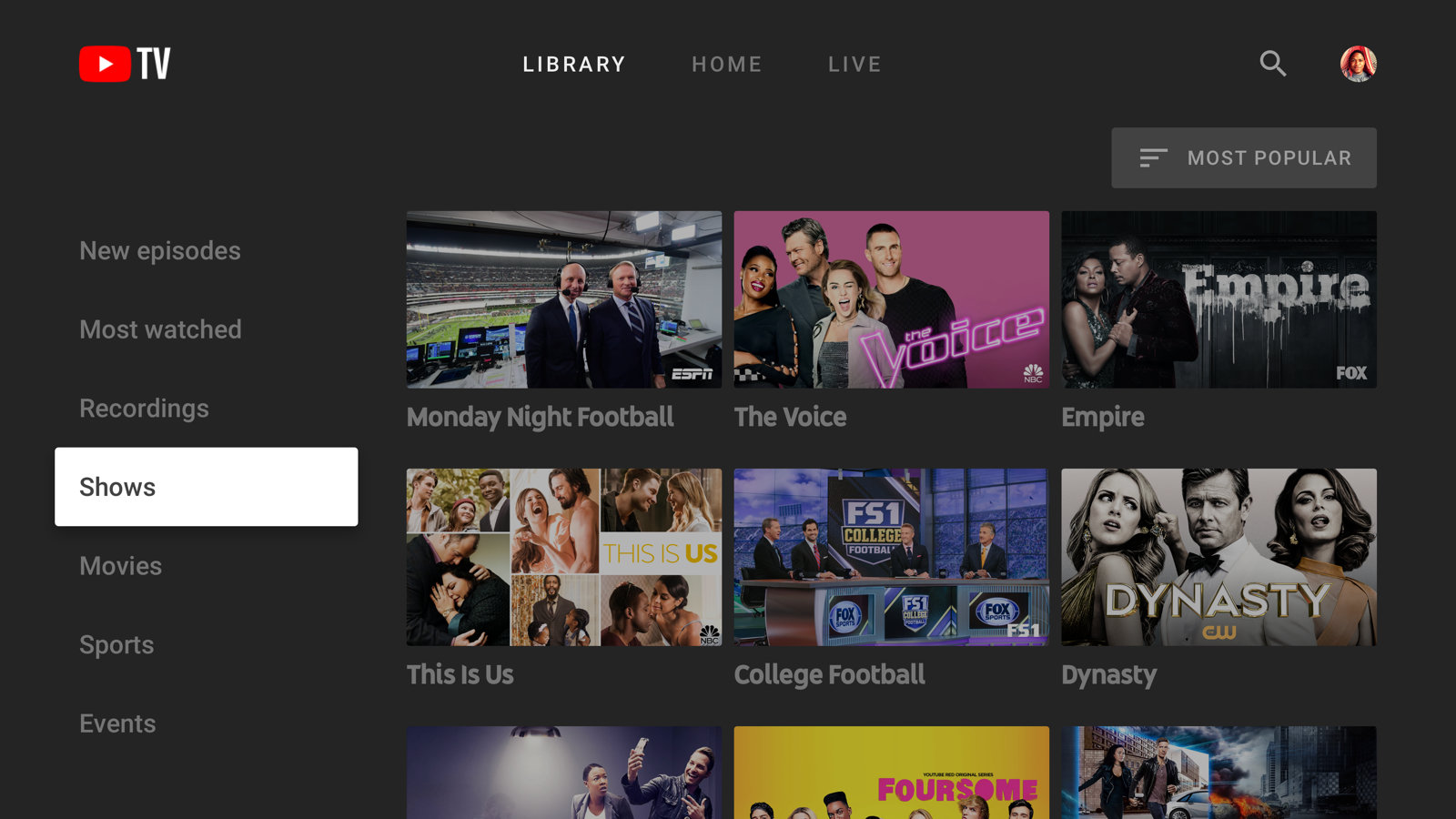
The user interface (UI) of YouTube TV is designed for simplicity and efficiency, mirroring the clean aesthetic of its parent platform, YouTube. Navigation is intuitive, with clear categories for Live, Library (DVR), and Home (recommendations). Underneath this user-friendly facade lies powerful data analytics and machine learning algorithms.
The “Home” section provides personalized content recommendations based on a user’s viewing history, subscriptions, and interactions. This is achieved through sophisticated recommender systems that analyze vast datasets of user behavior, identifying patterns and predicting preferences. These algorithms dynamically curate a feed of relevant live and on-demand content, reducing discovery friction and enhancing engagement. Search functionality is robust, utilizing natural language processing to quickly find channels, shows, or specific topics across the entire library. This intelligent UI/UX design is crucial for managing the overwhelming volume of content available and delivering a tailored experience.
Multi-User Profiles and Simultaneous Streams
YouTube TV supports up to six individual accounts (family members) per subscription, each with its own personalized settings, DVR library, and recommendations. This feature is enabled by robust account management systems and user authentication protocols. Technologically, each profile acts as a distinct user identity within the shared subscription, ensuring that one family member’s viewing habits don’t interfere with another’s personalized experience.
Furthermore, the service typically allows for three simultaneous streams. This capability is managed by sophisticated session tracking and resource allocation systems on Google’s backend. When a device initiates a stream, the system authenticates the user, checks against the simultaneous stream limit, and then allocates the necessary bandwidth and server resources. This balancing act ensures that multiple users within a household can enjoy their content concurrently on different devices without compromising performance or infringing on licensing agreements.
The Technological Edge Over Traditional TV and Competitors
YouTube TV’s design inherently offers several technological advantages over legacy television services and even differentiates itself within the crowded streaming market. These distinctions often boil down to flexibility, innovation velocity, and a superior user experience enabled by modern software architectures.
Breaking Free from Hardware: The Software-Defined TV Experience
Perhaps the most significant technological leap YouTube TV offers is its complete dissociation from dedicated hardware. Traditional cable and satellite TV necessitate proprietary set-top boxes, which are often clunky, outdated, and leased from the provider. These boxes represent a physical bottleneck for innovation, requiring costly hardware upgrades to introduce new features.
YouTube TV, in contrast, is entirely software-defined. Its “interface” is an app that can be updated wirelessly and frequently, delivering new features, bug fixes, and performance enhancements seamlessly. This agility allows YouTube TV to adapt quickly to user feedback, integrate emerging technologies, and continuously refine its service without requiring any action from the subscriber beyond an app update. The virtualization of the TV experience means freedom from physical constraints, enabling unprecedented flexibility in where and how content is consumed. This paradigm shift also results in greater reliability, as server-side issues can often be mitigated faster in a cloud environment than by dispatching technicians to individual homes.
Differentiating Features in the Streaming Landscape
While many services offer live TV streaming, YouTube TV distinguishes itself through several technological facets. Its unlimited cloud DVR, as discussed, is a significant differentiator from competitors who often impose storage limits or expiration dates. This is a direct benefit of Google’s vast storage capabilities and advanced data management.
Another area of differentiation lies in its tight integration with the broader Google ecosystem. For instance, YouTube TV benefits from Google’s expertise in search and AI, leading to superior content discovery and recommendation engines. The potential for seamless integration with Google Assistant and smart home devices (like Google Nest Hubs) offers a unique future-proofing advantage that smaller competitors may struggle to match. Furthermore, YouTube TV’s commitment to delivering a polished, low-latency stream, even during peak events like major sports finals, is a testament to its robust CDN and ABR technologies, which are often superior due to Google’s massive global network infrastructure. The ability to easily add and remove premium add-ons through a digital storefront, without requiring service calls or equipment changes, also highlights its software-first approach compared to the more rigid systems of some rivals.
Future Innovations and the Evolution of Streaming Technology
The technological trajectory of YouTube TV, intertwined with Google’s broader ambitions, suggests a future rich with innovations aimed at enhancing the immersive qualities of streaming and integrating it more deeply into our digital lives.
Towards Enhanced Visuals: 4K and Beyond
The demand for higher fidelity video is relentless, and YouTube TV is already positioned to meet it. With the introduction of a 4K Plus add-on, YouTube TV demonstrates its capability to deliver ultra-high-definition content. Technologically, this requires significantly more bandwidth and advanced compression codecs like AV1, which Google is actively developing and promoting. Future enhancements will likely include wider support for High Dynamic Range (HDR) for more vibrant colors and contrast, further closing the gap between traditional broadcast quality and streaming, and potentially even exploring higher frame rates for smoother motion, especially beneficial for sports. The challenge lies in optimizing these high-bandwidth streams for various network conditions while maintaining the seamless ABR experience. Continued advancements in encoding, distribution, and decoding hardware will drive this evolution.

Integration with Smart Ecosystems and AI-Driven Enhancements
YouTube TV’s future will undoubtedly see deeper integration into smart home ecosystems and more sophisticated AI-driven features. Imagine seamless voice control through Google Assistant to not only change channels but also to find specific moments within a broadcast, or to receive proactive recommendations based on your smart calendar (e.g., “Remind me when my favorite team’s game starts”).
AI will play an increasingly critical role in personalized advertising, delivering more relevant and less intrusive ads through server-side ad insertion (SSAI) that dynamically inserts commercials tailored to individual viewers. Beyond recommendations, AI could power advanced content analysis, enabling features like automatic sports highlights generation or “smart summaries” of news programs. The ability to interact with live content, perhaps through polls or augmented reality overlays (especially during sports events), presents exciting possibilities. As internet speeds increase and device processing power grows, YouTube TV will continue to push the boundaries of what a live television service can be, transforming it from a passive viewing experience into an interactive and intelligent part of our connected lives.
YouTube TV stands as a powerful exemplar of how technology is reshaping media consumption. By leveraging cloud computing, adaptive streaming, and intelligent software design, it offers a flexible, feature-rich, and user-friendly alternative to traditional television. Its continuous evolution, driven by Google’s technological prowess, promises to keep it at the forefront of the streaming revolution, consistently delivering innovative ways for us to connect with the content we love.
aViewFromTheCave is a participant in the Amazon Services LLC Associates Program, an affiliate advertising program designed to provide a means for sites to earn advertising fees by advertising and linking to Amazon.com. Amazon, the Amazon logo, AmazonSupply, and the AmazonSupply logo are trademarks of Amazon.com, Inc. or its affiliates. As an Amazon Associate we earn affiliate commissions from qualifying purchases.