
Opening an investment account marks a significant step towards securing your financial future, and for many, Vanguard stands out as a compelling choice. Renowned for its low-cost index funds, ETFs, and a unique investor-owned structure, Vanguard has empowered millions to pursue their financial goals with efficiency and transparency. This comprehensive guide will walk you through the process of opening a Vanguard account, from understanding its benefits to navigating the application steps, ensuring you embark on your investment journey with clarity and confidence.
Why Choose Vanguard for Your Investments?
Before diving into the mechanics of account opening, it’s beneficial to understand what distinguishes Vanguard in the vast landscape of financial service providers. Its unique model and investment philosophy resonate deeply with cost-conscious, long-term investors.

The Vanguard Philosophy: Investor-Owned and Low Costs
At its core, Vanguard is structured differently from most financial companies. It’s investor-owned, meaning its clients are the owners of the funds, which in turn own Vanguard. This structure eliminates external shareholders, allowing the company to operate at cost, with any profits being reinvested to lower expenses for investors. This commitment to low costs is not just a marketing slogan; it’s fundamental to their operation and directly benefits your investment returns. Lower expense ratios mean more of your money stays invested and grows over time, compounding the positive effects on your wealth. For an investor focused on long-term growth, minimizing fees is a critical component of successful investing. This principle is particularly powerful given the magic of compound interest; even seemingly small fees can erode a substantial portion of returns over decades. Vanguard’s dedication to this model has fundamentally reshaped the investment industry, setting a standard for accessible, low-cost investing that others have striven to emulate.
A Diverse Range of Investment Products
Vanguard offers a robust selection of investment products designed to meet various financial objectives and risk tolerances. While they are most famous for their index funds and exchange-traded funds (ETFs), which track specific market benchmarks rather than trying to beat them, their offerings extend further. You’ll find a wide array of actively managed mutual funds, money market funds for short-term savings, and target-date funds that automatically adjust their asset allocation as you approach retirement. This breadth ensures that whether you’re a novice investor looking for a simple, diversified portfolio or an experienced one seeking specific asset class exposure, Vanguard likely has a product suitable for your needs. Their ETFs, in particular, have gained immense popularity for their liquidity, transparency, and ultra-low expense ratios, making them an excellent choice for building diversified portfolios across various market segments, including U.S. stocks, international stocks, and bonds.
A Legacy of Trust and Performance
Founded by John C. Bogle in 1975, Vanguard has built a strong reputation over decades for its unwavering commitment to investors. Its disciplined, long-term approach to investing, coupled with its focus on cost efficiency, has resulted in a track record of strong, consistent performance relative to its peers. The company champions diversification, asset allocation, and keeping a steady hand, advising against market timing or chasing fads. This philosophy has instilled a deep sense of trust among its client base, many of whom are loyal adherents to Bogle’s enduring investment principles. When you choose Vanguard, you’re not just selecting a brokerage; you’re aligning with a financial institution that has demonstrably prioritized its investors’ success for nearly half a century.
Understanding Vanguard Account Types
Before you open an account, it’s crucial to determine which type best suits your financial goals. Vanguard offers a variety of accounts tailored for different purposes, from general investing to retirement and education savings.
Individual and Joint Brokerage Accounts
For most general investment needs, an individual or joint brokerage account is the go-to option. An individual brokerage account is owned by one person and is typically used for investing taxable money outside of retirement or education accounts. It offers flexibility in terms of when you can withdraw funds and for what purpose. A joint brokerage account, on the other hand, is owned by two or more individuals, often spouses or family members, and allows for shared ownership and management of assets. Both types provide access to Vanguard’s full suite of mutual funds and ETFs, making them versatile tools for building wealth over time, saving for a down payment, or creating an emergency fund that can grow with the market. The funds held within these accounts are typically subject to capital gains tax when sold at a profit, and dividends or interest income are also taxable in the year they are received.
Retirement Accounts: IRAs, Roth IRAs, and Rollovers
Vanguard is an excellent platform for saving for retirement, offering several tax-advantaged account types:
- Traditional IRA (Individual Retirement Account): Contributions may be tax-deductible, and your investments grow tax-deferred until retirement, when withdrawals are taxed as ordinary income.
- Roth IRA: Contributions are made with after-tax dollars, meaning they are not tax-deductible. However, qualified withdrawals in retirement are entirely tax-free, making it highly attractive for those who expect to be in a higher tax bracket later in life.
- SEP IRA (Simplified Employee Pension): Designed for self-employed individuals and small business owners, allowing for much higher contribution limits than traditional or Roth IRAs.
- SIMPLE IRA (Savings Incentive Match Plan for Employees): Another option for small businesses, offering a more straightforward retirement savings plan.
- 401(k) Rollovers: If you’ve left a previous employer and have a 401(k) or similar plan, you can roll it over into a Vanguard IRA. This allows you to consolidate your retirement savings and often access a broader range of investment options with lower fees. A direct rollover ensures your funds move seamlessly without triggering tax events.
These accounts provide significant tax benefits, encouraging long-term savings and compounding growth, making them cornerstones of a robust retirement strategy.
Education Savings: 529 Plans
Saving for a child’s education is a critical financial goal for many families. Vanguard partners with various states to offer 529 College Savings Plans. These plans allow your investments to grow tax-deferred, and qualified withdrawals for educational expenses (tuition, fees, books, room and board, even certain K-12 expenses) are tax-free. Contributions to 529 plans may even be tax-deductible at the state level, depending on where you live. Vanguard typically offers these plans with its signature low-cost funds, making it an attractive option for educational savings. It’s important to research the specific 529 plan offered by your state or one that Vanguard partners with, as benefits can vary.
Specialized Accounts: Small Business and Trusts
Beyond standard individual and retirement accounts, Vanguard also caters to more specialized needs. This includes small business retirement plans like SEP IRAs and SIMPLE IRAs, which we touched on, as well as solo 401(k)s for self-employed individuals. For estate planning purposes, you can also establish trust accounts, allowing for the management of assets on behalf of beneficiaries according to specific instructions. These options demonstrate Vanguard’s comprehensive approach to financial planning, addressing a broad spectrum of investment and wealth management needs.
Preparing for Your Vanguard Account Opening
Opening an account, particularly online, is streamlined, but having all necessary information and documents ready beforehand will expedite the process.
Essential Personal Information
You will need to provide standard personal identification details. This includes your full legal name, current residential address, mailing address (if different), phone number, and email address. Vanguard, like all financial institutions, is required by law to verify your identity.
Required Financial Details

Be prepared to provide your Social Security Number (SSN) or Taxpayer Identification Number (TIN). This is crucial for tax reporting purposes and identity verification. You’ll also need to specify your employment status and information about your employer, if applicable. Depending on the account type and how you plan to fund it, you might also be asked about your income and net worth, particularly for certain investment suitability assessments.
Gathering Necessary Documentation
While much of the process is digital, you might need to reference or provide copies of certain documents. These can include:
- A government-issued ID (driver’s license, state ID, passport) to verify your identity.
- Bank account and routing numbers for the bank account you wish to link for electronic transfers (ACH).
- Beneficiary information (full name, date of birth, SSN) for retirement accounts, which ensures your assets are distributed according to your wishes upon your passing.
- Statements from existing retirement accounts if you plan to initiate a rollover.
Having these details readily accessible before you begin the online application will ensure a smooth and efficient experience.
Step-by-Step Guide to Opening Your Account Online
Vanguard has made the process of opening an account largely digital and user-friendly. Here’s a typical walkthrough for an online application.
Initiating the Application Process
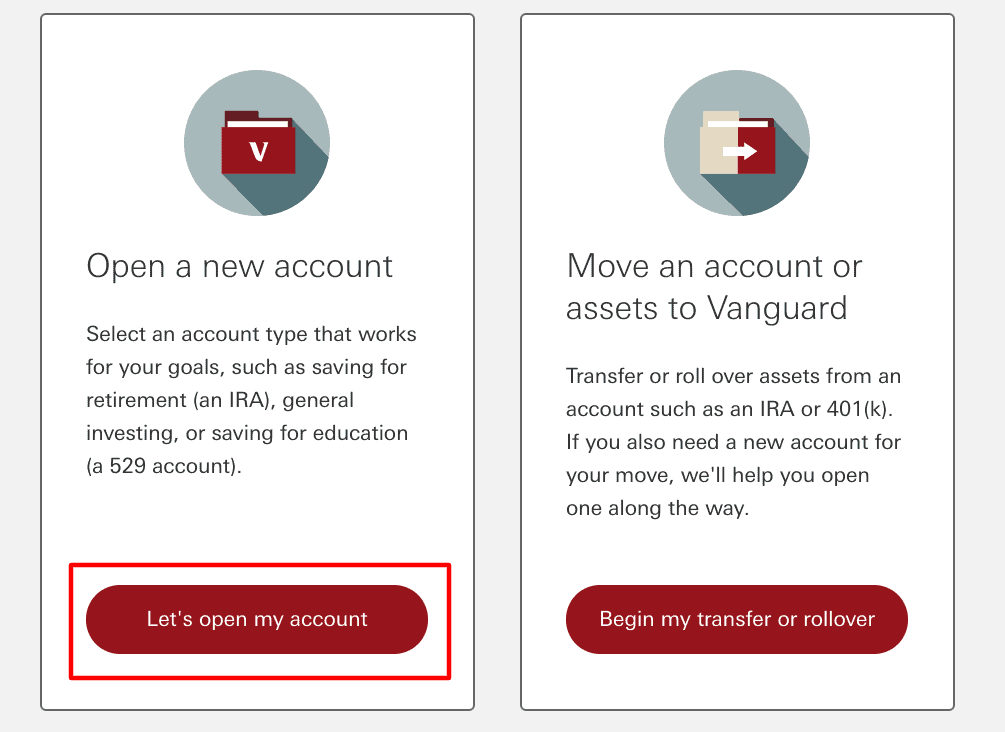
Start by visiting Vanguard’s official website (Vanguard.com). Navigate to the “Open an account” or “New investor” section. You’ll usually be prompted to choose the type of account you wish to open (e.g., individual brokerage, Roth IRA, 529 plan). Selecting the correct account type upfront is essential as it dictates the subsequent steps and requirements. You may also be asked if you are already a Vanguard client, as existing clients often have an even more streamlined process.
Providing Personal and Financial Details
The online application will guide you through a series of forms to input the personal information you gathered. This includes your name, address, SSN, date of birth, employment details, and citizenship status. For joint accounts, you will need to provide similar information for the co-applicant. You’ll also confirm your understanding of various disclosures and agreements, such as terms of service and privacy policies. Be sure to review these carefully before proceeding.
Funding Your New Account
Once your personal details are entered, you’ll typically be prompted to fund your new account. Vanguard offers several convenient options:
- Electronic Bank Transfer (ACH): This is the most common method. You’ll link your external bank account by providing the bank name, routing number, and account number. You can then specify an initial deposit amount to be transferred electronically. This usually takes a few business days to process.
- Mail a Check: You can print a deposit slip and mail a check directly to Vanguard. This method is slower but an option if you prefer not to link your bank account electronically.
- Rollover from Another Retirement Account: If you’re opening an IRA or Roth IRA, you might be funding it with a rollover from a 401(k) or another IRA. Vanguard will provide instructions for initiating this process, which often involves contacting your previous plan administrator.
- Transfer from Another Brokerage Firm: If you have an existing investment account elsewhere, you can initiate an Automated Customer Account Transfer Service (ACATS) to move your investments to Vanguard. This is a more complex process that Vanguard can help facilitate.
Ensure you meet any minimum initial investment requirements for the specific funds or ETFs you plan to purchase.
Selecting Your Initial Investments
After funding, or sometimes concurrently, you’ll choose your initial investments. If you’re unsure, Vanguard provides tools and resources, including risk questionnaires, to help you determine suitable options. Common starting points include:
- Target-Date Funds: These are popular for retirement accounts, offering a diversified portfolio that automatically rebalances over time, becoming more conservative as you approach your target retirement year.
- Diversified Index Funds or ETFs: Examples include total stock market index funds (like VTSAX or VTI) or total international stock index funds (VTIAX or VXUS). Many investors build a core portfolio with just a few broad-market index funds for simplicity and broad diversification.
- Managed Portfolios: Vanguard offers services like Vanguard Digital Advisor or Vanguard Personal Advisor Services for those who prefer automated or human-assisted portfolio management.
Consider your investment goals, time horizon, and risk tolerance when making these selections. Remember, you can always adjust your investments later.
Reviewing and Submitting Your Application
The final step involves a thorough review of all the information you’ve provided. Check for any errors or omissions, especially with personal details, account type, and funding instructions. Once satisfied, you will electronically sign and submit your application. Vanguard will then process your application, typically within a few business days. You will receive confirmation emails regarding your account opening and the status of your funding and investment purchases.
Navigating Your New Vanguard Account and Beyond
Once your account is open and funded, your investment journey truly begins. Vanguard offers various tools and services to help you manage your portfolio effectively.
Setting Up Automatic Investments
One of the most powerful strategies for long-term wealth building is dollar-cost averaging through automatic investments. Vanguard makes it easy to set up recurring contributions from your linked bank account into your chosen funds. By investing a fixed amount regularly, regardless of market fluctuations, you average out your purchase price over time and remove emotion from investing. This disciplined approach is highly recommended for building wealth steadily and consistently.
Understanding Vanguard’s Resources and Tools
Vanguard provides an extensive array of educational resources, research tools, and calculators on its website. Explore these to deepen your understanding of investing principles, analyze fund performance, and plan for various financial milestones. Their articles, videos, and guides cover topics from basic investment concepts to advanced portfolio strategies. Leveraging these resources can empower you to make more informed decisions and feel more confident about your financial direction.
Seeking Professional Guidance
While Vanguard champions self-directed investing, it also recognizes that some investors may benefit from professional advice. Vanguard Personal Advisor Services offers personalized financial planning and ongoing portfolio management with a human advisor, for a competitive fee. If you have complex financial situations, significant assets, or simply prefer professional oversight, this service can provide tailored guidance. Additionally, Vanguard’s customer service team is available via phone to answer specific questions about your account or investment options.
Opening a Vanguard account is a straightforward process that grants you access to a world of low-cost, diversified investment opportunities. By understanding the types of accounts available, preparing your information, and following the clear steps, you can confidently take control of your financial future and align yourself with a philosophy built on investor success.
aViewFromTheCave is a participant in the Amazon Services LLC Associates Program, an affiliate advertising program designed to provide a means for sites to earn advertising fees by advertising and linking to Amazon.com. Amazon, the Amazon logo, AmazonSupply, and the AmazonSupply logo are trademarks of Amazon.com, Inc. or its affiliates. As an Amazon Associate we earn affiliate commissions from qualifying purchases.