
In the intricate world of finance, understanding growth is paramount. Whether you’re tracking the performance of your investment portfolio, analyzing a company’s revenue trajectory, or negotiating a salary raise, the ability to accurately determine a percentage increase is an indispensable skill. It provides a standardized metric for comparing changes over time, regardless of the initial scale, offering a clear and concise snapshot of progress or decline. This guide will demystify the process, providing a robust framework for calculating percentage increases and interpreting their significance across various financial contexts.
Understanding the Essence of Percentage Increase in Finance
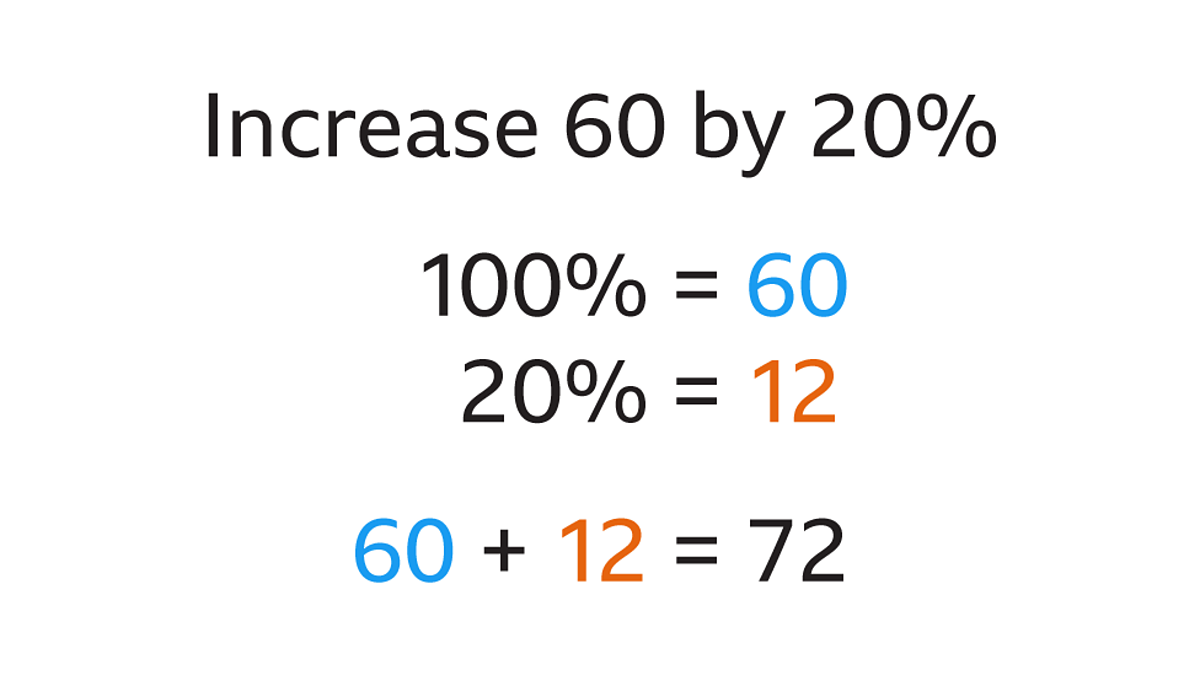
At its core, a percentage increase quantifies the relative change between an initial value and a subsequent, larger value. Instead of merely stating the absolute difference, which can be misleading without context, a percentage increase expresses this difference as a proportion of the original amount. This makes it an incredibly powerful tool for financial analysis, allowing for “apples-to-apples” comparisons of growth rates across diverse financial instruments, periods, or companies.
Why Percentage Increase Matters for Financial Decisions
Imagine two investments: one growing from $100 to $200, and another from $1,000,000 to $1,000,100. Both have an absolute increase of $100. However, their percentage increases tell a vastly different story: the first investment doubled (100% increase), while the second barely budged (0.01% increase). This stark contrast highlights why relative change, expressed as a percentage, is critical for informed financial decision-making.
For individuals, it helps in:
- Evaluating Investments: Comparing the annual returns of different stocks, bonds, or mutual funds.
- Tracking Personal Finance Goals: Measuring progress on savings, debt reduction, or net worth growth.
- Assessing Salary Growth: Understanding the real increase in purchasing power after a raise.
For businesses, it’s essential for:
- Performance Measurement: Analyzing revenue growth, profit margin improvements, or cost reductions quarter-over-quarter or year-over-year.
- Strategic Planning: Forecasting future growth based on historical trends and setting realistic targets.
- Investor Relations: Communicating financial health and growth prospects to shareholders and potential investors.
The Fundamental Formula: A Step-by-Step Guide
Calculating a percentage increase involves a straightforward mathematical formula. Once you grasp the logic, you can apply it to virtually any scenario requiring the quantification of growth.
The Basic Formula for Percentage Increase
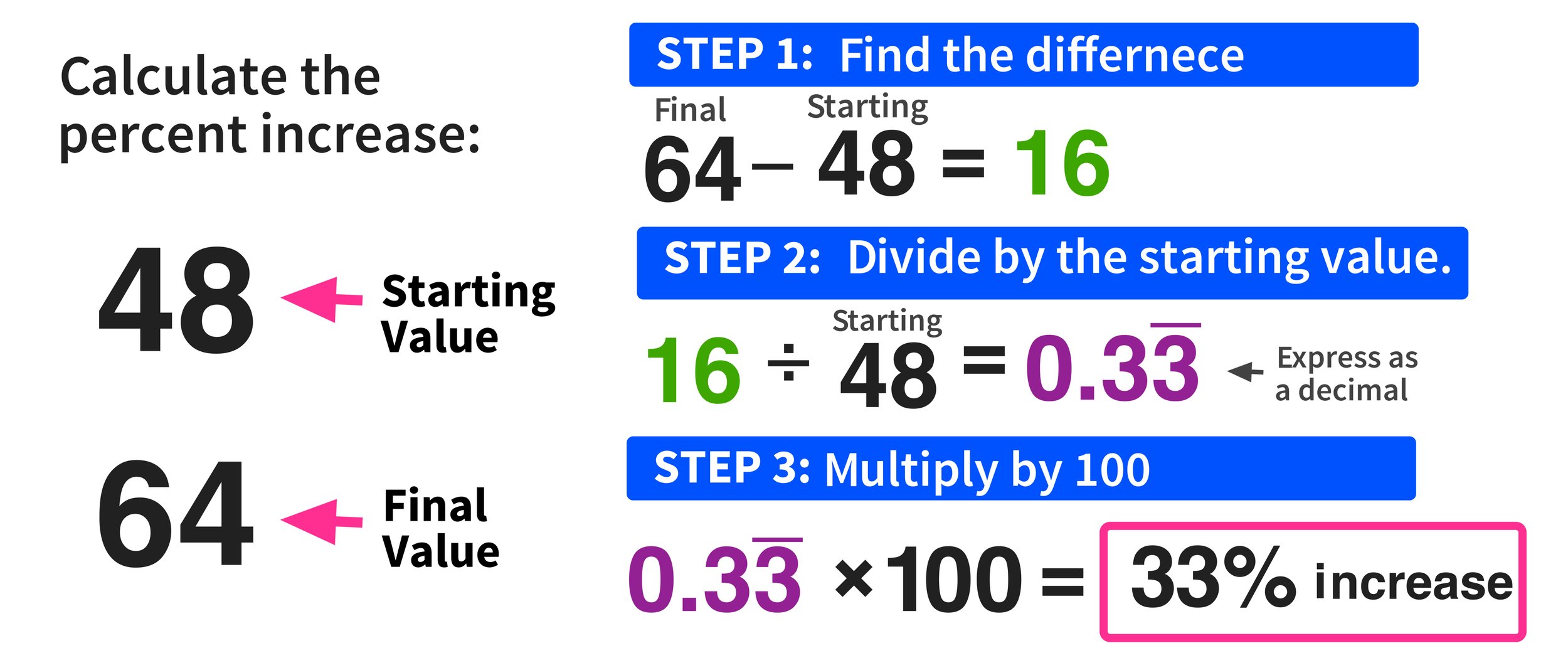
The universal formula is:
$$ text{Percentage Increase} = left( frac{text{New Value} – text{Original Value}}{text{Original Value}} right) times 100 $$
Let’s break down each component:
- New Value: This is the larger, subsequent value after the increase.
- Original Value: This is the initial or starting value before the change.
- Difference (New Value – Original Value): This calculates the absolute amount of the increase.
- Dividing by Original Value: This step normalizes the absolute increase by expressing it as a fraction of the starting point.
- Multiplying by 100: This converts the resulting decimal into a percentage.
Example: Calculating Investment Growth
Suppose you invested $5,000 in a stock, and after one year, its value grew to $6,250.
- Identify Original Value: $5,000
- Identify New Value: $6,250
- Calculate the Difference: $6,250 – $5,000 = $1,250
- Divide by Original Value: $1,250 / $5,000 = 0.25
- Multiply by 100: 0.25 * 100 = 25%
Therefore, your investment experienced a 25% increase.
Practical Applications in Personal Finance: Growing Your Wealth
Percentage increases are a cornerstone of effective personal finance management. They empower individuals to track their financial health, make informed investment choices, and plan for a secure future.
Monitoring Investment Portfolio Performance
One of the most common applications is assessing the performance of your investments. Whether it’s a mutual fund, a single stock, or a cryptocurrency, understanding its percentage increase (or decrease) helps you evaluate its effectiveness against benchmarks or other assets.
Scenario: You bought 10 shares of Company X at $50 per share (total $500). A year later, the stock price is $65 per share (total $650).
- Original Value: $500
- New Value: $650
- Percentage Increase = (($650 – $500) / $500) * 100 = ($150 / $500) * 100 = 0.30 * 100 = 30%

This 30% increase gives you a clear metric to compare against inflation, other investment opportunities, or your personal financial goals.
Analyzing Savings Growth and Debt Reduction
Beyond investments, percentage increases can illustrate progress in areas like savings and debt. While debt reduction might technically involve a “percentage decrease” in the debt amount, tracking the percentage change is still valuable. For savings, it shows how effectively your money is growing, especially when considering compound interest.
Scenario (Savings): You started the year with $10,000 in your savings account. By year-end, with contributions and interest, you have $10,750.
- Original Value: $10,000
- New Value: $10,750
- Percentage Increase = (($10,750 – $10,000) / $10,000) * 100 = ($750 / $10,000) * 100 = 0.075 * 100 = 7.5%
This 7.5% increase represents your total savings growth for the year.
Business Finance: Tracking Performance and Growth
In the corporate world, percentage increases are fundamental for evaluating operational efficiency, market penetration, and overall financial health. Businesses constantly analyze percentage changes in various metrics to make strategic decisions.
Measuring Revenue and Profit Growth
For any business, revenue and profit are key indicators of success. Tracking their percentage increase over time provides insights into market demand, sales effectiveness, and cost management.
Scenario (Revenue): A small business reported annual revenue of $500,000 last year. This year, their revenue reached $625,000.
- Original Value: $500,000
- New Value: $625,000
- Percentage Increase = (($625,000 – $500,000) / $500,000) * 100 = ($125,000 / $500,000) * 100 = 0.25 * 100 = 25%
A 25% revenue increase is a strong indicator of business expansion and market acceptance. Similarly, a percentage increase in profit signals improved efficiency or pricing power.
Analyzing Operational Efficiency and Key Performance Indicators (KPIs)
Beyond top-line revenue and bottom-line profit, businesses monitor numerous KPIs using percentage changes. These might include customer acquisition cost, conversion rates, market share, or even employee productivity.
Scenario (Customer Base): A subscription service had 10,000 active subscribers last quarter. This quarter, they have 11,500 subscribers.
- Original Value: 10,000
- New Value: 11,500
- Percentage Increase = ((11,500 – 10,000) / 10,000) * 100 = (1,500 / 10,000) * 100 = 0.15 * 100 = 15%
A 15% increase in the customer base is a vital metric for assessing marketing efforts and product appeal.
Beyond the Basics: Interpretation and Common Pitfalls
While the calculation of percentage increase is straightforward, its interpretation requires nuance. Understanding what the numbers really mean, and being aware of potential misinterpretations, is crucial for truly insightful financial analysis.
The Importance of Context and Timeframes
A percentage increase is only meaningful when viewed within its proper context and timeframe. A 10% increase might be stellar for a mature, large company but disappointing for a startup in a high-growth sector. Similarly, a 50% increase over five years is less impressive than a 50% increase in a single year.
- Annualized Growth: Often, financial figures are annualized to allow for consistent comparison. A 2% quarterly increase might translate to a significantly higher annualized growth rate due to compounding.
- Baseline Effect: A large percentage increase from a very small original value can seem dramatic but might represent a small absolute change. For instance, growing from $1 to $10 is a 900% increase, but only an $9 absolute gain. This is often referred to as the “low base effect.”
- Inflation: When assessing financial growth, it’s critical to consider inflation. A 3% salary increase might feel like progress, but if inflation was 4%, your real purchasing power actually decreased.
Avoiding Common Misinterpretations
- Confusing Percentage Points with Percentage Increase: If a market share goes from 10% to 12%, that’s a 2 percentage point increase. However, it’s a ((12-10)/10)*100 = 20% *percentage increase* in market share. These are distinct concepts.
- The Problem of Averaging Percentages: You cannot simply average percentage increases over different periods if the base values are changing. For example, if an investment grows 10% in year one and 20% in year two, the overall growth is not 15%. You must calculate the cumulative effect.
- Beware of “Cherry-Picking” Data: Presenting percentage increases only for favorable periods or selecting original values that inflate the growth figure can be misleading. Always seek transparent reporting and a comprehensive view of the data.
Mastering the calculation and interpretation of percentage increases equips you with a powerful tool for navigating the financial landscape. From personal budgeting to sophisticated business analytics, this fundamental concept underpins much of how we understand growth, evaluate performance, and make strategic decisions to enhance our financial well-being. By applying the formulas correctly and considering the broader context, you can unlock deeper insights and foster a more informed approach to managing your money.
aViewFromTheCave is a participant in the Amazon Services LLC Associates Program, an affiliate advertising program designed to provide a means for sites to earn advertising fees by advertising and linking to Amazon.com. Amazon, the Amazon logo, AmazonSupply, and the AmazonSupply logo are trademarks of Amazon.com, Inc. or its affiliates. As an Amazon Associate we earn affiliate commissions from qualifying purchases.