
The term “BIC Bank” is a common colloquialism, often used when inquiring about the Bank Identifier Code (BIC) itself, rather than a specific financial institution named “BIC Bank.” In the realm of global finance, BIC stands for Bank Identifier Code, a standardized identification code used to identify a specific financial institution in international transactions. It is a critical component of the global payments system, primarily enabling the accurate routing of funds through the SWIFT (Society for Worldwide Interbank Financial Telecommunication) network. Understanding the BIC is fundamental for anyone involved in international money transfers, from large corporations managing global supply chains to individuals sending remittances across borders.
Decoding the BIC: Essential for Global Financial Infrastructure
At its core, a BIC code serves as a unique address for a bank, similar to how a postal code directs mail to a specific location. Without this standardized identifier, the complexities of cross-border payments would be exponentially greater, leading to widespread errors, delays, and potential financial losses. The BIC code is an indispensable tool that underpins the reliability and efficiency of the international financial ecosystem, ensuring that funds reach their intended recipient bank swiftly and securely.
The Anatomy of a BIC Code: Structure and Meaning
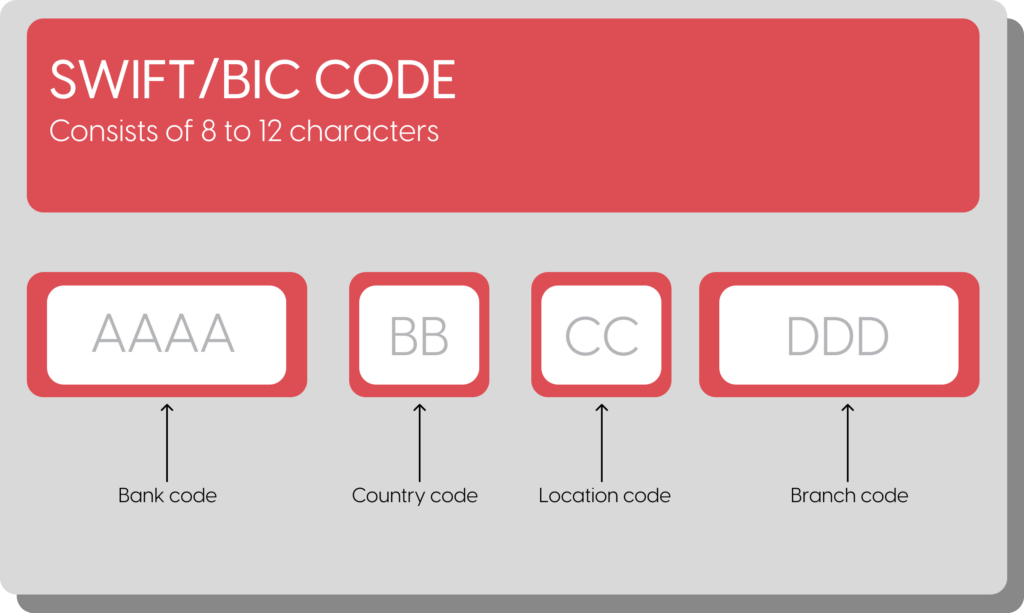
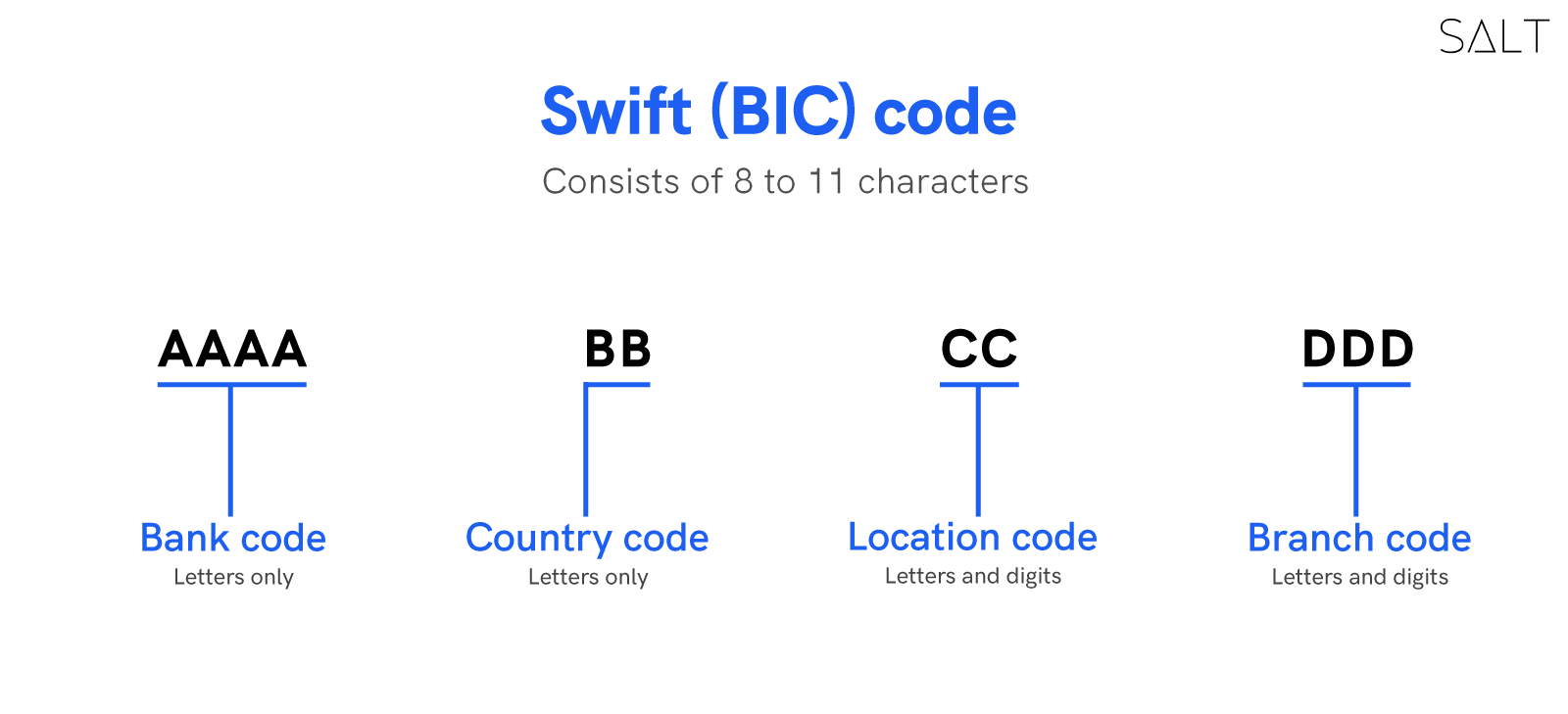
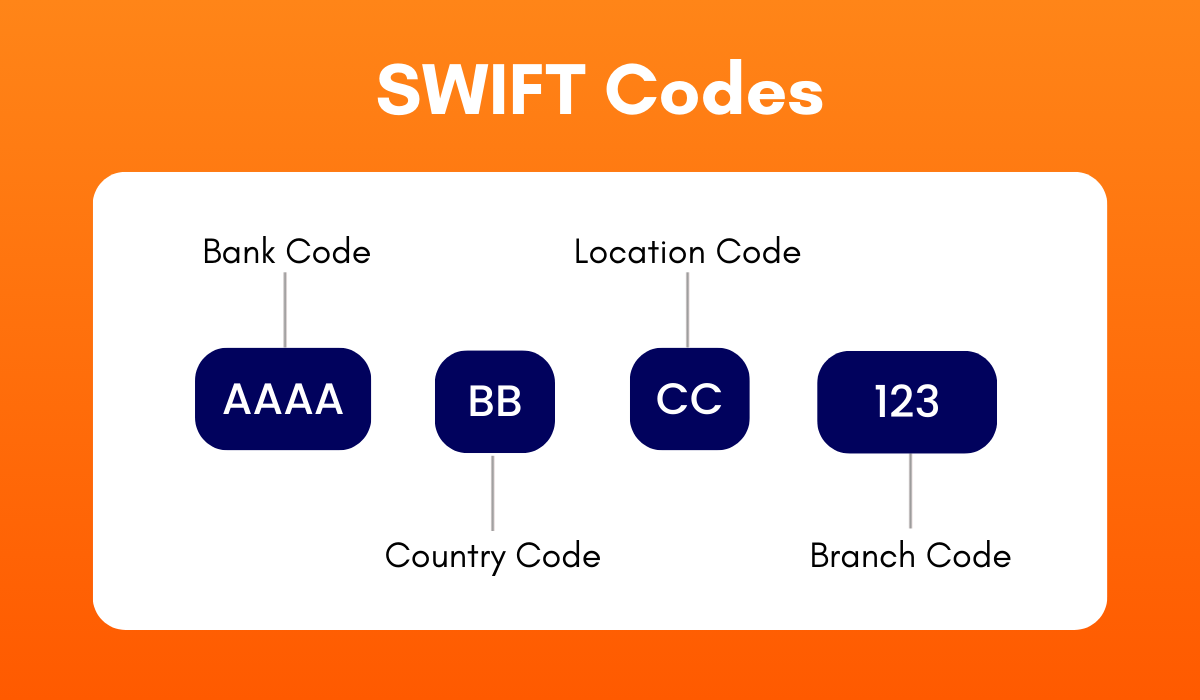
A BIC code is typically either 8 or 11 characters long, comprising both letters and numbers, each segment carrying specific identifying information:
- Bank Code (A-Z, 4 characters): This segment represents the unique identification code of the financial institution. For example, “DEUT” for Deutsche Bank or “CHAS” for JPMorgan Chase. These characters specify which bank is being identified.
- Country Code (A-Z, 2 characters): This two-letter code follows the ISO 3166-1 alpha-2 standard, indicating the country where the bank’s head office is located. For instance, “US” for the United States, “DE” for Germany, or “GB” for Great Britain. This ensures geographical identification.
- Location Code (A-Z or 0-9, 2 characters): This segment identifies the city or geographical location of the bank’s branch or main office. It can be a combination of letters and numbers, differentiating between various offices within the same bank and country.
- Branch Code (A-Z or 0-9, 3 optional characters): The final three characters are optional. If present, they specify a particular branch of the bank. If omitted, the BIC refers to the bank’s primary or head office. This level of detail allows for precise targeting of funds to specific branches.
For instance, “DEUTDEFFXXX” would signify Deutsche Bank (DEUT) in Germany (DE), at Frankfurt (FF), with “XXX” indicating the head office or main branch. This structured approach ensures that each BIC code is unique and universally recognizable within the SWIFT network.
Why BIC is Crucial for International Money Transfers
The primary function of a BIC code is to facilitate seamless and accurate international money transfers. When a payment is initiated from one country to another, the sending bank uses the recipient’s bank’s BIC code to identify the correct financial institution to route the funds to. This process is integral to:
- Accurate Routing: BICs prevent funds from being misdirected, ensuring they arrive at the intended financial institution. Without this precision, funds could be sent to the wrong bank, leading to significant delays, investigation costs, and potential loss.
- Speed and Efficiency: By standardizing bank identification, BICs streamline the payment processing workflow. Automated systems can quickly read and process these codes, accelerating transaction times compared to manual verification or less structured methods.
- Global Interoperability: BICs are a cornerstone of the SWIFT network, which connects over 11,000 financial institutions worldwide. This widespread adoption ensures that banks across different countries can communicate and transfer funds using a common language of identification. For businesses engaged in international trade, investment, or global payroll, the reliability offered by BIC codes is non-negotiable for efficient operations and cash flow management.
The Practical Impact of BIC on Business Finance and Personal Transactions
The utility of the BIC code extends beyond mere identification; it has profound practical implications for how businesses manage their finances and how individuals conduct international transactions. Its role is deeply embedded in the mechanics of global finance, influencing everything from operational efficiency to security and compliance.
Streamlining Cross-Border Operations and Reducing Costs
For businesses operating internationally, BICs are instrumental in optimizing financial operations. Accurate BIC usage directly contributes to:
- Reduced Processing Errors: Errors in bank identification can lead to returned payments, additional bank charges, and significant administrative effort to rectify. By ensuring the correct BIC is used, businesses minimize these costly mistakes, improving their bottom line.
- Faster Settlement Times: Efficient routing via correct BICs reduces the time it takes for funds to settle in the recipient’s account. This is particularly vital for businesses dependent on timely payments for supply chain management, just-in-time inventory, or meeting vendor obligations. Quicker settlements enhance cash flow and reduce financial risk.
- Operational Efficiency: Automated systems can leverage BICs to process large volumes of international payments with minimal human intervention. This automation reduces operational overhead, frees up staff to focus on more strategic tasks, and improves the overall efficiency of treasury and accounts payable/receivable departments.
Enhancing Financial Security and Compliance
In an era of heightened financial crime, BICs play a crucial role in maintaining the security and integrity of the global financial system:
- Fraud Prevention: BICs provide a verified identifier for financial institutions, making it harder for fraudulent entities to pose as legitimate banks. This adds a layer of security, helping to ensure that funds are transferred to recognized and regulated institutions.
- Anti-Money Laundering (AML) and Know Your Customer (KYC): Regulators often require banks to identify all parties involved in a transaction. The BIC code helps identify the originating and receiving financial institutions, facilitating AML and KYC compliance efforts. This traceability is essential for combating illicit financial activities and ensuring transparency.
- Regulatory Reporting: Financial institutions are subject to various reporting requirements. The standardized nature of BICs simplifies the aggregation and reporting of international transaction data, aiding compliance with global financial regulations.
Integration with Modern Financial Tools and ERP Systems
Modern business finance relies heavily on integrated software solutions. BICs are a standard data point within:
- Enterprise Resource Planning (ERP) Systems: ERP modules for finance, such as SAP or Oracle Financials, incorporate BIC codes into their vendor and customer master data. This allows for automated generation of international payment instructions.
- Accounting Software: Cloud-based accounting platforms and desktop software often require BICs for setting up international payment beneficiaries, streamlining the bookkeeping process for global transactions.
- Payment Gateways and Platforms: Many third-party payment providers and fintech solutions that facilitate cross-border payments utilize BICs in their backend processes, ensuring efficient routing and integration with the traditional banking system. This integration ensures that businesses can manage their international finances with robust, automated tools, reducing manual effort and potential errors.
Navigating BIC Codes: A Guide for Businesses and Individuals
Correctly identifying and using BIC codes is paramount for successful international transactions. Both businesses and individuals must be diligent in verifying these codes to avoid common pitfalls that can lead to financial setbacks.
How to Locate and Verify a BIC Code
Finding the correct BIC code for a recipient bank is typically straightforward:
- Recipient’s Bank Statement or Online Banking: Often, the BIC code (sometimes labeled as SWIFT code) is printed on bank statements or readily available within the online banking portal under account details.
- Recipient’s Bank Website: Most banks provide their BIC code prominently on their official website, especially in sections related to international transfers or contact information.
- Contact the Recipient Directly: The safest method is always to ask the person or business receiving the money for their bank’s BIC code. This ensures accuracy and reduces the risk of using an outdated or incorrect code.
- Official SWIFT Lookup Tools: While many unofficial online BIC lookup tools exist, it’s advisable to use trusted sources. Your own bank’s international transfer portal often includes a BIC verification feature.
Always double-check the BIC code before initiating a transfer, as a single incorrect character can send funds to the wrong bank.
Common Mistakes and Best Practices When Using BICs
Even with readily available information, errors can occur. Being aware of common mistakes helps mitigate risks:
- Typographical Errors: A single typo in the BIC can lead to misrouted funds. Meticulous entry and double-checking are essential.
- Using Outdated BICs: Banks can merge, change names, or update their systems, leading to changes in their BIC codes. Always verify the current code, especially for transactions to rarely used beneficiaries.
- Confusing BIC with IBAN: While both are crucial for international transfers, they serve different purposes. The BIC identifies the bank, while the IBAN (International Bank Account Number) identifies the specific account within that bank. Both are usually required.
- Ignoring the Optional Branch Code: If a specific branch code is provided by the recipient, it’s important to include it to ensure the funds reach the precise destination within the bank’s network.
Best practice dictates that businesses should implement internal controls and training for employees who handle international payments, emphasizing the importance of BIC verification. For individuals, always confirm the BIC with the recipient, preferably through a secure communication channel.
BIC vs. IBAN: Differentiating Key Financial Identifiers
Understanding the distinction between BIC and IBAN is crucial for any international transaction:
- BIC (Bank Identifier Code): As discussed, this code identifies the bank itself. It tells the payment system which financial institution globally should receive the funds.
- IBAN (International Bank Account Number): This is a globally recognized standard for identifying a specific bank account at a particular financial institution. The IBAN includes the country code, bank identifier, and the account number, all formatted into a single string.
In simple terms, for an international bank transfer, the BIC code is like the address of the building (the bank), and the IBAN is like the apartment number within that building (the specific account). Both are required to ensure the funds are delivered to the correct recipient and account. You need the BIC to route the payment to the correct bank, and the IBAN to credit it to the correct account once it arrives at that bank.
The Evolving Landscape of Bank Identification
While BICs have served as a cornerstone of international finance for decades, the financial landscape is continuously evolving. New technologies and regulatory demands are shaping the future of how banks and accounts are identified, though the fundamental need for robust identifiers remains constant.
Regulatory Changes and Global Harmonization Efforts
Regulators globally are constantly seeking ways to enhance transparency, security, and efficiency in financial transactions. Efforts towards global harmonization of payment standards, such as those driven by the Payment Systems Market Infrastructure (PSMI), aim to make cross-border payments even smoother. Regional initiatives, like the Single Euro Payments Area (SEPA) in Europe, have already streamlined transactions within their zones, often relying on BICs (or their SEPA equivalent, sometimes referred to as BIC/SWIFT codes in context of SEPA Credit Transfer and Direct Debit schemes) as primary identifiers. These initiatives push for greater standardization and data quality, implicitly reinforcing the need for reliable identifiers like the BIC.
The Impact of New Technologies on Interbank Communication
Emerging technologies, particularly distributed ledger technologies (DLT) like blockchain, are often discussed as potential disruptors to traditional financial infrastructure. While DLT offers alternative methods for recording and transferring value, the need for identifying the ultimate financial institutions involved in a transaction or settlement remains. Even in a future where payments might settle on a blockchain, robust identification of the participating banks will likely still be necessary for regulatory compliance, liquidity management, and establishing trust. Traditional systems like SWIFT, which utilize BICs, are themselves investing in new technologies to enhance their offerings, such as SWIFT gpi (Global Payments Innovation), which aims to provide faster, more transparent, and traceable cross-border payments. The BIC code continues to play a vital role in these modernized versions of traditional finance, acting as a critical identifier in an increasingly complex digital ecosystem.
Future-Proofing Financial Operations with Robust Identification
For businesses and financial institutions, maintaining an understanding of and adherence to current and evolving bank identification standards is crucial for future-proofing their financial operations. This involves staying informed about regulatory updates, ensuring internal systems can handle new data formats, and continuously verifying the accuracy of bank details for all international transactions. While technology advances, the core principle of knowing precisely where and to whom money is being sent—a principle that the BIC code embodies—will always be fundamental to secure and efficient global finance. The BIC, therefore, remains an essential financial tool, anchoring the world’s interconnected banking system.
aViewFromTheCave is a participant in the Amazon Services LLC Associates Program, an affiliate advertising program designed to provide a means for sites to earn advertising fees by advertising and linking to Amazon.com. Amazon, the Amazon logo, AmazonSupply, and the AmazonSupply logo are trademarks of Amazon.com, Inc. or its affiliates. As an Amazon Associate we earn affiliate commissions from qualifying purchases.