
In the intricate tapestry of global finance, a select few indicators stand out as beacons, offering critical insights into the health and direction of markets. Among these, the Dow Jones Industrial Average (DJIA) holds an almost mythical status, often serving as the benchmark for U.S. equity performance. However, for sophisticated investors, traders, and institutional players, the focus often extends beyond the index itself to its derivative counterparts: the Dow Jones Futures. These financial instruments offer a unique window into future market sentiment, providing opportunities for hedging, speculation, and crucial price discovery before the traditional stock market even opens. Understanding Dow Jones Futures is not merely about grasping a financial product; it’s about gaining a deeper appreciation for market dynamics, risk management, and the interconnectedness of global economic forces.
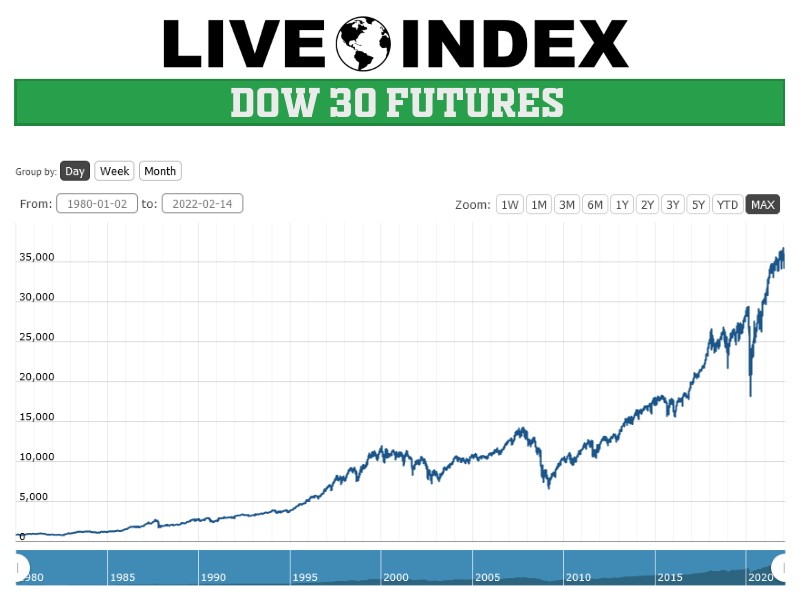
Understanding the Dow Jones Industrial Average (DJIA) and its Futures
To fully comprehend Dow Jones Futures, it’s essential to first establish a firm understanding of the underlying index they represent. The DJIA is more than just a number; it’s a historical barometer of American industry and economic prowess.
The DJIA: A Benchmark of U.S. Economic Health
The Dow Jones Industrial Average, established in 1896 by Charles Dow, is one of the oldest and most widely recognized stock market indices in the world. Comprising 30 large, publicly traded companies listed on the NASDAQ and the New York Stock Exchange (NYSE), it represents a significant portion of the U.S. stock market. Unlike market-capitalization-weighted indices such as the S&P 500, the DJIA is a price-weighted index, meaning stocks with higher share prices have a greater impact on the index’s value. While its methodology has faced criticism for not being as comprehensive as broader market indices, its iconic status and long history make it an indispensable indicator for tracking the performance of major industrial companies and, by extension, the broader U.S. economy. Movements in the DJIA are closely watched by investors, economists, and policymakers alike, often shaping narratives about economic growth, corporate earnings, and investor confidence.
Introducing Futures Contracts: A Primer
At its core, a futures contract is a standardized legal agreement to buy or sell a particular commodity or financial instrument at a predetermined price on a specified date in the future. These contracts are traded on organized exchanges, providing transparency and regulatory oversight. Originally developed for agricultural commodities to allow producers and consumers to lock in prices, futures contracts have evolved to cover a vast array of assets, including energy products, metals, currencies, and crucially, stock market indices like the Dow Jones.
The key characteristic of a futures contract is its obligation: the buyer is obligated to take delivery of the underlying asset (or cash settlement) and the seller is obligated to deliver it at the agreed-upon price on the expiration date. This contrasts with options contracts, which grant the holder the right, but not the obligation, to buy or sell. Futures contracts derive their value from the underlying asset, and their prices fluctuate based on supply and demand in the futures market, as well as expectations about the future price of the underlying asset.
The E-mini Dow Futures: The Most Traded Contract
While there are various Dow Jones futures contracts, the most actively traded and liquid contract by far is the E-mini Dow Futures, traded on the Chicago Mercantile Exchange (CME) Group’s electronic platform, Globex. Introduced in 1997, E-mini contracts were designed to be a smaller, more accessible version of the standard futures contracts, making them suitable for individual traders and smaller institutional participants who might find the capital requirements of full-sized contracts prohibitive.
The E-mini Dow Futures contract tracks the Dow Jones Industrial Average, with each point movement in the index corresponding to a specific dollar value (e.g., $5 per point for the E-mini Dow). This smaller contract size allows for greater flexibility and risk management, as traders can take on smaller positions. Its electronic nature also facilitates near 24-hour trading, enabling participants to react to global economic news and events even outside of traditional U.S. market hours. The E-mini Dow Futures effectively serves as a proxy for anticipating the opening direction of the cash DJIA and is a vital tool for market participants worldwide.
The Mechanics of Dow Jones Futures Trading
Trading Dow Jones Futures involves a distinct set of rules and mechanisms that differentiate it from traditional stock trading. Understanding these mechanics is crucial for anyone considering participation in this dynamic market.
How Futures Contracts Work: Price Discovery and Expiration
When you trade a Dow Jones Futures contract, you are not buying or selling the actual 30 stocks that comprise the DJIA. Instead, you are entering into a financial agreement based on the future value of the index. If you buy a futures contract, you are essentially betting that the DJIA will be higher at the contract’s expiration date, or that you can sell the contract at a higher price before it expires. Conversely, if you sell a futures contract, you expect the index to fall.
Futures contracts have specific expiration dates, typically quarterly (March, June, September, December). As the expiration date approaches, the futures price tends to converge with the cash (spot) price of the underlying index. Most futures traders do not hold contracts until expiration; instead, they offset their positions before maturity, either by buying an identical contract to close a short position or selling an identical contract to close a long position. The difference between the entry and exit price, multiplied by the contract multiplier, determines the profit or loss. This continuous buying and selling based on expectations about the future price of the index is what drives price discovery in the futures market, offering a real-time gauge of market sentiment.
Leverage and Margin: Amplifying Gains and Risks
One of the most appealing, yet potentially dangerous, aspects of futures trading is the concept of leverage, enabled by margin requirements. When you open a futures position, you don’t need to pay the full notional value of the contract. Instead, you only need to deposit a fraction of the total value, known as the initial margin, into your trading account. This margin acts as a performance bond, ensuring that you can cover potential losses. Maintenance margin is a lower threshold; if your account balance falls below this level due to losses, you’ll receive a margin call, requiring you to deposit additional funds to bring your account back up to the initial margin level.
This high degree of leverage means that even a small price movement in the underlying index can result in significant profits or losses relative to the initial capital invested. For example, if an E-mini Dow Futures contract moves 100 points, it could represent a $500 gain or loss for a contract that might have required an initial margin of only a few thousand dollars. While leverage can magnify returns exponentially, it also amplifies risks, making robust risk management strategies absolutely critical for futures traders.
Contract Specifications and Market Hours
Understanding the specific contract details is paramount for trading Dow Jones Futures. Key specifications include:
- Symbol: For E-mini Dow Futures, it’s typically “YM”.
- Contract Multiplier: $5 per point for E-mini Dow Futures.
- Tick Size: The smallest increment a price can move (e.g., 1 point or 0.01 point). For E-mini Dow, it’s typically 1 point, representing $5 per contract.
- Expiration Months: March, June, September, December.
- Last Trading Day: Usually the third Friday of the expiration month.
- Settlement: Cash-settled, meaning no physical delivery of stocks, but rather a cash payment based on the final settlement price.
Another significant advantage of E-mini Dow Futures is their extended trading hours. They typically trade nearly 24 hours a day, five days a week, from Sunday evening to Friday afternoon U.S. time, with a brief daily maintenance period. This allows traders to react to overnight news from Asia and Europe, making futures an excellent vehicle for gauging global market sentiment and managing risk continuously.

Why Dow Jones Futures Matter: Roles in the Financial Market
Beyond their operational mechanics, Dow Jones Futures play several vital roles in the broader financial market ecosystem, benefiting various participants.
Price Discovery and Market Sentiment Indicator
One of the primary functions of Dow Jones Futures is to provide continuous price discovery for the underlying index. Because they trade virtually around the clock, they offer a real-time gauge of how market participants perceive the value of the Dow Jones Industrial Average outside of regular U.S. stock market hours. Before the NYSE and NASDAQ open, the movement of Dow Jones Futures acts as a strong indicator of how the cash index is likely to open. A significant move up in futures might signal a higher open for the DJIA, while a downtick could portend a lower start to the trading day. This “pre-market” insight is invaluable for investors, analysts, and traders to formulate their strategies and adjust portfolios ahead of the bell. Moreover, the volume and open interest in futures contracts can reflect the general sentiment and conviction of institutional players.
Hedging Against Market Volatility
For institutional investors, portfolio managers, and even individual investors with substantial equity holdings that mirror the DJIA, Dow Jones Futures offer an effective tool for hedging. Hedging is a risk management strategy used to offset the risk of adverse price movements in an asset. If a portfolio manager holds a large basket of stocks similar to the Dow Jones components and anticipates a short-term market downturn, they can sell Dow Jones Futures contracts. If the market indeed falls, the loss on their stock portfolio would be partially or fully offset by the profit from their short futures position. This allows them to protect their portfolio’s value without having to sell off their underlying stock holdings, which might incur transaction costs or disrupt long-term investment strategies.
Speculation and Profiting from Price Movements
For active traders and speculators, Dow Jones Futures present a highly liquid and leveraged vehicle for betting on the direction of the broader U.S. stock market. Traders can take long positions (buy futures) if they believe the market will rise, or short positions (sell futures) if they expect a decline. The relatively low margin requirements, combined with the continuous trading hours, make futures attractive for short-term trading strategies, including day trading, swing trading, and arbitrage. Speculators benefit from the efficiency of trading an entire index with a single instrument, rather than having to buy or sell 30 individual stocks. However, this speculative potential comes with inherent risks, as the leverage that magnifies gains can just as quickly amplify losses, necessitating stringent risk management.
Navigating the Dow Jones Futures Market: Strategies and Considerations
Successfully trading Dow Jones Futures requires more than just understanding the mechanics; it demands a disciplined approach, strategic analysis, and robust risk management.
Technical vs. Fundamental Analysis
Traders in the Dow Jones Futures market typically employ a combination of technical and fundamental analysis to inform their decisions.
- Technical Analysis: This involves studying past market data, primarily price and volume charts, to identify patterns and predict future price movements. Traders use indicators like moving averages, Bollinger Bands, Relative Strength Index (RSI), and MACD (Moving Average Convergence Divergence) to identify entry and exit points, support and resistance levels, and overall trend strength. Given the high liquidity and frequent trading of E-mini Dow Futures, technical analysis is particularly popular for short-term and day traders.
- Fundamental Analysis: While more commonly associated with stock picking, fundamental analysis still plays a crucial role in futures trading, especially for longer-term positions. This involves evaluating economic data, corporate earnings reports (for DJIA components), central bank policies (e.g., Federal Reserve interest rate decisions), geopolitical events, and overall market sentiment. A strong earnings season, positive economic growth figures, or dovish central bank commentary could fundamentally support a rally in Dow Jones Futures, while adverse news could trigger a sell-off. Successful futures traders often integrate both approaches, using fundamental analysis to gauge the broader market direction and technical analysis for precise timing.
Risk Management: A Paramount Concern
Due to the inherent leverage in futures trading, robust risk management is not just important; it’s absolutely paramount. A single adverse move can wipe out a significant portion of a trading account if not properly managed. Key risk management strategies include:
- Setting Stop-Loss Orders: These are orders placed with a broker to sell (or buy to cover) a security once it reaches a certain price. A stop-loss order limits potential losses on a position.
- Position Sizing: Determining the appropriate number of contracts to trade based on account size and risk tolerance. Never risking more than a small percentage (e.g., 1-2%) of total capital on any single trade.
- Understanding Margin Requirements: Always maintaining sufficient capital in the account to meet both initial and maintenance margin calls, avoiding forced liquidations.
- Avoiding Over-Leveraging: While leverage is attractive, excessive leverage can lead to rapid account depletion. Prudent traders use leverage judiciously.
- Developing a Trading Plan: Having a clear strategy that defines entry/exit rules, risk parameters, and profit targets before entering a trade.
Choosing a Broker and Trading Platform
Selecting the right futures broker and trading platform is a critical step. A good broker should offer:
- Competitive Commissions and Fees: Futures trading often involves frequent transactions, so low commissions can significantly impact profitability.
- Reliable Trading Platform: The platform should be fast, stable, user-friendly, and offer advanced charting tools, order types, and real-time data feeds.
- Access to Research and Analytics: Valuable resources that can assist in market analysis.
- Excellent Customer Support: Responsive and knowledgeable support is essential, especially when dealing with time-sensitive trading issues.
- Regulatory Compliance: Ensure the broker is regulated by relevant authorities (e.g., CFTC and NFA in the U.S.) to protect client funds.
The Broader Impact and Future Outlook
Dow Jones Futures are not isolated instruments; their movements are deeply intertwined with global economic trends and technological advancements in financial markets.
Global Economic Influences
The performance of Dow Jones Futures is heavily influenced by a wide array of global economic factors. Macroeconomic data from major economies (GDP reports, inflation rates, employment figures), central bank interest rate decisions, geopolitical events (trade wars, political instability, conflicts), and even commodity price fluctuations can all impact investor sentiment and, consequently, the direction of the Dow Jones. For instance, a strong jobs report in the U.S. might boost confidence in corporate earnings, leading to an upward move in futures, while concerns over global supply chains or rising inflation could trigger a sell-off. Understanding these broader influences is crucial for interpreting futures movements and making informed trading decisions.

Technological Advancements in Trading
The futures market, particularly the E-mini Dow, has been at the forefront of technological innovation in trading. The shift from pit trading to electronic platforms has democratized access, reduced transaction costs, and increased market efficiency. High-frequency trading (HFT) firms, utilizing sophisticated algorithms and superfast connections, now account for a significant portion of futures volume. While this increases liquidity, it also means market movements can be extremely rapid, requiring traders to have robust systems and discipline. The ongoing evolution of AI and machine learning in financial analysis is likely to further shape how futures are traded, offering new avenues for predictive modeling and automated strategy execution.
In conclusion, Dow Jones Futures are indispensable instruments in the financial world. They serve as a crucial barometer for market sentiment, a powerful tool for risk management, and a highly liquid vehicle for speculation. While offering immense potential for profit, their leveraged nature demands a disciplined approach to analysis, strategy, and above all, rigorous risk management. For those willing to navigate its complexities, the Dow Jones Futures market remains a fascinating and critical component of global finance, reflecting the ever-changing pulse of the economy.
aViewFromTheCave is a participant in the Amazon Services LLC Associates Program, an affiliate advertising program designed to provide a means for sites to earn advertising fees by advertising and linking to Amazon.com. Amazon, the Amazon logo, AmazonSupply, and the AmazonSupply logo are trademarks of Amazon.com, Inc. or its affiliates. As an Amazon Associate we earn affiliate commissions from qualifying purchases.