
The question “how much is an Amazon stock?” seems simple on the surface, often eliciting a quick glance at a real-time stock ticker. However, to truly grasp the significance of Amazon’s stock (AMZN), one must look beyond the immediate numerical value. It’s an inquiry that opens a window into the company’s financial health, market sentiment, global economic trends, and the intricate world of investing. For both seasoned investors and curious newcomers, understanding what drives the price of one of the world’s most influential companies is crucial for making informed decisions and appreciating the dynamics of the modern stock market.
Amazon, a behemoth born from an online bookstore, has transformed into a diversified technology and e-commerce leader, touching nearly every aspect of digital life. Its stock price reflects not only its past successes but also market expectations for its future innovations, growth trajectories in cloud computing (AWS), advertising, entertainment, and its vast e-commerce operations. This article will delve into the multifaceted answer to “how much is an Amazon stock,” exploring where to find its value, the forces that shape it, its historical context, and the broader implications for potential investors.
Decoding Amazon’s Current Stock Price
At any given moment during trading hours, Amazon’s stock price is a fluid number, constantly adjusting to supply and demand. This price represents the last agreed-upon value between a buyer and a seller for a single share of the company. It’s the most basic metric, yet it’s derived from a complex interplay of factors.
Where to Find Real-Time AMZN Data
For anyone looking to pinpoint the exact current value of an Amazon stock, readily available financial platforms are the go-to source. Major financial news websites like Google Finance, Yahoo Finance, Bloomberg, Reuters, and dedicated brokerage platforms (e.g., Fidelity, Charles Schwab, Robinhood) all provide real-time or near real-time quotes for AMZN. Simply searching for “AMZN stock price” or “Amazon stock” on any of these platforms will yield the latest trading data, including the current price, daily high/low, trading volume, and market capitalization. These platforms are essential tools for investors to monitor their holdings and research potential investments.
The Dynamic Nature of Stock Prices
The price displayed on a ticker is a snapshot, a fleeting moment in a continuous auction. Stock prices are inherently dynamic, influenced minute-by-minute by trade executions. When there are more buyers than sellers for a particular stock, its price tends to rise; conversely, when sellers outnumber buyers, the price typically falls. This basic economic principle of supply and demand is the bedrock of stock market movements. However, what drives these shifts in supply and demand is a far more intricate puzzle, involving everything from breaking news and corporate earnings reports to broader economic indicators and investor sentiment. Understanding this dynamism is key to appreciating that “how much is an Amazon stock” is a question with a constantly changing answer.
Key Factors Driving Amazon’s Stock Valuation
Amazon’s stock price isn’t merely a random number; it’s a quantitative reflection of the market’s collective assessment of the company’s intrinsic value and future prospects. Several critical factors consistently exert influence, making AMZN one of the most closely watched equities globally.
Company Performance and Financial Health
At the core of any stock’s valuation is the underlying performance of the company itself. For Amazon, this encompasses a vast array of metrics:
- Revenue Growth: Sustained growth across its multiple segments (e-commerce, AWS, advertising) signals a healthy and expanding business.
- Profitability: Net income, operating income, and profit margins are crucial. While Amazon historically prioritized growth over immediate profit, its increasing focus on profitability in recent years has become a significant driver for investors.
- Cash Flow: Strong free cash flow indicates the company’s ability to generate cash to reinvest in the business, pay down debt, or potentially return value to shareholders.
- Earnings Reports: Quarterly and annual earnings announcements are critical events. Positive surprises (exceeding analyst expectations) can send the stock soaring, while misses can lead to significant drops.
- Guidance: What Amazon forecasts for its future performance often has a greater impact than past results, setting market expectations.
Any developments related to these financial indicators, from new product launches to strategic acquisitions or cost-cutting measures, directly feed into how the market values AMZN.
Market Sentiment and Macroeconomic Forces
Beyond the company’s internal metrics, broader market sentiment and macroeconomic conditions play a profound role.
- Investor Confidence: General optimism or pessimism about the stock market, specific sectors (like technology or retail), or the global economy can influence buying and selling pressure on Amazon’s stock.
- Interest Rates: Changes in interest rates by central banks can affect the cost of borrowing for companies and consumers, impacting economic activity and, consequently, Amazon’s growth prospects and future discounted cash flows. Higher rates can also make bonds more attractive, drawing money away from stocks.
- Inflation: Inflationary pressures can increase Amazon’s operating costs (shipping, labor) and potentially dampen consumer spending, impacting its profitability.
- Economic Growth: A robust global economy generally bodes well for consumer spending and business investment in cloud services, both of which benefit Amazon.
- Geopolitical Events: Wars, trade disputes, or political instability can introduce uncertainty, leading to market volatility and impacting investor risk appetite.
These external factors, often beyond Amazon’s direct control, can cause significant swings in its stock price, even when the company’s fundamentals remain strong.
Industry Trends and Competitive Landscape
Amazon operates in highly dynamic and competitive industries.
- E-commerce: Competition from traditional retailers with online presences, other pure-play e-commerce sites, and direct-to-consumer brands. Regulatory scrutiny over market dominance is also a growing concern.
- Cloud Computing (AWS): A fiercely competitive market with giants like Microsoft Azure and Google Cloud vying for market share. Innovation and pricing strategies in this segment are crucial.
- Digital Advertising: Competing with Google and Meta for ad dollars, Amazon’s growing advertising business is a significant revenue stream.
- Logistics and Supply Chain: The efficiency and resilience of Amazon’s vast logistics network are critical, especially in the face of global supply chain disruptions.
- Technological Innovation: Amazon’s ability to innovate in areas like AI, robotics, and new consumer electronics is vital for its long-term growth and competitive edge.
Positive developments in these areas, such as gaining market share in cloud services or successfully expanding into new territories, can boost investor confidence. Conversely, increased competition or regulatory setbacks can put downward pressure on the stock.
Amazon’s Historical Journey: Growth, Splits, and Milestones
Understanding Amazon’s current stock price is enriched by examining its remarkable historical trajectory. From its humble beginnings to its status as a global titan, AMZN has been a fascinating case study in growth investing.
Tracing AMZN’s Impressive Trajectory
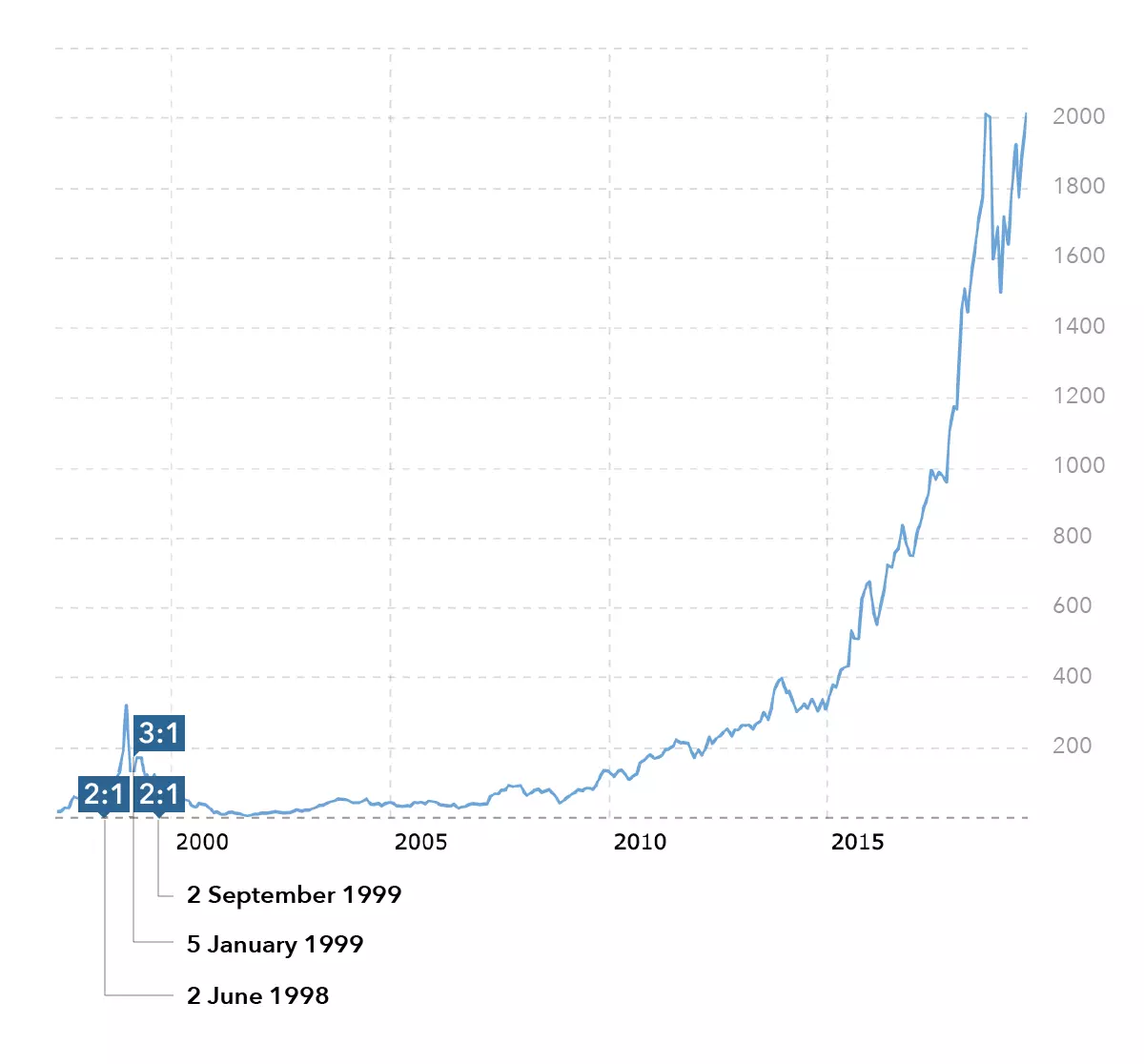
Launched in 1994 and going public in 1997 at a split-adjusted price of roughly $1.50 per share, Amazon’s stock has delivered extraordinary returns over the long term. Its journey has been characterized by aggressive expansion, reinvestment of profits back into the business, and a relentless focus on customer experience. Early investors who held onto their shares witnessed exponential growth as the company moved beyond books into electronics, apparel, groceries, cloud services (AWS), and a multitude of other ventures. This sustained growth, coupled with market leadership in multiple sectors, cemented Amazon’s reputation as a disruptive force and a premier growth stock.

The Impact of Stock Splits on Share Price
One of the significant events in Amazon’s stock history that directly impacts how “much is a stock” is the occurrence of stock splits. Amazon has executed multiple stock splits over its lifetime, most recently a 20-for-1 stock split in June 2022.
- What a Split Does: A stock split increases the number of outstanding shares while simultaneously decreasing the price per share proportionally. For instance, a 20-for-1 split means that for every share an investor owned, they now own 20 shares, each valued at 1/20th of the pre-split price.
- Why Companies Split: Splits are typically done to make shares more accessible to a broader range of investors (especially retail investors) by reducing the per-share price. It doesn’t change the total value of an investor’s holdings or the company’s market capitalization, but it can enhance liquidity and investor interest.
- Historical Context: Prior to the 2022 split, Amazon’s shares had climbed to over $2,000 per share, making a single share a substantial investment for many. The split brought the price down significantly, making it more palatable. When discussing historical prices, it’s crucial to refer to split-adjusted prices to make accurate comparisons.
From Online Bookseller to Global Conglomerate
Amazon’s stock performance is inextricably linked to its evolution as a company. Its stock price reflects the successful pivots and expansions that transformed it from a niche online bookstore into a global conglomerate. The launch of Amazon Prime in 2005, the introduction of the Kindle, the creation of Amazon Web Services (AWS) in 2006 (which became an unprecedented engine of profitability), and numerous strategic acquisitions like Whole Foods Market, all marked significant milestones that fueled revenue growth, diversified income streams, and ultimately drove shareholder value. Each successful venture reinforced investor confidence and contributed to the stock’s long-term appreciation, painting a picture of innovation and adaptability that the market has consistently rewarded.
Investing in Amazon: Opportunities and Considerations
For many, the question “how much is an Amazon stock” quickly leads to “should I buy Amazon stock?” Investing in a mega-cap company like Amazon presents both compelling opportunities and important considerations that prospective investors must weigh carefully.
Why Investors Look to AMZN
Amazon remains a highly attractive investment for several reasons:
- Market Dominance: Amazon holds leading positions in multiple high-growth sectors: e-commerce, cloud computing (AWS is the market leader), digital advertising, and streaming entertainment. This diversification provides resilience.
- Innovation Engine: The company has a proven track record of relentless innovation, constantly exploring new technologies (AI, robotics, drone delivery) and entering new markets.
- Strong Brand Loyalty: Services like Amazon Prime create a sticky ecosystem that fosters strong customer retention and increased spending.
- Long-Term Growth Potential: Despite its massive size, Amazon still has significant runway for growth, especially in international markets, enterprise cloud adoption, and emerging technologies.
- Profitability Focus: In recent years, Amazon has shifted its focus more towards profitability and efficiency, which can be appealing to investors seeking stronger bottom-line results.
These factors make Amazon a core holding for many growth-oriented portfolios, representing a bet on continued technological advancement and global consumer trends.
Navigating the Risks of a Mega-Cap Stock
No investment is without risk, and Amazon is no exception. While its size offers stability, it also introduces specific challenges:
- Regulatory Scrutiny: Amazon faces increasing antitrust scrutiny globally, which could lead to forced breakups, restrictions on business practices, or significant fines, impacting its growth and profitability.
- Intense Competition: As discussed, Amazon operates in highly competitive markets. Aggressive moves by competitors could erode market share or profit margins.
- Economic Downturns: As a major retailer, Amazon is susceptible to economic recessions that dampen consumer spending. Its AWS segment, while more resilient, could also see slower growth in a prolonged downturn.
- Valuation Concerns: While its growth has been immense, Amazon often trades at a high valuation compared to traditional metrics. This means investors are paying a premium for future growth, and any slowdown could lead to a significant price correction.
- Operational Challenges: Managing a global empire of Amazon’s scale involves immense logistical complexity, labor relations challenges, and vulnerability to supply chain disruptions.
Understanding these risks is paramount for any investor considering AMZN, as they could impact the stock’s future performance.
Practical Steps to Buying Amazon Shares
For individuals looking to invest, buying Amazon stock is a straightforward process:
- Open a Brokerage Account: You’ll need an investment account with a reputable brokerage firm (e.g., Fidelity, Vanguard, Charles Schwab, E*TRADE, Robinhood).
- Fund Your Account: Transfer money into your brokerage account via bank transfer, wire transfer, or check.
- Place an Order: Search for Amazon using its ticker symbol (AMZN). You can then choose between different types of orders:
- Market Order: Buys shares immediately at the current market price. This ensures execution but not necessarily the exact price.
- Limit Order: Buys shares only when the price reaches or falls below a specified limit. This guarantees a price but not execution.
- Consider Fractional Shares: Many brokerages now offer fractional shares, allowing you to invest a specific dollar amount (e.g., $100) into Amazon, even if that amount is less than the price of one full share. This significantly lowers the barrier to entry for high-priced stocks.
Before buying, it’s wise to conduct your own due diligence, align the investment with your financial goals, and consider consulting a financial advisor.
Beyond the Share Price: A Holistic Investment Perspective
Focusing solely on “how much is an Amazon stock” can be misleading if not put into a broader investment context. The share price is just one piece of a larger puzzle that defines the company’s value and its role in an investment portfolio.
Market Capitalization vs. Share Price
It’s crucial to differentiate between a company’s share price and its market capitalization.
- Share Price: The cost of a single share.
- Market Capitalization: The total value of the company, calculated by multiplying the current share price by the total number of outstanding shares (e.g., if a company has 100 million shares outstanding and the price is $100, its market cap is $10 billion).
A company with a high share price isn’t necessarily “more valuable” than a company with a lower share price. For example, before its 2022 split, Amazon’s individual shares were very expensive, but its market cap reflected its actual overall worth, which was one of the largest globally. The share price largely dictates accessibility for individual investors, while market capitalization reflects the company’s size and market influence.
The Importance of Due Diligence and Diversification
Investing in any single stock, even a seemingly robust one like Amazon, carries inherent risks.
- Due Diligence: Thoroughly researching the company’s financials, management, competitive landscape, and future prospects is non-negotiable. Don’t rely solely on headlines or past performance.
- Diversification: A cornerstone of sound investing, diversification means spreading your investments across different assets, industries, and geographies. This mitigates the risk of any single investment performing poorly. While Amazon may be a strong component, it shouldn’t be your sole holding. Investing in a diversified portfolio of stocks, bonds, and other asset classes helps protect against unforeseen events impacting a single company or sector.

Long-Term Vision and Short-Term Volatility
Amazon’s stock, like all stocks, experiences short-term volatility driven by news cycles, market sentiment, and macroeconomic fluctuations. What was “how much” yesterday can be very different today. For most investors, particularly those seeking wealth accumulation, a long-term perspective is vital. Amazon’s historical performance demonstrates that patient investors who weathered short-term dips often reaped substantial rewards as the company executed its long-term strategy. Focusing on the company’s fundamentals and its long-term growth story rather than daily price swings is generally a more effective approach to investing in a company of Amazon’s caliber.
In conclusion, “how much is an Amazon stock” is far more than a simple numerical query. It’s an invitation to explore the intricate mechanisms of the stock market, the financial health of a global powerhouse, and the strategic considerations vital for successful investing. By looking beyond the number and understanding the context, investors can gain a clearer, more insightful perspective on the true value and potential of Amazon’s stock.
aViewFromTheCave is a participant in the Amazon Services LLC Associates Program, an affiliate advertising program designed to provide a means for sites to earn advertising fees by advertising and linking to Amazon.com. Amazon, the Amazon logo, AmazonSupply, and the AmazonSupply logo are trademarks of Amazon.com, Inc. or its affiliates. As an Amazon Associate we earn affiliate commissions from qualifying purchases.